Can You Recline a Car Seat With Baby Inside
Figuring out car seat safety can feel tricky, especially for new parents. A question that pops up a lot is, “Can You Recline a Car Seat With Baby Inside?” It’s totally normal to wonder about this! You want your little one to be comfy, but safety always comes first.
Don’t worry, we’ll break down exactly what you need to know in a super simple way. We’ll cover everything from the car seat manual to making sure your baby is safe and snug on every ride. Let’s get your questions answered so you can feel confident on the road.
Understanding Car Seat Recline Levels
The angle of a car seat is super important for a baby’s safety and comfort. It’s not just about making the ride smoother; it plays a big role in how well the seat protects your child in a crash. The angle can affect how your baby’s head is supported and how their breathing passages are kept open.
For newborns, a proper recline is especially vital because their neck muscles aren’t strong enough to hold their head up. This section will help you understand why recline is a big deal and what the different levels mean for your baby.
Why Car Seat Recline Matters for Babies
When you have a tiny baby, their head can easily fall forward when they’re sleeping. This is dangerous because it can block their airway, making it hard for them to breathe. A good recline angle helps keep their head from slumping forward.
It ensures their breathing stays clear, which is the most important thing.
Think of it like this: a more reclined seat cradles the baby, supporting their whole body better. This is especially true for infants who don’t have good head and neck control. The car seat is designed to work best at a certain angle to provide this crucial support.
Different Recline Positions Explained
Car seats usually have different recline settings. Some have a built-in recline foot that you can adjust. Others might have a recline indicator line on the side of the seat itself.
This line shows you if the seat is at the correct angle.
For rear-facing car seats, the angle is usually more reclined. This is because babies need more support. As your child grows and can hold their head up better, the recline angle might become less reclined.
Forward-facing seats are typically more upright. Always check your car seat’s manual to know exactly what angles are safe for your child’s age and weight.
Reading Your Car Seat Manual
The car seat manual is your best friend when it comes to safety. It has all the specific instructions for your exact car seat model. It will tell you what the correct recline angle should be for infants versus older children.
It also explains how to adjust the recline if your seat allows it.
Don’t toss that manual! Keep it handy in your car or a safe place. It’s full of important information that can keep your baby safe.
If you can’t find it, you can usually download a PDF version from the car seat manufacturer’s website.
The Core Question Can You Recline a Car Seat With Baby Inside?
This is the question on many parents’ minds! The simple answer is yes, but with very important conditions. You can absolutely recline a car seat with your baby inside, and often you must do so for safety, especially for newborns.
The key isn’t just reclining it, but reclining it to the correct angle for your baby’s age and weight. This section will get straight to the point about when and how you can recline the seat with your little one buckled up safely.
Infant Car Seats and Recline
Infant car seats are almost always used in a rear-facing position. They are designed to be very reclined. This is because newborns and young infants need that deep recline to keep their heads from falling forward and to ensure their airway stays open.
Many infant car seats have a base that you install in your car. This base is often adjustable to achieve the correct recline angle. You then click the carrier portion of the car seat into the base.
When you’re carrying your baby, you’ll place them into the carrier, which is already in the reclined position. So yes, the recline is present with the baby inside.
Convertible Car Seats and Recline
Convertible car seats can be used rear-facing and then convert to forward-facing as your child grows. When used rear-facing, they also need to be reclined to a safe angle for infants and younger toddlers. The manual will specify the safe recline range for rear-facing use.
As your child gets older and transitions to a forward-facing seat, the recline angle will typically change. Forward-facing seats are generally more upright. However, even in a forward-facing seat, some recline might be necessary for comfort or to meet specific safety guidelines for taller children.
Adjusting Recline After Securing Baby
In most cases, the car seat is installed and reclined to the correct angle before you put your baby in. However, some car seats allow for minor recline adjustments after the baby is secured, especially for comfort.
For example, if your car seat has a recline lever or a mechanism to adjust the base, you might make small tweaks. The crucial point is that any adjustment must keep the seat within the manufacturer’s safe recline range. You should never let the seat become too upright for an infant, or too reclined for a forward-facing child.
Always refer to your manual to know if and how you can adjust the recline after your baby is buckled.
Safe Recline Angles for Different Ages
Getting the angle just right is critical for safety, and it changes as your baby grows. What’s safe for a brand-new baby is different from what’s safe for a one-year-old. This section focuses on the specific angles and how to tell if your car seat is set correctly for your child’s developmental stage.
We’ll cover the importance of these angles and how to check them easily.
Newborns and Infants (0-12 Months)
For newborns and young infants, the recline angle is very important to prevent positional asphyxiation. This is when the baby’s head falls forward, obstructing their breathing. A steep recline, meaning the seat is tilted back quite a bit, is necessary.
The goal is to have the baby’s chin comfortably off their chest. Their head should be supported by the car seat’s harness or headrest. Most infant car seats and rear-facing convertible seats will have a bubble indicator or a line on the side.
When the bubble is in the correct zone or the line is in the right place, the recline is safe.
For example, a common guideline is that the bottom of the seat should be slightly lower than the back. This creates that gentle cradle. A statistic from the American Academy of Pediatrics (AAP) shows that proper car seat installation and usage can reduce the risk of injury by up to 70%.
Ensuring the correct recline is a big part of that.
Toddlers (1-3 Years)
Toddlers are typically still riding rear-facing for as long as possible, which is the safest option. So, the safe recline principles for infants still apply to a good extent. The car seat should still provide good head and neck support.
However, as toddlers grow, they can often tolerate a slightly less reclined position than newborns. Their neck muscles are stronger, and they can hold their heads up better. The car seat manual will specify the recline range for rear-facing toddlers.
Some seats might have a different recline setting for older infants and toddlers compared to newborns.
If you’re transitioning a toddler to a forward-facing seat, the recline angle will change significantly. Forward-facing seats are much more upright. But even then, a slight recline for comfort or to prevent slumping is often recommended.
Always follow the manual for forward-facing recline guidelines.
Older Children (3+ Years)
Once a child is in a forward-facing car seat with a harness, or eventually a booster seat, the recline is less about airway safety and more about comfort and proper fit.
Forward-facing seats can usually be installed more upright. However, if the seat has an adjustable recline, you might use a slightly reclined position. This is particularly helpful on longer car rides to prevent the child from slumping forward when they fall asleep.
The key is that the child’s body should be properly supported by the seat and harness. The harness straps should be at or above the child’s shoulders for a forward-facing seat. The lap belt in a booster seat should lie snugly across the upper thighs, not the stomach.
Using the Recline Indicator
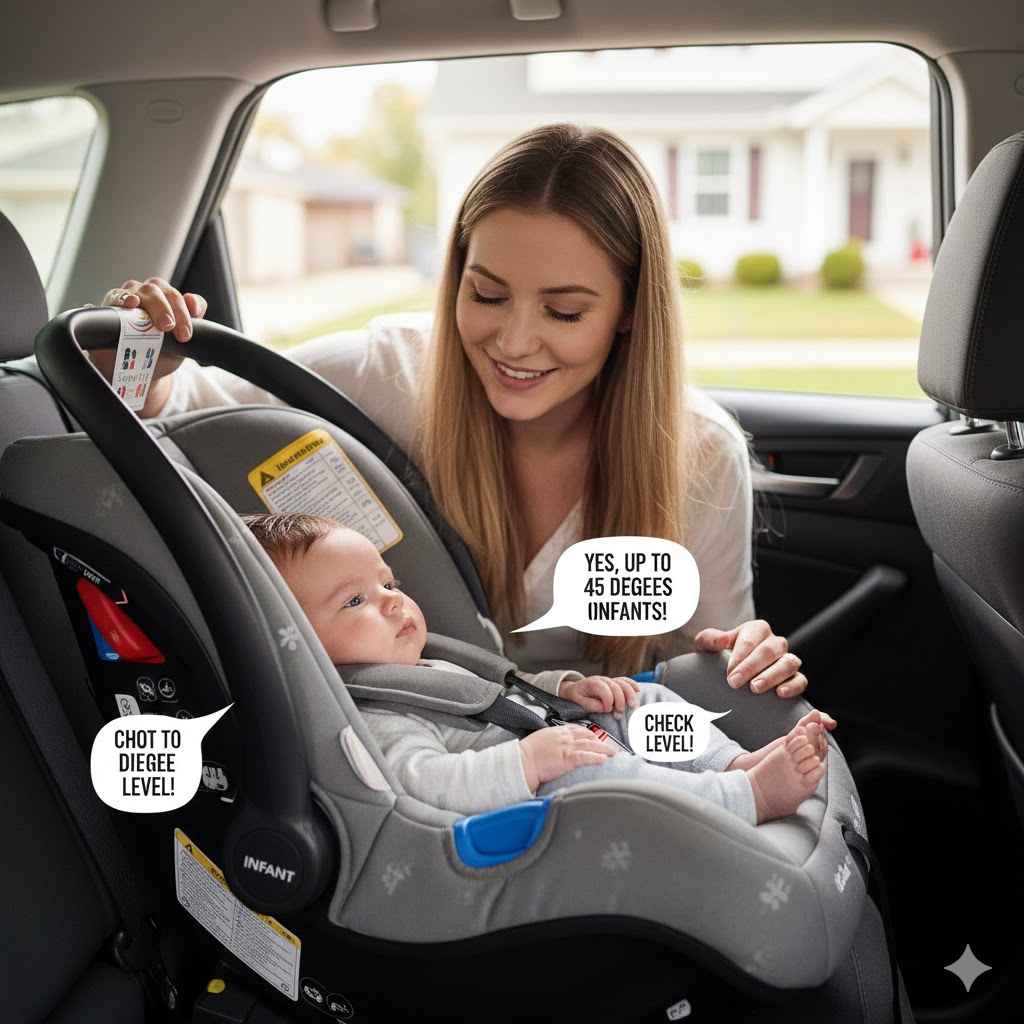
Most modern car seats come with a built-in recline indicator. This is a visual guide to help you set the correct angle. These can be a small bubble level, a colored line, or a dial.
You need to check the indicator with the car seat installed in your vehicle. If the bubble is in the green zone or the line is within the marked range, the recline is correct. If it’s too upright or too reclined, you’ll need to adjust the seat or its base.
Always consult your car seat manual to understand how to read your specific seat’s indicator. Some seats have different indicators for rear-facing and forward-facing modes, or different indicators for infants versus older children.
Checking for Proper Installation and Safety
Ensuring your car seat is installed correctly is just as vital as getting the recline angle right. Even the perfect recline won’t help if the seat isn’t securely fastened in the car. This section will guide you through the steps to make sure your car seat is locked in tight and safe for every trip.
We’ll cover the LATCH system and seat belt installation.
The LATCH System
The LATCH (Lower Anchors and Tethers for Children) system is a set of anchors built into your car and your car seat. It’s designed to make car seat installation easier and more secure.
For rear-facing seats, you’ll connect the lower anchors from the car seat to the lower anchors in your vehicle’s seat. For forward-facing seats, you’ll also connect the top tether strap from the car seat to the tether anchor in your vehicle.
To check if the LATCH system is installed correctly, grab the car seat at its base and try to move it side to side and front to back. It should not move more than one inch in any direction. This is the “inch test.”
A study by the National Highway Traffic Safety Administration (NHTSA) found that correct LATCH system use significantly improves car seat safety. When used properly, it helps ensure the seat stays put in a crash.
Seat Belt Installation
If your car doesn’t have LATCH anchors, or if you choose to use the seat belt, you can install the car seat using your vehicle’s seat belt. The process is similar: you route the seat belt through the correct belt path on the car seat and buckle it.
When using the seat belt, you often need to lock the seat belt to ensure a tight installation. Your vehicle’s manual will explain how to lock the seat belt for car seat installation. This might involve using a locking clip or engaging the seat belt’s retractor.
Just like with LATCH, you’ll perform the “inch test” to confirm a secure installation. Grab the car seat at the base and try to move it. It should not move more than one inch in any direction at the belt path.
The Top Tether
The top tether is a strap that connects the top of a forward-facing car seat to an anchor point in your car. It helps reduce forward head movement in a crash, preventing the child’s head from slamming forward.
It is strongly recommended to use the top tether whenever possible for forward-facing car seats. Make sure you know where the tether anchor is in your vehicle and how to attach it correctly. Always consult your car seat manual and your vehicle owner’s manual for specific instructions.
NHTSA research indicates that using the top tether can reduce the risk of head injuries by up to 67% for forward-facing children. It’s a small step that makes a big difference in safety.
When to Seek Professional Help
Car seat safety is serious, and sometimes it’s hard to be sure you’ve got it right. If you’re ever unsure about your car seat installation or recline, don’t hesitate to get help. Many communities have certified Child Passenger Safety Technicians (CPSTs) who can check your installation for free.
You can find a local CPST through websites like Safe Kids Worldwide or NHTSA’s website. They can demonstrate how to install your seat correctly and answer any questions you have. They are experts trained to ensure your child is as safe as possible.
Common Mistakes and How to Avoid Them
Even with the best intentions, parents can make mistakes with car seats. These errors, often small, can significantly impact safety. This section highlights the most common pitfalls regarding car seat recline and installation, and offers simple ways to steer clear of them.
Knowing these can give you peace of mind.
Recline Angle Mistakes
One common mistake is not reclining the seat enough for newborns, leading to the danger of their heads falling forward. Conversely, some parents might over-recline a forward-facing seat, which can be unsafe.
To avoid this, always use the recline indicator on your seat and check your manual for the specific requirements for your child’s age and weight. Never guess; always verify.
Improper Harness Fit
The harness is what directly restrains your child. If it’s too loose, the child can be ejected or injured in a crash. If it’s too tight, it can be uncomfortable or restrict breathing.
Ensure the harness straps are snug enough that you cannot pinch any slack at your child’s shoulder. For rear-facing seats, the straps should be at or below the child’s shoulders. For forward-facing, they should be at or above.
A stat from the CDC shows that car seats reduce the risk of death in a crash by 71% for infants and 54% for toddlers compared to seat belts alone. This highlights how crucial proper harness fit is.
Loose Installation
As mentioned before, a car seat that moves more than one inch at the belt path is not installed securely. This can happen if the LATCH system or seat belt isn’t tight enough.
Always perform the “inch test” after installation. If you’re struggling to get it tight, try a different installation method or seek help from a CPST.
Using the Wrong Mode
Using a car seat in the wrong mode (e.g., forward-facing before the child is ready, or using a rear-facing seat as forward-facing) is a major safety risk. Convertible car seats have specific weight and height limits for each mode.
Always adhere strictly to the limits stated in your car seat manual for rear-facing, forward-facing, and booster modes. Keep your child rear-facing for as long as possible.
Swapping Bases Incorrectly
For infant car seats, the base is crucial for achieving the correct recline. Sometimes parents use the infant carrier in the car without its base. This is only permissible if the carrier itself has a built-in recline indicator and is safe to use alone, as specified in the manual.
Always check your manual to see if the infant carrier can be used safely without its base. If it can, ensure the recline angle is correct for your baby.
Frequently Asked Questions
Question: Can I recline my car seat all the way back with my baby in it?
Answer: You can recline your car seat to the manufacturer’s recommended angle for your baby’s age and weight. For newborns and infants, this is usually a significant recline to keep their airway open. However, “all the way back” might be too far and not safe for all situations.
Always check the recline indicator and your manual.
Question: How do I know if my car seat is reclined correctly?
Answer: Most car seats have a recline indicator, like a bubble level or a colored line. Check your car seat manual to see what the correct position looks like for your baby’s age. You want to ensure your baby’s head is supported and their chin isn’t slumping onto their chest, which can block breathing.
Question: Is it safe to adjust the recline after my baby is buckled in?
Answer: Some car seats allow for minor recline adjustments after the baby is buckled in for comfort. However, you must ensure that any adjustment keeps the seat within the manufacturer’s safe recline range. Never let the seat become too upright for an infant or too reclined for a forward-facing child.
Always refer to your manual.
Question: My car seat manual is confusing. Where else can I find information?
Answer: You can usually find a downloadable PDF version of your car seat manual on the manufacturer’s website. Additionally, Child Passenger Safety Technicians (CPSTs) are excellent resources. They can help you understand your manual and check your installation.
Question: What if my car seat doesn’t have a recline indicator?
Answer: If your car seat doesn’t have a built-in indicator, your manual will describe how to achieve the correct recline angle, often by using a pool noodle or rolled towel placed under the front edge of the seat base. You can also seek assistance from a CPST.
Conclusion
You can indeed recline a car seat with your baby inside, and it’s often a necessary safety feature. The key is always to recline it to the specific angle recommended for your baby’s age and weight. Always consult your car seat manual, use recline indicators, and ensure the seat is securely installed.
Your baby’s comfort and safety ride on these simple steps.