Can You Register a Car With an Open Title? What You Should Know
Figuring out the paperwork for a car can seem tricky, especially when you’re just starting. A common question is, Can You Register a Car With an Open Title? It can feel overwhelming, but don’t worry! This post breaks down exactly what an open title is and what steps you’ll need to take. We’ll explore the process from start to finish, so you’ll know exactly what to do. Let’s get started and clear up any confusion.
What Exactly Is an Open Title?
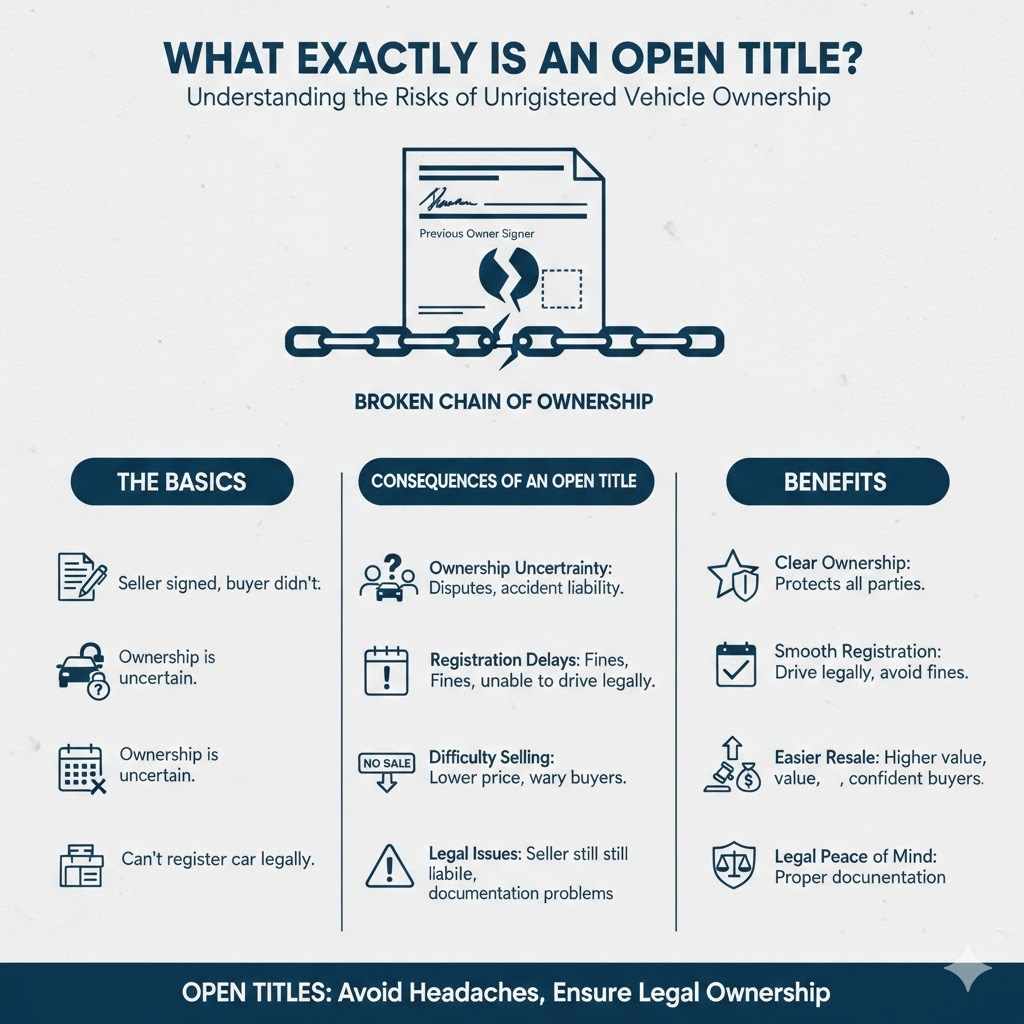
An open title for a vehicle means the previous owner has signed the title over to someone, but that person hasn’t yet put their name on it. Think of it like a blank check. The seller has given up ownership, but the new owner hasn’t officially claimed it with the state. This usually happens because the person who bought the car didn’t complete the registration process. This situation creates potential headaches because the current owner must verify the process to obtain ownership. Problems arise when there are unclear ownership transfers because the state is unable to ensure proper ownership.
The term “open title” is often used in the automotive world, but what happens when you have one? It’s essential to recognize the significance of the title itself. The car title is more than just a piece of paper; it’s the legal proof of who owns the vehicle. When the title is “open,” the chain of ownership is broken. This means there’s a missing link between the last registered owner and the current person trying to register the car.
The Consequences of an Open Title
- Ownership Uncertainty: The biggest issue is that it can be unclear who legally owns the car. This can create problems if there’s ever a dispute or if the vehicle is involved in an accident. A missing link in the chain of ownership creates confusion, which makes it hard to establish rightful ownership.
- Registration Delays: You likely won’t be able to register the car in your name until the title is properly transferred. This can prevent you from driving the car legally and may lead to fines or other penalties. Registering a vehicle is usually required to be street legal, and open titles prevent that from occurring.
- Difficulty Selling: A car with an open title is much harder to sell. Potential buyers will be wary because it can be difficult to transfer ownership to them. This can also drive down the vehicle’s selling price.
- Legal Issues: If there’s a problem with the title, you could face legal troubles. The original owner may still be held responsible for the car, which isn’t what you want. The lack of proper documentation makes it hard to make sure everything’s done correctly.
Imagine you purchase a used car from a private seller, but they never finished the paperwork. Now, you’re stuck because the title is “open,” meaning you can’t register the car. This is a common situation. It’s also important to think about the original seller. They could still be liable for any parking tickets or even if the car is used in a crime. You need to make sure everything is handled the right way.
Can You Register a Car With an Open Title? The Basics
The short answer to the question, Can You Register a Car With an Open Title?, is usually no, but it’s more complicated. You normally can’t register a car with an open title, because the process requires a complete chain of ownership. You will usually need to get the previous owner to complete the transfer and sign it over to you. However, there may be some things you can do depending on your state’s laws.
State motor vehicle departments require a clear and unbroken chain of ownership. This means each transfer of the car must be accurately recorded on the title. The goal is to prevent theft and confirm who legally owns the vehicle. A title that doesn’t have the current owner’s information on it, with the prior owner listed, won’t meet these requirements. The title must be properly assigned to you.
What You Need to Get Started
- The Open Title: This is the most critical item. Inspect it to see if it’s been signed by the previous owner. If it’s unsigned, you’ll need them to sign it. Check for any missing information.
- Bill of Sale: A bill of sale is a document that shows the transaction details, including the purchase price, date of sale, and the names of the buyer and seller. This is good proof of purchase.
- Identification: You’ll need to show your driver’s license or another form of acceptable identification to prove you are who you say you are.
- Smog Certificate: Depending on the state and the age of the vehicle, you might need a smog certificate or an emissions test. This proves the car meets environmental standards.
- Vehicle Inspection: Some states require a vehicle inspection to make sure the car is safe to drive.
Let’s say you’re trying to register a car with an open title. You might encounter situations where the person who sold it to you can’t be contacted. Each state has different rules about how to handle this, such as providing a court order. So, what steps can you take to try to solve the issue? Next, we’ll talk about steps and scenarios to help you resolve the issues.
Solutions and Workarounds for Open Titles
If you have an open title, it’s not the end of the road. There are usually ways to solve the problem and get the car registered. The specific steps will depend on where you live and the details of your case. It is important to know that most states will want a complete and accurate paper trail.
It can be tough when you’re dealing with an open title. It’s hard to predict every specific situation, but here are some common things you can explore.
Contact the Previous Owner
- Find the Seller: The first step is to track down the person who sold you the car. You’ll need them to sign the title to you properly.
- Explain the Situation: Let them know there was an error in the sale and that you need their help. Be friendly and explain that you need their signature on the title to register the car.
- Offer Assistance: If they are unable to come in person, maybe offer to send the title to them. Provide a prepaid, trackable envelope so they can mail it back.
Imagine you have a car with an open title and the seller is willing to cooperate. They can simply sign the title over to you. This is the simplest solution. Once you have the signed title, you can proceed with registering the car in your name. If you can get the original seller to sign, this removes the biggest obstacle.
Obtain a Duplicate Title
- Lost Title Application: If the original title is missing, the previous owner may be able to apply for a duplicate title. They’ll need to fill out paperwork and often pay a fee to get a replacement.
- State Requirements: The requirements for getting a duplicate title vary by state. Check with your local Department of Motor Vehicles (DMV) to learn their specific process.
- Verification: The state might need additional evidence to confirm the previous owner’s ownership of the vehicle before they can issue a new title. This might include the original bill of sale.
If the original title is nowhere to be found, don’t panic! In many cases, the seller can request a duplicate title from the state. The process takes a little time, but it can solve the problem if the original title is missing. After the seller receives the duplicate title, they can sign it over to you. A duplicate title has the same legal value as the original one, allowing you to proceed with registration.
Explore a Bonded Title
- What It Is: A bonded title is a special type of title that can be used when the usual documentation isn’t available. You’ll need to purchase a surety bond (a type of insurance) to get one.
- Requirements: The requirements for getting a bonded title vary by state. This process often includes vehicle inspections. You may have to provide proof that you tried to locate the previous owner.
- Duration: A bonded title is often valid for a set amount of time. If no one comes forward to claim ownership during this period, you can get a regular title.
In cases where you cannot locate the previous owner or obtain a signed title, you might be able to get a bonded title. This approach lets you register the car even without a perfect paper trail. The bond protects the state if someone later claims they owned the vehicle. It’s not a common option, but in tough cases, a bonded title can be really helpful. It’s another option when facing a car with an open title, especially if the original owner is not contactable.
Common Challenges and How to Avoid Them
Working with an open title can be tricky, and it’s essential to watch out for problems that can come up. By learning about common issues, you can take steps to handle them and make sure the registration process goes smoothly. Careful planning can save you time and headaches.
Dealing with open titles can be complex, and some issues often occur. You need to be ready to address them to avoid delays and possible legal issues.
Dealing With Missing Information
- Missing Signatures: Ensure the seller has signed the title. If the seller didn’t sign the title, you can’t register the car.
- Incomplete Data: Make sure all the necessary fields on the title are filled in correctly. Errors or missing data can delay the process.
- Solutions: If a signature is missing, track down the seller and have them sign. For incorrect information, request a new title or seek clarification from the DMV.
For example, you have an open title, and you realize the seller’s signature is missing. This one small mistake means you can’t register the car. You’ll need to make every effort to contact the seller. They need to sign the title to proceed.
Unforeseen Issues and How to Resolve Them
- Missing Previous Owners: If the person who sold you the car isn’t the one listed on the title, there are extra steps to take. Each prior owner must transfer the title to the next person in line.
- Uncooperative Sellers: If the seller won’t cooperate, it can make it hard to complete the process. Sometimes, legal action is needed.
- Vehicle History: Always run a vehicle history report before buying a used car. This can reveal issues like outstanding liens or if the car was reported stolen.
Here’s a scenario: You buy a car, and then you discover the seller can’t be reached or won’t sign the title. In this situation, a bonded title or a court order might be your best option. Each option requires additional steps. These steps involve legal processes and specific documentation. That is why running a vehicle history is a smart thing to do.
State-by-State Variations for Open Titles
The rules about open titles vary quite a bit from state to state. What’s allowed in one state might not be allowed in another. It’s key to know the specific rules where you live. You’ll want to check with your state’s DMV or equivalent agency. They can tell you exactly what you need to do.
Rules regarding Can You Register a Car With an Open Title?, differ from place to place. The steps you will need to take in California might not be the same as in Florida or New York. The DMV rules vary. Understanding what your state requires helps you get your car registered without problems.
Key Differences to Consider
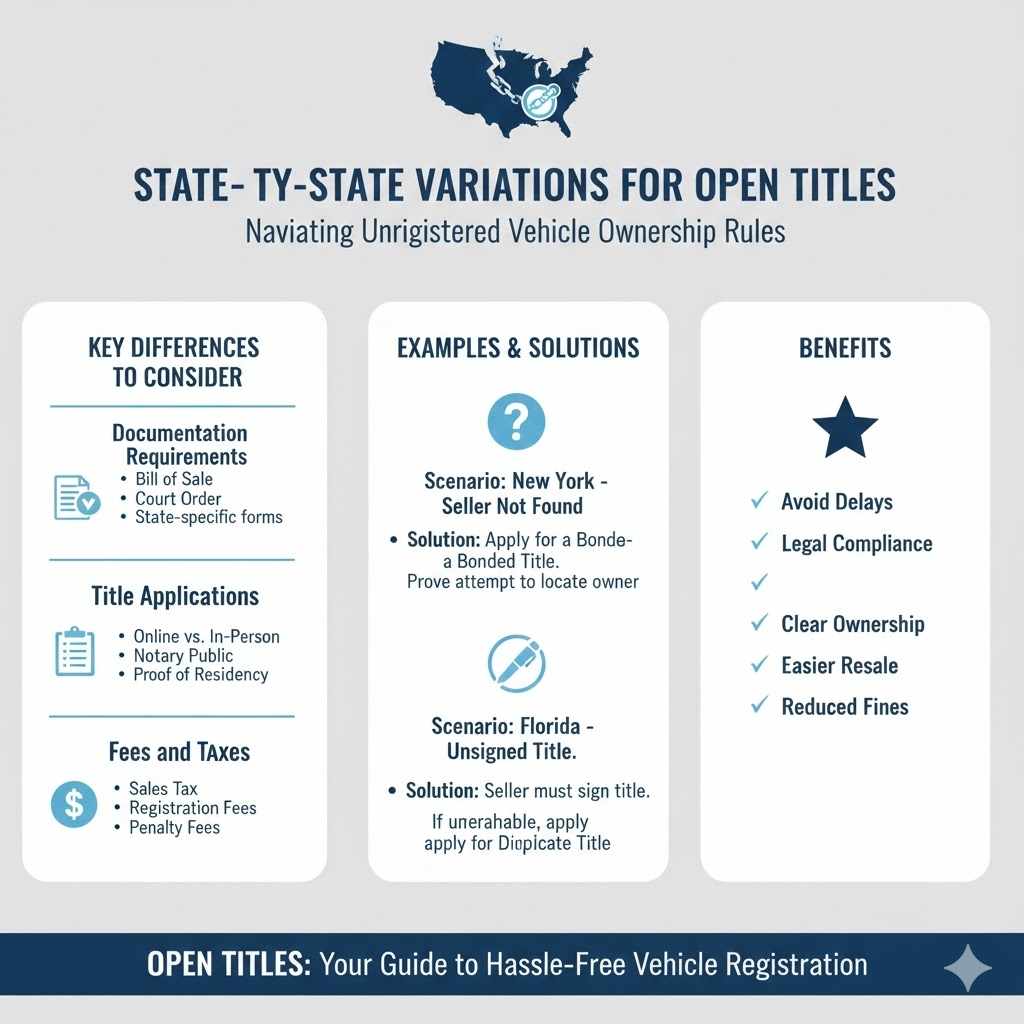
- Documentation Requirements: Each state has its unique requirements for the documents needed to register a car with an open title. Some states may accept a bill of sale. Others may need a court order.
- Title Applications: The application process for titles can vary. Some states offer online applications. Others may require you to visit a DMV office in person.
- Fees and Taxes: The fees and taxes associated with car registration also differ from state to state. These fees are based on several factors.
Here’s an example. Let’s say you’re buying a car in Texas and have an open title. You might need to provide a bill of sale and have the seller sign an affidavit. In California, you might need to obtain a duplicate title from the previous owner. Understanding these details can save you time.
Examples
- Scenario: You are trying to register a car in New York with an open title and the seller is nowhere to be found.
Solution: You will likely need to apply for a bonded title. This is a common situation for dealing with open titles. You must show that you attempted to locate the original owner. This approach protects you.
- Scenario: You purchased a car in Florida with an open title, but the previous owner did not sign the title.
Solution: The seller must sign the title for you to register the car. If the seller is not reachable, you will need to try to obtain a duplicate title. The duplicate title allows you to register the vehicle in your name.
As you can see, the specific steps change from one place to another. You can look up the DMV requirements for your state. Make sure you have the right documents and understand the process. The DMV website is full of resources. Knowing the rules in your location ensures your car is registered with no delay.
Frequently Asked Questions
Question: What if the seller is dead?
Answer: If the seller has passed away, the process becomes more complex. You’ll usually need to work with the deceased’s estate. This might involve getting paperwork from the executor or administrator of the estate to transfer ownership.
Question: Can I register a car with an open title if I have a bill of sale?
Answer: A bill of sale is important, but it’s usually not enough by itself. You typically still need a properly signed title. A bill of sale is a good supporting document. It confirms that the transaction happened. You must have the seller’s signature on the title to legally transfer ownership.
Question: How long does it take to get a duplicate title?
Answer: The time it takes to get a duplicate title varies by state. It might take anywhere from a few weeks to several months. You’ll need to check with your local DMV to get an idea of the timeline. The timeframe can be longer, especially if there are delays in processing the request or if additional information is needed.
Question: What if the title is damaged or unreadable?
Answer: If the title is damaged or hard to read, you should try to obtain a replacement. Contact the DMV to find out how to apply for a new title. They might need a replacement fee. A clear, readable title is necessary for registration.
Question: What are the risks of driving a car with an open title?
Answer: Driving a car with an open title can have several risks. You could face legal problems. You can also have difficulty selling the vehicle later. Plus, it could create issues if the car is involved in an accident. The biggest risk is the lack of clear ownership.
Final Thoughts
When asking Can You Register a Car With an Open Title?, remember the process has a few steps. You should always aim for a title with a complete chain of ownership. If you find yourself in a situation with an open title, don’t worry! First, make every effort to contact the previous owner. If that’s not possible, explore options such as duplicate titles and bonded titles. This is essential for proper registration. Always check your local DMV for state-specific rules. Doing so will help you get your car legally on the road. Remember to keep all documentation. With a little effort, you can overcome this obstacle and drive with peace of mind.