What Happens If Your Car Fails an Emissions Test? Retest & Waiver Guide
Failing an emissions test means your car exceeds pollution limits, and in most states you cannot renew your registration until you fix the problem and pass a retest.
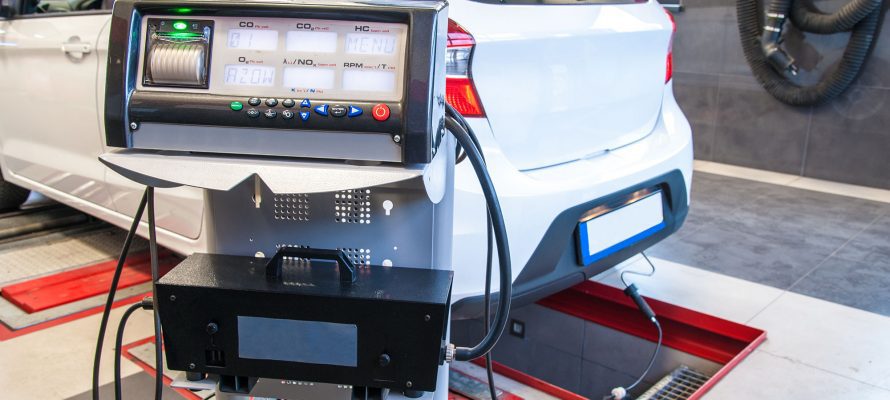
Emissions tests exist to make sure vehicles meet environmental standards for pollutants like carbon monoxide, nitrogen oxides, and unburned hydrocarbons. When your car doesn’t pass, the test report tells you which reading was too high, and that reading almost always points to a specific part: a worn oxygen sensor, a failing catalytic converter, or something as small as a loose gas cap.
The good news is that the process after a failure is predictable. You get a report, you make a repair, and you get a free or low-cost retest within a set window (commonly 30 to 60 days depending on your state). If the repair costs more than a set dollar amount and the car still won’t pass, most states also offer a repair-cost waiver so you’re not stuck paying endlessly to chase a pass. We’ll walk through each step below, including the real 2026 waiver thresholds several states use.
Emissions Test Basics
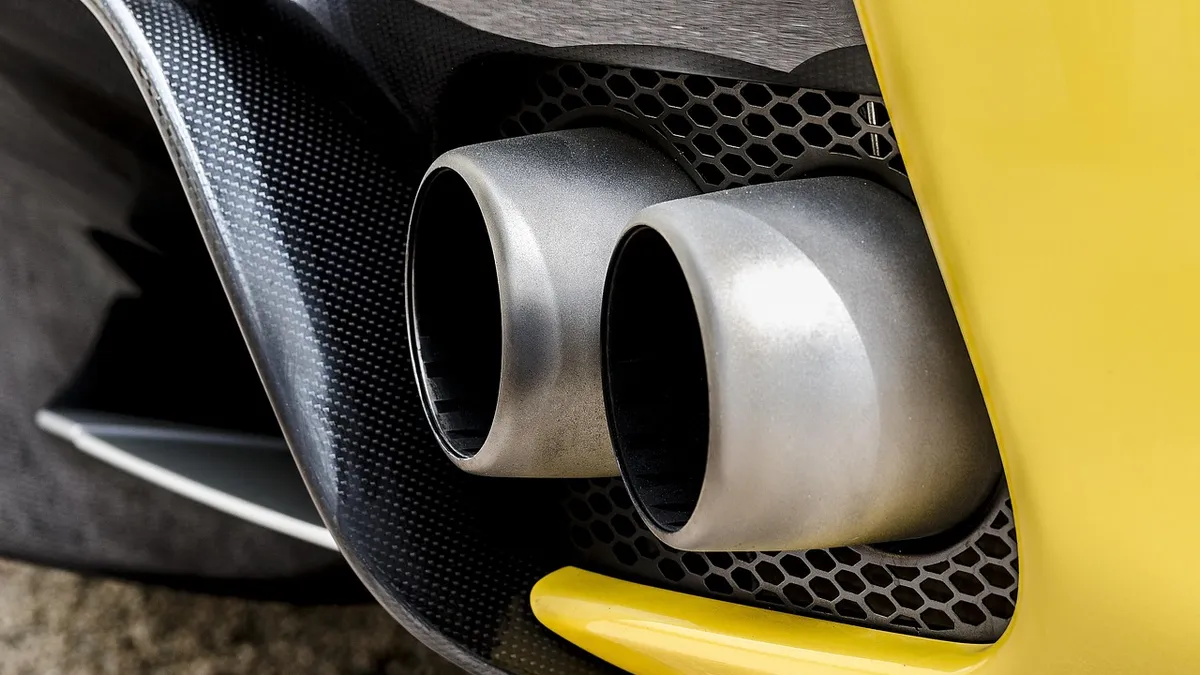
An emissions test checks how much pollution your car’s exhaust releases and compares it against limits set by your state’s environmental agency. Passing means your engine, exhaust system, and emissions-control components are all working the way they were designed to. Failing means at least one of those systems is letting more pollutants through than allowed, which is bad for air quality and usually signals a real mechanical issue.
Cars fail emissions tests for a handful of common reasons. A faulty oxygen sensor is one of the most frequent culprits: it monitors the air-to-fuel ratio, and when it degrades, the engine runs an inefficient mix that produces more pollutants. A failing catalytic converter is another major cause; this part is supposed to convert harmful gases into less harmful ones before they exit the tailpipe, so a clogged or damaged converter lets far more pollution through. Even something as simple as a loose or cracked gas cap can cause a failure, since it allows fuel vapor to escape instead of staying sealed in the tank. Regular maintenance catches most of these issues before test day.
Immediate Actions After Failure
Start by reading your test report line by line. It will flag exactly which pollutant or system failed, using terms like “excessive emissions” or a specific system code. That detail tells you (or your mechanic) where to start looking, and sometimes it’s something as minor as a loose gas cap rather than a major repair.
From there, a certified mechanic is your best resource. Bring them the test report so they can run diagnostics against the specific failure rather than guessing. Ask for a written estimate before any work begins; most states cap how much you’re required to spend on repairs before you can qualify for a waiver (more on that below), so knowing the number up front helps you plan.
Repair Options
Some fixes are simple enough to do yourself. Check the air filter first since a dirty one throws off the air-to-fuel mix, and replace it if it’s clogged. Inspect the gas cap for cracks or a worn seal and tighten or replace it. Old spark plugs can also cause incomplete combustion, which raises emissions, so clean or swap them if they’re worn. A basic OBD2 scanner (see our pick below) will pull the exact trouble code your engine set, which tells you whether you’re dealing with an oxygen sensor issue, a misfire, or something else before you spend money guessing.
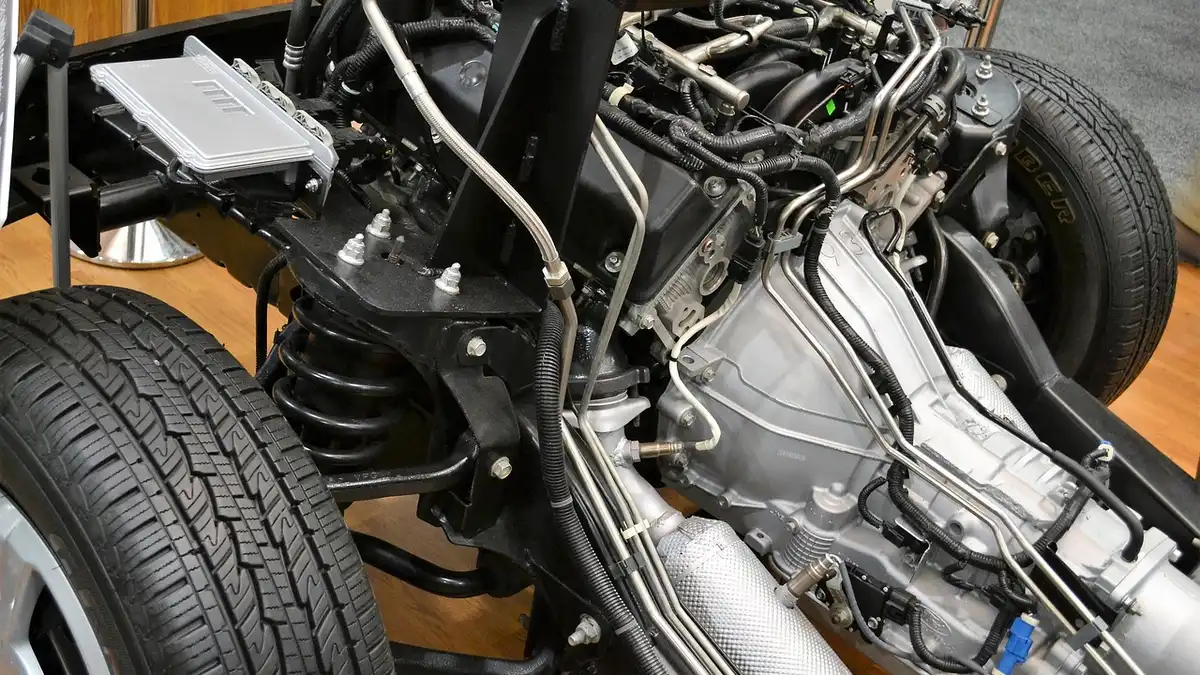
Bigger jobs are better left to a certified shop. A catalytic converter replacement, in particular, requires diagnostic tools and specialized parts that most home garages don’t have, and a botched replacement can make the car fail again. A shop can also check for outdated engine control module software, since some manufacturers release updates that improve emissions performance on their own. If you’re not sure your car is ready for its next test, our guide on how to tell if your car will pass emissions before testing walks through the same checks a station will run, so you can catch problems before you pay for a retest.
Our Top Pick
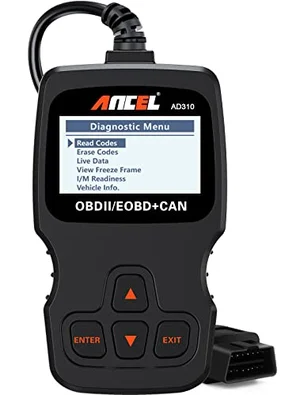
ANCEL AD310 Classic Enhanced OBD II Scanner
Best for: Reading and clearing the exact code behind your check engine light before you pay for a repair or a retest.
Why we picked it: It reads generic OBD2 codes on any 1996-or-newer vehicle, shows the freeze-frame data, and turns the light off after a verified repair, all with no subscription or app required.
Main drawback: It reads codes but doesn’t run live sensor graphs, so a shop’s professional scanner may still be needed for tricky intermittent faults.
View Our Pick on Amazon
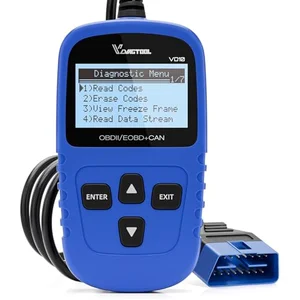 VDIAGTOOL VD10 Code Reader Best for: Budget-conscious owners who just need a quick pass/fail read. Why we picked it: Simple one-button operation with a bright color screen and I/M readiness monitor status, which is exactly what a test station checks before you retest. Main drawback: Fewer advanced features than pricier scanners. Check on Amazon |
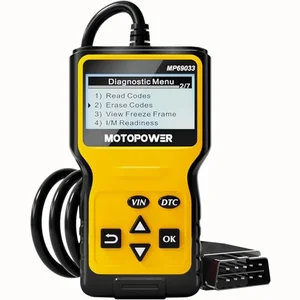 MOTOPOWER MP69033 Scanner Best for: First-time DIYers who want a very low learning curve. Why we picked it: Plain-language code definitions on screen mean you don’t have to look up what a code means separately. Main drawback: No Bluetooth or app connectivity. Check on Amazon |
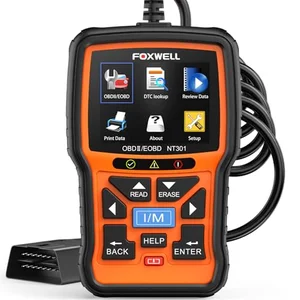 FOXWELL NT301 Scanner Best for: Owners who want closer-to-shop-level diagnostics at home. Why we picked it: Adds live sensor data streaming on top of standard code reading, useful for catching intermittent issues a basic reader would miss. Main drawback: Costs more than an entry-level reader. Check on Amazon |
Retesting Process
Scheduling a retest is usually easy. Call the test center or book online, and pick a slot after your repairs are finished. Most states offer one free or discounted retest within a set window after your first failure, commonly 30 to 60 days, so don’t wait too long or you could lose that free retest and have to pay full price again.
Before you go back, review exactly what your original report flagged and confirm that specific issue is resolved. A car that still has a dirty air filter, an unaddressed check-engine code, or the wrong fuel in the tank can fail the retest for the same reason, or a new one. Make sure your engine has had a normal warm-up drive beforehand too, since a cold start can throw off some readings.
Financial Implications
Failing an emissions test can lead to real, sometimes unexpected costs. A faulty oxygen sensor is a relatively inexpensive fix, often under $200 in parts and labor, but a full catalytic converter replacement can run well over $1,000 depending on your vehicle. Labor adds to the total too, since some diagnoses take a mechanic several hours to track down.
Not fixing the problem carries its own cost. Driving a vehicle that has failed emissions is restricted in most testing states, and your registration renewal will be blocked until you pass. Some areas add late fees the longer your registration stays expired, so the cost of delay can add up faster than the repair itself.
Repair-Cost Waivers: What If You Can’t Afford the Fix?
If you’ve made a genuine repair attempt at a certified shop and your car still won’t pass, most states won’t leave you stuck paying indefinitely. A repair-cost waiver lets you renew your registration despite a failed retest, once you’ve spent at least a minimum amount on emissions-related repairs at an approved facility. The exact dollar threshold is adjusted every year and varies by state. For 2026, a few examples: Illinois, Georgia, and Wisconsin set the threshold around $1,176; Connecticut is $1,137; Virginia is $1,090; and Ohio’s is $450 for vehicles that fail in 2026. Check your own state’s testing program site for the current number, since these figures typically move each January.
California runs a separate program worth knowing about if cost is the real barrier: the Consumer Assistance Program (CAP). It’s income-based, requiring a household income at or below 225% of the federal poverty level, and it applies to vehicles that already failed a biennial Smog Check with no tampered emissions equipment. Eligible owners can receive up to $1,450 in repair assistance for 1996-or-newer vehicles, or up to $1,100 for 1976-1995 models. The same program also offers a retirement (buyback) option if repairs aren’t worth pursuing. None of these waiver programs apply automatically, so you’ll need to apply through your state’s Bureau of Automotive Repair or equivalent agency and show proof of the repair work already completed.
Environmental Impact
The reason emissions testing exists in the first place is public health and air quality. A car that fails its test is putting more carbon monoxide, nitrogen oxides, and unburned hydrocarbons into the air than allowed, and that pollution contributes to smog and respiratory problems for people nearby, not just the driver.
The effects build up over time. Children and older adults are more vulnerable to prolonged exposure to poor air quality, and vehicle emissions are one of the largest contributors to ground-level ozone in most metro areas. Keeping your car within its emissions limits is a small but real contribution to cleaner air for everyone who shares the road with you.
Legal Consequences
Failing an emissions test can lead to driving restrictions. Your car may not be allowed on the road in some jurisdictions until it’s repaired to meet emission standards. Enforcement varies, but the goal is always the same: get non-compliant vehicles fixed or off the road to protect air quality.
The most common consequence is registration denial. Renewal is blocked until your vehicle passes, meaning you can’t legally register or, in many states, legally drive the car on public roads without a valid registration. Getting your car repaired and retested (or approved for a waiver) is the only way to clear this.
Preventative Measures
Keeping your car in good shape is the easiest way to avoid a repeat failure. Change your engine oil on schedule and keep it clean, since dirty oil makes the engine work harder and produces more pollution as a result. Check your air filter regularly too; a clean filter helps the engine breathe properly and use fuel more efficiently. Worn spark plugs can waste fuel and increase emissions, so replace them on the manufacturer’s schedule. And never ignore the check engine light: it’s your car’s earliest warning that something affecting emissions is starting to go wrong.
Fuel choice matters too. Ethanol blends and natural gas both burn cleaner than standard gasoline in vehicles built to use them, and fully electric cars produce no tailpipe emissions at all. If you want to catch a problem before it costs you a failed test, see our guide on how to tell if your car will pass emissions before testing for the same checks a station runs.
Frequently Asked Questions
How Do You Fix an Emission Test Failure?
Start by checking and replacing faulty spark plugs, oxygen sensors, or air filters, and inspect the exhaust system for leaks. Fuel additives can help clean fuel injectors, and proper tire pressure matters on some rolling-road tests. Regular maintenance prevents most future failures, but for anything beyond a simple part swap, a certified mechanic should diagnose and repair the specific issue your test report flagged.
What Happens If You Fail an Emissions Test?
Failing an emissions test means you can’t renew your vehicle registration until you pass. You’ll need to repair the flagged issue and retest, usually within a 30-to-60-day window that’s often free or discounted. Common repairs include replacing the catalytic converter or oxygen sensor. Some states allow a temporary extension or permit while repairs are underway, but rules vary, so check your local program’s requirements.
Can I Still Drive My Car If It Fails Emissions?
In most states, you can keep driving for a limited time while your registration is still valid, but once it expires you generally can’t legally renew it (or in some areas, drive at all) until the car passes. Some states issue a short grace period or temporary permit specifically to give you time to complete repairs, so check with your local DMV or testing program before assuming either way.
What Is a Repair-Cost Waiver, and How Do I Get One?
A repair-cost waiver lets you renew your registration even though your car still fails, once you’ve spent at least a state-set minimum on genuine emissions repairs at a certified shop (commonly $450 to $1,176 depending on the state for 2026). You apply through your state’s testing or Bureau of Automotive Repair program and provide proof of the repair work. California also runs an income-based Consumer Assistance Program that can cover up to $1,450 in repairs for newer vehicles for qualifying owners.
Is There an Extension for a Failed Emissions Test in Illinois?
Illinois grants a temporary extension for failed emissions tests. Eligible vehicle owners can apply online or by mail, and extensions are typically valid for one year. You’ll still need to repair your vehicle to pass the next test, so check the Illinois EPA website for current application details and the repair-cost waiver threshold.
What Does a Rejected Emissions Test Mean?
A rejected emissions test usually means your vehicle’s emissions-control system failed a check or the test itself was incomplete, often because a monitor hadn’t finished running after a recent battery disconnect or repair. It points to a potential issue with a sensor or component that needs to be addressed before you can pass, so treat it the same as a failure and get it diagnosed.
Conclusion
Failing an emissions test can feel stressful, but the next steps are straightforward. Read your test report, get a certified diagnosis, complete the repair, and schedule your free or low-cost retest before the window closes. If the repair bill gets out of hand, look into your state’s repair-cost waiver or, in California, the Consumer Assistance Program, before assuming you’re stuck.
Regular maintenance is still the cheapest fix of all: it helps you avoid a failed test in the first place. Staying informed about your local rules and knowing your rights when a shop has your vehicle keeps the whole process faster and cheaper.
Products related to this article
Sponsored / affiliate links. As an Amazon Associate I earn from qualifying purchases. I may earn additional commission from eligible campaigns.