Can You Reset The Mileage Of Car? A Dangerous Secret
Yes, you can technically reset a car’s mileage, but doing so with the intent to mislead a buyer is illegal and known as odometer fraud. Legitimate repairs may require an odometer reset, but this must be documented and disclosed by law. Altering mileage to misrepresent a vehicle’s value is a serious federal crime with severe penalties.
Have you ever looked at your car’s dashboard and wondered about the number on the odometer? It’s a simple display, but it tells a huge story about your vehicle’s life. Maybe you’ve heard whispers or seen online ads about “mileage correction” tools and thought, “Can you really reset the mileage on a car?” It’s a common question, and I’m here to give you the clear, honest answer.
The truth is, it’s a topic surrounded by a lot of confusion and danger. While technically possible, changing a car’s mileage is a serious issue with big consequences. In this guide, I’ll walk you through everything you need to know. We’ll explore how it’s done, why it’s almost always a terrible idea, and how you can protect yourself from this type of fraud. Let’s unravel this mystery together, safely and simply.
What Is an Odometer and Why Is It So Important?
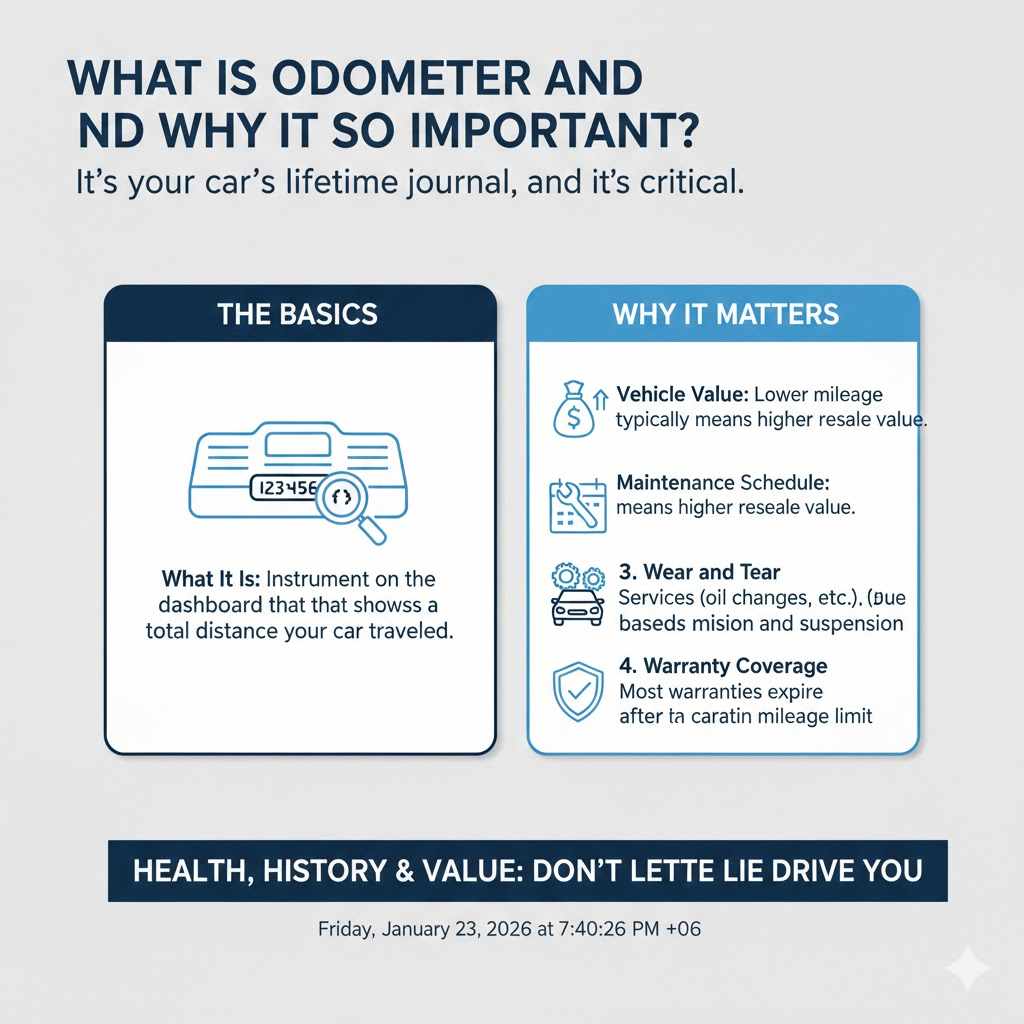
Before we dive into the deep end, let’s start with the basics. The odometer is the instrument on your dashboard that shows the total distance your car has traveled. Think of it as your car’s lifetime journal, recording every single mile of its journey.
This number isn’t just for show. It’s one of the most critical pieces of information about your vehicle. Here’s why it matters so much:
- Vehicle Value: Lower mileage almost always means a higher resale value. This is the primary reason people are tempted to illegally alter it.
- Maintenance Schedule: Your car’s maintenance plan is based on mileage. Oil changes, tire rotations, and major services (like timing belt replacements) are all scheduled according to the distance it has driven.
- Wear and Tear: Mileage gives a general idea of the wear on a car’s engine, transmission, and suspension. A car with 30,000 miles is expected to be in much better shape than one with 130,000 miles.
- Warranty Coverage: Most manufacturer warranties are valid up to a certain mileage limit. Once you pass that number, the coverage ends.
In short, the odometer reading is a measure of your car’s health, history, and value. When that number is tampered with, the entire story of the car becomes a lie.
The Two Types of Odometers: Old School vs. New Tech
To understand how mileage can be changed, you first need to know that there are two main types of odometers. The method for altering the mileage depends heavily on which type a car has.
The Old-School Mechanical Odometer
If you’ve ever driven a car from the 1990s or earlier, you’ve seen a mechanical odometer. It’s the one with physical number wheels that click and turn as you drive. These odometers are directly connected to the car’s drivetrain by a cable.
Because they are physical devices, altering them requires taking the dashboard apart. A person would have to manually roll the numbers back. While it sounds simple, it often leaves behind tell-tale signs of tampering, like misaligned numbers, scratches, or fingerprints inside the instrument cluster.
The Modern Digital Odometer
Almost every car made in the last two decades has a digital odometer. These display the mileage on an LCD or LED screen. There’s no physical connection to the wheels; instead, a sensor sends electronic signals to the car’s computer, the Engine Control Unit (ECU), which then calculates and displays the mileage.
You might think digital is more secure, but that’s not always the case. The mileage data is stored on a small chip. With specialized (and often illegal) software and tools, someone can connect to the car’s computer and rewrite the data on that chip, changing the mileage without leaving any physical marks.
| Feature | Mechanical Odometer | Digital Odometer |
|---|---|---|
| Display | Physical rotating number wheels | LCD or LED screen |
| How it Works | Driven by a physical cable from the transmission | Receives electronic signals from sensors |
| Tampering Method | Manual disassembly and rolling back numbers | Reprogramming the memory chip with special tools |
| Signs of Tampering | Misaligned numbers, scratches, broken seals | Often no physical signs, requires electronic checks |
The Dangerous Secret: It’s a Federal Crime
Now for the most important part of this entire article: resetting a car’s mileage to misrepresent its value is illegal. It’s not just frowned upon; it’s a federal crime in the United States, known as odometer fraud or “clocking.”
The U.S. government takes this very seriously. According to the National Highway Traffic Safety Administration (NHTSA), odometer fraud costs American consumers over $1 billion annually. To combat this, strict laws are in place.
The Federal Odometer Act makes it illegal to:
- Disconnect, reset, or alter a vehicle’s odometer with the intent to change the mileage.
- Drive a vehicle with a disconnected or nonfunctional odometer with the intent to commit fraud.
- Advertise for sale, sell, or use any device that can alter odometer readings.
- Provide a false odometer statement when selling a vehicle.
What Are the Consequences?
Getting caught for odometer fraud is not a minor slap on the wrist. The penalties are severe and can include:
- Heavy Fines: Civil penalties can be as high as $10,000 for each violation.
- Prison Time: Odometer tampering is a felony, and convicted individuals can face up to three years in federal prison.
- Lawsuits: A buyer who was deceived can sue the seller for three times the amount of their damages or $10,000, whichever is greater.
This “dangerous secret” isn’t a clever trick to make a few extra bucks; it’s a serious crime that can ruin lives, both for the person committing the fraud and the unsuspecting victim who buys the car.
Are There Any Legal Reasons to Change an Odometer?
With such strict laws, you might wonder if there’s ever a legitimate reason to alter an odometer. The answer is yes, but only in very specific situations, and it requires following a strict legal process.
The most common legal reason is when the odometer or the entire instrument cluster is broken and needs to be replaced. If your odometer stops working, you can’t just leave it broken. It needs to be repaired or replaced.
The Right Way to Handle a Legitimate Odometer Repair
If a mechanic needs to replace your odometer, they must follow these legal steps:
- Set to Original Mileage: If possible, the new odometer must be set to the car’s true mileage.
- Set to Zero: If the new odometer cannot be set to the true mileage, it must be set to zero.
- Apply a Disclosure Sticker: A special sticker must be placed on the driver’s side doorjamb. This sticker must state the mileage on the old odometer when it was removed and the date of replacement.
- Disclose to Future Buyers: When you sell the car, you must legally disclose that the odometer was replaced and that the reading does not reflect the actual mileage.
Following these steps ensures the process is transparent and legal. It’s all about honesty. The goal is to repair the vehicle, not to deceive anyone.
How to Protect Yourself: Your Guide to Spotting Odometer Fraud
Now that you know how serious this is, how can you avoid becoming a victim when buying a used car? Thankfully, there are several red flags you can look for. You don’t have to be a master mechanic; you just need to be a good detective.
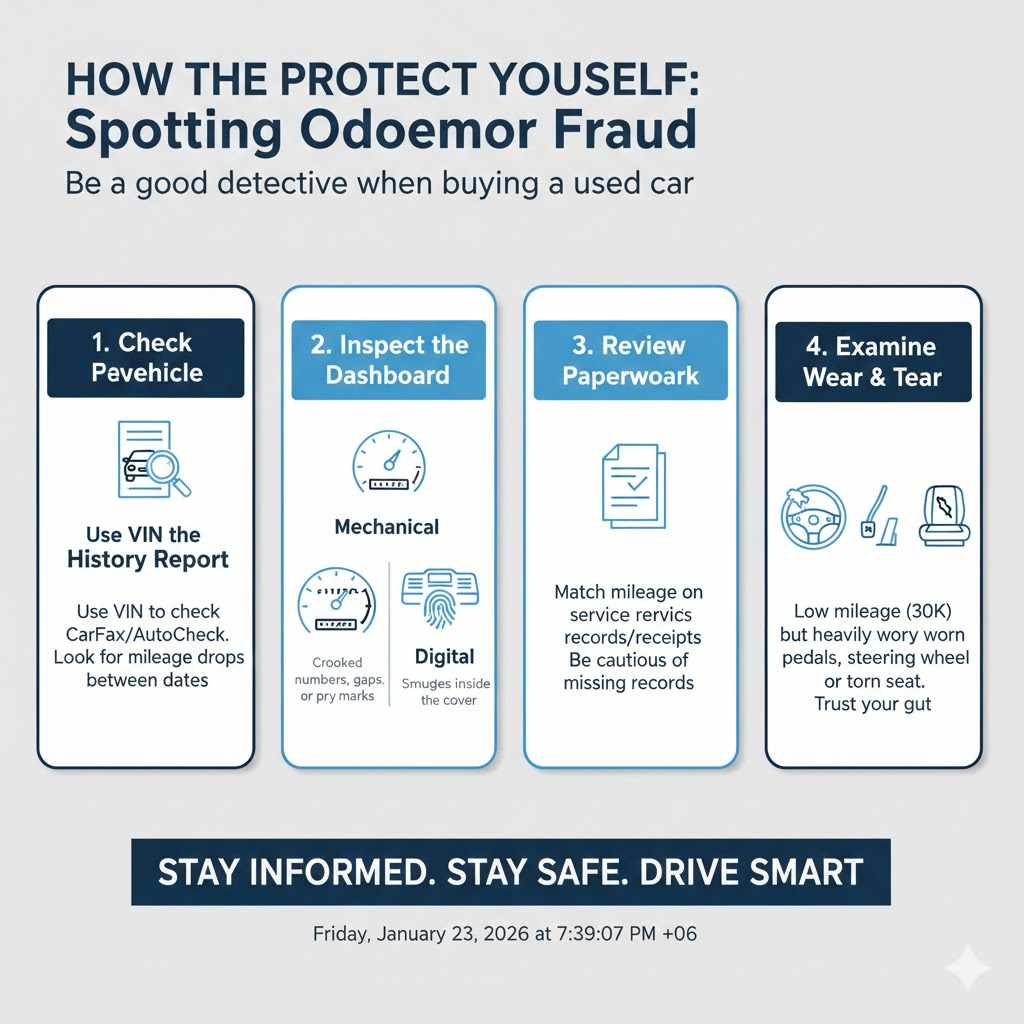
1. Check the Vehicle History Report
This is your first and most powerful tool. Services like CarFax or AutoCheck track a car’s history using its Vehicle Identification Number (VIN). They record mileage at various points, such as state inspections, service appointments, and title transfers. Look for inconsistencies. If the mileage suddenly goes down between two recorded dates, that’s a massive red flag.
2. Inspect the Dashboard and Instrument Cluster
Look closely at the odometer itself.
- For mechanical odometers: Are the numbers perfectly aligned? Are there any gaps between them? Do they look crooked? These are classic signs of manual tampering. Also, look for scratches on the clear plastic cover or pry marks around the dash.
- For digital odometers: While harder to spot, check for fingerprints or smudges on the inside of the instrument cluster cover. This could mean it was recently opened.
3. Review the Paperwork
Ask the seller for all service records and inspection receipts. Compare the mileage listed on these documents with the current odometer reading. A complete set of records that shows a consistent, logical progression of mileage is a very good sign. If the seller has no records, be cautious.
4. Examine the Car’s General Wear and Tear
Does the car’s condition match its mileage? A car with a low reading of 30,000 miles should not have a heavily worn steering wheel, faded brake pedal, or a torn driver’s seat. These are signs of a high-mileage car. Trust your gut. If something feels off, it probably is.
| Inspection Area | What to Look For (Red Flags) |
|---|---|
| Vehicle History Report | Mileage drops or inconsistencies over time. Title history shows a “salvage” or “rebuilt” brand. |
| Physical Inspection | Worn brake/gas pedals, worn-out steering wheel, or torn driver’s seat on a “low-mileage” car. |
| Dashboard | Misaligned numbers (mechanical), scratches on the instrument cluster, or loose dash panels. |
| Tires | New tires on a car with only 15,000 miles could be a sign (most original tires last longer). |
| Service Records | Missing records, or oil change stickers on the windshield that show a higher mileage than the odometer. |
Frequently Asked Questions About Car Mileage
1. Is it always illegal to reset a car’s mileage?
No, it’s not always illegal. It is legal to repair or replace a broken odometer. However, it becomes a crime when you do it with the intent to deceive a potential buyer about the vehicle’s true mileage and value. The process must be documented with a disclosure sticker.
2. What is “odometer rollback”?
Odometer rollback is just another term for odometer fraud. It refers to the act of illegally rolling back the mileage on a car’s odometer to make it appear as though it has traveled fewer miles than it actually has.
3. Are digital odometers safer from tampering than mechanical ones?
Not necessarily. While digital odometers can’t be physically rolled back, they can be reprogrammed with special electronic tools. In some ways, digital tampering is harder to detect because it may not leave any physical evidence like scratches or misaligned numbers.
4. How can I check a car’s true mileage?
The best way is to get a vehicle history report from a reputable source using the car’s VIN. You should also check all available service records and state inspection documents. A pre-purchase inspection by a trusted mechanic can also help identify inconsistencies between the car’s condition and its displayed mileage.
5. What should I do if I think I bought a car with a rolled-back odometer?
If you suspect you’re a victim of odometer fraud, you should contact your state’s attorney general’s office, department of motor vehicles, or a local law enforcement agency. You can also file a complaint with the NHTSA. It’s a good idea to consult with an attorney to understand your legal options.
6. Can a dealership roll back mileage?
No, it is illegal for anyone, including a dealership, to roll back mileage with the intent to defraud. Reputable dealerships are well aware of the severe penalties and have procedures in place to ensure the accuracy of the mileage they report.
7. Does replacing an engine change the car’s mileage?
No. The mileage is tied to the vehicle’s chassis, not the engine. Even if you install a brand-new engine, the odometer reading on the car does not change. The overall wear and tear on the rest of the car (suspension, frame, transmission) is still reflected by the original mileage.
The Final Word on Resetting Your Car’s Mileage
So, can you reset the mileage on a car? The answer is a resounding “yes, but you shouldn’t.” While the technology exists, the ethical and legal lines are crystal clear. Altering an odometer to fool someone is a serious crime that hurts people and carries life-changing penalties.
The only time it’s acceptable is during a legitimate repair, and even then, it must be done with complete transparency. For the everyday car owner and buyer, the most important lesson is not how to change the mileage, but how to protect yourself from those who do. By being a smart, informed consumer, you can spot the warning signs of odometer fraud and make confident, safe decisions.
Your car’s odometer is a record of its journey and a symbol of its honesty. Keeping it accurate isn’t just a legal requirement—it’s about maintaining trust on the road. Drive safe, buy smart, and always value honesty above all else.