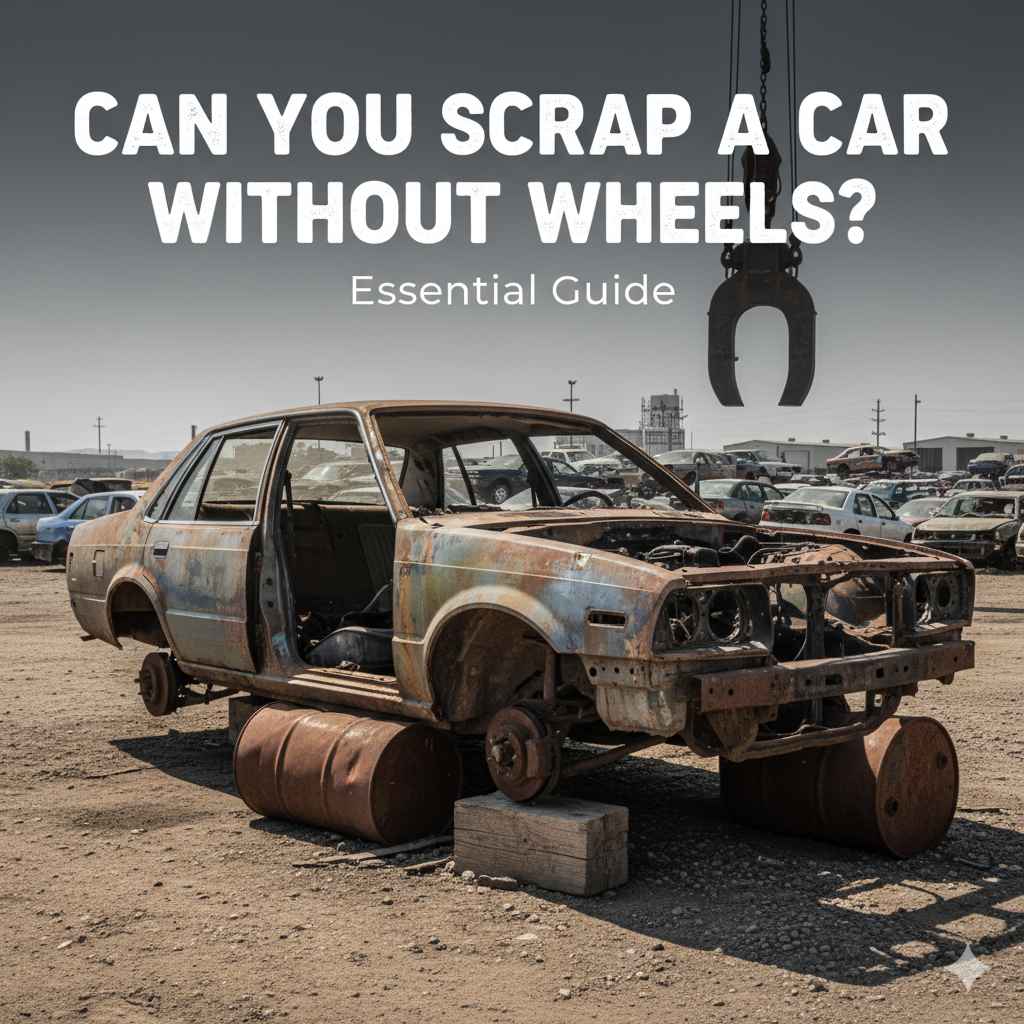
Can You Scrap A Car Without Wheels? Essential Guide
Yes, you can absolutely scrap a car without wheels. The absence of wheels doesn’t prevent a scrap yard from accepting your vehicle. They can easily remove or replace them to move the car. What matters most to them is the car’s overall weight, especially the metal content, and its fluids.
Having a car that’s seen better days and is ready for scrap can be a relief, but what happens when it’s missing a crucial part like its wheels? It’s a common question that pops up, and it can feel like another hurdle in an already frustrating process. You might worry that a car without wheels is unusable for scrap. But don’t let that thought stop you from getting rid of your old vehicle! The good news is, scrap yards are equipped to handle this.
They understand that cars come in all conditions. This guide will walk you through exactly what happens when you try to scrap a car without its wheels, what you need to know, and how to make the process smooth. We’ll break down everything you need to feel confident about this.
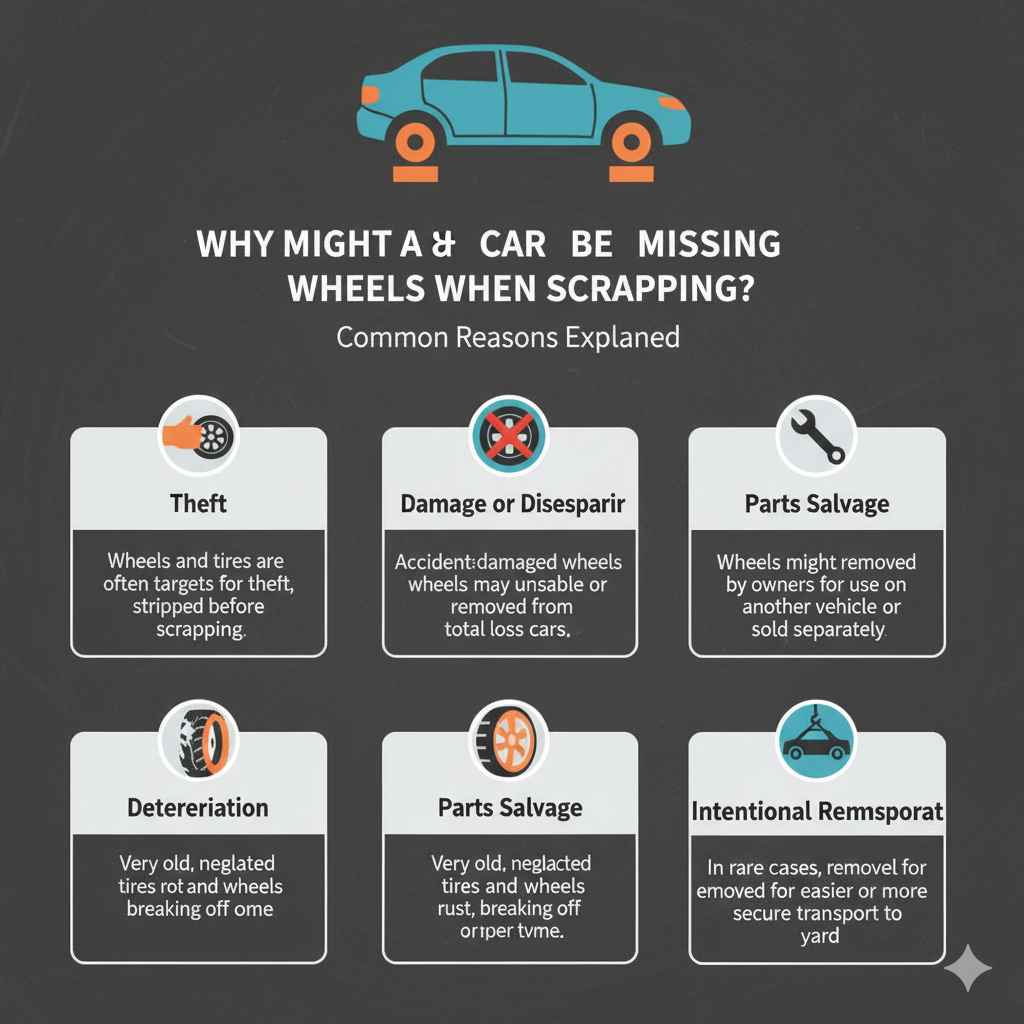
Why Might a Car Be Missing Wheels When Scrapping?
It’s not uncommon for a car to end up at a scrapyard without its wheels. Life happens, and vehicles can reach the end of their road in various states. Understanding these situations can shed light on why this scenario is more normal than you might think.
- Theft: Sadly, wheels and tires are often targets for theft. In some cases, a car might be stripped of these valuable parts before it’s even considered for scrapping, or while it’s sitting on a property.
- Damage or Disrepair: A severe accident can damage wheels to the point where they are unusable or removed for safety reasons. If the car is already deemed a total loss, the wheels might not be repaired or replaced before it heads to the scrap yard.
- Parts Salvage: Sometimes, the wheels might have been removed by the owner or a previous party for use on another vehicle or sold separately before the car was ready to be scrapped.
- Deterioration: In very old or neglected vehicles, tires can rot and wheels can rust to the point where they are no longer functional. They might crumble or break off over time.
- Intentional Removal for Transport: In rare cases, a car might have its wheels intentionally removed for easier or more secure transport to the scrap yard, perhaps if it’s being moved a very long distance or in an unusual way.
How Scrapyards Handle Cars Without Wheels
Scrap yards are specialists in dismantling and recycling vehicles, and missing wheels are not a problem for them. Their primary interest is the salvageable materials within the car, especially metals, and the overall weight. They have processes in place to manage vehicles in various states of completeness.
When a car arrives without wheels, the scrapyard will typically:
- Use Specialized Equipment: Most scrapyards have equipment like forklifts, cranes, or tow trucks with dollies designed to lift and move vehicles regardless of whether they have wheels. They can easily place the car onto lifts or trucks for transport within their facility.
- Add Temporary Wheels or Blockage: For ease of movement within their yard, they might place blocks under the car’s chassis and suspension points, or in some cases, attach temporary “skid” wheels or dollies.
- Focus on Metal Content: The value of your scrap car is largely determined by its weight and the types of metals it contains (steel, aluminum, copper, etc.). The presence or absence of wheels doesn’t significantly alter the scrap value of the car’s body and frame, which are the most substantial metal components.
- Remove Fluids: Before processing, scrapyards are required to drain all hazardous fluids like oil, gasoline, coolant, and brake fluid. This is a standard procedure regardless of the car’s condition. You can learn more about the environmental regulations surrounding scrap vehicle disposal from the Environmental Protection Agency (EPA).
So, rest assured, a car without wheels is still a perfectly acceptable candidate for scrapping. The scrapyard has seen it all and has the means to handle it.
What You Need to Know Before Scrapping a Car Without Wheels
While a scrapyard will accept your wheel-less car, there are a few points to consider to ensure the process is as smooth and beneficial for you as possible. Preparation and knowing what to expect can make a big difference.
1. Checking Local Regulations and Scrapyard Policies
Before you call a scrapyard, it’s a good idea to do a little homework. Regulations can vary by location, and individual scrapyards may have specific policies.
- Licensing: Ensure the scrapyard is licensed and operates legally in your area. This protects you from potential issues and ensures responsible disposal.
- Accepted Conditions: While most accept cars without wheels, it never hurts to confirm their policy. A quick phone call can save misunderstandings later.
- Documentation: You will almost always need to provide proof of ownership (like a vehicle title) and a valid ID. Ensure these are in order.
2. Estimating Your Car’s Scrap Value
The value of your scrap car is mainly based on its weight and metal content. The absence of wheels might slightly reduce the overall weight, but the primary value comes from the car’s chassis, body panels, engine block, and other metal components. If the wheels were stolen, you naturally won’t get value for them. If they were removed for salvage, that’s also separate.
Factors influencing scrap value include:
- Vehicle Age and Model: Newer cars might have more aluminum or other lighter, higher-value metals.
- Metal Prices: The going rate for scrap metal fluctuates based on market demand.
- Vehicle Weight: Heavier cars generally mean more metal and thus higher scrap value.
- Fluids Drained: Scrapyards often deduct a fee if fluids haven’t been drained (though for a car missing wheels, it’s likely all fluids would have been drained or leaked out already).
You can often get an instant quote over the phone or online by providing your car’s make, model, year, and its condition (mentioning the missing wheels).
Table: Factors Affecting Scrap Car Value
- Car Make, Model, Year
ModerateInfluences metal types and potential resale of some parts.
- Scrap Metal Market Prices
HighPrices fluctuate daily.
- Presence of Catalytic Converter
HighContains precious metals; often removed and valued separately.
- Hazardous Fluids Drained
Moderate (as a deduction if not done)Scrapyards must dispose of these safely.
- Missing Parts (e.g., Wheels)
Low to ModerateReduces overall weight, minimal impact on core metal value unless other valuable parts are gone.
| Factor | Impact on Value | Notes |
|---|---|---|
| Vehicle Weight | High | More metal equals more value. |
3. Preparing Your Car for Pickup
Even without wheels, there are some steps you can take to make the pickup process easier for the scrapyard and ensure you get your payment without a hitch.
- Documentation: Gather your vehicle title and a valid photo ID. Having the title is crucial for proving you own the car. If you’ve lost it, you may need to apply for a duplicate from your local Department of Motor Vehicles (DMV). DMV.org can be a helpful resource for finding your state’s specific DMV information.
- Remove Personal Belongings: Thoroughly check the car for any personal items. You don’t want to accidentally scrap sentimental items or important documents.
- Clean Up Excess Debris: While not strictly necessary for scrapping, removing any loose trash or debris from the interior can make the process cleaner for everyone.
- Inform the Scrapyard: Clearly state that the car is missing its wheels when you arrange for pickup. This helps them send the right equipment and prepares them for the vehicle’s condition.
Step-by-Step Guide: Scrapping Your Car Without Wheels
Ready to get that wheel-less car off your hands? Follow these simple steps. We’ll make it easy!
Step 1: Gather Necessary Information and Documentation
Before contacting any scrapyards, get your ducks in a row. You’ll need:
- Vehicle Title: This is the most important document. Make sure it’s in your name and free of any leans. If you don’t have it, contact your local DMV or equivalent to find out how to get a duplicate.
- Photo ID: A driver’s license or other government-issued ID will be needed to verify your identity.
- Vehicle Details: Know your car’s make, model, and year. The Vehicle Identification Number (VIN) is also useful. You can usually find the VIN on the dashboard or the driver’s side doorjamb.
Step 2: Research and Contact Local Scrapyards
Do a quick search for “car scrap yards near me” or “cash for cars.” Look for companies with good reviews and a reputation for fair pricing and reliable service.
-
- Call Ahead: Contact a few different scrapyards.
- Describe the Car: Be upfront about the car missing its wheels. This helps them give you an accurate quote and prepare for pickup.
- Ask Questions: Inquire about their pricing structure, how they determine value, whether they offer free pickup, and what documentation they require.
- Get Quotes: Compare the offers you receive. Don’t just go for the first one; a little comparison shopping can save or earn you more money.
Step 3: Schedule a Pickup
Once you’ve chosen a scrapyard, schedule a pickup time that works for you. Confirm the date, time, and exact location of pickup.
-
-
- Confirm Requirements: Reconfirm the driver will have the necessary equipment to load a car without wheels.
- Be Present: It’s usually best to be present during the pickup to ensure everything goes smoothly, sign any paperwork, and receive your payment.
-
Step 4: The Pickup Process
When the scrapyard’s tow truck arrives:
-
-
- Verify the Company: Ensure the truck and driver represent the company you arranged pickup with.
- Sign Paperwork: You’ll likely need to sign a bill of sale or a transfer of ownership document. This officially transfers the car to the scrapyard.
- Receive Payment: You will typically receive payment on the spot, usually in cash or via check. Make sure the amount matches the agreed-upon quote.
- Hand Over Keys and Title: Give the driver the car keys and your vehicle title.
-
Step 5: Finalize Paperwork with the DMV
After the car is picked up and you’ve been paid, it’s important to notify your local DMV that you have sold or scrapped the vehicle. This helps you avoid any future liability for parking tickets, tolls, or insurance issues related to that car.
-
-
- Check Your State’s Procedures: Each state has a slightly different process. Some may require you to officially surrender the license plates, while others might just need a notification form. The National Highway Traffic Safety Administration (NHTSA) provides a helpful list of state DMV contacts.
- Cancel Insurance: Once you’ve officially transferred ownership, contact your insurance company to cancel the policy on the scrapped vehicle.
-
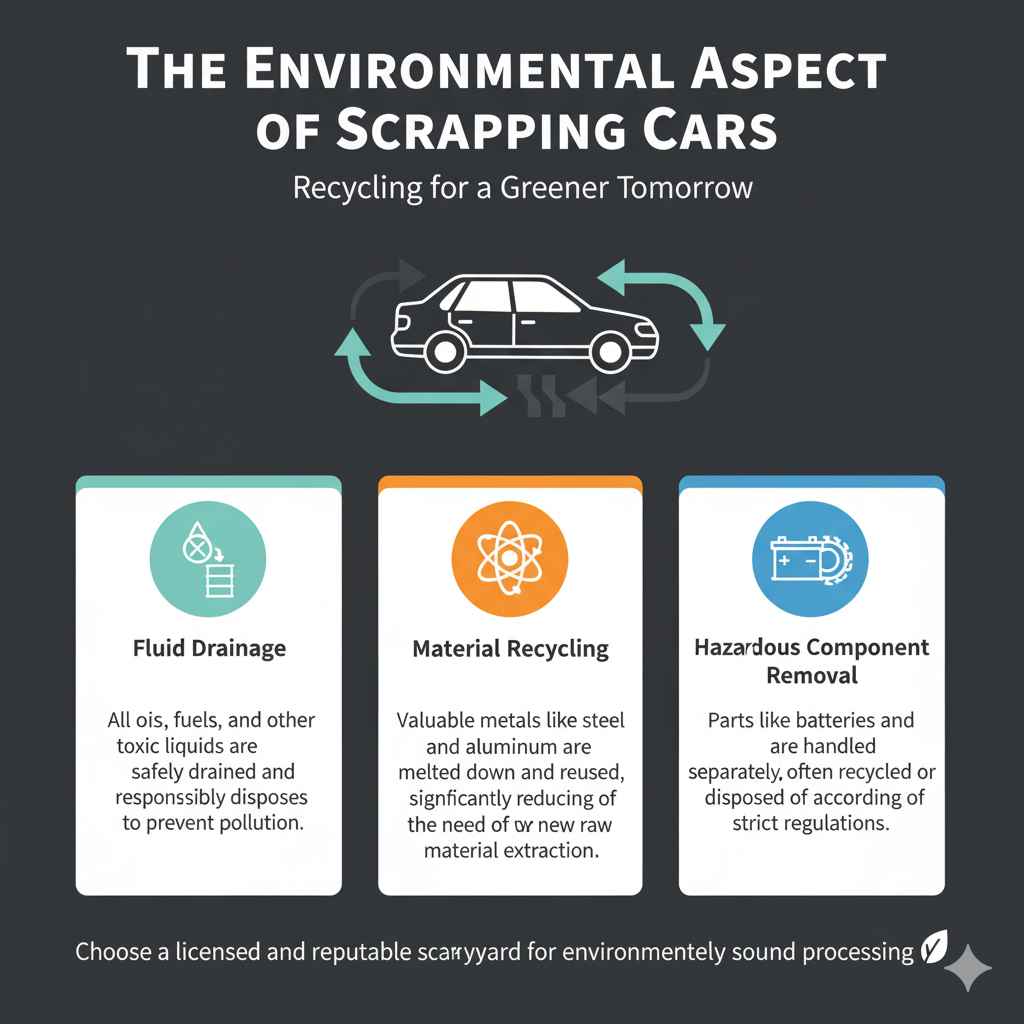
The Environmental Aspect of Scrapping Cars
Scrapping a car contributes positively to the environment by recycling valuable metals and preventing the vehicle from becoming a pollutant. Scrapyards are regulated to ensure they properly dispose of hazardous materials.
Key environmental considerations include:
-
-
- Fluid Drainage: All oils, fuels, and other toxic liquids must be drained and disposed of responsibly.
- Material Recycling: Metals like steel and aluminum are melted down and reused, significantly reducing the need for new raw material extraction.
- Hazardous Component Removal: Parts like batteries and tires are handled separately and often recycled or disposed of according to specific regulations.
-
Choosing a licensed and reputable scrapyard ensures that your old vehicle is processed in an environmentally sound manner.
Frequently Asked Questions (FAQ)
What is the scrap value of a car without wheels?
The value is determined primarily by the car’s weight and metal content, not necessarily the presence of wheels. While missing wheels reduce the overall weight slightly, the core value comes from the chassis and body. The exact value depends on current scrap metal prices.
Will a scrapyard pick up a car that can’t roll?
Yes, absolutely. Scrapyards are equipped with specialized lifting equipment like forklifts and cranes to move cars that cannot roll. This is a standard part of their operation.
Do I need the title to scrap a car without wheels?
Yes, in most cases, you will need the vehicle’s title to prove ownership and complete the sale to the scrapyard. Regulations may vary slightly by state or locality, but a title is typically required.
Can I sell the wheels separately before scrapping?
Yes, if the wheels are in good condition, you can often sell them separately to a tire shop, an auto parts store, or online to a private buyer before you scrap the car. This can provide you with some extra cash before the vehicle is taken away.
How do I find a reputable scrapyard?
Look for scrapyards that are licensed and insured in your area. Check online reviews, ask for recommendations from friends or mechanics, and ensure they clearly state their policies regarding payment and pickup, especially for vehicles missing parts.
Are there extra fees for a car without wheels?
Generally, there are no specific “extra” fees for a car missing wheels. The scrapyard will factor the reduced weight into their offer. However, be aware of potential deductions if hazardous fluids haven’t been properly drained, though in a wheel-less car, these are often already gone.
Can I remove parts before scrapping beyond the wheels?
Yes, you can remove parts before scrapping. Some people remove the catalytic converter for its precious metals, batteries, or even the engine if they plan to sell those components separately. Just be honest with the scrapyard about what has been removed, as this will affect their valuation of the car.
Conclusion
Navigating the process of scrapping a car can seem daunting, especially when your vehicle isn’t in perfect condition. However, as we’ve explored, having a car without wheels is not a barrier to getting it recycled. Scrapyards are fully equipped to handle such vehicles, utilizing specialized equipment to move them safely and efficiently. Your main focus should be on providing the necessary documentation, like your vehicle title, and ensuring you’re working with a reputable scrapyard that offers a fair price based on the car’s metal content and weight.
By following the straightforward steps outlined in this guide—from gathering your papers to scheduling pickup and notifying the DMV—you can confidently turn your old, wheel-less car into cash while contributing to responsible recycling. Don’t let missing parts deter you; your old vehicle still has value, and getting it scrapped is a practical and environmentally sound decision. You’ve got this!