Best Paint for RC Car Bodies: 4 Picks Compared
For Lexan shells, the safest paint choice is a purpose-made polycarbonate formula such as Tamiya PS, while ABS and styrene hard bodies can often take hobby acrylic or enamel better. Pick shell material first, then decide on masking needs and how hard the body must survive wear. The wrong formula usually leads to peeling, cracking, bleed, or cure problems that waste a shell.
Paint comparison table


| Paint | Shell type | Application method | Finish style | Beginner-friendliness | Likely failure modes |
|---|---|---|---|---|---|
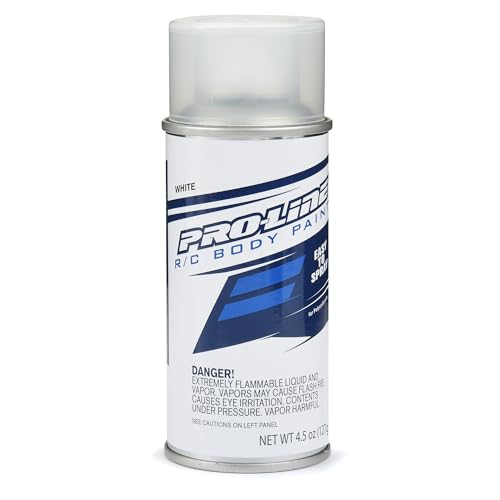
| Pro-Line RC Body Spray Paint | Clear Lexan / polycarbonate | Ready-to-spray can | Solid color, candy, metallic, fluorescent, backer coats | High for fast coverage | Overspray on tight graphics, heavy coats that soften detail, poor results if used on hard bodies without checking adhesion |
| Vallejo Premium RC Color | Lexan detail work, layered graphics, some hard-body detail jobs | Airbrush, 60ml bottle | Fine shading, fades, controlled color layers | Medium; easy to control, but brush setup matters | Tip-dry, thin coverage if over-reduced, edge lift if masking is rushed |
| Tamiya PS paint | Clear polycarbonate / Lexan | Spray can; some workflows also pair with airbrush-compatible steps | RC-style opaque color coats | High for standard shell jobs | Cracking on flex if the shell is overcoated incorrectly, bleed under poor masking, heavy-build texture if sprayed too close |
| Testors Pactra RC paint | Clear polycarbonate shells | Traditional RC spray workflow | Standard color coats and simple graphics | Medium | Thick coat lines, adhesion issues if the shell is not cleaned well, weaker control for fine fades than an airbrush system |
That table should guide the first choice. Lexan and polycarbonate flex under impact, so paint has to move with the shell. ABS and styrene are stiffer, which means they can often accept regular hobby paint more easily than a polycarbonate body, though prep still matters.
Which paint fits your shell?
Pick the paint by shell material first. A clear Lexan body needs paint made for polycarbonate, while ABS and styrene hard bodies can often use regular hobby paint more successfully because they do not flex the same way under crashes and body twist.
Clear Lexan basher shells
For a basher shell, Pro-Line RC Body Spray Paint is the cleanest fit if you want fast coverage and high flexibility. Pro-Line describes the paint as “Specially Formulated for R/C Bodies” and “Extremely Durable and Ultra-Flexible.” That matters when the body keeps flexing after hard landings.
Say your 1/10-scale monster truck shell needs a solid black and silver scheme with one afternoon of work. A spray-can RC formula is the lower-risk path because it covers quickly, backs color easily, and avoids the setup overhead of a detailed airbrush session.
Detailed airbrushed shells
Vallejo Premium RC Color fits the painter who wants fades, panel accents, or layered graphics. It comes in a 60ml plastic bottle and is water based and nontoxic, which suits controlled airbrush work where thin coats matter more than heavy coverage. Expect better control, not faster coverage.
For fine work, a 0.3–0.5 mm nozzle is commonly used as a practical range. Pro-Line’s ready-to-spray setup uses a 0.5mm tip @ 30psi, which shows how even spray workflows depend on controlled atomization. If the nozzle is too large or the coat is too wet, fine lines blur fast.
Quick backer coats
Backer coats are where spray cans earn their keep. On transparent Lexan, a black, white, or silver backing layer can make translucent colors pop and can protect the color from abrasion. Pro-Line’s black can is aimed at RC bodies and uses a wide grip nozzle, which makes it suitable for broad backing passes.
Skip the backing coat, and transparent colors can look weak or washed out. On a candy orange shell, the color may read correctly against white but go dull against a clear interior. The backing color is part of the finish, not an optional extra.
Hard-body projects
ABS and styrene hard bodies change the equation. They are less flexible than polycarbonate, so regular hobby acrylic or enamel can work better than Lexan-specific paint. Tamiya PS, Testors Pactra RC paint, and Duratrax RC body paint remain established RC-specific options, but a hard body does not require a polycarbonate-only formula by default.
Common first-timer mistake: treating an ABS crawler body like a clear touring-car shell. That usually leads to overbuying flexible RC paint when a standard model paint would have been the cleaner fit for the surface and the lower-risk choice for detail work.
Pro-Line RC body spray paint vs the rest
Pro-Line is the fastest route for a clear shell that needs strong color and impact tolerance. It is built for R/C bodies, so the formula suits Lexan flex better than regular spray paint. The trade-off is control: spray cans are efficient, but they are less precise than an airbrush for fades, panel fades, and tiny graphics.
Where it wins is simple. You open the can, lay down thin passes, and build coverage without mixing paint or thinning ratios. Where it loses is detail density. If the shell carries sharp multi-color lines, a can can still work, but masking has to be cleaner and the edges are less forgiving.
Pro-Line’s color range also matters for body builders who want a finished look without mixing. White, black, green, fluorescent orange, candy, and metallic variants cover the common RC body jobs. That makes it especially practical when the shell needs a fast exterior color plus a separate backing layer.
Where ready-to-spray cans beat mix-and-thin systems
Spray cans win when the shell is large, the design is simple, and the goal is durable coverage. They are also easier for beginners because the paint is already matched to the spray format. That reduces the risk of over-thinning, poor atomization, and inconsistent coverage from pass to pass.
The weak point is waste. Cans are less economical for many tiny graphics, because you still pay for full-can capacity even if you only need one or two color layers. Airbrush bottles can be more efficient for small shells or complex fades.
Airbrush paints for detail work
Vallejo Premium RC Color is the better fit when the shell needs control more than speed. It suits panel shading, fine color breaks, and detailed graphics where thin layers matter. Tamiya PS paint stays important here as a recognized RC-specific spray-paint option for polycarbonate shells, especially when a body painter wants a proven clear-shell workflow.
Vallejo Premium RC Color for fine control
Vallejo’s RC Color line is water based, nontoxic, and sold in a 60ml bottle. That packaging suits color-by-color planning, which is useful when the design uses multiple small areas rather than broad body panels. It also gives you more control over cost per layer than opening a full spray can for one narrow fade.
Fine detail is where airbrush paint earns its keep. Thin coats help avoid pooling at panel edges, and the brush can place color where a can would overshoot. The downside is tip-dry risk, especially if the session runs dry or the paint is pushed through too fast.
Tamiya PS paint for polycarbonate shells
Tamiya PS paint belongs in the RC-specific spray category and is a common choice for polycarbonate bodies. It fits the same shell class as Lexan, so it belongs in the conversation whenever the body flexes and the finish has to survive impact. It is also noted as usable as a base coat on some RC jobs.
Use it when you want a known RC workflow and do not need the extra precision of an airbrush. For many builders, that means solid-color shells, underbody backing, and straightforward race bodies rather than complicated artwork.
Thin-coat habits, nozzle size, and tip-dry risk
With airbrush paint, thin coats matter most. A 0.3–0.5 mm nozzle gives useful control for fades and graphics, while a 0.5 mm tip at 30 psi is a common spray setup reference point for ready-to-spray RC paint. Heavy coats raise the risk of runs, edge bleed, and a rough finish.
Suppose a shell needs a red-to-black fade along the rear quarter. An airbrush can place that gradient cleanly, but only if the painter keeps the layers light and lets each pass settle before adding the next. A wet coat can swamp the fade and force a repaint.
How do these paints fail?
Each paint system fails in a different way. On Lexan, the main risks are bleed under masks, cracking when the shell flexes, and poor adhesion if the formula is not meant for polycarbonate. On airbrush jobs, tip-dry and chalking can appear if the paint is pushed too dry or layered too fast.
Bleed under masks
Bleed happens when paint creeps under the mask edge. That risk rises with thin paint, poor tape contact, or a wet spray angle that drives pigment under the line. Low-tack masking tape is the starting point for most RC shell work because it pulls cleanly without fighting the film underneath.
For tighter details, thin vinyl masking tape, liquid mask, and frisket film all have a place. Use liquid mask for organic shapes and curved panels. Use thin vinyl tape for narrow body lines. Use frisket film when you need a broader cuttable mask with sharp edges.
Cracking on flexed shells
Cracking is the warning sign that the paint film is too rigid for the body. That is why regular spray paint usually does not adhere well to Lexan, and why polycarbonate-specific formulas matter so much. A body that flexes in a crash needs paint that bends with it.
Chalking, tip-dry, and poor adhesion
Chalking can show up when a coat dries rough, powdery, or uneven. Tip-dry is more common on airbrush jobs and can interrupt a smooth line if the nozzle starts to clog. Poor adhesion usually traces back to bad prep, incompatible paint, or both.
The prep sequence is simple and should not be skipped: wash the shell with warm soap and water, wipe with a lint-free cloth, scuff Lexan with a Scotch-Brite pad when the surface calls for it, and clean cut lines with a #11 blade after masking. Skipping any of those steps raises the failure risk.
Decision matrix
| Use case | Best pick | Why it fits | Main risk to watch |
|---|---|---|---|
| Clear Lexan basher shell | Pro-Line RC Body Spray Paint | Flexible, fast, and made for R/C bodies | Heavy coats that reduce flexibility |
| Detailed airbrushed shell | Vallejo Premium RC Color | Water-based control for fades and graphics | Tip-dry and over-thinning |
| Quick backer coat | Tamiya PS paint | Established RC-specific spray path for polycarbonate | Bleed if masking is weak |
| Hard-body project | Testors Pactra RC paint | Traditional RC option for clear shells and a workable bridge to hobby-body painting | Using RC-body habits on a stiff body without checking adhesion |
Choose Pro-Line if… / Choose Vallejo if…
Choose Pro-Line if you are painting a clear Lexan shell, want a fast spray-can workflow, need strong flexibility, or need solid-color coverage with a backing layer. It is the safer fit for bashers and for builders who want fewer setup steps.
Choose Vallejo if you want fine airbrush control, layered graphics, or a smaller color job where cost per layer matters. It suits detail painters better than casual shell coverage, and it gives more control where sharp fades or graphic edges matter.
Tamiya PS sits in the middle for established RC spray work on polycarbonate. Testors Pactra RC paint is another traditional option, and Duratrax RC body paint remains part of the RC-specific category for polycarbonate shells. Those names matter because they signal the right surface target, not because every project needs the same can.
What should you avoid before buying RC body paint?
Avoid buying by brand name alone. The shell material matters more than the logo on the can. Also avoid assuming every “model paint” works on Lexan. If the bottle or can does not state compatibility with polycarbonate or RC bodies, treat it as a risky choice for a flexing shell.
Do not ignore application method. Spray cans fit big, simple coverage. Airbrush paint fits detail and controlled layering. And do not skip the backing plan, because transparent Lexan needs a backing color to protect the finish and make translucent colors read correctly.
Frequently asked questions
What is the best paint for RC car bodies?
For Lexan and other polycarbonate shells, a purpose-made RC paint is the right starting point. Tamiya PS and Pro-Line RC Body Spray Paint are strong matches for clear shells, while Vallejo Premium RC Color is better when the job needs airbrush control. Hard bodies can often use different hobby paints.
Can I use regular spray paint on an RC car body?
Usually not on Lexan. Regular spray paint does not adhere well to polycarbonate bodies and can crack or peel when the shell flexes. For ABS or styrene hard bodies, regular hobby paint can work better, but the surface still needs proper cleaning and masking before you spray.
What paint works best on Lexan RC bodies?
Paint made for polycarbonate works best on Lexan. Pro-Line RC Body Spray Paint and Tamiya PS are built for that shell type, and both fit the flex that RC bodies see in use. Vallejo Premium RC Color is useful when the design needs airbrush detail rather than broad spray coverage.
Is acrylic or enamel better for RC car bodies?
For Lexan, neither is automatically better unless the product is made for polycarbonate. For ABS and styrene hard bodies, acrylic or enamel can both work, depending on the finish and application style you want. Acrylic usually suits detail work better, while enamel often favors slower, tougher-looking coats.
Do I need to mask an RC body before painting?
Yes. Masking is essential for clean lines, window cutouts, and layered colors. Low-tack masking tape is the baseline choice, while liquid mask, thin vinyl masking tape, and frisket film help with tighter shapes. Without masking, color bleed and uneven edges become much more likely.
How do I prep a polycarbonate RC body for paint?
Wash the shell with warm soap and water, then dry it with a lint-free cloth. If the job needs surface bite, use a Scotch-Brite pad on the Lexan. Trim and refine edges with a #11 blade, then mask carefully before applying thin coats. That prep sequence lowers adhesion risk.
What paint should I use for ABS or styrene hard bodies?
ABS and styrene hard bodies often accept regular hobby acrylic or enamel better than Lexan-specific paint because they do not flex the same way. If the body will still see rough use, check adhesion on a hidden spot first. For detail work, airbrush paint can still be the cleaner choice.
Products related to this article
Sponsored / affiliate links. As an Amazon Associate I earn from qualifying purchases. I may earn additional commission from eligible campaigns.