Can You Use AAA On Any Car? Essential Guide
Yes, AAA roadside assistance generally covers most vehicles you own, including cars, motorcycles, RVs, and even ATVs, as long as your membership is active and the vehicle is registered in your name or driven by you. It’s designed to be versatile, helping you get back on the road no matter what you drive.
Your Car, Covered: Can You Use AAA on Any Car?
Ever been stuck on the side of the road, wondering if that little blue umbrella symbol could come to your rescue? It’s a common worry for car owners, especially beginners. You might have heard that AAA is super helpful, but a big question looms: can you use AAA on any car? This is a really important question because knowing your roadside assistance coverage can save you a lot of stress, time, and money when the unexpected happens. Maybe you just bought a new-to-you car, you’re borrowing a friend’s vehicle, or you’re simply curious about how far your membership stretches.
Many people think their AAA membership is tied strictly to one specific vehicle, making them anxious about coverage for other cars they might drive. But the good news is, AAA is designed to be flexible and offer broad protection. We’re going to break down exactly who and what your AAA membership can cover, explaining everything in simple terms so you can drive with confidence. We’ll explore what makes a vehicle eligible, how your membership works, and what to do if you’re ever in a roadside bind. Stick around, and we’ll ensure you’re fully informed about your AAA coverage!
Understanding Your AAA Membership: It’s More Than Just a Car
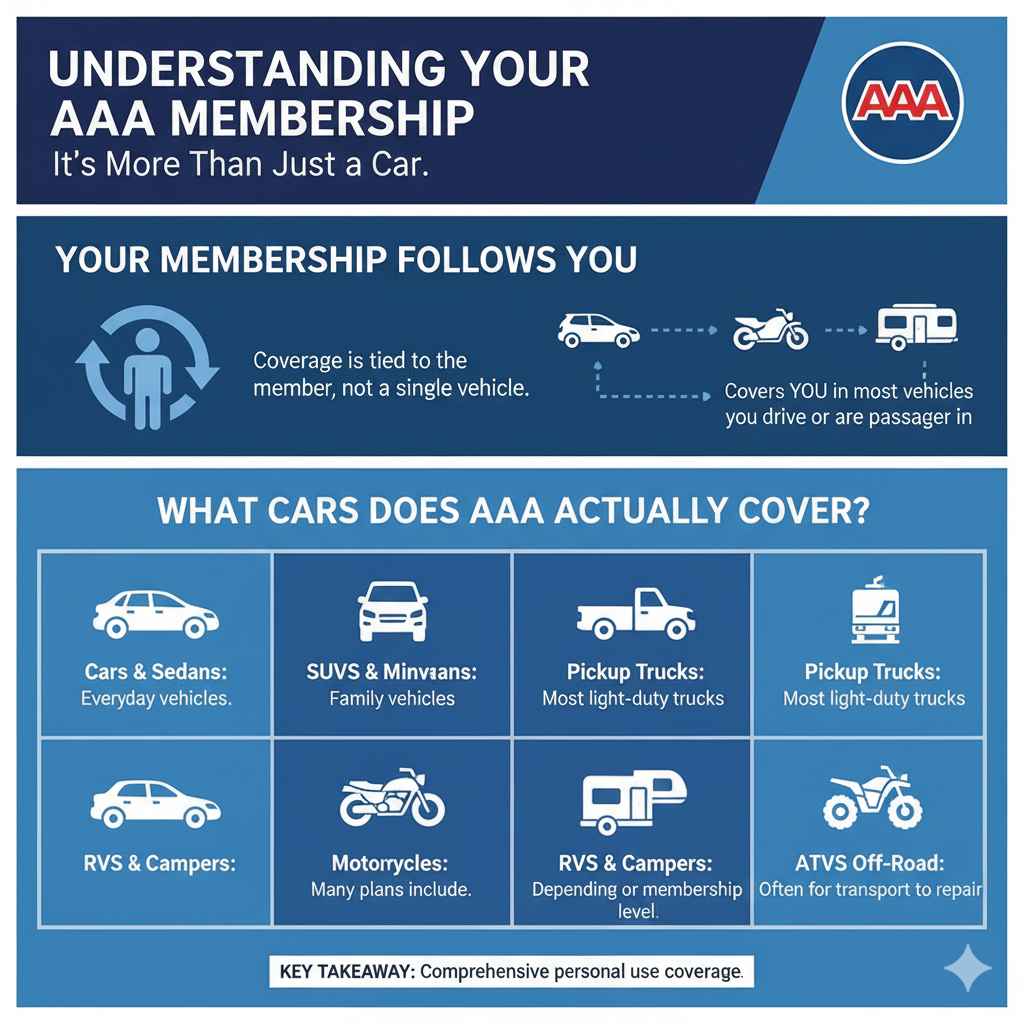
At its heart, an AAA membership is about providing you with peace of mind on the road, no matter what challenges you face. It’s not tied to a single VIN (Vehicle Identification Number) in the way insurance might be. Instead, your membership is typically associated with you, the member, and the household defined in your membership. This means your coverage generally follows you, not just your primary vehicle.
This broad approach is one of AAA’s biggest benefits. It acknowledges that most people don’t just drive one car. You might have a daily commuter, a weekend project car, a family SUV, or even a motorcycle. Your AAA membership is designed to assist you in a wide variety of situations across many different types of vehicles.
So, What Cars Does AAA Actually Cover?
Generally speaking, AAA roadside assistance covers most vehicles that you own, drive, or are a passenger in, provided they are legally registered and in safe operating condition. This typically includes:
Cars and Sedans: Your everyday car, whether it’s new or used, is almost always covered.
SUVs and Minivans: Family vehicles are a staple of AAA coverage.
Pickup Trucks: Most light-duty pickup trucks are included.
Motorcycles: Many AAA plans extend coverage to motorcycles, which is a huge plus for riders.
Recreational Vehicles (RVs): Depending on the level of your AAA membership, coverage can extend to RVs, campers, and even sometimes trailers. This is particularly valuable for those who enjoy road trips and adventuring.
ATVs and Off-Road Vehicles: In some cases, AAA may provide towing for ATVs and other recreational off-road vehicles, especially if they are being transported to or from a repair facility.
Vans and Commercial Vehicles (with limitations): While AAA is primarily for personal use, certain light commercial vans owned by a member for personal or light business use may be covered. However, heavily utilized commercial vehicles or those with specialized equipment often have different coverage needs best met by commercial fleet services.
The key takeaway is that AAA’s coverage is designed to be comprehensive for personal use. It’s about ensuring you have help when you need it, regardless of the specific vehicle you’re in.
When Does AAA Coverage Apply?
Your AAA membership acts as a safety net in several common roadside scenarios. Here are the typical situations where you can expect assistance:
Towing: If your car breaks down and can’t be safely driven, AAA can tow it to a nearby AAA-approved repair facility or your preferred mechanic within a certain mileage limit. The distance covered depends on your membership level.
Battery Jump-Starts: Dead battery? No problem. AAA can provide a jump-start to get your engine running again.
Tire Changes: Got a flat? AAA can come out and swap your flat tire with your spare. You’ll need to have a usable spare tire and the tools (like a lug wrench and jack) on hand.
Fuel Delivery: Ran out of gas? AAA can deliver a small amount of fuel to get you to the nearest gas station. You’ll typically pay for the cost of the fuel itself, but the delivery service is covered.
Lockout Services: Locked your keys in your car? AAA can help you get back into your vehicle.
Mechanical First Aid: For minor issues that can be fixed on the spot with basic tools and supplies, AAA technicians may be able to get you going again.
It’s important to remember that AAA roadside assistance is designed for emergencies and temporary fixes to get you to a safe location or a repair shop. It’s not a substitute for regular vehicle maintenance or major repairs.
How Your Membership Works: It’s All About You (and Your Household)
Think of your AAA membership card like a ticket that grants you access to roadside services. When you call for assistance, you’ll typically need to provide:
Your Membership Number: This identifies you as an active member.
Your Location: Be precise so they can find you.
The Vehicle Type: They need to know what to expect (car, truck, motorcycle, etc.).
The Problem: Briefly describe what’s happening.
Crucially, AAA’s service often extends to any vehicle you are driving, even if it’s not registered in your name. This is fantastic for situations like:
Borrowing a Friend’s Car: If you’re driving a pal’s vehicle and it breaks down, your AAA membership can still be used.
Rental Cars: Many AAA plans cover rental cars, offering valuable protection while you’re on the road in a temporary vehicle. It’s always a good idea to check your specific AAA plan details and your rental car agreement to understand the nuances.
Family Members: If you have a household membership, other members living at your address can often use the service in their vehicles as well.
What About Commercial or Specialty Vehicles?
While AAA is exceptionally versatile for personal vehicles, there are some limitations, particularly with commercial or heavily modified vehicles:
Commercial Vehicles: Vehicles primarily used for business purposes, like delivery vans, service trucks, or fleet vehicles, are usually excluded from standard personal AAA plans. These require commercial roadside assistance programs.
Heavily Modified Vehicles: Cars with significant modifications (e.g., extremely low-profile vehicles, lifted trucks with large tires) might exceed the standard towing or service capabilities.
Vehicles Weighing Over a Certain Limit: While most personal vehicles fall within the weight limits, very heavy trucks or specialized equipment might require a different service.
Vehicles Used for Towing or Hauling: If your vehicle is actively towing another vehicle or trailer at the time of breakdown,AAA might not be able to assist with towing both.
It’s always best to confirm with AAA directly if you have a vehicle that falls into these categories or if you’re unsure about your specific coverage. You can usually find this information on the AAA website for your region or by calling their customer service.
Essential Tools for Roadside Assistance Success
While AAA brings the expertise, there are a few tools and items you should keep in your car to make roadside assistance as smooth as possible. These are not just for AAA; they’re good practice for any driver who wants to be prepared.
Your AAA Membership Card: Obvious, but essential! Keep it with your driver’s license.
Phone Charger/Power Bank: A dead phone means you can’t call for help or let loved ones know your situation.
Vehicle Owner’s Manual: This can help you identify warning lights or understand basic functions, which is useful information to relay to AAA.
Spare Tire: Make sure it’s properly inflated and in good condition.
Jack and Lug Wrench: These are needed for a tire change. Your manual will show you where they are stored and how to use them if needed.
Basic Toolkit: Some basic tools can help with minor issues.
Flares or Reflective Triangles: To make your vehicle visible to other drivers while you wait for assistance, especially at night or in poor visibility. Many safety organizations, like the National Highway Traffic Safety Administration (NHTSA), recommend these for visibility.
First-Aid Kit: Always a good idea to have for any minor injuries away from home.
How to Maximize Your AAA Coverage
To ensure you get the most out of your AAA membership, especially when it comes to different vehicles, here are some tips:
1. Know Your Membership Level
AAA offers different membership tiers (e.g., Classic, Plus, Premier). Generally, higher tiers offer more towing miles, coverage for larger vehicles like RVs, and sometimes additional benefits. Understand what your current plan includes. If you frequently drive or own vehicles like RVs, upgrading might be worthwhile.
2. Understand Towing Limits
Each membership level comes with a maximum towing distance. For example, Classic might cover 5 miles, Plus up to 100 miles, and Premier even more. Know this limit so you can plan – if you need to tow to a shop that’s just outside your limit, you’ll have to pay for the extra distance.
3. Keep Your Contact Information Updated
Ensure AAA has your current phone number and address. This helps them reach you and dispatch help efficiently.
4. Check RV and Motorcycle Coverage Specifically
If you own an RV or motorcycle, double-check that your specific AAA plan offers coverage for these types of vehicles. Sometimes, they are included in higher-tier plans or may require a specific endorsement.
5. Use AAA Approved Auto Repair Shops
While you can usually choose your preferred repair shop, using an AAA Approved Auto Repair facility can sometimes streamline the process and ensure quality work. These shops have met AAA’s standards for service and customer satisfaction.
6. Register Household Members (If Applicable)
If you have a household membership, make sure all eligible family members are recognized under your plan. This ensures they have access to the same roadside benefits when driving their vehicles.
What if You’re Driving a Company Car or a Car Not in Your Name?
This is where things can get a little nuanced, but generally, if you are driving a vehicle and it breaks down, you are the one who needs assistance. Since AAA coverage often follows the member, you can typically call for help. However, there are a few points to consider:
Company Cars: Many company car policies include their own roadside assistance programs. It’s best to use those first, as they are specifically designed for business vehicles and may have different protocols. If your company car doesn’t have its own coverage, your AAA membership might be a backup, but confirm this with your employer and AAA.
Cars Not Registered to You: As long as you are legally operating the vehicle (e.g., borrowing it with permission, driving a rental), AAA will usually provide service. The key is that you are the one experiencing the breakdown and need assistance.
Limitation on Calls per Year: Some AAA plans have a limit on the number of service calls you can make per year. If you use your membership on a borrowed car, it counts towards your yearly total.
AAA vs. Other Roadside Assistance Options
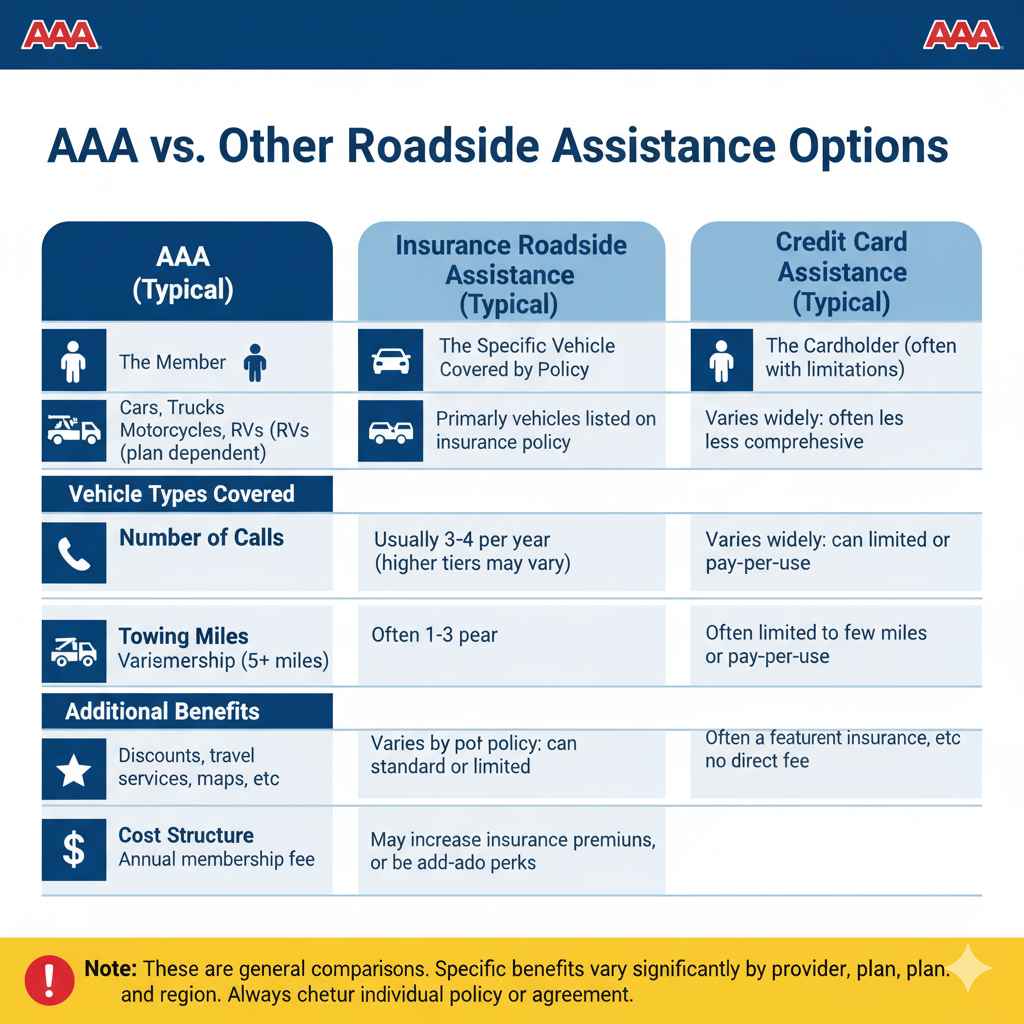
It’s helpful to compare AAA to other roadside assistance providers, whether they are offered by your auto insurance company, a credit card benefit, or a standalone service.
| Feature | AAA (Typical) | Insurance Roadside Assistance (Typical) | Credit Card Roadside Assistance (Typical) |
|---|---|---|---|
| Coverage Follows | The Member | The Specific Vehicle Covered by Policy | The Cardholder (often with limitations) |
| Vehicle Types Covered | Cars, Trucks, Motorcycles, RVs (plan dependent) | Primarily vehicles listed on the insurance policy | Varies widely; often less comprehensive |
| Number of Calls | Usually 3–4 per year (higher tiers may vary) | Often 1–3 per year | Varies; can be limited or pay-per-use |
| Towing Miles | Varies by membership level (5+ miles) | Varies by policy; can be standard or limited | Often limited to a few miles or pay-per-use |
| Additional Benefits | Discounts, travel services, maps, etc. | May include accident forgiveness, rental car perks | Travel accident insurance, etc. |
| Cost Structure | Annual membership fee | May increase insurance premiums or be an add-on cost | Often a feature of the card; no direct fee |
Note: These are general comparisons. Specific benefits vary significantly by provider, plan, and region. Always check your individual policy or agreement.*
Frequently Asked Questions About AAA and Car Coverage
Q1: Is AAA coverage only for the car listed on my membership?
No, AAA roadside assistance generally covers you, the member. This means it can be used on most vehicles you are driving, not just one specific car. Your membership is tied to your name and address, making it flexible for different vehicles you use.
Q2: Can I use AAA if I’m a passenger in a friend’s car that breaks down?
Yes, in most cases, if you are a passenger in a vehicle that breaks down and needs assistance, you can call AAA using your membership. The service is there to help you, the member, get out of a bind.
Q3: Does AAA cover rental cars?
Many AAA plans do offer coverage for rental cars. However, the specifics can vary, and it’s always best to check your particular AAA membership details or contact them directly to confirm. Your rental car agreement might also have its own roadside assistance components.
Q4: What happens if I need a tow that’s further than my membership allows?
If your towing needs exceed the mileage limit of your AAA plan, you will likely have to pay for the additional miles. The service provider will inform you of the extra cost before proceeding with the tow.
Q5: Are RVs and motorcycles covered by AAA?
Coverage for larger vehicles like RVs, campers, and motorcycles varies by AAA plan and membership level. Basic plans might not include them, while higher-tier plans (like AAA Plus or Premier) often extend coverage. Always verify your specific membership benefits.
Q6: Can I use AAA for a car I just bought or a temporary vehicle?
Yes, if you are legally driving the vehicle and it breaks down, you can generally use your AAA membership for assistance. This is part of the flexibility of the membership following the member, not a specific car.
Q7: Is there a limit to how many times I can use AAA roadside assistance per year?
Most standard AAA plans allow for a certain number of service calls per membership year, typically around three or four. Higher membership tiers might offer more calls or fewer restrictions. Exceeding this limit might require a temporary membership upgrade or pay-per-use service.
A Final Word on Confidence and Coverage
Navigating car troubles can be stressful, but understanding your AAA membership is a huge step towards feeling more in control. The core message is that yes, you can use AAA on pretty much any personal vehicle you’re driving. This flexibility is one of the most valuable aspects of their service, offering a broad safety net for everyday drivers and even those with a few extra wheels like motorcycles or a trusty RV.
Remember to keep your membership details handy, know your plan’s limits, and consider keeping a few essential roadside items in your car. By staying informed, you can ensure that when the unexpected happens, you know exactly who to call and understand the comprehensive support that AAA offers. Drive safe, and drive with confidence, knowing you’ve got a reliable partner ready to help you get back on the road!