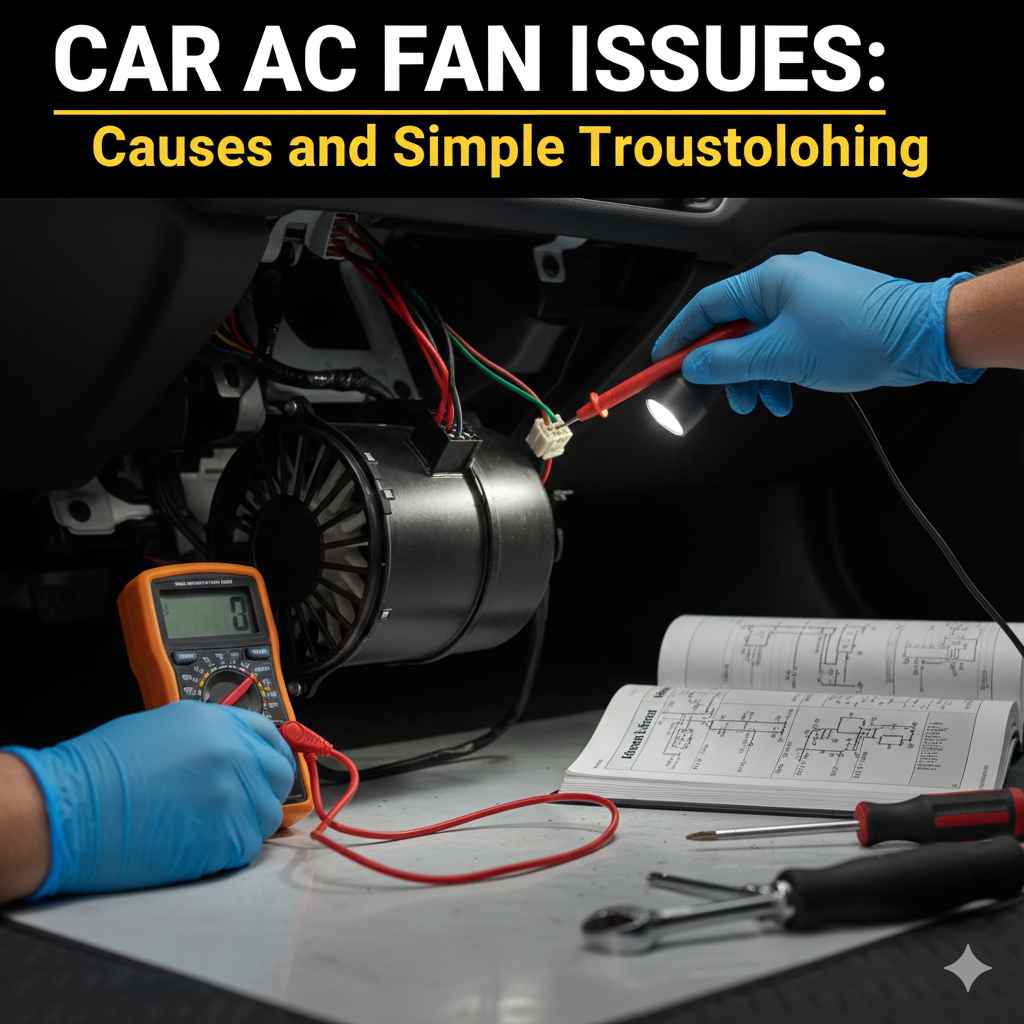
Car AC Fan Issues: Causes and Simple Troubleshooting
Having your car’s air conditioning fan turn on and off repeatedly can be frustrating. It’s a common problem that can be tricky if you’re not a car expert. This can be challenging because several different parts could be causing the issue. Don’t worry, though! We’ll explore the common reasons why your Car AC Fan Turns On and Off Repeatedly: Causes, and show you how to start fixing it. Let’s start and get you some relief from the heat!
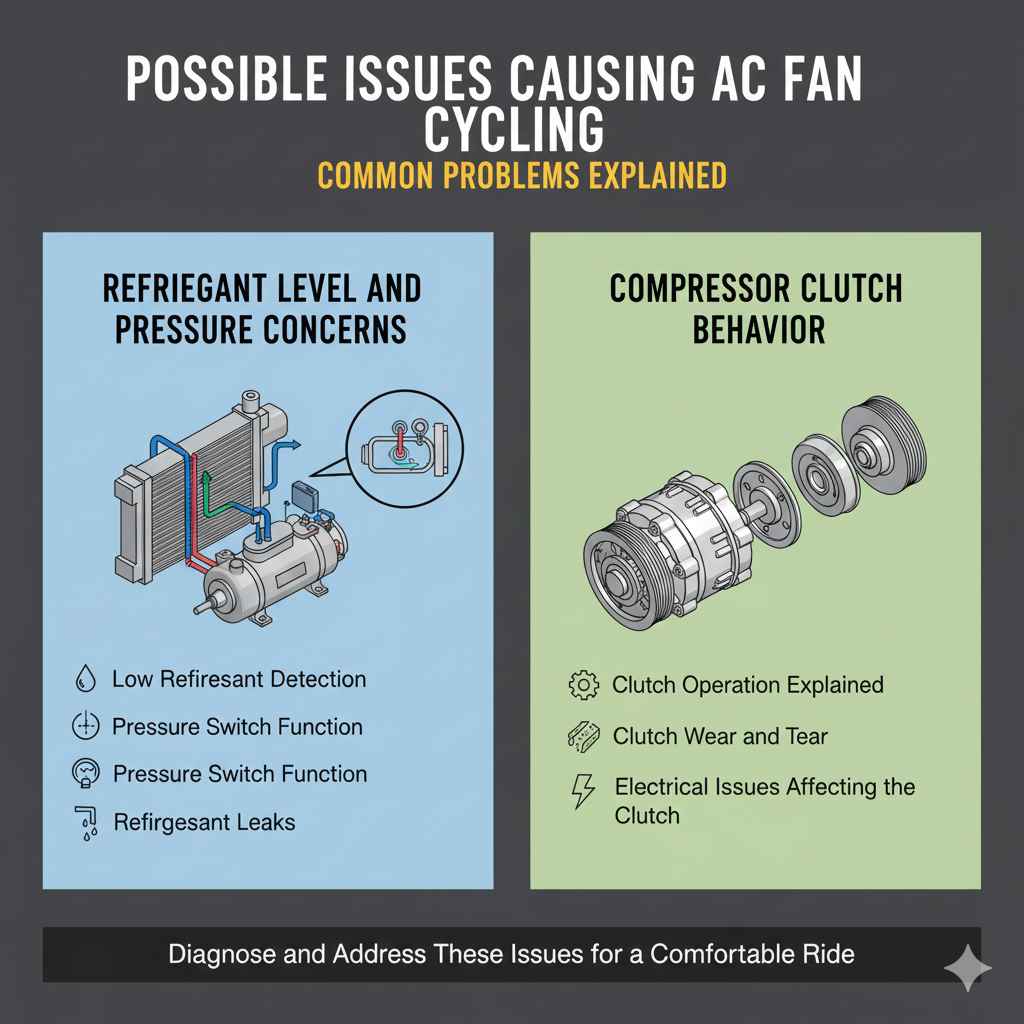
Possible Issues Causing AC Fan Cycling
When the car’s AC fan behaves erratically, it signals that something isn’t working as it should. This repeated turning on and off, also known as “cycling,” often points to an underlying problem within the air conditioning system. This can be caused by various issues, from electrical faults to mechanical failures. Knowing the source of this problem can help you find a suitable solution.
Refrigerant Level and Pressure Concerns
One of the most frequent reasons for an AC fan to cycle is low refrigerant levels. Refrigerant is the substance that absorbs heat, cooling the air. A drop in refrigerant can happen because of leaks or simply because the system needs a recharge after years of use. When the refrigerant level drops, the system’s pressure sensors notice it and trigger the AC compressor to shut off to protect itself. This cycle of on and off becomes noticeable.
Low Refrigerant Detection: AC systems have pressure sensors. These sensors will trigger the system to shut down if they detect pressure falling outside of the normal range.
If the pressure gets too low, the compressor can be damaged, as it needs the refrigerant to lubricate its components. When the pressure drops too low, the compressor will turn off, then back on as pressure builds, resulting in the cycling behavior you’re observing.
Pressure Switch Function: The pressure switch plays a vital role. It’s like a safety valve. If the pressure gets too low (indicating a leak) or too high (possibly indicating a blockage), the switch cuts power to the compressor.
This action prevents serious damage to the AC system. It’s similar to a circuit breaker in your home. The switch’s response to pressure changes directly affects the fan’s operation.
Refrigerant Leaks: Leaks are another major cause. Refrigerant can escape from various points, like hoses, seals, or the compressor itself. These leaks lead to low refrigerant levels, causing the cycling issue.
Finding a leak can be difficult. AC systems can leak slowly, so a minor leak might take time to reveal its effects. Common signs include oily residue around AC components.
Compressor Clutch Behavior
The AC compressor is the heart of the system, and its clutch is a key part. The clutch engages and disengages the compressor, allowing it to turn on and off as needed. If the clutch is faulty, it can cause the fan to cycle frequently. This is particularly noticeable because the compressor will not run for extended periods.
Clutch Operation Explained: The AC compressor clutch is an electromagnetically operated device. When the AC is turned on, the clutch engages, connecting the compressor to the engine. This engagement allows the compressor to start working.
A failed or malfunctioning clutch will prevent the compressor from engaging. This will cause the AC fan to repeatedly switch on and off.
Clutch Wear and Tear: Over time, the clutch can wear down because of repeated use and environmental factors. Its friction surfaces degrade, and its electromagnetic coil can fail.
If the clutch’s friction surfaces wear, the AC system might not fully engage or disengage, causing the fan to cycle on and off improperly. The electrical coil might also fail, preventing the clutch from engaging, thus stopping the compressor from running.
Electrical Issues Affecting the Clutch: Problems in the electrical system can also impact the clutch’s function. Loose connections, corroded wires, or a faulty relay could interrupt the power supply to the clutch.
A weak or intermittent electrical signal will cause the clutch to switch erratically. This will then result in the fan repeatedly turning on and off.
Electrical System Issues and Fan Cycling Problems
The electrical system controls the AC fan’s operations. Any issues within this system can impact the fan’s function. This can include problems with the control module, the fuses, the wiring harness, or the relays. These issues can lead to the fan cycling on and off in an unusual manner.
Relay Malfunctions
Relays are like electronic switches. They control the flow of power to the AC components. A faulty relay can cause the fan to cycle on and off. Relays are cost-effective, but they can wear out. They are designed to manage high current loads, but over time, their contacts can degrade, which makes them unreliable.
Relay Function and Failure: The AC compressor relay is especially important. This relay is directly responsible for powering the compressor. A malfunctioning relay may not close properly, cutting off power to the compressor.
The relay might also close and open intermittently, causing the fan to cycle. Other relay problems include corrosion on the contact points, which affects power transmission.
Testing and Replacing Relays: Diagnosing a relay issue can be quite simple. Usually, you can swap it with a known good relay to see if that resolves the issue. If the cycling stops, it is probably the relay.
Relays usually have standard pin configurations, making them easy to swap and test. A multimeter can also be used to check if the relay is functioning by checking the circuit continuity.
Finding Relay Locations: Relays are usually located in the fuse box under the hood or near the dashboard. The owner’s manual will provide a diagram of the fuse box, identifying the AC relay.
Many modern cars have multiple fuse boxes, so finding the correct one is important. Inspecting the fuse box and relay locations can help you diagnose and troubleshoot problems quickly.
Wiring and Connector Problems
Wiring and connectors are an essential part of the electrical system that powers the AC fan. Problems here can cause the fan to cycle improperly. Loose connections, damaged wires, or corrosion can disrupt the power supply to the fan’s components. They can lead to intermittent failures.
Inspecting the Wiring Harness: Examine the wiring harness that connects to the AC compressor, the fan, and other AC components. Look for signs of damage, such as frayed wires or cracks in the insulation.
Check for wires that might have been damaged by heat, vibrations, or contact with other vehicle components. Worn or damaged wires can make intermittent contact, which causes the fan to switch on and off.
Checking Connectors for Corrosion: Corrosion on the connectors is a very common issue. This corrosion can cause resistance in the circuit, affecting the power delivery. Disconnect the connectors and look for any green or white buildup.
Clean the corrosion with electrical contact cleaner or a wire brush. Apply dielectric grease to the connectors to prevent future corrosion. Ensuring good connectivity is important for reliable operation.
Tracing Electrical Shorts: Short circuits can occur when a wire’s insulation wears off, and the wire touches a metal part of the car, or another wire. They can cause the fuse to blow or interrupt power flow to the fan.
When you have a short circuit, use a multimeter to check the circuit’s continuity. If you have an intermittent issue, test the wiring while wiggling the wires. This action may expose loose connections.
Control Module Failure
The AC control module is the “brain” of the AC system. It receives signals from various sensors and decides how to run the system. This control module monitors all the systems, from refrigerant pressure to the engine’s temperature. If the control module malfunctions, it can cause the fan to cycle erratically.
Module Function Explained: The AC control module receives input from different sensors, such as the temperature sensor inside the car and the pressure sensor in the refrigerant lines. The control module processes these inputs.
Based on the readings, it sends signals to the compressor, the fan, and other components, telling them when to turn on and off. The control module’s correct function is critical for proper operation.
Diagnosing Control Module Issues: Diagnosing issues with the control module may need special tools. Professional scanners can read diagnostic trouble codes (DTCs) that point to system faults.
Checking the connections to the control module for corrosion or loose wires is important. If the control module is suspected, it is sometimes replaced to test if it resolves the issue. But keep in mind that module replacement should be done after other tests.
Sensor Input Importance: The control module depends on input from the sensors throughout the AC system. These sensors provide data about the conditions, such as temperature, pressure, and fan speed.
If a sensor is malfunctioning, it may send incorrect data to the control module. This can cause the system to misbehave and cause the fan to cycle inappropriately. When working on this system, you need a full understanding of the interdependencies between the sensors and the control module.
Other Potential Causes of Intermittent AC Fan Operation
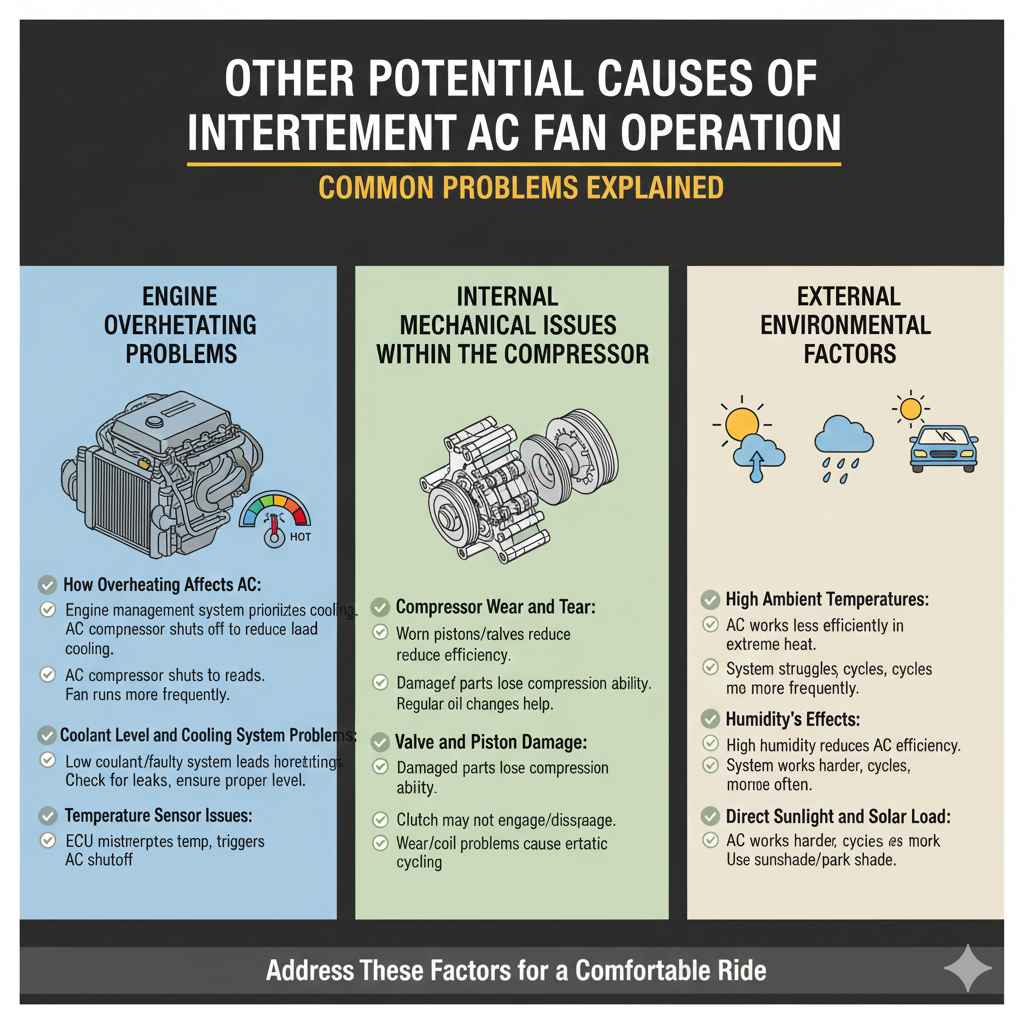
Besides the main problems we’ve talked about, other issues can cause the AC fan to cycle on and off repeatedly. These problems can be related to the engine or the cooling system. They can also involve internal mechanical issues or external factors that affect the AC’s operation.
Engine Overheating Problems
Engine overheating can indirectly affect the AC fan. Many modern vehicles are designed to turn off the AC to prevent engine damage. If the engine gets too hot, the AC will shut down automatically. The fan may turn on to help cool the engine.
How Overheating Affects AC: Overheating triggers the car’s engine management system. The system prioritizes engine cooling. Turning off the AC removes an additional load from the engine.
If the engine temperature rises above a certain threshold, the AC compressor will be shut off. This reduces the engine’s workload and improves cooling. The fan may run more frequently to draw air through the radiator.
Coolant Level and Cooling System Problems: Low coolant levels or a faulty cooling system can lead to overheating. A clogged radiator or a malfunctioning water pump reduces the cooling efficiency.
Keep the coolant level in the system at the correct level and avoid coolant leaks. Overheating signals a cooling system issue that needs immediate attention to avoid severe engine problems. Proper function ensures the AC runs smoothly.
Temperature Sensor Issues: A faulty temperature sensor can give incorrect readings to the engine control unit (ECU). The ECU might then misinterpret the engine’s temperature, triggering AC shutoff even if the engine isn’t actually overheating.
The sensor tells the ECU how hot the engine is. If this sensor is broken, it can report wrong numbers, causing the AC system to behave in unexpected ways. If the sensor is bad, it needs to be fixed to ensure the AC functions correctly.
Internal Mechanical Issues Within the Compressor
Internal problems with the compressor can cause intermittent operation. These problems can involve worn or damaged internal components. The compressor may then shut down intermittently. This can lead to the fan cycling on and off. They can be related to how the compressor pumps the refrigerant.
Compressor Wear and Tear: Compressors have moving parts, like pistons and valves, that wear down over time because of friction. After years of running, internal wear can cause the compressor to fail.
Wear can reduce the compressor’s efficiency and eventually cause it to malfunction. Regular maintenance, such as oil changes for the compressor, helps to reduce wear.
Valve and Piston Damage: Inside the compressor, the valves and pistons are critical. If the valves or pistons are damaged, the compressor can lose its ability to compress the refrigerant effectively.
This loss of efficiency can cause the system to cycle improperly. The compressor’s internal parts must be maintained for them to function correctly.
Compressor Clutch Issues (Related to Internal Problems): While the clutch is external to the compressor, clutch issues are related. A failing clutch may not engage or disengage properly, leading to the fan’s on-off cycling.
This behavior could be caused by wear on the clutch’s friction surfaces or problems with its electromagnetic coil. Because the clutch controls the compressor’s operation, it can cause the on/off cycling issue.
External Environmental Factors
Sometimes, the car’s AC operation can be impacted by factors outside of the system itself. This includes very hot weather. Air conditioning systems work by releasing heat to the outside environment, so extreme heat can affect how well they perform. This can also involve high humidity levels, which can put more stress on the AC system.
High Ambient Temperatures: AC systems work less efficiently in extreme heat because they depend on the outside air to get rid of the heat that the refrigerant absorbs. In very hot weather, the system has to work harder.
This added workload can cause the compressor to cycle more frequently. This is because the system struggles to cool the air, and it’s trying to keep the temperatures at a safe level.
Humidity’s Effects: High humidity decreases the efficiency of the AC system. Humid air holds more moisture, which makes it harder for the AC to remove heat and moisture from the car’s interior.
Because the system has to work harder, it may cycle more often. When the air is moist, condensation can accumulate on the AC components, which may also affect performance.
Direct Sunlight and Solar Load: Direct sunlight increases the heat load on the vehicle. This makes it more difficult for the AC to keep the interior cool.
This increased load may cause the AC to work harder, which may cause it to cycle more frequently. Using a sunshade or parking in the shade can lessen the effect of the sun on your car.
| Factor | Effect on AC | Why It Matters |
|---|---|---|
| Low Refrigerant | Cycling On/Off | System cannot maintain proper pressure. |
| Faulty Relay | Intermittent Power | Compressor power interrupted. |
| Engine Overheating | AC Shutoff | Prioritizes engine cooling. |
Frequently Asked Questions
Question: What’s the first thing I should check if my AC fan cycles?
Answer: First, check the refrigerant level. A low refrigerant level is a common reason for cycling. If the refrigerant is low, it means there’s a leak or the system needs a recharge.
Question: Can a bad relay cause the AC fan to cycle?
Answer: Yes, a faulty relay is a very likely cause. The relay controls power to the AC compressor. If it’s failing, the compressor will turn on and off.
Question: How do I know if my compressor clutch is bad?
Answer: If the clutch isn’t engaging when the AC is on, or it’s making a clicking noise, it could be bad. You may also see the compressor turning on and off at short intervals.
Question: Can engine overheating affect my AC fan?
Answer: Yes. Many cars turn off the AC to prevent engine overheating. If your engine gets too hot, the AC compressor will shut off, and the fan may cycle on and off.
Question: Where can I find the AC relay in my car?
Answer: The AC relay is usually in the fuse box under the hood or near the dashboard. Consult your owner’s manual for its exact location.
Final Thoughts
If your car’s AC fan is repeatedly turning on and off, several factors might be at play. The most common issues include low refrigerant levels, problems with the compressor clutch, electrical system faults like faulty relays or damaged wiring, and issues with the control module. Engine overheating and even external factors like high temperatures can cause this cycling as well. Tackling the problem requires careful troubleshooting, starting with easy checks such as looking for leaks or testing the relay.
If you’re comfortable with car repairs, try diagnosing the issue yourself. If you’re not comfortable working with these components, don’t hesitate to seek professional help from a mechanic. With the right approach, you can restore your car’s AC function and stay cool during your travels.