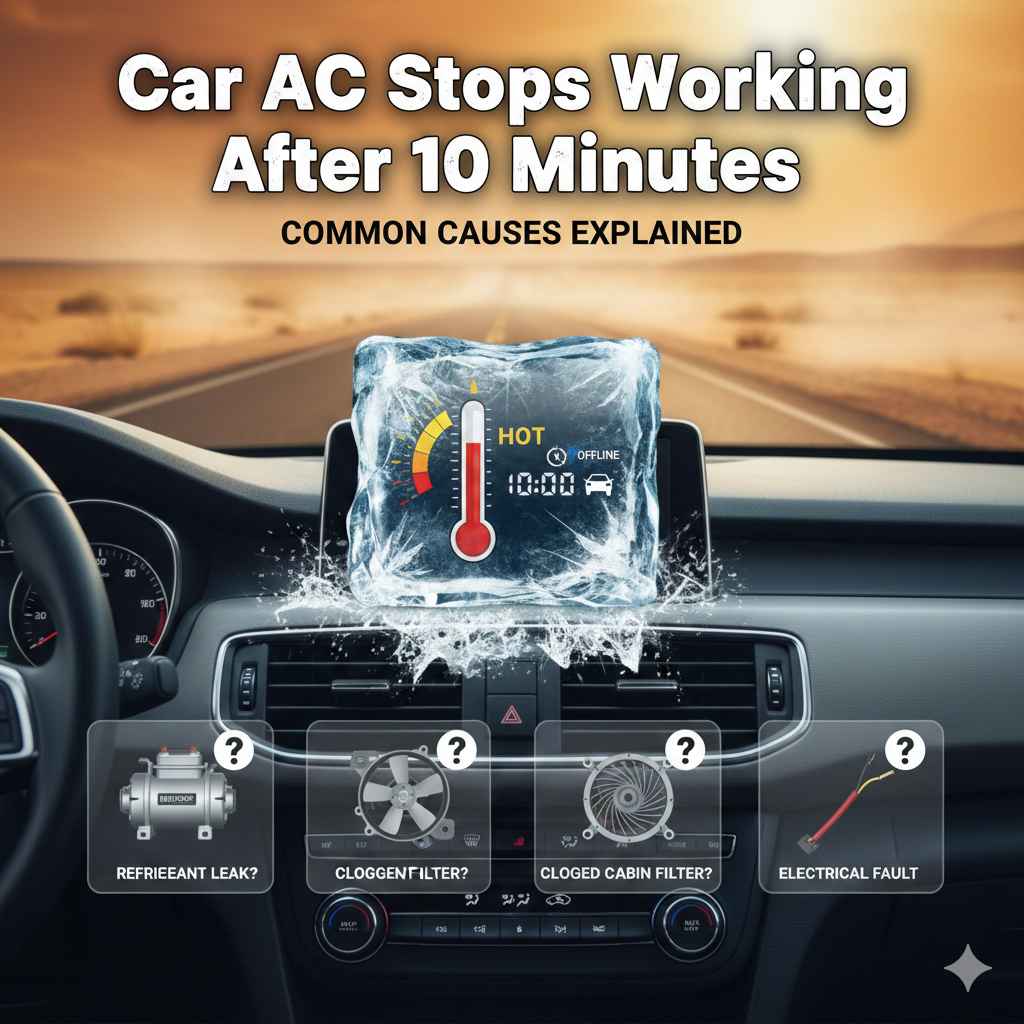
Car AC Stops Working After 10 Minutes: Common Causes Explained
Having your Car AC Stops Working After 10 Minutes: Why can be super frustrating, especially when it’s hot outside. This problem is surprisingly common, even for those new to car maintenance. Don’t worry, you’re not alone! Figuring out what’s causing your AC to fail after a short time can seem tough, but it’s usually something straightforward. We’ll go through the most likely culprits, breaking things down step-by-step so you can start cooling down again. Ready to find out what’s up with your AC?
Why Your Car Air Conditioning Fails After a Short Time
When your car’s air conditioning system quits working after running for about ten minutes, it’s often a sign of a specific issue rather than a complete system failure. Many components work together, and problems with just one can cause the AC to falter after a brief period. This can feel like a guessing game, but common causes exist that you can easily identify and possibly even fix yourself. Let’s explore the common problems that trigger this issue, breaking them down into simpler terms.
Refrigerant Leaks and Low Pressure
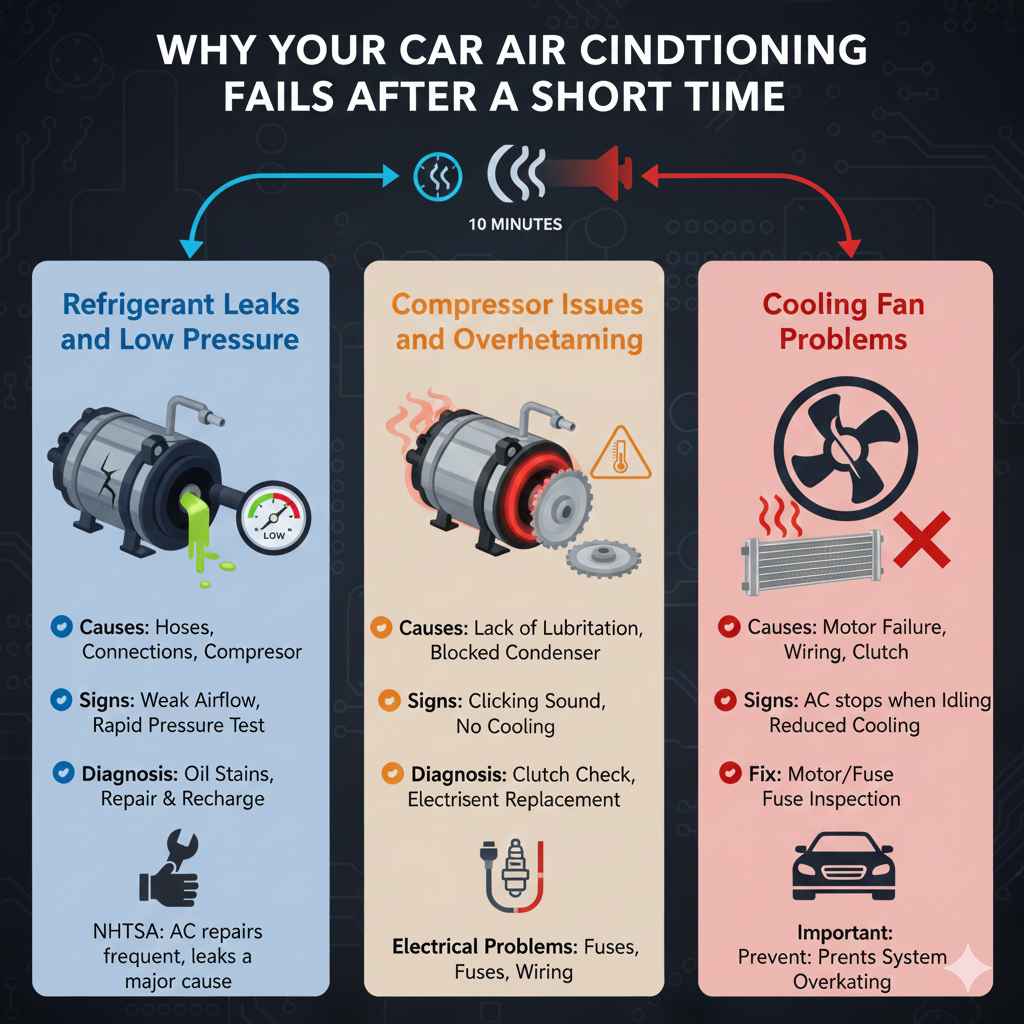
The refrigerant, often called Freon, is the lifeblood of your AC system. It absorbs heat from inside your car and releases it outside. If there’s a leak, you’ll eventually run out of refrigerant. This causes the AC to perform poorly or stop working altogether. The most common locations for leaks are the hoses, connections, and the AC compressor itself. Over time, these parts can deteriorate due to wear and tear or impacts from road debris.
Low refrigerant is a key factor because the system relies on a specific pressure range to function correctly. A leak might let enough refrigerant out that your AC works temporarily, but as pressure drops, the system will eventually shut down to protect its components.
- Identifying Leaks: Visual inspection can sometimes reveal oil stains around AC components, indicating a leak. Special leak detectors, available at auto parts stores, can also help find the source.
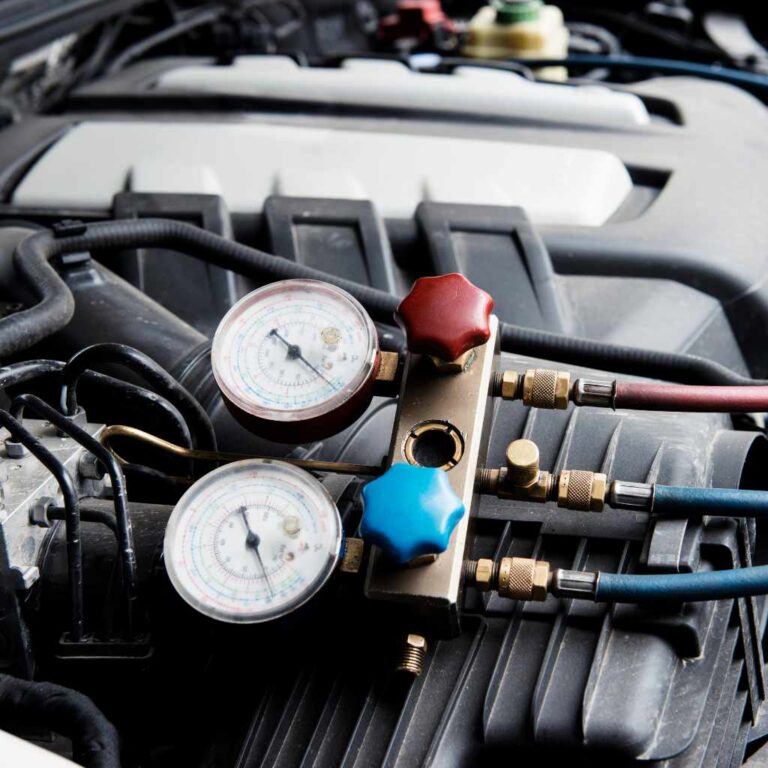
- Refrigerant Pressure Testing: Auto mechanics use gauges to measure the refrigerant pressure in the system. If the pressure is low, it confirms a leak or a shortage of refrigerant.
- Importance of Professional Help: Fixing a leak and recharging the system with refrigerant requires specific tools and knowledge. It’s often best to have a mechanic handle this.
- Symptoms of Low Refrigerant: Besides the AC stopping after a while, other signs include weak airflow, reduced cooling, and the AC compressor cycling on and off rapidly.
According to a study by the National Highway Traffic Safety Administration (NHTSA), AC-related repairs are among the most frequent car repairs, with refrigerant leaks being a major cause. Proper maintenance, including regular inspections, can help prevent these issues.
Compressor Issues and Overheating
The AC compressor is like the heart of your air conditioning system. It pumps the refrigerant through the system, compressing it to build up pressure. If the compressor isn’t working correctly, your AC won’t cool effectively. One frequent problem is the compressor overheating. This can occur due to insufficient lubrication, a blocked condenser, or excessive pressure within the system. When the compressor overheats, a safety mechanism often kicks in to shut it down and prevent further damage.
This is why the AC might work briefly and then stop after a short time. Several internal components of the compressor can cause it to fail. The clutch, which engages and disengages the compressor, can wear out, and the compressor’s internal seals can deteriorate, leading to loss of compression and function.
- Compressor Clutch Failure: If the clutch fails, the compressor won’t engage. You might hear a clicking sound when you turn on the AC, but the compressor won’t start.
- Internal Compressor Damage: Worn or damaged internal parts, such as pistons or valves, reduce the compressor’s ability to compress refrigerant efficiently.
- Overheating Causes: Blocked condensers, low refrigerant levels, or a faulty cooling fan can cause the compressor to overheat.
- Electrical Problems: Wiring issues or blown fuses can also prevent the compressor from working. A mechanic’s diagnosis can identify electrical faults.
Air Conditioning System Cooling Fan Problems
The cooling fan plays an important part in the AC system’s performance. It blows air across the condenser, which helps to dissipate heat. If the fan isn’t working correctly, the condenser can’t shed heat as efficiently, causing the system to overheat.
When the AC stops working after about ten minutes, a malfunctioning fan might be the root cause. The fan might have a motor that’s failing or the wiring could have issues. This leads to the refrigerant pressure increasing, potentially triggering the AC system to shut down to prevent damage.
Diagnosing fan issues is often straightforward. A quick visual check can reveal if the fan is spinning when the AC is turned on. It is important to inspect the fuse related to the fan’s operation. If the fuse is blown, replacing it may restore the fan’s function. Also, consider any loose connections.
- Fan Motor Failure: The motor that runs the cooling fan can wear out or seize up, stopping the fan from working.
- Wiring Issues: Damaged or corroded wiring can interrupt the power supply to the fan.
- Fan Clutch Problems: Some fans use a fan clutch that can fail, preventing the fan from spinning at the right speed.
- Symptoms: AC not cooling effectively, especially when idling or driving slowly, is a common sign of fan trouble.
Common Problems That Cause Car AC Failure
Beyond the primary culprits, some other problems can also make your Car AC Stops Working After 10 Minutes: Why. Identifying these requires some detective work, but knowing what to look for will speed up the process. Things like blocked airflow and electrical troubles could interfere with how well your AC cools.
Clogged Airflow and Blocked Condensers
A restricted airflow is a frequently overlooked but significant problem. The condenser, which is similar to a radiator, releases the heat from the refrigerant. If the condenser is blocked by debris, such as leaves, dirt, or bugs, it won’t be able to dissipate heat efficiently. This increases pressure and can cause the AC system to shut down. The evaporator core, located inside the car, can also become blocked by debris or mold, limiting airflow and reducing cooling.
Regular maintenance is necessary to prevent these issues. Keeping the condenser and evaporator clean can make a big difference in how your AC works. A clogged cabin air filter will also limit airflow through the system. This can reduce cooling performance and eventually cause the AC to stop functioning correctly.
- Condenser Blockage: Leaves, dirt, or other debris can obstruct the condenser, preventing it from releasing heat.
- Evaporator Core Issues: The evaporator can get clogged with dirt and mold. A blocked evaporator will reduce airflow.
- Cabin Air Filter: A dirty cabin air filter reduces airflow through the system, decreasing cooling efficiency.
- Inspecting for Blockages: Check the condenser and evaporator for obstructions. Replace the cabin air filter regularly.
Electrical System and Sensor Issues
Electrical problems and sensor malfunctions can also make your AC shut down after a short period. Modern car AC systems rely on several electrical components, including the AC compressor clutch relay, the blower motor resistor, and various sensors. A faulty relay can prevent the compressor from engaging. The blower motor resistor controls the fan speed and can fail.
Sensors, like the temperature sensor or the pressure sensor, monitor the system’s performance. If one of these sensors fails, it can send incorrect information to the AC system’s control unit, causing it to shut down. This is especially true if the pressure sensors detect excessive or insufficient refrigerant pressure. Diagnosing these electrical issues often requires specialized tools and knowledge. A mechanic can use diagnostic equipment to check for codes and test the system.
- Faulty Relays: The AC compressor clutch relay might fail, preventing the compressor from starting.
- Blower Motor Resistor Problems: This resistor controls fan speed and can fail.
- Sensor Malfunctions: Temperature and pressure sensors provide key information to the AC system.
- Wiring and Fuse Issues: Short circuits, corroded wires, or blown fuses can interrupt the AC’s operation.
Diagnosing and Fixing the Issue
Once you see that your Car AC Stops Working After 10 Minutes: Why, you can use a systematic approach to pinpoint the cause. This process involves simple steps you can take to check your AC, along with the help of a professional if necessary.
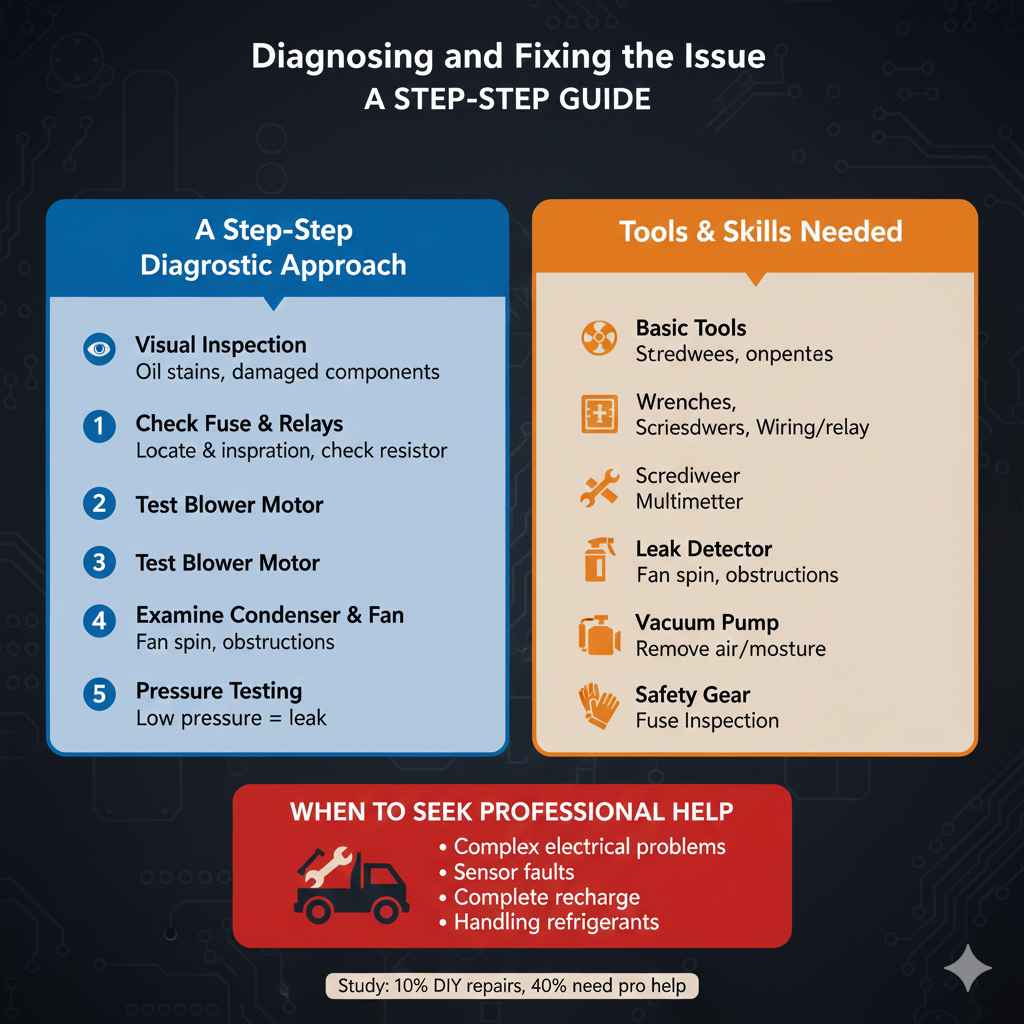
A Step-by-Step Diagnostic Approach
The following steps will help you check your car AC system. They are designed to identify the most common issues so you can solve them efficiently. Begin by checking the simple things, and then move on to more complicated issues if necessary. Always refer to your car’s owner’s manual for specific details on your car’s AC system.
This will help you find the relevant parts and the right maintenance schedule. This should always be the starting point before any work on the AC. Before starting any repair, remember to disconnect the negative battery cable to prevent electrical shocks.
- Visual Inspection: Check for any obvious signs of damage, such as leaks or broken components. Look for oil stains around the compressor, hoses, and connections.
- Check the Fuse and Relays: Locate the fuse box and check the AC fuse and relay. If the fuse is blown,
- Test the Blower Motor: Turn on the AC and listen to the blower motor. If it’s not working, check the blower motor resistor for possible issues.
- Examine the Condenser and Cooling Fan: Make sure the cooling fan is running when the AC is on. If the fan isn’t working, check the fan motor and wiring. Also, check for any obstructions around the condenser.
- Pressure Testing: If you suspect a refrigerant leak, have a mechanic measure the refrigerant pressure. Low pressure indicates a leak.
Tools and Skills Needed for Repair
Some AC repairs can be handled by people with basic mechanical skills and the right tools. However, for more complex problems, professional help is often needed. Having the correct tools makes any repair easier and safer. Here are some of the tools you might need. Make sure you know how to safely use the tools and are comfortable working on your car.
- Basic Tools: Wrenches, screwdrivers, pliers, and a multimeter are essential for basic troubleshooting.
- Refrigerant Gauges: These gauges measure refrigerant pressure and help diagnose leaks and system performance.
- Leak Detector: A leak detector helps locate refrigerant leaks in the system.
- vacuum pump: If you’re replacing components or recharging the system, a vacuum pump is needed to remove air and moisture.
- Safety Gear: Always use eye protection and gloves when working on AC systems.
Even with the right tools, some repairs require a strong understanding of how AC systems work. Handling refrigerant can be dangerous if you’re not properly trained. According to a recent study, about 10% of car owners attempt DIY AC repairs, but about 40% of them end up needing professional help.
When to Seek Professional Help
While you can handle some AC problems yourself, there are instances where you should call a professional. Working with the AC system involves refrigerants and complex electrical systems that require specialized knowledge and equipment. Ignoring the safety aspects can lead to injuries or damage to your car. If you’re not comfortable working on cars, or if you encounter a problem that seems beyond your skill level, it’s best to seek professional help.
A qualified mechanic has the tools, training, and experience to diagnose and fix AC issues safely and efficiently. If the car AC has any electrical problems, sensors are faulty, or a complete recharge is needed, a professional can complete the job with the correct diagnostic tools and supplies. They can provide an accurate diagnosis, fix the problem properly, and make sure your AC system is working at its best.
FAQ
Question: What does it mean when my AC blows warm air after working for a while?
Answer: This usually means there’s a problem with your AC system. The most common causes are low refrigerant, a failing compressor, a blocked condenser, or issues with the cooling fan.
Question: Can I add refrigerant to my car’s AC myself?
Answer: Yes, you can. You can get refrigerant with a gauge at most auto parts stores. However, first, make sure there are no leaks. It’s best to have a mechanic check for leaks before adding refrigerant.
Question: How often should I get my AC system checked?
Answer: It’s good to have your AC system checked annually, especially before the hot summer months. Regular checks help prevent small problems from turning into bigger ones.
Question: What is a clutch and why does it matter?
Answer: The AC compressor has a clutch that engages and disengages it. If the clutch fails, the compressor won’t work, and the AC won’t cool. If you hear a clicking sound when you turn on the AC, the clutch might have an issue.
Question: Are there any simple checks I can perform if the AC is not working?
Answer: Yes, you can start by checking the AC fuse and relay, examining the condenser for blockages, and ensuring the cooling fan is working. Also, listen for unusual noises.
Final Thoughts
The Car AC Stops Working After 10 Minutes: Why can be frustrating, but knowing the typical causes will help you. We looked at common issues like refrigerant leaks, compressor problems, and electrical faults. You’ve also learned the steps you can take to find the issue. If you’re seeing these symptoms, start with a visual inspection, check the basics like fuses and fans, and consider professional assistance when needed.
With a little detective work and some basic mechanical knowledge, you can often pinpoint what is causing the issue. This allows you to either fix it yourself or make an informed decision when consulting a mechanic. Armed with this information, you are ready to stay cool and comfortable in your car.