Do All Cars Have Cabin Air Filters? History Since 1979
No, not every car has a cabin air filter. The feature debuted on the 1979 Saab 900, spread through the 1990s, and became close to standard on new sedans and SUVs by around 2005 – today more than 90 percent of new vehicles sold in North America include one. Budget trims, older vehicles, and some work trucks still leave it out, so checking your own car is the only way to know for sure.
What Is a Cabin Air Filter?
BEST FOR CHARCOAL-FILTER ODOR CONTROL (TOYOTA / LEXUS FIT)
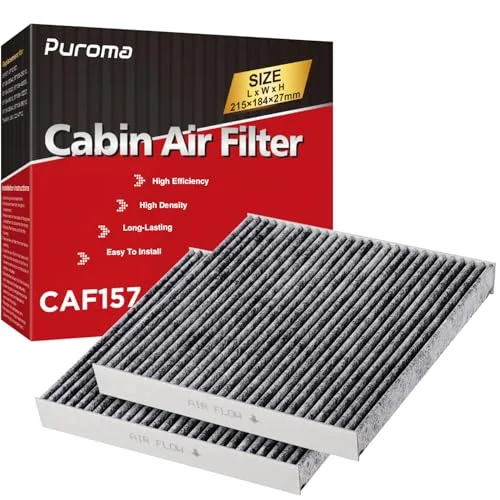 |
Puroma Activated Carbon Cabin Air Filter (2-Pack, CP157/CF12157) – $13.55 This is the activated-charcoal filter type described in the Types of Cabin Air Filters table above, sized for the CP157/CF12157 housing used on several Toyota and Lexus models.
|
A cabin air filter is the filtration element built into a car’s heating, ventilation, and air conditioning (HVAC) system. It sits between the outside air intake and the vents on the dashboard, and its only job is to trap dust, pollen, exhaust soot, and other airborne particles before that air reaches the driver and passengers.
It is easy to confuse the cabin air filter with the engine air filter, but they do different jobs entirely. The engine air filter cleans air heading into the combustion chamber and affects horsepower and fuel economy. The cabin air filter only cleans the air blown into the passenger compartment, and swapping it has no effect on how the engine runs.
Most cabin air filters are pleated paper or a paper-and-cotton blend. Premium versions add a layer of activated charcoal, which adsorbs odors and some gases in addition to trapping particles. Depending on the vehicle, the filter is mounted behind the glovebox, under the dashboard, or in a housing near the base of the windshield under the hood.
Do All Cars Have Cabin Air Filters?
No. Cabin air filters are common today, but they are not universal, and they have not been around nearly as long as most drivers assume.
The first production car with a factory cabin air filter was the 1979 Saab 900. The idea spread slowly at first: the 1989 Mercedes-Benz SL was one of the first vehicles outside Saab to offer one as standard equipment, and the 1990 Opel Astra was among the earliest mass-market cars to include one from the factory. Through the 1990s the feature moved from a European luxury-brand extra into mainstream models, and by the early-to-mid 2000s it had become close to universal on new sedans and SUVs sold in the United States.
Industry estimates put cabin air filter adoption above 90 percent of new vehicles sold in North America today, with some figures closer to 94 percent. That still leaves a real gap. Base trims of budget economy cars, work-oriented pickup trucks, and vehicles built before the early 2000s are the ones most likely to be missing one entirely.
Luxury automakers were the early adopters and still tend to go beyond the minimum, often making activated-charcoal media standard rather than optional. If your car was built after 2010, it almost certainly has a cabin air filter, but checking is still the only way to know for sure – the next section shows how.
Why Some Cars Don’t Have Cabin Air Filters
The reasons come down to cost, age, and vehicle category rather than any real technical limitation. A cabin air filter needs a dedicated housing molded into the HVAC ductwork plus one more maintenance item for the owner, so manufacturers competing on price have historically left it off base trims to save a few dollars per vehicle.
Heavy-duty and work-oriented trucks are the other common exception. These vehicles are engineered around durability and cargo capacity rather than cabin comfort, and older truck HVAC designs sometimes simply do not have room in the ductwork for a filter housing. Vehicles built before the early 2000s are also frequently missing one, since the feature was not yet close to universal at that point in automotive history.
How to Check If Your Car Has a Cabin Air Filter
The fastest way to check is the owner’s manual. Look in the index for “cabin air filter” or the HVAC section; it will state whether one is fitted and exactly where. If you no longer have the physical manual, most manufacturers post a free digital copy on their support site, searchable by year, make, and model.
You can also check physically. The filter is almost always in one of three places:
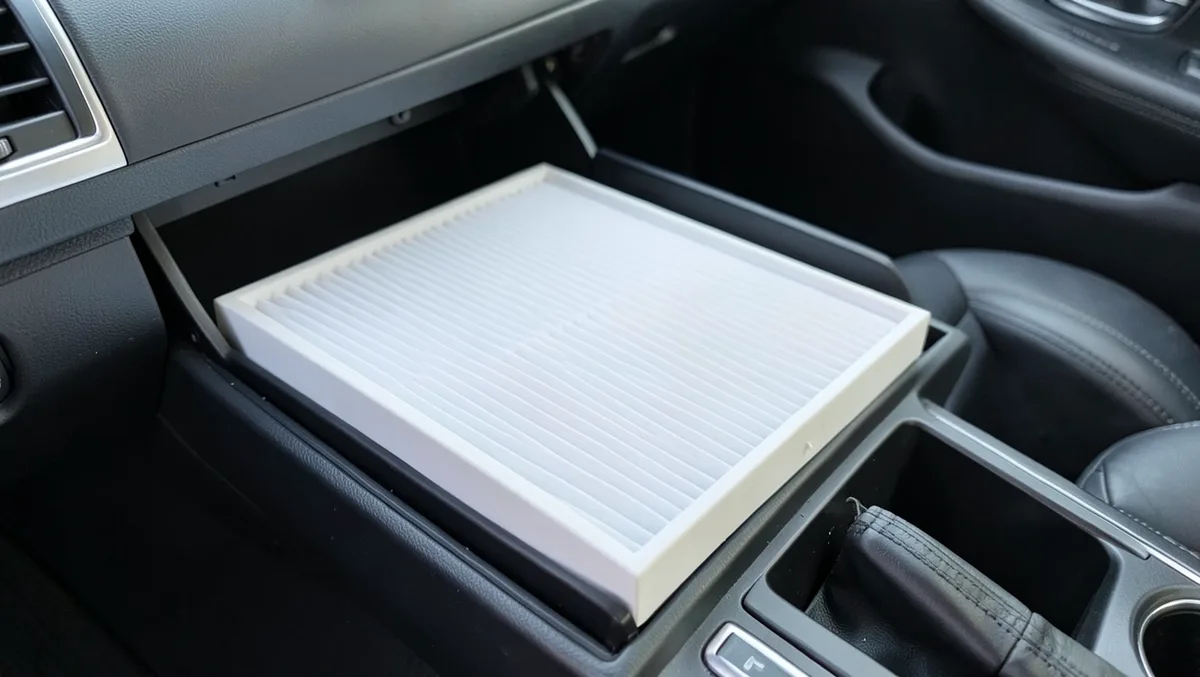
- Behind the Glovebox: Empty the glovebox. Many cars let you unclip the glovebox itself or open a small access panel to reach the filter. Look for a rectangular cover or tray that slides out; a filter cartridge behind it confirms your car has one.
- Under the Hood: On some vehicles the filter sits near the windshield, under a plastic cowl cover. Open the hood and look for a compartment at the base of the windshield; a few clips or screws usually hold the cover in place.
- Under the Dashboard: Less common, but some filters are tucked under the passenger-side dashboard, accessible only from below with a flashlight.
If none of those three locations reveal a filter or a housing built to hold one, your car most likely was not built with a cabin air filter at all.
Benefits of Having a Cabin Air Filter
A properly maintained cabin air filter affects more than just how the car smells. The main benefits are:
- Cleaner air: The filter traps dust, pollen, and other allergens before they reach the cabin, which matters for anyone with seasonal allergies.
- Better smell: Activated-charcoal media absorbs odors from exhaust fumes, food, and pets rather than just blowing them around the cabin.
- Better HVAC performance: A clean filter lets air move freely, so the AC and heater both work closer to their rated output; a clogged filter is a common, overlooked cause of weak airflow.
- Healthier for sensitive passengers: Drivers who regularly carry kids, or passengers with asthma, benefit from keeping harmful particles out of the air they breathe.
Types of Cabin Air Filters
Not all cabin air filters are built the same way. Here is a quick rundown of the main types on the market:
| Filter Type | Description | Best For |
|---|---|---|
| Particulate Filter | Made of pleated paper, traps dust, pollen, and debris. | Basic air quality needs, budget-friendly. |
| Activated Charcoal Filter | Has a layer of charcoal to absorb odors and harmful gases. | Odor reduction, urban driving. |
| HEPA Filter | High-efficiency filter that traps tiny particles, like allergens and bacteria. | Allergy sufferers, premium vehicles. |
| Electrostatic Filter | Uses static charge to attract and hold particles. | Long-lasting filtration, reusable. |
Activated charcoal filters are the best pick for city driving, where exhaust odor is a constant issue. A basic particulate filter is fine for a tight budget, but it is worth upgrading if you deal with allergies or live somewhere dusty.
How to Maintain Your Cabin Air Filter
Maintaining a cabin air filter takes only a few minutes a few times a year. A clean filter keeps the cabin air fresh and the HVAC system running as designed. The basics:
- Check it regularly: Open the filter compartment roughly every six months. If it looks gray or is visibly caked with debris, it is time for a replacement.
- Vacuum for a quick clean: A light vacuuming can extend a particulate filter’s life between replacements. Do not do this with charcoal filters, since it strips away the odor-absorbing layer.
- Replace on schedule: Most manufacturers recommend replacing the cabin air filter every 12,000 to 15,000 miles, or about once a year, whichever comes first.
- Match the filter to the car: Always buy a filter sized and shaped for your specific make and model. An ill-fitting universal filter can leave gaps that let unfiltered dust through.
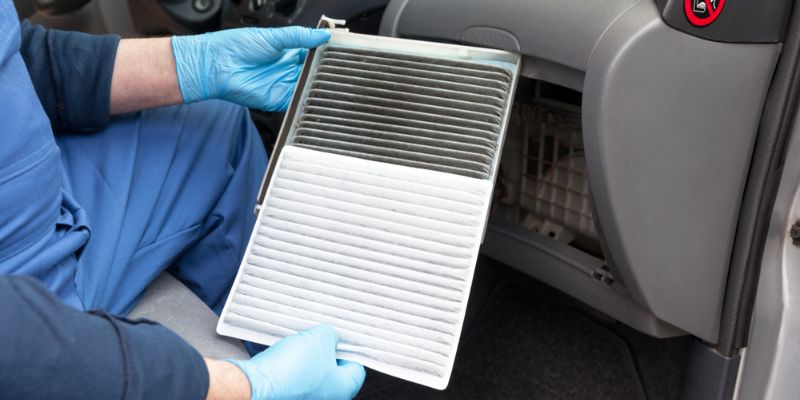
Replacing a filter is usually a five-minute job: slide out the old one, slide in the new one facing the correct airflow direction (marked with an arrow), and close the compartment. It is one of the easiest maintenance tasks on a modern car and a lot cheaper than paying a shop to do it.
What Happens If Your Car Doesn’t Have a Cabin Air Filter?
Driving without a cabin air filter is not dangerous, and plenty of older vehicles get by without one. But there are real downsides. Without a filter, dust, pollen, and road debris get pulled straight into the ventilation system. Over time this can make the cabin air noticeably dirtier, clog the AC or heater core, and contribute to mold growth if moisture gets trapped inside the ductwork.
If your car does not have a filter, you can still keep the air cleaner by vacuuming the vents periodically and using an HVAC-safe disinfectant spray to control bacteria. Keeping the cabin free of food crumbs and pet hair also helps. Some vehicles can be retrofitted with a cabin air filter using an aftermarket kit, but it is not always cheap or straightforward, since it can involve modifying the ventilation housing.
Can You Add a Cabin Air Filter to a Car That Doesn’t Have One?
Sometimes. It depends on the vehicle’s ductwork design. Some models have space in the HVAC housing where a filter can be added, and aftermarket retrofit kits exist for a number of popular older cars and trucks. On vehicles without that space, adding one means cutting into the dashboard or ductwork, which is a bigger job than most owners want to take on.
If you are considering a retrofit, check with the manufacturer or a trusted mechanic first. They can confirm whether a kit exists for your specific year, make, and model and what parts are involved. Retrofitting can cost more than expected and rarely filters as well as a factory-designed housing, so many owners with older cars stick with regular vent cleaning instead.
Common Signs Your Cabin Air Filter Needs Attention
A handful of warning signs usually show up well before a clogged filter becomes a bigger problem:
- Musty or bad odors: A mildew or stale smell when the AC kicks on usually means the filter is clogged or has trapped moisture.
- Weak airflow: Noticeably weaker air from the vents, especially on high fan speed, is one of the most common signs of a dirty filter blocking flow.
- More allergy symptoms in the car: If sneezing or coughing picks up specifically while driving, the filter may no longer be catching allergens effectively.
- Visible dirt on the filter: A filter that looks gray, dark, or covered in debris when checked is due for replacement regardless of mileage.
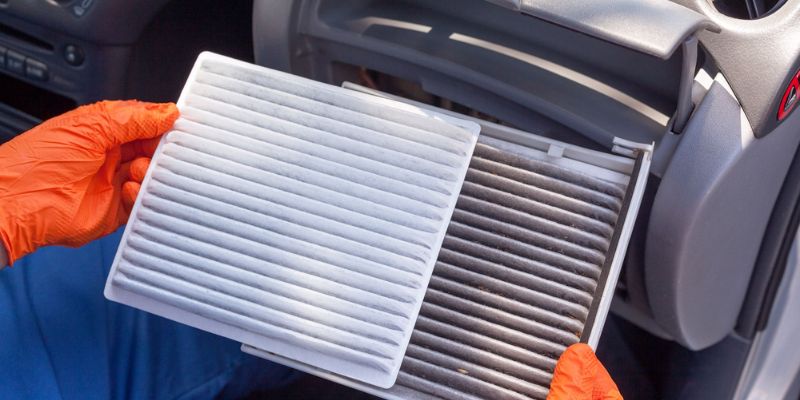
Checking the filter at every oil change is a simple habit that catches most of these issues before they turn into a bigger HVAC repair.
Choosing the Right Cabin Air Filter for Your Car
With so many options on the shelf, a few criteria narrow the choice down quickly:
- Compatibility: Check the owner’s manual or an online parts lookup to find the exact filter size and part number for your make and model.
- Material: A particulate filter is fine for basic protection. For odor control or allergies, activated charcoal or HEPA media performs noticeably better.
- Brand: Established brands like Fram, Bosch, and Puroma, or the vehicle’s original equipment manufacturer, tend to fit more precisely and last longer than unbranded filters.
- Price: Filters typically run from about $10 to $50 depending on material and brand; a mid-range activated-charcoal filter around $15 to $25 covers most needs.
An auto parts store or an online retailer is usually cheaper than the dealership for the exact same filter, since dealership pricing includes a markup for OEM packaging.
How to Replace a Cabin Air Filter
Replacing a cabin air filter is one of the easiest car maintenance tasks there is. The general steps:
- Find the filter: Check the manual to confirm the location (usually behind the glovebox or under the hood).
- Access the compartment: For glovebox filters, empty the glovebox and remove any clips or panels. For hood filters, open the cowl cover near the windshield.
- Remove the old filter: Slide it out carefully and note the airflow arrow printed on the frame.
- Clean the housing: Wipe down the filter compartment with a damp cloth to remove loose dust before installing the new one.
- Install the new filter: Slide it in with the airflow arrow matching the original orientation.
- Close everything up: Reattach any panels or covers and you are done.
The whole job typically takes about ten minutes. Manufacturer-specific video walkthroughs are widely available online if you want to see the exact steps for your make and model before starting.
When to Call a Professional
Most cabin air filter maintenance is a straightforward do-it-yourself job. But if a musty smell persists even after installing a fresh filter, the cause is often deeper in the HVAC system, such as a clogged evaporator drain or mold growth on the evaporator coil itself. That kind of issue usually needs a technician with the tools to access and clean the evaporator housing, since it sits further back in the dash than the filter compartment.
Tips for Keeping Your Car’s Air Clean
Even with a good cabin air filter in place, a few habits keep the air fresher for longer:
- Avoid eating in the car: Crumbs and spills get pulled into the vents and cause lingering odors.
- Vacuum regularly: Dust and pet hair clog the filter faster than normal use alone.
- Run the fan periodically: A few minutes of fan time each week helps blow loose dust out of the ductwork.
- Fix leaks quickly: A clogged AC drain tube or a water leak into the cabin is a common, overlooked cause of mold in the ventilation system.
Conclusion: Not Every Car Has One, But Most Modern Cars Do
Cabin air filters went from a rare feature on the 1979 Saab 900 to standard equipment on the overwhelming majority of new vehicles in a little over two decades. Whether your car has one or not, understanding how the HVAC filtration system works is the key to a cleaner, healthier ride. If your car has a filter, checking and replacing it on schedule keeps the air fresh and the AC and heater running at full strength. If it does not, regular vent cleaning is the best substitute available.
FAQs
What was the first car with a cabin air filter?
The 1979 Saab 900 was the first production car with a factory cabin air filter. The feature did not become common across the industry until the early-to-mid 2000s.
Do all new cars have cabin air filters?
Most new cars built after 2010 in the U.S. come with a cabin air filter, but some base models and budget brands still skip it. Check your owner’s manual to confirm.
How can I tell if my car has a cabin air filter?
Check the owner’s manual for the HVAC section, or look behind the glovebox, under the hood near the windshield, or under the dashboard for a filter compartment.
What happens if my car doesn’t have a cabin air filter?
Without a filter, dust, pollen, and debris enter the cabin through the vents, reducing air quality and potentially clogging parts of the HVAC system over time.
How often should I replace my cabin air filter?
Replace it every 12,000 to 15,000 miles or about once a year. Dusty climates or households with pets may need more frequent replacement.
Can I clean my cabin air filter instead of replacing it?
A particulate filter can be gently vacuumed to extend its life, but replacement is more reliable. Charcoal and HEPA filters should always be replaced rather than cleaned.
What type of cabin air filter is best for allergies?
A HEPA or activated-charcoal filter is best for allergies, since both trap smaller particles more effectively than a basic particulate filter.
How much does a cabin air filter cost?
Cabin air filters typically cost $10 to $50 depending on the type and brand. Charcoal and HEPA filters cost more but offer better filtration.
Can I drive without a cabin air filter?
Yes, it is not dangerous, but ventilation air quality suffers over time. Installing one where possible, or retrofitting an aftermarket kit, is worth considering.
Products related to this article
Sponsored / affiliate links. As an Amazon Associate I earn from qualifying purchases. I may earn additional commission from eligible campaigns.