Car Camping: Elevating Your Outdoor Lifestyle on a Budget
Car camping works best when the vehicle fits the trip: a hatchback can suit solo overnights, a midsize SUV can fit two adults and some gear, and a minivan or larger SUV is often a safer pick for families or longer trips in mixed weather. Poor planning brings bad sleep, wet gear, cramped cabins, and avoidable safety problems. This guide covers vehicle selection, sleep setup, storage, weather protection, campsite setup, and the gear choices that matter most.
What car camping is, and what it is not


Car camping means using a regular vehicle as the base for sleeping, storage, and travel, with quick setup and the option to move without breaking down a full camp. It differs from vanlife, RV travel, and tent camping because the vehicle does the heavy lifting, while still keeping the setup simpler than a dedicated camper.
Car camping versus car glamping, vanlife, and tent camping
Outside’s description of car glamping calls it a “cheaper alternative to VanLife and RVs” and notes that it uses “a basic automobile for transport.” In practice, car camping is the broader category. It can be bare-bones or comfort-focused, but it still relies on a normal car, SUV, or crossover rather than a converted living space.
Compared with tent camping, vehicle-based sleeping offers “quick setup,” protection from the elements, and “added security against predators.” That does not remove campsite rules or weather limits. It simply shifts shelter duty from fabric walls to a cabin, hatch, or cargo area.
Why vehicle-based camping appeals to short and long trips
The appeal is practical. Car camping lets you “explore different locations” without committing to one site, and the setup can stay light for an overnight or grow for a weekend. For many travelers, that flexibility matters more than the idea of a full camper build.
Think of it as a system. Short trips reward simplicity. Longer trips reward better storage, better sleep support, and more attention to ventilation, food storage, and power management.
📊 The article cites KOA’s "2026 Camping & Outdoor Hospitality Report". Source: Why Car Glamping Is a Cheaper Alternative to VanLife and RVs.
Which vehicle works best for your trip?
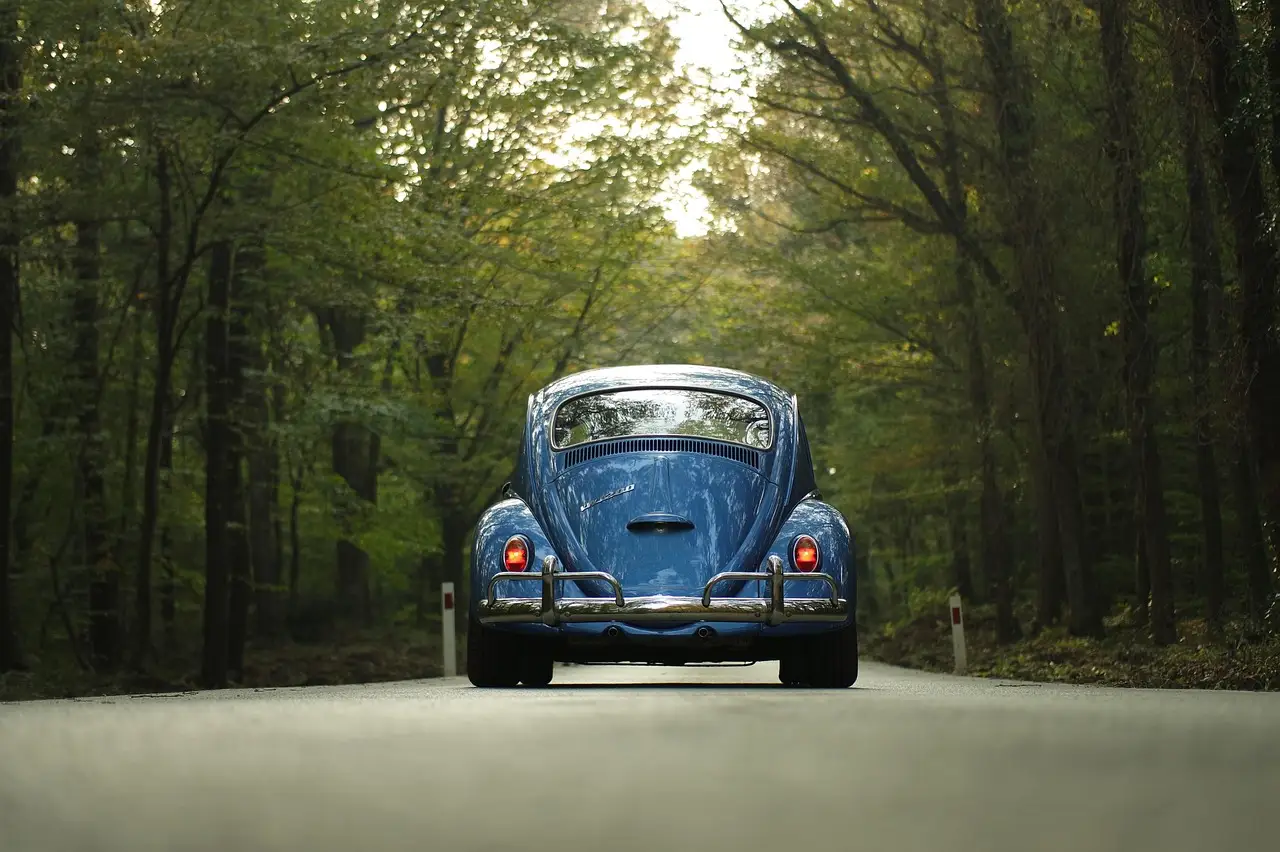
The best vehicle depends on who is sleeping, how much gear you carry, and whether the route includes rough access or mostly paved roads. SUVs usually make the most sense when cargo room and mixed terrain matter, while sedans work best for solo or duo trips with lighter gear and flatter sleeping plans.
SUV versus sedan for car camping
SUVs are recommended for their “spaciousness and off-road capabilities,” which helps when you need taller cargo space, longer folded-seat layouts, or access to campsites with uneven approaches. Sedans are described as “fuel-efficient” with a smoother ride on paved roads, which makes them a budget-friendly choice for drivers who can travel light.
The key fit question is not badge or body style alone. It is folded-seat length, cargo height, and whether a person can lie flat without curling at the knees. A sedan can work well for one sleeper or a very compact duo setup. It tends to fall short when gear piles up or when one traveler needs extra room for cold-weather layers.
The setup matrix: match your vehicle to the trip
| Trip type | Weather | Sleeper count | Recommended vehicle type | Sleep platform | Storage strategy | Safety checks |
|---|---|---|---|---|---|---|
| Solo weekend | Mild | 1 | Sedan, hatchback, compact crossover | Flat folded rear seat or low platform with camping mattress pad | Soft bag for clothing, small storage bins for daily items | Window shades, ventilation plan, battery check |
| Couple, multi-night | Cool to mild | 2 | Midsize SUV or larger wagon | Full-length flat cargo area with compressible pad | Stackable bins; cooler near rear access | Carbon monoxide detector, battery reserve, weather backup |
| Family travel | Mild to mixed | 3 to 4 | Minivan or larger SUV | Split sleeping zones, rear platform, or hybrid tent use | Roof rack or cargo box for bulky gear | Seat-belted travel positions, campground rules, door clearance |
| Cold-weather trip | Cold | 1 to 2 | Midsize SUV, minivan, or well-insulated wagon | Insulated mattress pad with layered bedding | Keep insulation and dry layers inside the cabin | Portable heater limits, ventilation, carbon monoxide detector |
When a sedan fits, and when it does not
A sedan fits best when the trip is short, the road is paved, and the sleepers can accept a tighter setup. It does not fit well when bulky gear, tall bedding, or winter clothing eats the cabin. If the rear seat fold leaves a step or a slope, comfort drops quickly.
Picture a couple taking a two-night roadside trip in a sedan with a half-packed trunk. The first night feels fine. By the second night, a cooler, two duffels, and a sleeping pad leave no room to move, and the wrong packing order turns a workable car into a cramped box. That is a planning problem, not a sedan problem.
What gear do you actually need?
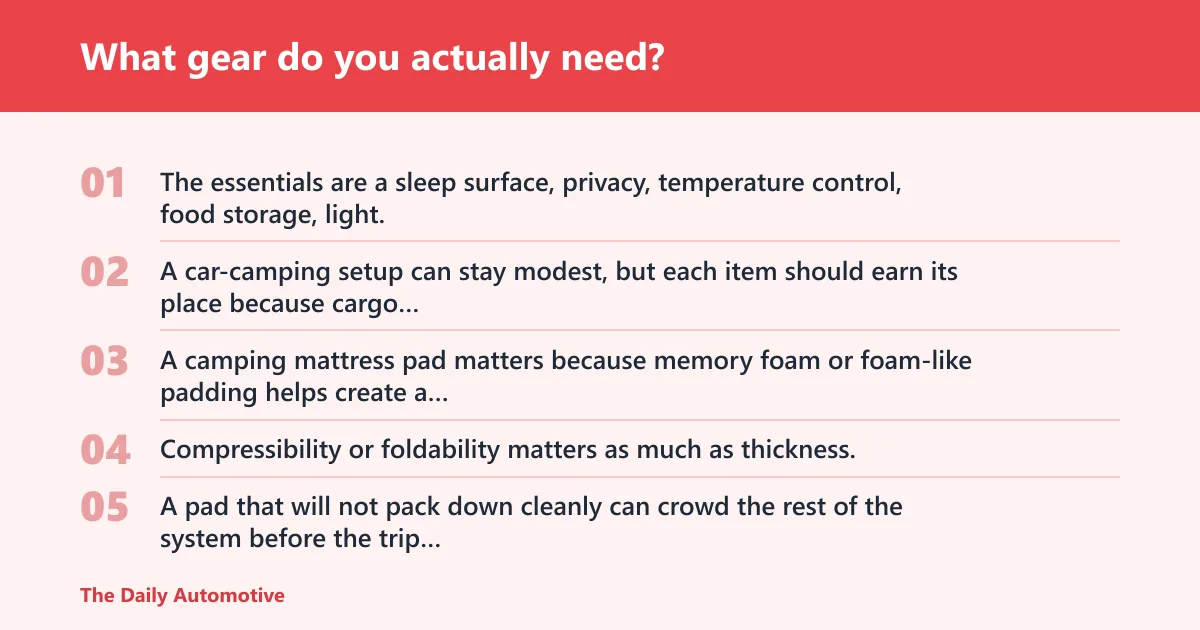
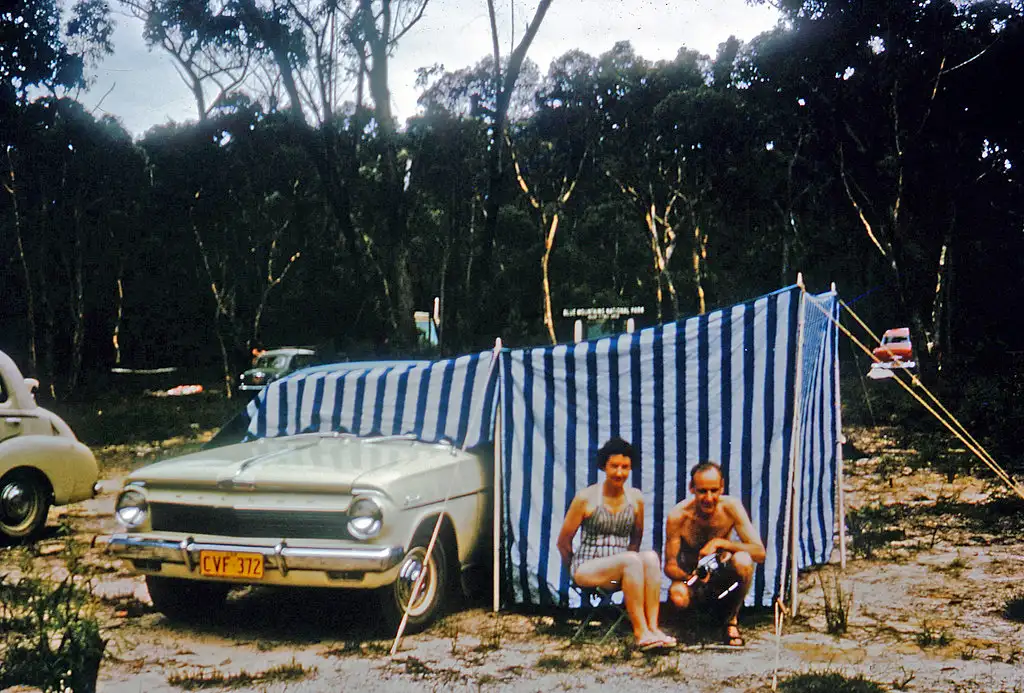
The essentials are a sleep surface, privacy, temperature control, food storage, light, and a way to keep gear organized. A car-camping setup can stay modest, but each item should earn its place because cargo room is finite and setup mistakes are hard to fix at the site.
Sleep system, shades, and safety gear
A camping mattress pad matters because memory foam or foam-like padding helps create a flatter sleeping surface in a car or SUV. Compressibility or foldability matters as much as thickness. A pad that will not pack down cleanly can crowd the rest of the system before the trip even starts.
Window shades help with privacy and light blocking. Magnetic installation is handy only when the frame and magnet placement fit the window shape. Window size compatibility matters, especially on rear quarter windows and smaller hatch openings.
A carbon monoxide detector is generally a must-have for sleeping in a vehicle. Choose a portable, battery-powered unit that does not rely on the vehicle electrical system, and check the battery before every trip.
Food, lighting, and extra storage
A cooler for food storage belongs near the top of the packing list because it keeps meals organized and reduces unnecessary trips in and out of the vehicle. Add simple lighting, such as a small lantern or headlamp, so you are not draining the car battery just to find water or bedding.
Storage containers keep items organized and compact. Roof racks or cargo boxes add storage space for bulky gear and help maximize interior room, but they should carry items you do not need during the drive or overnight.
A basic versus comfort-focused budget
A beginner setup can stay lean: mattress pad, window shades, cooler, a lamp, soft bags, and a battery-powered carbon monoxide detector. A comfort-focused setup adds better insulation, more structured storage, stronger bedding, and roof-mounted cargo for items that would otherwise crowd the cabin. Costs vary by vehicle and quality level, so the best rule is to buy for fit before buying for convenience.
How do I make sleeping in my car more comfortable?
Comfort depends on flatness, temperature control, and how much gear stays out of the sleep area. The best setups reduce pressure points, keep air moving, and avoid making the cabin feel like a storage locker. Small changes matter more than expensive extras.
Flat sleeping surfaces and padding choices
Start with the flattest possible surface. If folded seats create a slope, use a pad or board system that reduces the angle rather than accepting it. A camping mattress pad with memory foam can smooth out the cabin floor or cargo area, but only if it fits the space without bunching.
For solo sleepers, a narrower pad may be enough. For couples, the issue is width first, then length. If the bodies fit but the elbows do not, the sleep setup is still wrong.
Temperature, condensation, and airflow
Ventilation matters even in cool weather. Crack windows enough for airflow while keeping rain out, and use shades to reduce light and outside visibility. Condensation can build fast when two people sleep in a closed vehicle, especially after a wet hike or a cold evening.
A portable heater can be useful as supplemental warmth, but it should be treated as a limited tool, not a full heating system. Battery-powered or cordless heaters depend on runtime limits, and any power source has to be checked before the trip. If warmth is essential, plan bedding and clothing first.
Small-space comfort moves that save room
Keep bedtime items in one reachable bag: water, headlamp, charger, and a layer you can grab without unpacking the whole vehicle. That reduces clutter and avoids opening every bin at midnight.
Use soft storage for items that will be squeezed into odd shapes and hard bins for food or fragile gear. The goal is not a perfect cabin. It is a cabin that still lets you lie flat.
How do I pack without wasting space?
Packing well means using the vehicle like cargo architecture, not like a closet. Heavy items should ride low, daily-use items should stay accessible, and anything bulky should move out of the main cabin before it turns into a sleeping zone.
Use soft bags and stackable bins
Soft bags fit around wheel wells, seat backs, and curved cargo edges better than rigid luggage. Stackable storage bins help keep food, cooking gear, and clothing separate, and they make it easier to unload one category at a time.
Group by function, not by room. Sleep gear together. Cooking gear together. Repair and safety gear together.
Move bulky gear to the roof when needed
Roof racks or cargo boxes work best for bulky gear that is weather-tolerant and not needed overnight. Tents, camp chairs, and extra insulation often fit this category. If the cargo box makes the vehicle too tall for garage access or low branches, rethink the load before the trip.
Keep daily items within arm’s reach
One common first-timer mistake is burying water, chargers, and the carbon monoxide detector under a stack of camp chairs. Keep sleeping clothes, a flashlight, and the safety gear where you can reach them after dark without unloading the car.
How safe is sleeping in a car overnight while camping?
Sleeping in a car can be safe when you manage airflow, power use, and weather. It becomes risky when the engine is run without planning, the cabin is sealed too tightly, or the temperature drops below what your bedding and clothing can handle.
Carbon monoxide, battery drain, and ventilation
A portable, battery-powered carbon monoxide detector is the right baseline because it does not depend on the vehicle electrical system. Check the battery before every trip. Keep ventilation open enough to prevent stale air and condensation buildup, especially if two people are inside.
Battery management matters too. Interior lights, phone charging, and powered accessories can flatten the battery if the vehicle is not running. If the night depends on electrical gear, have a backup plan that does not rely on the car starting in the morning.
Portable heater limits and weather backups
A portable heater can help in a cold snap, but runtime limitations are real, and cordless units are only as good as their charge. If the forecast turns severe, move from comfort planning to weather planning. That may mean a lodge, a heated facility, or a different date.
Suppose a family parks at a mountain campground expecting a mild night and wakes to a hard frost warning. The right response is not to improvise heat with a tired battery pack. It is to use extra bedding, reduce air loss, and choose a backup sleeping plan if the vehicle cannot hold warmth safely.
When to skip sleeping in the vehicle
Skip the car when the cabin cannot be ventilated, the vehicle is packed so tightly that sleep becomes unsafe, or local rules prohibit overnight vehicle sleeping. Also skip it if you cannot manage the temperature with the gear on hand. Bad sleep is inconvenient. Carbon monoxide exposure is not.
What should you look for in a campsite?
Choose a campsite that fits the vehicle, the weather, and the rules. Drive-up access, a flat parking area, and vehicle-friendly regulations matter as much as scenery. A beautiful site can still fail if the car cannot level out or if overnight parking is not allowed.
Access, surface, and clearance
Look for a flat parking area that supports your vehicle length and door swing. Long hatchbacks and SUVs need more room than they first appear to need, especially when rear doors or liftgates must open fully. If the ground slopes, sleep quality drops and items roll around the cabin.
Rules, etiquette, and stealth parking risk
Campground and campsite rules vary. Some permit vehicle sleeping; others restrict overnight parking or require a designated site. Quiet hours, light use, and door slamming matter in shared spaces. If the site is not clearly vehicle-friendly, do not assume discretion will solve the problem.
Stealth parking can sound convenient, but it brings legal and etiquette risks. Better to know the overnight rule than to discover it at midnight with nowhere else to go.
For solo campers, couples, families, and cold weather
Solo campers can prioritize a smaller vehicle and lighter packing. Couples should focus on cabin width and sleep length before adding extra gear. Families need a minivan or larger SUV more often than not, because movement space matters once children, bags, and wet clothing enter the picture.
Cold-weather users should look for shelter from wind, a dry parking surface, and enough room to manage layers without living on top of one another. In that scenario, a larger cabin often matters more than fuel economy.
Frequently asked questions
What is car camping and how is it different from car glamping?
Car camping is sleeping in a regular vehicle while using it as the base for travel, storage, and shelter. Car glamping is usually the comfort-heavy version. The difference is less about the car itself and more about how much equipment, bedding, and convenience you add around it.
What vehicle is best for car camping, an SUV or a sedan?
An SUV is usually better for more people, more gear, and rougher access because of its spaciousness and off-road capabilities. A sedan works well for solo campers or couples on paved routes, especially if fuel efficiency and a smoother ride matter more than cargo space.
What gear do I need for car camping?
Start with a camping mattress pad, window shades, a portable battery-powered carbon monoxide detector, a cooler for food storage, basic lighting, and storage bins. Add weather-appropriate bedding and keep the setup compact so the sleeping area stays usable.
How do I save space when packing for car camping?
Use soft bags for flexible items and storage containers for organized, compact packing. Move bulky gear to a roof rack or cargo box when needed, and keep daily-use items close to the door or tailgate. Packing by category keeps the cabin usable overnight.
How do I make sleeping in my car more comfortable?
Make the sleeping surface as flat as possible, then add a mattress pad that fits the cabin without bunching. Manage airflow, reduce condensation, and keep bedtime items within reach. Comfort rises fast when the bed area stops doubling as storage.
Is it safe to sleep in a car overnight while camping?
It can be safe if you manage ventilation, battery use, and weather. Use a carbon monoxide detector, check the battery before every trip, and avoid relying on a heater that cannot run long enough for the forecast. If the weather or site rules do not fit, choose another plan.
Can I do car camping without buying an RV or van?
Yes. Car camping is built around using a regular car, SUV, hatchback, or crossover as the accommodation base. That is the point: you can keep the vehicle you already have and build a workable sleep and storage system around it instead of buying a dedicated camper.
Products related to this article
Sponsored / affiliate links. As an Amazon Associate I earn from qualifying purchases. I may earn additional commission from eligible campaigns.