Storage Solutions for a Car-Centric Lifestyle Guide
Use a 3-bin rule: keep daily-use and emergency items in the car, move occasional gear to home storage, and keep bulky, costly, or theft-prone items offsite unless you need them fairly often. If you do this poorly, you waste cargo space, add clutter, raise theft risk, and turn easy errands into searches. This guide sorts car gear by use, safety, and storage location, with practical choices for commuters, parents, road trips, and hobbies.
What belongs in your car, and what does not?


Use how often you reach for an item, plus safety, as the test. If you use it most days or need it for an emergency, it can stay in the vehicle. If you use it only for trips, sports, or home projects, it belongs in home storage. If it is bulky, valuable, or attractive to thieves, offsite storage is usually the cleaner choice.
Separate everyday items from seasonal gear
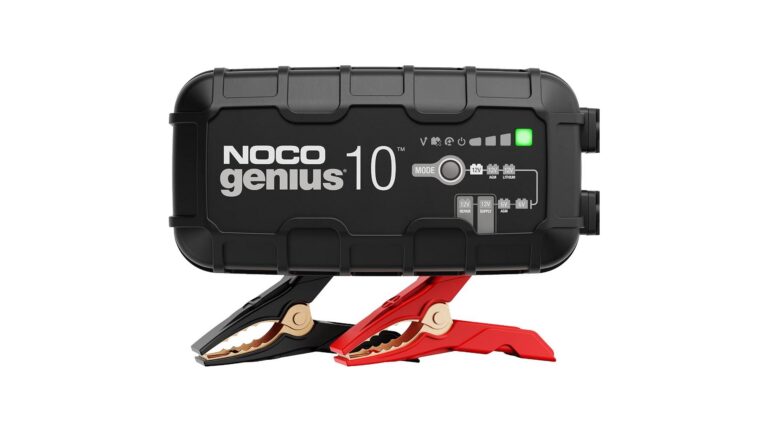
Daily-driver storage should stay narrow. Think registration papers, a charging cable, tissues, a compact first-aid kit, jumper cables, and a tire inflator if you truly depend on it. Seasonal gear such as ski racks, beach chairs, and extra coolers should leave the cabin when the season ends.
A common first-timer mistake is keeping every “just in case” item in the car. A trunk full of rarely used gear becomes dead weight. It also makes it harder to reach the things you need fast.
Keep safety and theft risk in the decision
Items that can fly forward during hard braking should not ride loose in the cabin. Fewer loose items improves safety in a sudden stop. Visible bags, tools, electronics, and packages also raise theft risk, especially if they sit where a window passerby can see them.
How do I organize gear without cluttering the cabin?
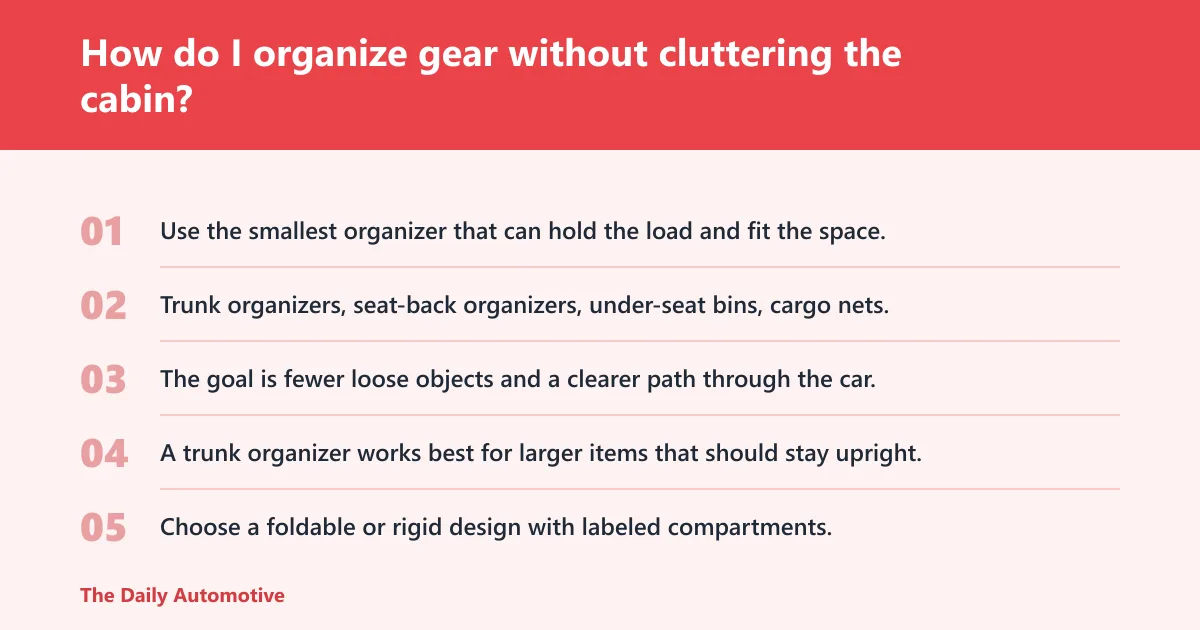
Use the smallest organizer that can hold the load and fit the space. Trunk organizers, seat-back organizers, under-seat bins, cargo nets, collapsible trunk bins, and adjustable dividers each solve a different problem. The goal is not more containers. The goal is fewer loose objects and a clearer path through the car.
Pick the right organizer for the location
A trunk organizer works best for larger items that should stay upright, such as grocery bags, cleaning supplies, road-trip food, and emergency kits. Choose a foldable or rigid design with labeled compartments, collapsible storage when not in use, and a shape that fits the trunk cargo area.
A seat-back organizer mounts behind the front seats and keeps small essentials in multiple compartments. It suits family travel, tablets, wipes, maps, and snacks. An under-seat storage bin uses hidden space beneath seats for small essentials you need fast without filling cupholders or the center console.
Use compartments to stop small-item drift
Adjustable dividers matter when the load changes. They let you size compartments to the item instead of forcing every object into one open box. That cuts down on clutter, rattling, and the habit of piling loose things on top of other loose things.
Match organizer size to trunk or seat space
Measure the footprint before you buy. A large bin that blocks access to the spare tire well or prevents the trunk from closing cleanly is the wrong size, even if the product looks useful. In the cabin, any organizer that blocks legroom, vents, or rear visibility is too large for routine use.
| Item category | Best storage location | Matching organizer type | Failure risk if stored poorly |
|---|---|---|---|
| Jumper cables, tire inflator, gloves | Keep in car | Under-seat storage bin or labeled trunk organizer | Buried under cargo, hard to reach in an emergency |
| Groceries and errands | Keep in car for short periods | Collapsible trunk bin with adjustable dividers | Sliding loads, crushed bags, spills |
| Kids’ travel items, wipes, snacks | Keep in car for family trips | Seat-back organizer with multiple compartments | Cabin clutter, loose items at the feet of passengers |
| Seasonal sports gear | Store at home | Home shelving or clear lidded bins | Consumes trunk space all year |
| Large hobby gear, spare tires, camper items | Offsite storage | Vehicle storage unit or indoor storage | Theft exposure, weather damage, constant crowding at home |
Which storage accessories work best in each part of the car?
The trunk is the best home for rigid or semi-rigid storage. A trunk organizer with labeled compartments can help keep cargo from mixing together, while a collapsible trunk bin can fold flat when the car does not need it. Both should sit low and stable so they do not tip when the vehicle turns or stops hard.
A cargo net is for restraint, not sorting. It secures loose items and prevents shifting during sudden stops in the trunk or cargo bay. Use it for soft bags, boxed items, or awkward shapes that do not fit neatly in a bin.
What should you keep in the trunk versus the back seat?
Put the least urgent cargo in the trunk and the most frequently used passenger items within reach of the back seat. The trunk is better for sealed, stable loads. The back seat is better for items passengers need during a drive, but it should never become a shelf for loose gear.
Daily commuting gear
Keep commuting items simple: umbrella, charging cable, sunglasses, a compact cleanup kit, and a water bottle if you actually want one in the car. Use an under-seat storage bin for objects that should stay accessible but out of sight. A seat-back organizer can hold smaller items for rear passengers without spreading them across the seat cushion.
Travel and kid items
Travel gear changes the rules. Snacks, wipes, tablet cords, motion-sickness bags, and coloring supplies belong in multiple compartments so each item has a fixed place. If the car carries child seats, avoid organizers that interfere with seat anchors, legroom, or the child’s exit path.
Emergency supplies and what to avoid leaving loose
Emergency supplies should be easy to reach, but they still need restraint. A first-aid kit, flashlight, reflective triangles, and basic tools can ride in a trunk organizer or secured bin. Do not leave a jack, bottle jack handle, or loose tools rolling around under cargo where they can shift into a hazard.
Suppose a compact sedan carries a stroller, two grocery bags, and a roadside kit all in the trunk. Without dividers or a cargo net, the stroller shifts into the bags, one bag tips, and the kit slides into the rear wall. The fix is simple: separate the load, anchor the small items, and leave a clear lane to the emergency kit.
When should gear move to home storage or offsite storage?

Move gear out of the car when it is seasonal, bulky, expensive, or rarely touched. Home storage works for items used monthly or quarterly. Offsite storage makes more sense when the item is too large for a closet, too valuable to leave visible in a vehicle, or too awkward to keep moving between home and car.
Home storage thresholds for seasonal and bulky items
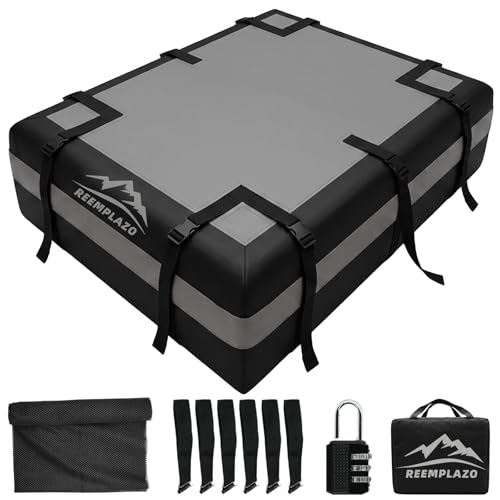
If an item does not fit in one labeled home bin or one shelf section, it is already stretching the car-based system. Keep winter traction gear, picnic supplies, roof accessories, and hobby cases at home when the season changes. That keeps the trunk open for errands instead of treating it like a spare closet.
When a storage unit fits better than the car
Self-storage becomes useful when car-related gear crowds living space or vehicle space. Vehicle storage is also an option for cars, boats, trailers, and campers. Latrobe Indoor Storage says it can store a car, boat, trailer, camper, appliances, and other possessions, and it offers indoor recreational vehicle parking near Greensburg, Pennsylvania. Public Storage lists vehicle storage among its storage types, highlights climate-controlled units, and promotes free reservations and no long-term commitment.
10×10 versus 10×20 unit sizing for car-related gear
Reliable Storage – Kingston Club Rd lists 10×10 units for 1-bedroom apartment contents and 10×20 units for 2–3 bedroom home contents. It also lists a 10×10 unit for $95.00 per month and a 10×20 unit for $120.00 per month, with drive-up access and wide aisles. That size split is useful when gear spills past the trunk into household overflow.
A 10×10 unit can fit a smaller set of tires, boxes of detailing supplies, sports gear, or a compact project stash. A 10×20 unit is often the better match when you are storing larger vehicle-related gear, multiple bulky bins, or items from a fuller garage corner.
- Sort items by how often you use them.
- Keep emergency and daily items in the car.
- Move seasonal or bulky items to home storage.
- Send costly, bulky, or theft-prone items offsite.
- Choose the smallest organizer or storage unit that fits the load.
How do climate and theft risk change your storage plan?
Heat, cold, moisture, and visibility should change what stays in the vehicle. Electronics, adhesives, food, liquids, and sensitive gear are poor long-term passengers in hot or damp conditions. If a car is parked outside or on a street, items visible through the glass face a higher theft risk.
Heat, cold, and moisture limits for in-car storage
Trunks and cabins swing in temperature faster than most people expect. That matters for medications, batteries, aerosol cans, food, and anything with glue or liquid seals. If an item can be damaged by freezing, softened by heat, or warped by humidity, it belongs at home or in climate-controlled storage, not in the car.
How visibility affects theft risk
Anything visible from outside should be treated as a target. That includes backpacks, packages, power tools, and electronics. A seat-back organizer can be convenient, but it should not advertise valuables through the rear glass. A cargo net helps keep items down and less visible, but it does not replace locked storage.
What should never stay in the vehicle long-term
Long-term car storage is a bad fit for valuables, perishable goods, critical paperwork, and items that are damaged by temperature swings. The safest rule is simple: if the item matters enough to regret losing, or if heat and cold would ruin it, keep it out of the vehicle unless you need it for the day.
What car storage solutions work best for road trips and daily commuting?
Road trips need flexible volume. Daily commuting needs quick access and a low clutter count. Use collapsible trunk bins, cargo nets, and seat-back organizers for trips; use under-seat bins, compact trunk organizers, and adjustable dividers for commuting. The best setup changes with the trip length and the cargo mix.
Road trips
For long drives, a rigid trunk organizer with labeled compartments keeps snacks, chargers, tissues, and roadside items separated. Use a cargo net for soft bags and a collapsible trunk bin for groceries or overnight gear. The key is preventing the back of the car from turning into one mixed pile.
Daily commuting
For commuting, the car should stay mostly empty. Keep only what you need to reach fast, and store the rest at home. An under-seat storage bin and a small trunk organizer usually do more good than a large cargo system that eats usable space every day.
Frequently asked questions
What are the best storage solutions for a car-centric lifestyle?
The best setup is usually a mix: a trunk organizer for larger loads, a cargo net for loose items, a seat-back organizer for family travel, and an under-seat storage bin for small essentials. The right choice depends on how often you use the item and whether it is safer in the car, at home, or offsite.
How do I organize gear in my car without cluttering the cabin?
Limit the cabin to items you need while driving or for quick access. Use multiple compartments, labeled bins, and a fixed place for each category. If an item keeps migrating between seats and the floor, it is probably too bulky for cabin storage and should move to the trunk or home.
How can I store travel gear, kids’ items, and emergency supplies in a small car?
Use compact containers with clear categories. A seat-back organizer handles child items, an under-seat bin handles small emergency gear, and a collapsible trunk bin handles trip supplies when they are needed. If the same load no longer fits without blocking seats or visibility, move part of it to home storage.
What trunk organizer size or style works best for my vehicle?
Pick a trunk organizer that fits the cargo floor without blocking access to the spare tire area or forcing the lid to close against it. Foldable models are better if you need the space back often. Rigid models are better when you want stable compartments and less shifting during braking or turns.
When should I use home storage or a storage unit for car-related gear?
Use home storage for seasonal, medium-use gear that can sit on a shelf or in a bin. Use a storage unit when vehicle gear becomes bulky, expensive, or part of a larger household overflow. Vehicle storage units and indoor options are especially useful for cars, boats, trailers, and campers that do not fit the regular routine.
Products related to this article
Sponsored / affiliate links. As an Amazon Associate I earn from qualifying purchases. I may earn additional commission from eligible campaigns.