What Is Car Culture? From Hobby to Lifestyle Explained
Car culture is the set of shared habits, clubs, events and identities that form around cars, from hot rod and lowrider scenes to racing associations and road-trip heritage. A hobby becomes a lifestyle when the car stops being only a project and starts shaping where people gather, who they spend time with and how they describe themselves. This guide traces that shift using museum, association and government sources, then shows the main scenes, the legal limits on modifying cars, and safe ways to take part.
The Evolution Of Car Culture
Best Hot Rod History Book Pick |
|
 |
Hot Rod Gallery: A Nostalgic Look at Hot Rodding’s Golden Years: 1930-1960 ($16.01) A photo-driven history book by Pat Ganahl whose subtitle covers 1930 to 1960, the same stretch as the dry lakes racing, the first Hot Rod Show and the founding of the NHRA described in this guide.
|
As an Amazon Associate we earn from qualifying purchases. Spec-based pick from the listing, not a hands-on test.
The Origins Of Automotive Enthusiasm
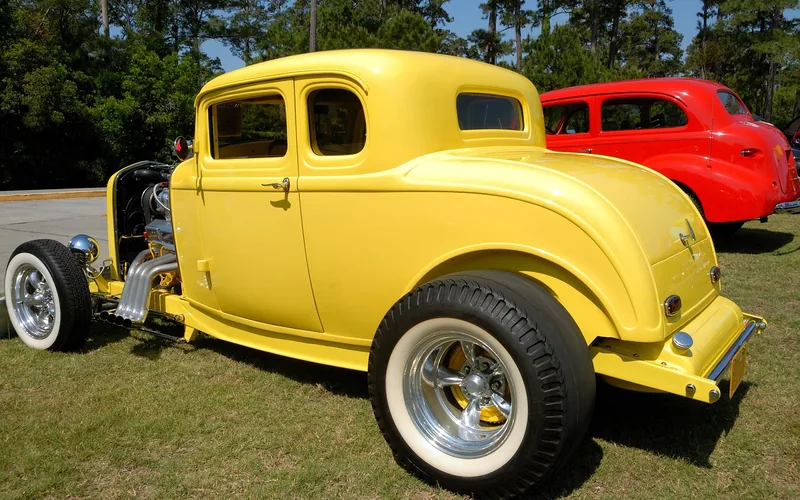
Organized car enthusiasm has a documented starting point in Southern California. According to the National Hot Rod Association (NHRA), Wally Parks took part in forming the Southern California Timing Association (SCTA) in 1937, a group focused on land speed record events held on dry lakebeds. After the war he was elected president of the reorganized SCTA in 1946 and became its general manager in 1947, and his concept produced what NHRA calls America’s first Hot Rod Show, presented by the SCTA in 1948 at the Los Angeles Exposition Armory.
Organized car enthusiasm moved fast: Hot Rod magazine launched in 1948 with Bob Petersen and Bob Lindsay, the 1949 campaign opened Bonneville to hot rod speed trials, and Parks formed the NHRA in 1951, per NHRA.
Shifting Gears: From Niche Hobby To Mainstream
A March 1952 Hot Rod magazine story, reprinted in an NHRA history feature in 2021, offers a rare early headcount: it estimated more than 3,000 hot rod owners in California in 1945 and somewhere between 20,000 and 30,000 by its own writing date, with more than 25 percent of them regular competitors. These are the magazine’s estimates, not a census, but they show a niche growing roughly sixfold to tenfold in about seven years.
The same story sorted builders into two camps: those building for speed and those building for beauty and originality, with a “neutral zone” where a good-looking street car can also be very fast. For related takes, see car culture: a lifestyle or a passion and how enthusiasts connect across generations.
Defining Car Culture
More Than Machines: A Social Phenomenon
Car culture is social before it is mechanical. Anthea Hartig, director of the Smithsonian’s National Museum of American History, described lowriding in a 2026 interview as a culture where men and women came together in community, using garages, community halls and churches as safe spaces. The car is the reason to meet; the community is what keeps people coming back. That is the practical difference between owning a car you like and belonging to a culture.
Each scene defines itself differently. The table lists only what the sources we read state. We left out Japanese tuner and muscle car scenes rather than describe them from memory; see our page on a 1971 Monte Carlo lowrider for one related scene.
Components Of Car Community Beliefs
| Scene | What defines it (per source) | Origin as the source states it | Source |
|---|---|---|---|
| Hot rod and drag racing | Building and racing modified cars; organized, supervised competition instead of street racing | SCTA formed 1937 for land speed events; NHRA founded 1951 | NHRA |
| Lowriding | Painted, chromed, hydraulic-equipped cars driven “low and slow”; community, art and identity | Mid-twentieth-century Southern California, per NPR; the Smithsonian ties it to post-war Los Angeles | NPR, 2024; Smithsonian exhibit coverage, 2026 |
| Road-trip heritage | Historic roadside places and routes: hotels, filling stations, restaurants | U.S. Highway 66, “the Mother Road” | National Park Service |
| Club motorsport | Autocross, track days, time trials and road racing run by a club with regional chapters | SCCA program list; founding history not read for this guide | SCCA |
| Aftermarket and industry | Specialty parts and accessories for personalizing cars and trucks | SEMA research covers the U.S. specialty-equipment market | SEMA |
The Social Impact Of Car Culture
The Smithsonian’s 2026 lowriding exhibit, reported by NPR member stations as “Corazon y Vida,” places a famous lowrider called Gypsy Rose at its center and traces the culture from its Chicano roots to its influence on art and activism. A national museum treating a car scene as American history shows how far the hobby has come.
Status Symbols And Identity
For many people the car is identity, not status. NPR’s 2024 report quotes lowrider enthusiast Cesar Ibarra: “It’s not a hobby for me. It’s my lifestyle.” Another builder in the same story passed the tradition on by building a lowrider bike for his son.
Automobiles And Lifestyle Significance
Hartig tied lowriding to the post-war American dream of owning a car, noting that opportunities were not equally open to Mexican Americans, African Americans and others, and that a family car could be reworked with bodywork, chrome, paint and pinstriping. She also said the space was contested: signs banning loitering and lowriding were still seen as late as the 1990s.
If you want the fan-culture angle, our pages on car culture in pop culture and finding community in the automotive lifestyle go deeper.
Automotive Passion And Career Paths
Passion can turn into work, and the NHRA founder is the best documented example we found.
From Enthusiast To Professional
NHRA’s tribute says Wally Parks spent ten years as a road test driver and process engineer for General Motors before leaving in 1947 to run the SCTA, became the first editor of Hot Rod magazine and formed the NHRA in 1951. SEMA named him its Man of the Year in 1973.
The Economic Engine Of Car Culture
Car culture has a commercial side. A SEMA market research page lists an Accessory Opportunity Report that places emerging segments within a $44.6 billion industry of vehicle personalization; the page does not state the year of that figure, so treat it as a SEMA-reported scale, not a current forecast.
Competition has a purse too: NHRA says today’s racers compete for a share of more than $3 million in prize money, while 1950s winners earned little more than a trophy and bragging rights. One caution on events: SEMA describes its annual SEMA Show as a trade-only event for manufacturers and buyers, so it is not a public car show.
Diversity In The Car Community
Car communities are not one group: the 1952 Hot Rod story noted that most non-competition cars were used mainly for transportation and valued for looks, while a smaller share raced.
Respect Across Different Builds And Projects
Written policies show how organized clubs handle this. The SCCA says it strives to give all participants a welcoming environment and supports equality of opportunity and treatment regardless of factors it lists, including gender, race, age and disability. For newcomers, that kind of published expectation is a useful sign of a club worth joining. Our guide to how to join a car club covers what to ask before you sign up, and the role of car clubs in community explains why clubs matter.
Car Enthusiasm As A Lifestyle Choice
Beyond Materialism: Cars As Cultural Artifacts
Governments and museums now treat cars and roads as heritage. The National Park Service says more than 250 buildings, bridges, road alignments and other sites along Route 66 are on the National Register of Historic Places, and its travel itinerary highlights over 100 of them, describing the route as a reminder of the influence the automobile has had on the nation. The Smithsonian’s lowrider exhibit does the same for a car scene. Cars, in this view, are cultural artifacts as much as machines. For a closer look at preservation, see documenting automotive heritage.
Is Driving A Hobby? Hobby Versus Lifestyle
Searchers often ask whether driving or owning cars counts as a hobby. The answer depends on how central the car is. A hobby is something you do in spare time; a lifestyle shapes your schedule, friendships and spending. The lowrider builders NPR interviewed describe the second case, while someone who attends one local show now and then is in the first. Our page on what a car enthusiast is covers that range.
The Cost Of Car Culture
No source puts one number on costs, because they depend on the car and the scene. Common categories are:
- Buying the vehicle and keeping it insured
- Routine maintenance and storage
- Performance parts and modifications
- Event entry fees, travel and track time
- Cosmetic work such as paint, wheels and interior
Set a budget before the first modification, and see gift ideas for car enthusiasts for smaller purchases.
Modification Rules To Know First
Modifying a car can break the law even when it is a hobby car. The U.S. Environmental Protection Agency states that tampering with a vehicle’s emissions control system is illegal under the Clean Air Act, and that the Act also prohibits making, selling or installing aftermarket devices that defeat those controls. Read the EPA page on tampering and aftermarket defeat devices before changing exhaust, engine tuning or emissions parts.
Rules also vary by state and city. NPR’s lowrider report shows how: a 1958 section of the California Vehicle Code banned modifying cars so the frame sat lower than the bottom of the wheel rims, and a law that took effect on January 1, 2024 stopped cities from banning cruising there. Check your own state’s vehicle code or DMV before you modify, and do not treat any one state’s rule as national.
What Is “Auto Lifestyle”? How It Differs From Car Culture
“Auto lifestyle” and “car culture” are often used as if they mean the same thing, but the emphasis differs. Car culture is the shared layer: meets, clubs, events, history and the communities around them. Auto lifestyle is the personal layer: how one person fits cars into daily habits, style and choices, from the vehicle they drive to how they maintain and modify it.
Someone can be part of car culture without making cars their lifestyle, such as attending an occasional show, while someone deep in the lifestyle usually lives it daily. Both point to the same passion from different angles: community in one case, personal identity in the other.
Ways To Get Involved Safely
The sources above point to organized, supervised settings. The 1952 Hot Rod story argued that supervised competition beats street racing, and NHRA’s own site continues that approach with tracks and programs. The table lists real options named on the pages we read.
| Option | What the source lists | Source |
|---|---|---|
| SCCA events | Programs including Autocross, RallyCross, Track Days, Time Trials, HillClimb and Road Racing, plus a “Find Your Region” tool and a Teen Driving Program | SCCA website |
| NHRA tracks and spectating | A “Locate an NHRA Track” page, an open-pits policy that lets fans watch teams work, and a Junior Dragster program | NHRA website |
| Museum visits | The Smithsonian lowrider exhibit “Corazon y Vida” was reported in March 2026; check the museum for current dates | NPR member station reports |
| Route 66 sites | A National Park Service travel itinerary highlighting over 100 historic sites | National Park Service |
Whatever you pick, drive legally on public roads and save speed for a venue built for it.
Common Car Culture Myths
| Myth | What the sources say |
|---|---|
| Car culture is just street racing | The 1952 Hot Rod story and NHRA describe clubs, timing and supervised competition as the core of organized hot rodding. |
| Car culture is a recent social media trend | SCTA formed in 1937 and the first Hot Rod Show ran in 1948, per NHRA. |
| The SEMA Show is a public car show | SEMA describes it as a trade-only event for manufacturers and buyers. |
| A hobby car can be modified any way you like | EPA states tampering with emissions controls is illegal under the Clean Air Act, and state rules vary. |
The Future Of Car Culture
Nobody can predict how car culture will change. One concrete signal comes from SEMA: its 2026 Future Trends Report is described as covering alternative powertrains, vehicle sales and financing trends, and the economy, all of which affect what enthusiasts can buy and modify. The SCCA website also lists an eMotorsports program next to its traditional events.
Personal Stories Of Car Culture
NPR’s 2024 report profiles lowrider owners who treat the culture as a family tradition, and the Smithsonian coverage notes that families loaned Gypsy Rose to the museum. The jump from hobby to lifestyle is carried by people, not products.
If you are starting out, our overview of model car shows is a low-cost way to see the hobby, and when cars became common gives the background on why cars spread so widely.
Frequently Asked Questions
What Does Car Culture Mean To You?
Car culture means the shared habits, communities and identities that form around cars, including clubs, events, modification scenes and preserved history.
Is Being A Car Enthusiast A Hobby?
Yes, for many people it is a spare-time hobby. It becomes a lifestyle when the car shapes friendships and spending, as lowrider owners interviewed by NPR described.
What Are The Aspects Of Car Culture?
Main aspects are clubs and meets, shows, modification, organized racing, road heritage and the aftermarket industry.
How Can Cars Be A Part Of Culture?
Museums and governments treat cars as heritage: the Smithsonian displays a famous lowrider, and over 250 Route 66 sites are on the National Register of Historic Places.
Is Street Racing Part Of Car Culture?
Organized motorsport is, but street racing is not a safe or legal way to take part. NHRA history describes organized, supervised competition as the alternative; use a sanctioned track or event instead.
Conclusion
Car culture grows from hobby to lifestyle through gathering places, shared rules and community, a pattern documented since the SCTA in 1937. Pick one scene, join an organized event, learn your state’s modification rules and let the community do the rest.
Products related to this article
Sponsored / affiliate links. As an Amazon Associate I earn from qualifying purchases. I may earn additional commission from eligible campaigns.