Therapeutic Benefits of Automotive Restoration: What Helps
Automotive restoration can support wellbeing when you choose low-risk, finishable tasks: cleaning, disassembly, rust removal, trim repair, and reassembly; if a job needs heavy structural work, high-voltage systems, or a full repaint, it usually shifts from soothing to stressful. Ignore that line and you can trade calm progress for stalled projects, rising costs, and safety mistakes. This guide breaks restoration into therapeutic tasks, warning signs, and the point where outside help makes more sense.
What therapeutic means in automotive restoration
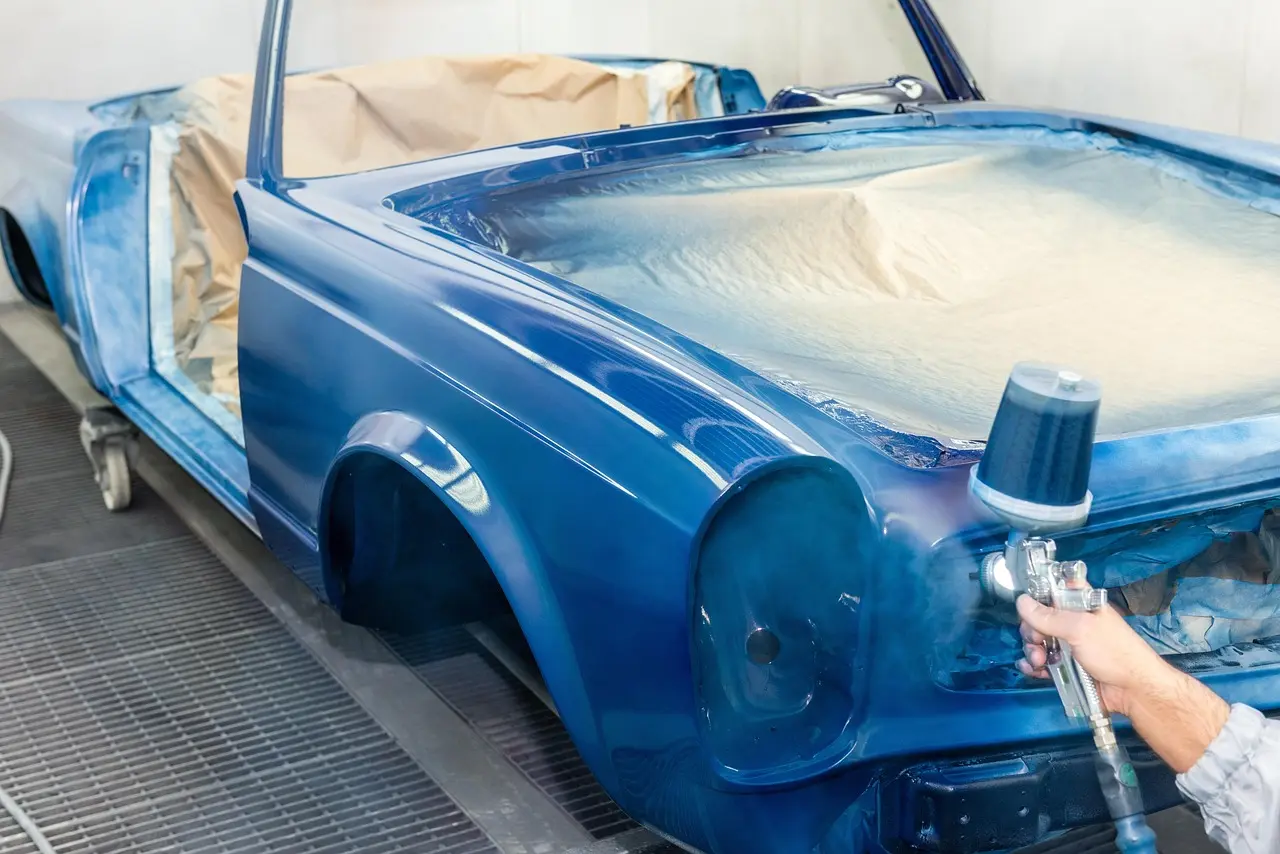
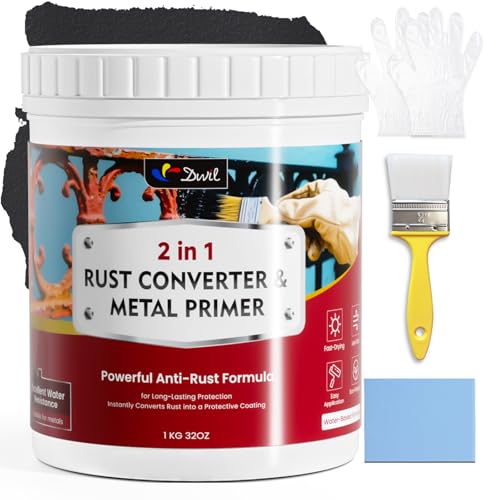


In this context, therapeutic means something that helps to heal or restore health in a broad sense, not only medical treatment. Vocabulary.com notes that therapeutic is not reserved only for drugs or medical treatments, and it links the word to feeling rejuvenated. Dictionary.com adds that therapeutic can mean curative, related to treating disease, or serving to maintain health; its etymology dates to 1535–45 and traces to Greek therapeutikós.
Therapeutic as restorative, not medical
That wider meaning matters here. A task can be therapeutic because it steadies attention, lowers tension, or leaves a person feeling more restored, even when it has nothing to do with clinical care. Automotive restoration fits that broader use when the work feels manageable, purposeful, and physically safe.
Why hands-on work can feel grounding
Restoration gives the brain a clear job: sort parts, remove fasteners, clean surfaces, measure fit, or bring a surface back to uniform condition. Repetition matters. Your hands stay busy, but your mind does not have to juggle endless choices at once, which is one reason many people find repetitive tactile work calming.
How classic-car context changes motivation
Classic cars often carry sentimental value, craftsmanship, and history. That does not mean every project will feel meaningful to every person, but it can strengthen motivation when the vehicle connects to family memory, design interest, or a respect for older engineering. The emotional pull is part of the appeal, not the whole story.
📊 The term therapeutic dates to 1535–45 in Dictionary.com’s etymology. Source: Dictionary.
Can restoring a car actually help with stress and anxiety?
Yes, it can help with stress for many people, especially when the job is repetitive, finite, and low risk. Automotive restoration can lower cortisol through repetitive tactile tasks, and sanding and polishing are part of that effect. It is not a treatment for anxiety, but it can create a calmer mental state while the hands stay occupied.
Repetition, rhythm, and present-moment attention
Tasks with a steady rhythm often support mindfulness because attention stays on touch, motion, sound, and fit. Removing a trim clip, wet-sanding a panel, or cleaning corrosion from a connector can narrow the mental field in a useful way. That kind of focus can interrupt rumination for some people.
Where calm turns into strain
Stress rises when the task stops being bounded. Scope creep, missing parts, seized fasteners, deadline pressure, and surprise corrosion can turn a relaxing job into a frustration loop. Chemical exposure, grinders, jacks, airbags, springs, and sharp edges also matter. If safety margins are thin, the task is no longer therapeutic in any practical sense.
What kind of restorer tends to benefit most
People who enjoy routine, visible progress, and small completions often get the most from restoration as a stress-reduction activity. It tends to suit someone who can accept unfinished work in stages. The biggest benefit usually comes when the project size matches skill, space, and patience.
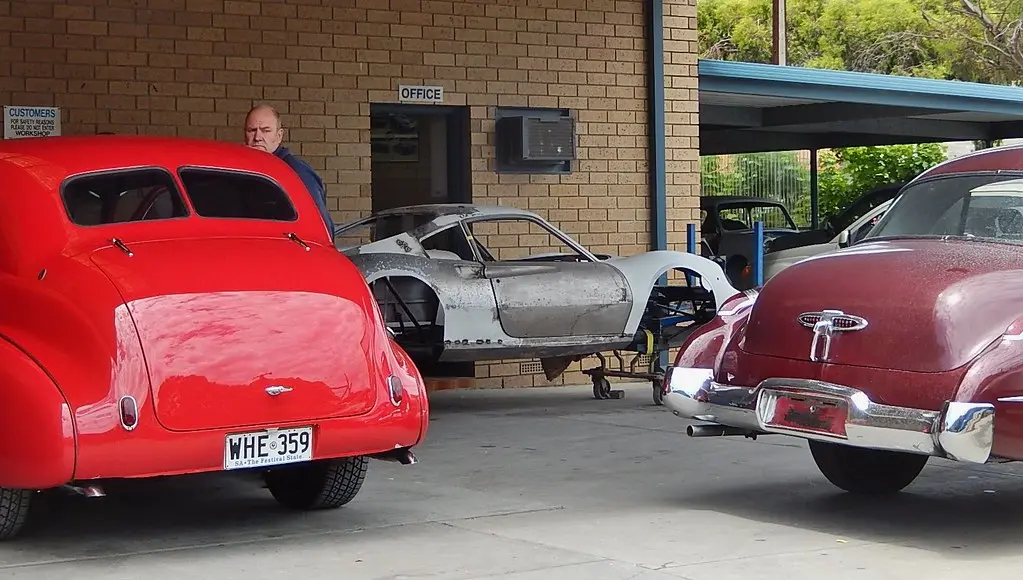
Which restoration tasks feel most therapeutic?
The most therapeutic jobs are usually the ones with clear before-and-after feedback, moderate repetition, and limited risk. Cosmetic work often calms the mind; diagnostic work often sharpens it; precision assembly often builds dexterity. The wrong job, by contrast, can feel noisy, expensive, or physically punishing very quickly.
Cosmetic tasks that reward repetition
Cleaning, decontamination, sanding, polishing, trim restoration, and paint prep are common examples. These jobs suit people who want predictable progress and visible change. They also create a sense of order, which is part of why they can feel grounding.
Mechanical tasks that create clear progress
Simple mechanical work can feel satisfying when the outcome is obvious: replacing hoses, servicing brakes under proper support, rebuilding a carburetor, or reassembling labeled parts. Each completed step reduces clutter and increases momentum. That is psychologically useful because progress is easy to see.
Precision tasks that build focus and dexterity
Fine motor skills matter in sanding, masking, paint prep, trim fitting, wiring cleanup, and careful assembly. These tasks ask for hand-eye coordination and patience. They can be therapeutic when the person likes detail work, but they can frustrate anyone who wants fast results.
Therapeutic Task Map: choose the right job for your temperament
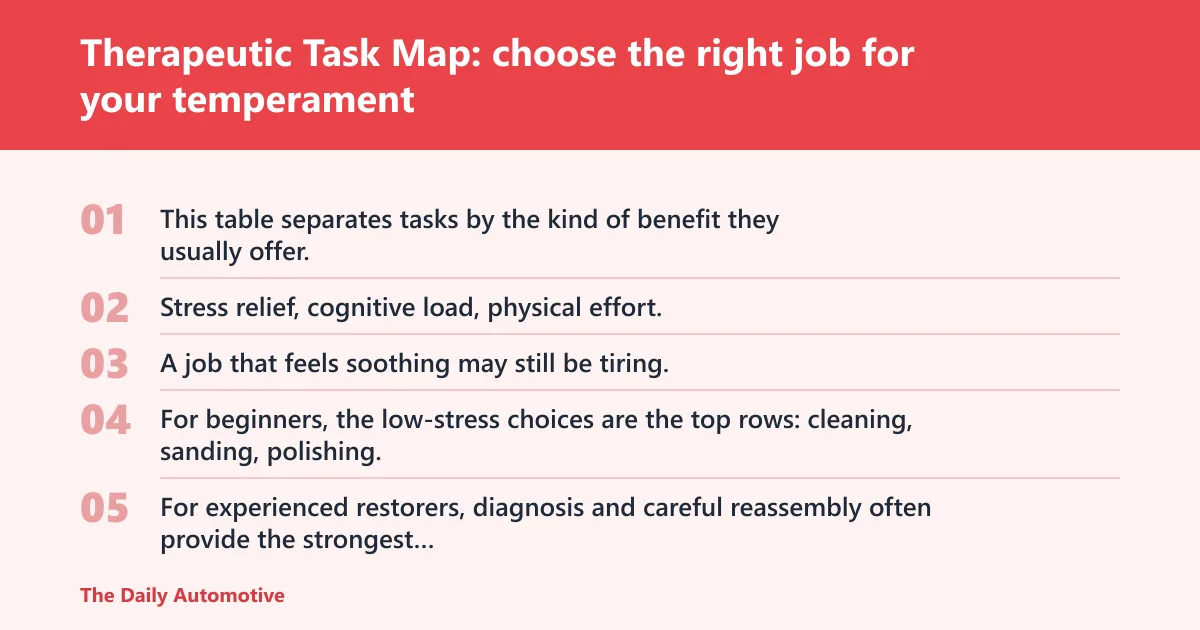
This table separates tasks by the kind of benefit they usually offer. Stress relief, cognitive load, physical effort, and frustration risk are not the same thing. A job that feels soothing may still be tiring, and a job that builds focus may also be mentally demanding.
| Task | Stress relief | Cognitive load | Physical effort | Frustration risk | Best fit |
|---|---|---|---|---|---|
| Parts cleaning | High | Low | Low | Low | Beginners, anyone wanting quick calm and visible progress |
| Hand sanding | High | Low to medium | Medium | Low to medium | Patient restorers who like repetition and texture work |
| Polishing trim | Medium to high | Low | Low to medium | Low | People who want visible payoff without major disassembly |
| Disassembly and labeling | Medium | Medium | Low to medium | Medium | Beginners with patience and a methodical approach |
| Simple diagnosis | Low to medium | High | Low | Medium to high | Experienced hobbyists who enjoy logic and sequencing |
| Brake work under safe support | Medium | Medium to high | Medium | Medium | Confident DIYers who understand safety limits |
| Full paint prep | Medium | Medium | High | High | People with time, patience, and a tolerance for detail |
| Rust repair and structural work | Low | High | High | High | Experienced restorers or those working with professional help |
| Engine teardown and rebuild | Medium | High | Medium to high | High | Experienced restorers who like diagnosis and sequencing |
For beginners, the low-stress choices are the top rows: cleaning, sanding, polishing, and organizing parts. For experienced restorers, diagnosis and careful reassembly often provide the strongest problem-solving momentum. The least therapeutic tasks are usually the ones that mix high effort, high uncertainty, and high consequences.
Say your project is a 1978 coupe with faded brightwork and a trunk full of labeled trim. Cleaning the trim, sorting clips, and re-fitting one panel at a time may feel calming because every half-hour produces visible order. By contrast, stripping a quarter panel with hidden rust can turn into a long, discouraging chain of surprises.
How restoration creates flow state and better focus
Flow state is a deep concentration that can appear during repetitive manual work when the task is challenging enough to hold attention but not so hard that it overwhelms it. The Daily Automotive page explicitly mentions a genuine flow state in this kind of work. Restoration is a good candidate when the next step is clear and feedback comes quickly.
Why repetitive work can quiet mental noise
Repeating the same motion on a body panel, wire loom, or interior component can reduce mental scatter. The brain has enough to track, but not so much that it keeps jumping between unrelated concerns. That makes the task feel orderly, which supports focus.
How diagnosis and sequencing train problem-solving
Problem-solving is a major part of restoration. Diagnosing a no-start condition, finding the right part number, or planning what must come apart first all require sequence thinking. That can build confidence because each solved issue makes the next decision easier.
Picture a common first-timer mistake: removing a dashboard before documenting connector positions, screw lengths, and clip locations. Reassembly then becomes a puzzle with missing edges. The work still teaches problem-solving, but the lesson is stressful instead of therapeutic.
What breaks flow during a project
Flow breaks when tasks keep changing shape. Waiting on parts, switching tools, or discovering hidden damage interrupts momentum. Deadlines do the same thing. If a project is supposed to be relaxing, leave room for pauses and surprises.
What physical benefits can come from hands-on restoration?
Automotive restoration can add useful movement, improve fine motor skills, and build hand-eye coordination. The Daily Automotive page says restoration work can build cardiovascular fitness through movement around and under the vehicle. The physical benefit is real, but it comes with clear limits: strain, awkward positions, and chemical exposure can outweigh the upside.
Fine motor skills and hand-eye coordination
Sanding, paint prep, clip installation, connector work, and trim fitting ask for steady hands and accurate touch. These tasks can support dexterity because the hands must respond to small visual cues. The effect is strongest in precision work, not in heavy dismantling.
Light physical activity versus strain
Walking around a car, crouching, reaching, and moving tools all count as activity. That is different from repetitive force, overhead work, or lifting heavy assemblies. If the task leaves joints sore or forces bad posture for long stretches, the physical cost may exceed the wellbeing benefit.
Safety limits that matter more than motivation
Motivation cannot cancel risk. Jack stands, eye protection, gloves where appropriate, ventilation, hearing protection, and chemical handling rules are generally part of this kind of project rather than optional extras. When a job involves suspension springs, fuel systems, airbags, or major structural repair, caution should outrank enthusiasm.
How to choose a restorative project that supports wellbeing
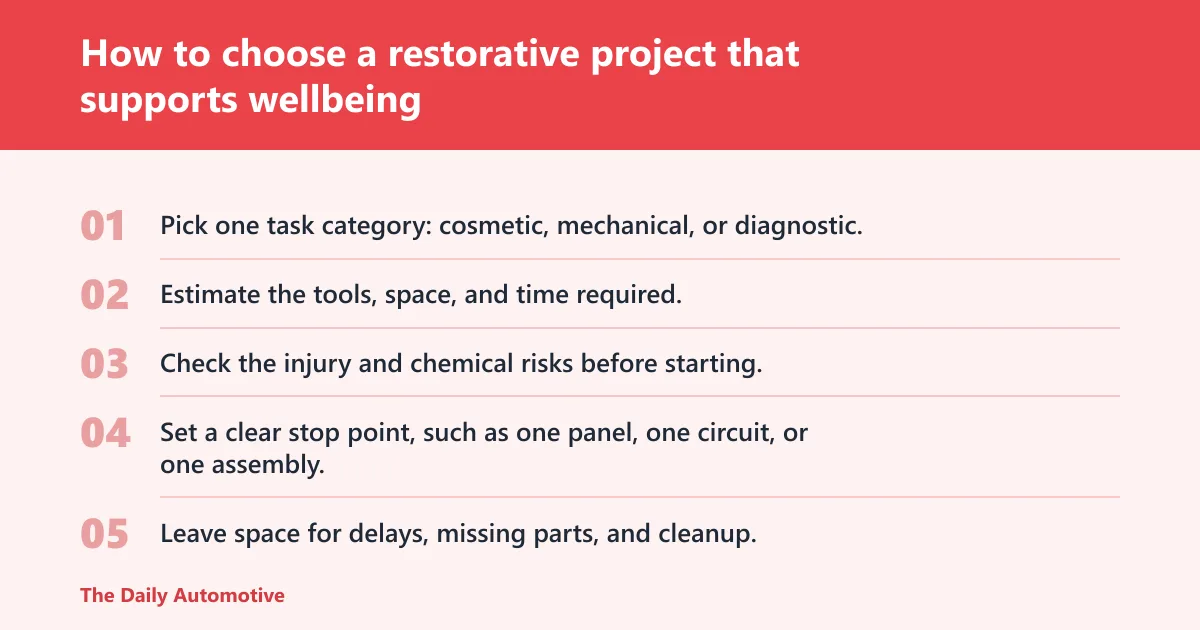
The best project is the one that fits your skill, space, time, and tolerance for uncertainty. A therapeutic project should have a finish line you can actually reach. If the task list keeps growing faster than the work gets done, the hobby stops feeling restorative and starts feeling like a burden.
Match task difficulty to your skill level
Choose jobs you can complete with the tools and knowledge already available, or with a realistic chance of learning them safely. Simple projects give faster feedback. Complex projects can still be rewarding, but only if they do not exceed your patience or budget.
- Pick one task category: cosmetic, mechanical, or diagnostic.
- Estimate the tools, space, and time required.
- Check the injury and chemical risks before starting.
- Set a clear stop point, such as one panel, one circuit, or one assembly.
- Leave space for delays, missing parts, and cleanup.
Set a finish line that prevents scope creep
Scope creep is one of the fastest ways to lose the therapeutic effect. A “quick” rust cleanup becomes a body-off rebuild. A trim refresh becomes a full interior replacement. Define success narrowly: one seat, one door, one panel, one subsystem.
Build in pauses, storage, and protection from frustration
Bag and label parts. Photograph assemblies before removal. Keep chemicals sealed and tools organized. These habits reduce friction later, which is part of what keeps restoration calming. They also make it easier to stop for the day without losing progress.
Frequently asked questions
Is restoring a car actually therapeutic?
It can be. Therapeutic means helping to heal or restore health in a broad sense, and restoration fits that meaning when it feels grounding, repetitive, and finishable. The effect is strongest in tasks that reduce mental noise, create visible progress, and stay within safe limits.
What mental health benefits can automotive restoration have?
Automotive restoration can support stress reduction, focus, and a sense of accomplishment. Classic cars may add emotional meaning through memory, craftsmanship, or history, but that varies by person. The benefit is practical: attention shifts to concrete tasks instead of unstructured worry.
Does car restoration help with stress and anxiety?
It can help with stress for many people, especially through repetitive, tactile work such as cleaning, sanding, and polishing. Those jobs can support mindfulness and a flow state. It should not be treated as a substitute for professional mental health care when that care is needed.
What physical benefits come from working on a car restoration project?
Restoration can build fine motor skills, hand-eye coordination, and light physical activity from moving around the vehicle. The Daily Automotive page also notes cardiovascular fitness gains through movement around and under the vehicle. The benefit depends on task choice, posture, and safety practices.
How does restoration create a flow state?
Flow state tends to appear when a task is repetitive enough to settle attention but still requires skill. Wet sanding, polishing, or careful assembly can fit that pattern. Flow breaks when the project becomes too chaotic, too dangerous, or too interrupted by missing parts and delays.
What parts of car restoration are most calming?
The calmest tasks are usually cleaning, sanding, polishing, labeling, and other repetitive jobs with clear outcomes. They give the mind something concrete to do without constant high-stakes decisions. Tasks that involve hidden rust, complex wiring, or major structural work are less likely to feel calming.
Can automotive restoration improve focus and problem-solving?
Yes. Diagnosis, parts sourcing, and repair sequencing all ask for attention, logic, and planning. Those skills improve most when the work is broken into small steps. The project becomes useful mental practice when each step has a clear goal and a visible result.
What tools or tasks make restoration feel therapeutic?
Hand tools, sanding blocks, polishers, parts trays, labels, and inspection lights often support therapeutic work because they keep the task orderly and controllable. The tasks that pair best with them are low-risk, repeatable jobs with obvious progress. Anything noisy, hazardous, or open-ended is less likely to feel restorative.
Products related to this article
Sponsored / affiliate links. As an Amazon Associate I earn from qualifying purchases. I may earn additional commission from eligible campaigns.