How to Use a Car Jack for Changing Tires Safely
The safe way to jack up a car for a tire change is to place the jack under the vehicle’s reinforced pinch weld, the notched metal seam near each wheel, not the flat floor pan or a plastic underbody panel.
Loosen the lug nuts about a quarter turn before you lift the car, then raise it only until the flat tire clears the ground by an inch or two. A jack rated for roughly 4,409 lbs (2 tons) covers most sedans and compact SUVs, while trucks and larger SUVs need a 3-ton-rated jack or higher.
How to Use a Car Jack to Change a Tire Safely
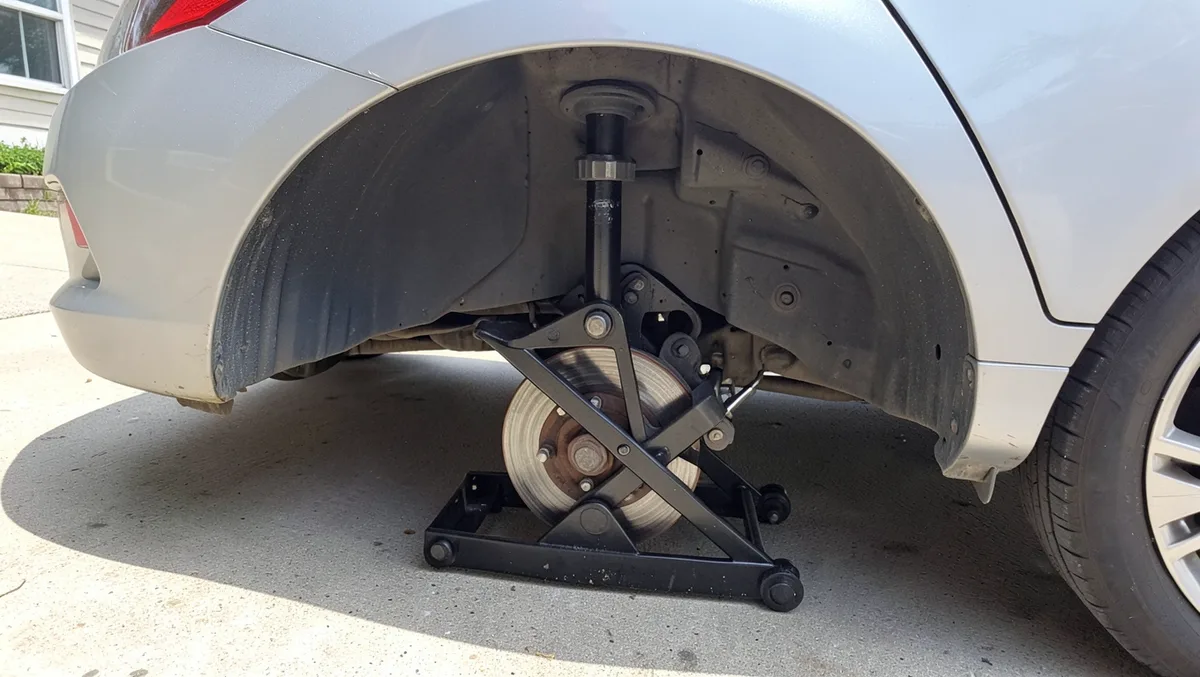
Every unibody car and most SUVs have a reinforced jacking point built into the pinch weld — the seam running along the underside of each rocker panel. It is usually marked with a notch, an arrow, or a small triangle stamped into the metal, and your owner’s manual will show the exact location for your model. Setting a bare jack cup directly against an unmarked section of that seam can fold the thin flange over, which is exactly what a jacking point is designed to prevent.
- Pull onto a flat, level surface, away from traffic, and turn on your hazard lights.
- Engage the parking brake and chock the wheel diagonally opposite the flat tire.
- Use the lug wrench to break each lug nut loose about a quarter turn while the tire is still on the ground — the wheel’s weight keeps it from spinning.
- Find the pinch weld jacking point closest to the flat tire and set the jack’s saddle squarely under it.
- Turn the jack handle steadily until the flat tire is an inch or two off the ground.
- Remove the loosened lug nuts, pull the flat tire off, and mount the spare.
- Thread the lug nuts back on by hand, then lower the car until the spare touches the ground.
- Finish tightening the lug nuts in a star pattern once the car’s weight is back on the wheel.
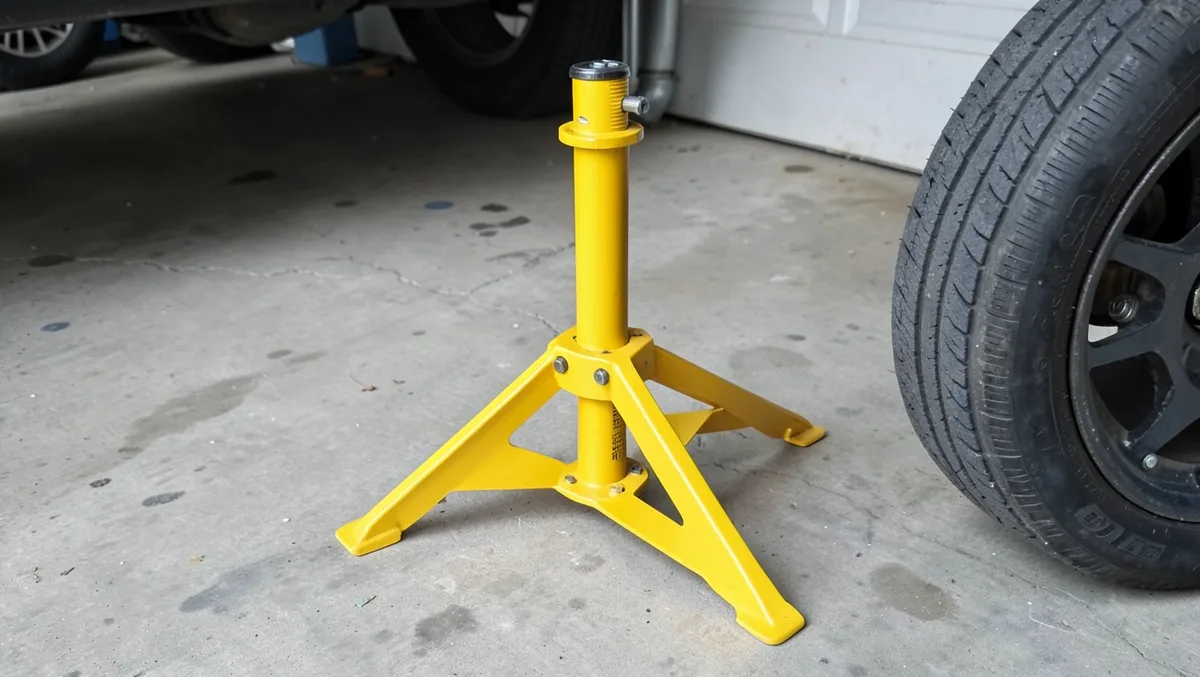
A scissor or bottle jack is only meant to hold the car up long enough to swap a wheel. If you need to spend more than a minute or two under the vehicle, or you’re working on jack stands in a driveway rather than a quick roadside swap, slide a rated jack stand under the frame before you get underneath. Jacks can slip off an angled or damaged pinch weld, and a stand is what actually keeps the car from coming down.
Because a jack only has to lift one corner of the car at a time, a capacity rating of roughly half your vehicle’s curb weight gives you a safe working margin — a 2-ton (4,409 lb) jack covers most sedans and compact SUVs, and a 3-ton jack or higher is the safer call for full-size SUVs and trucks. If a lug nut will not break loose even with the wrench from one of these kits, stop and see our guide on what to do when a tire will not come off rather than forcing it while the car is in the air.
Need one of these today rather than ordering online? See our store-by-store comparison of where to buy a car jack for same-day pickup options.
If you do not already have a rated jack and lug wrench in your trunk, these three kits are built for exactly the process above.
Car Jack Kit Scissor Jack For Car 2 Ton Tire Jack Tool Kit Universal Car Emergency Kit
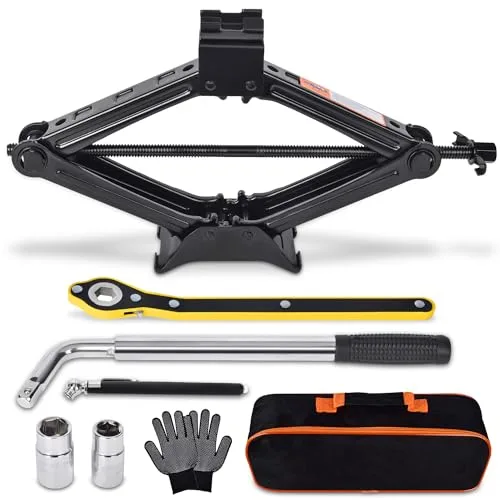
The Gurduenon Car Jack Kit Scissor Jack for Car 2 Ton (4409 lbs) is built for drivers who want a rated jack and lug wrench in one bag rather than buying each tool separately. Its universal fit works across most cars and SUVs, which makes it a practical pick for a household with more than one vehicle.
Pros:
- Universal compatibility with various car and SUV models.
- Lightweight and portable, facilitating easy storage and transport.
- Durable construction supports up to 2 tons (4409 lbs).
- Easy to use with a straightforward design for quick tire changes.
Cons:
- Manual operation may require more effort compared to hydraulic jacks.
- Limited lifting height, not suitable for all vehicle types.
The compact scissor mechanism stores flat in a trunk and is simple enough to operate correctly even with minimal car-maintenance experience, provided you set it on the pinch weld as described above rather than the floor pan. The included lug wrench fits a range of lug nut sizes, so the kit stays useful even if you change vehicles later. For most standard cars and SUVs, this is a straightforward, affordable way to be prepared for unexpected tire changes.
To buy this product, click here.
Scissor Jack 3 Ton Tire Changing Kit
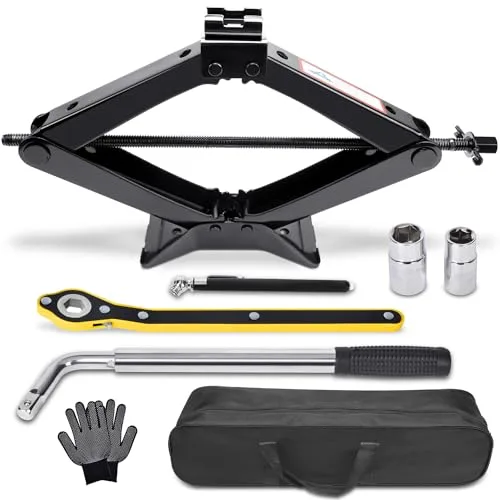
The Gurduenon Scissor Jack 3 Ton (6610 lbs) Tire Changing Kit with Lug Wrench steps up the capacity for owners of larger SUVs and light trucks who need more margin above the vehicle’s curb weight than a 2-ton jack provides.
Pros:
- Durable construction ensures long-lasting performance.
- Compact design makes it easy to store in your vehicle.
- High lifting capacity of 3 tons accommodates larger vehicles.
- User-friendly with an included lug wrench for added convenience.
Cons:
- Manual operation may require more effort compared to hydraulic jacks.
- Limited height range might not be suitable for very high-clearance vehicles.
Like the 2-ton version, this jack still needs to sit on the vehicle’s pinch weld or a manufacturer-approved lift point rather than the floor pan — the higher weight rating does not change where the jack belongs. The compact design fits in most trunks, and the bundled lug wrench covers the same roadside job the 2-ton kit does, just with more capacity in reserve for heavier vehicles.
To buy this product, click here.
Beaiguna Portable Car Jack Kit
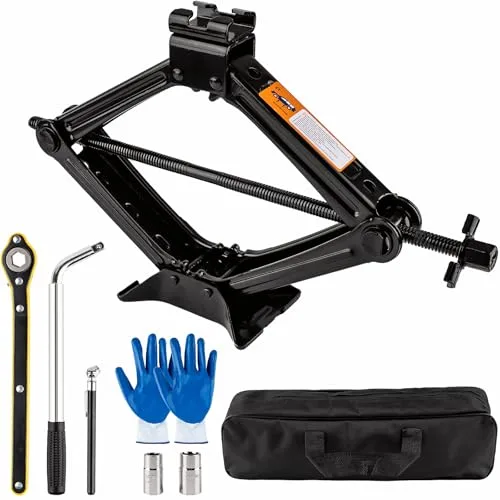
The Beaiguna Portable Car Jack Kit is a 2-ton scissor jack bundled with a lug wrench and a pair of work gloves, aimed at drivers who want one self-contained kit for occasional roadside tire changes.
Pros:
- Durable construction ensures long-lasting performance.
- Compact design makes storage convenient and saves space in your vehicle.
- Universal fit suitable for various car models, including SUVs.
- Easy operation with the included lug wrench.
Cons:
- Limited weight capacity of 2 tons may not be suitable for larger vehicles.
- Manual operation can be physically demanding during use.
The included work gloves are a small but genuinely useful add for a roadside kit, since tire-changing tools pick up brake dust and road grime fast. As with the other two kits here, its 2-ton rating is meant for the vehicle’s designated jacking point, not an open floor pan, and it covers most standard cars and SUVs comfortably within that limit.
To buy this product, click here.
Frequently Asked Questions
Where Do You Place a Jack When Changing a Tire?
Place the jack under the vehicle’s reinforced pinch weld, the notched metal seam a few inches behind the front wheels or in front of the rear wheels, not the flat floor pan or a plastic underbody cover. Check your owner’s manual or look for a stamped arrow or notch to confirm the exact spot for your car.
What Is a Scissor Jack Used For?
A scissor jack is used to lift one corner of a vehicle for a tire change or quick roadside repair. It is compact and stores easily in a trunk. Scissor jacks fit most cars and SUVs and are the standard tool included in a tire-changing kit.
How Much Weight Can a 2-Ton Jack Lift?
A 2-ton jack can lift up to 4,409 lbs. That covers most sedans and small SUVs. Since a jack only has to raise one corner of the car, this rating gives most vehicles a safe margin above the actual weight resting on that wheel.
Do You Need a Jack Stand to Change a Tire?
A jack stand is not strictly required for a quick roadside tire swap since you are only under the car briefly to pull the wheel and bolt on the spare, but you should never crawl underneath or linger under a vehicle held up only by a jack. Set a jack stand first for any job that takes longer than a few minutes.
How Do You Use a Scissor Jack Safely?
Park on level ground, engage the parking brake, and chock the wheel diagonally opposite the flat tire. Loosen the lug nuts about a quarter turn, then position the jack under the pinch weld and turn the handle until the tire clears the ground by an inch or two. Remove the lug nuts and wheel, mount the spare, then lower the car and finish tightening the lug nuts in a star pattern.
What Tools Come in a Tire-Changing Kit?
A tire-changing kit typically includes a scissor jack and a lug wrench, and many also add a socket adapter, work gloves, and a carrying bag. Having a complete kit means you are not searching for extra tools on the side of the road when you need them most.
Conclusion
Changing a tire safely comes down to two things: putting the jack on the vehicle’s reinforced pinch weld instead of the floor pan, and matching the jack’s rated capacity to your vehicle’s weight. A 2-ton scissor jack covers most sedans and compact SUVs, while larger SUVs and trucks are safer with a 3-ton-rated jack or higher.
An emergency kit with a lug wrench built in means you are not hunting for extra tools on the shoulder of a road. Loosen the lug nuts before you lift, use a jack stand for anything longer than a quick wheel swap, and check your jack’s condition periodically so it is ready when you actually need it.
Products related to this article
Sponsored / affiliate links. As an Amazon Associate I earn from qualifying purchases. I may earn additional commission from eligible campaigns.