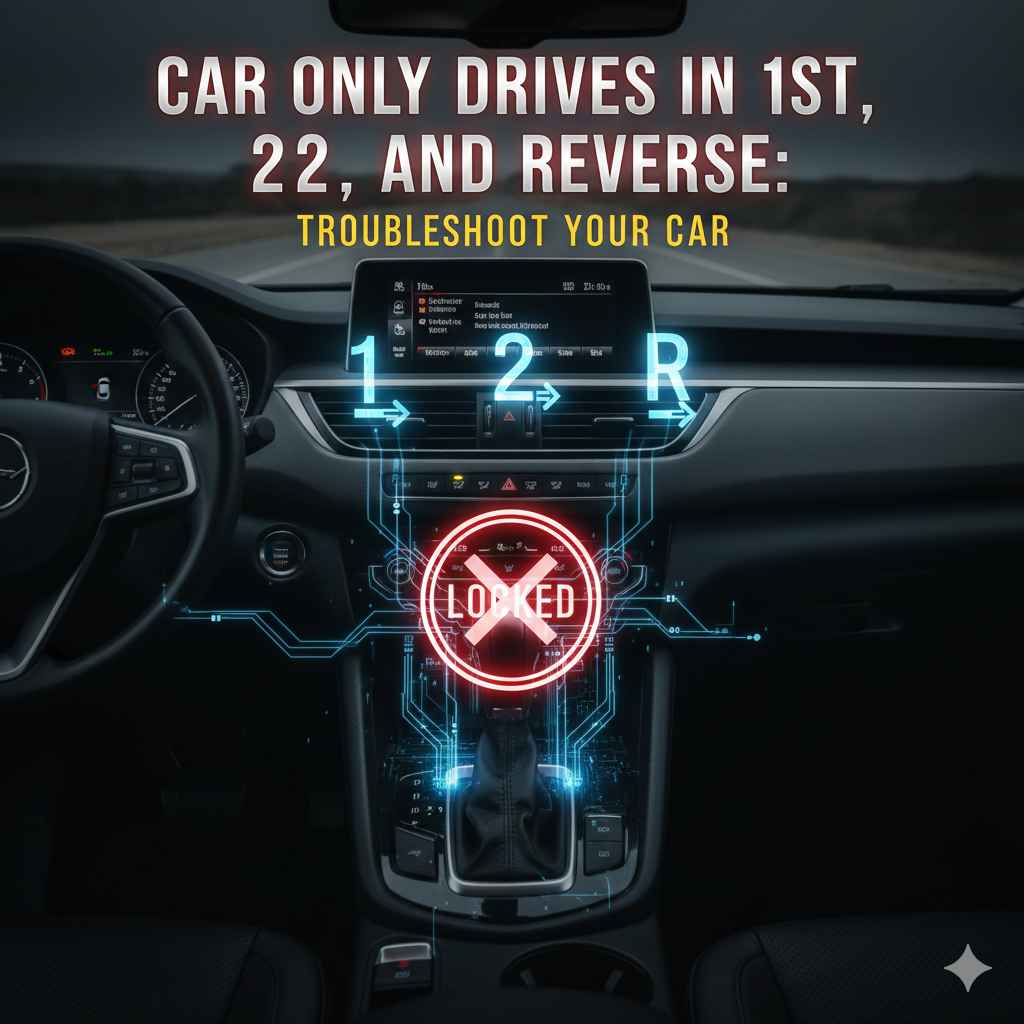
Car Only Drives in 1st, 2nd, and Reverse: Troubleshoot Your Car
If your car suddenly refuses to shift into higher gears and the Car Only Drives in 1st, 2nd, and Reverse: Causes can be tough, especially for new drivers. Seeing those warning lights and dealing with unexpected behavior can be frustrating. Don’t worry, many people experience this. We’re going to break down why this happens and give you straightforward steps to figure out what’s going on. We will explore the common culprits and then suggest how to get your car running right again. Now, let’s get started and look into what might be happening with your car.
Possible Issues When Your Car Is Stuck in Low Gears
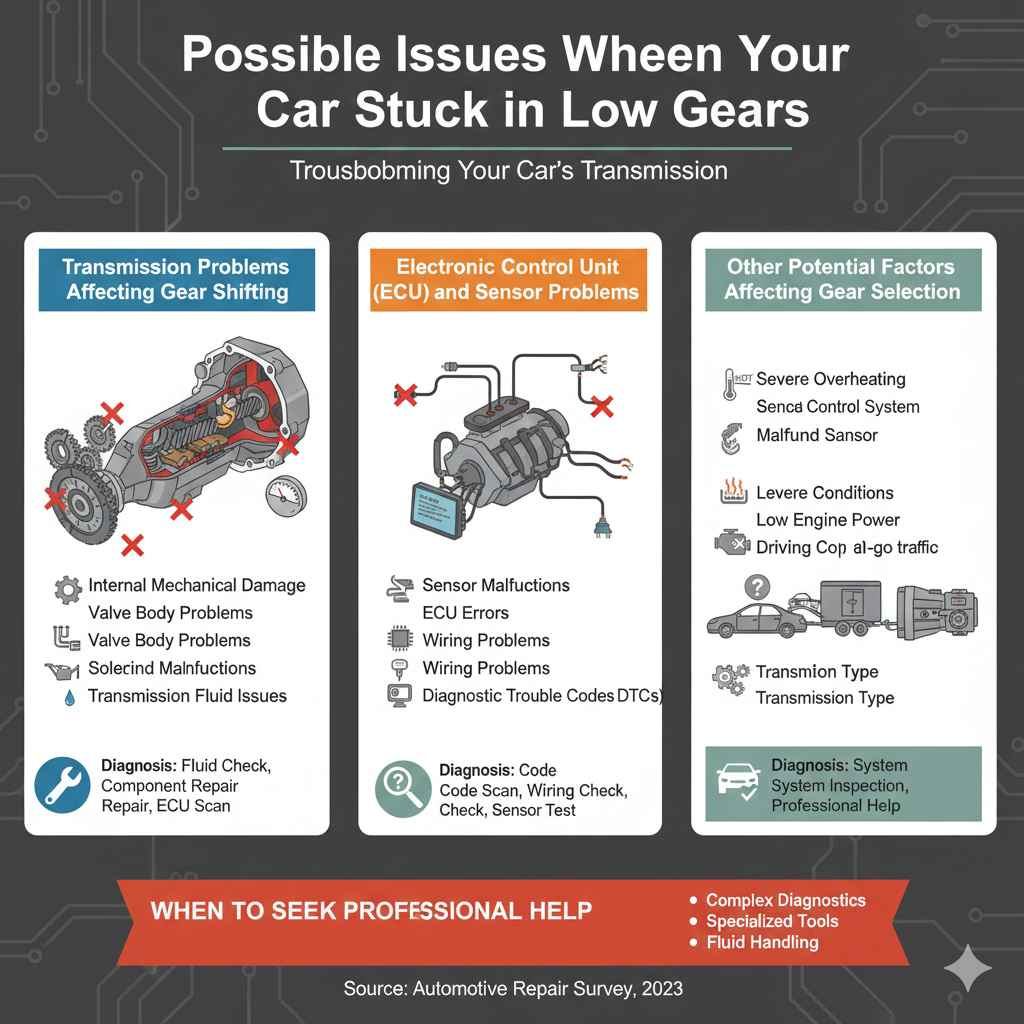
When your car only drives in 1st, 2nd, and reverse, it’s often a sign of a problem within the transmission. This can be caused by several components failing or malfunctioning. Pinpointing the exact cause can be tricky, but we’ll explore the main areas to consider. This will provide you with a good base to begin troubleshooting.
Transmission Problems Affecting Gear Shifting
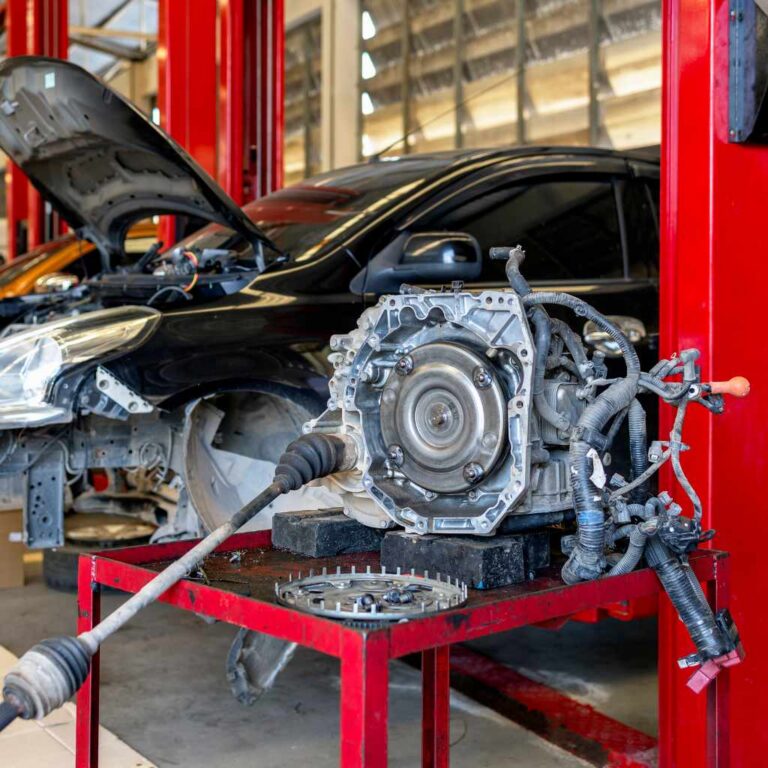
The transmission is the part of your car that changes gears, allowing your engine to deliver power to the wheels efficiently at different speeds. If the transmission isn’t working correctly, your car might be stuck in low gears. Transmission failures can range from minor issues to major mechanical breakdowns. It is important to know about different types of transmission problems to understand what’s happening.
These issues can include problems with the transmission’s internal components, such as worn-out clutches or damaged gears, or malfunctions in the electronic control system. These failures can result in your car remaining in lower gears, limiting your speed and performance. For example, a worn-out clutch in a manual transmission could make it difficult or impossible to shift gears.
- Internal Mechanical Damage: This includes issues like worn clutches, damaged gears, or broken bands. These parts are essential for the transmission to shift correctly. Over time, these parts wear down because of friction and use. When these parts are damaged, they may not be able to engage the correct gears, leaving your car stuck in a limited range. For instance, a broken band in an automatic transmission will stop the car from switching gears because it is not possible to generate the right amount of power to move the car forward.
- Valve Body Problems: The valve body is a critical component in automatic transmissions, managing the flow of transmission fluid to control gear changes. If the valve body is clogged, dirty, or damaged, it can prevent the transmission from shifting properly. This can cause the car to remain in lower gears. The valve body uses fluid pressure to shift gears. If the fluid flow is disrupted, it will cause the transmission to stay in a lower gear.
- Solenoid Malfunctions: Solenoids in an automatic transmission are electrically controlled valves that regulate fluid flow. If a solenoid malfunctions, it can disrupt the shifting process. A broken solenoid can give an error message to the car’s computer, preventing shifts. This will limit the gears available. This can cause the car to drive in only first and second gears.
- Transmission Fluid Issues: Low, dirty, or incorrect transmission fluid is a common cause of transmission problems. This fluid is essential for lubricating and cooling the internal components of the transmission. If the fluid level is low, it can lead to overheating and damage. Also, old or dirty fluid can cause wear and tear, and may affect shifting performance.
Electronic Control Unit (ECU) and Sensor Problems
The Electronic Control Unit (ECU), or car computer, plays a key role in managing the transmission. This system receives information from various sensors, making decisions about when to shift gears. Problems with the ECU or these sensors can trick the transmission into staying in low gears. Modern cars depend greatly on electronic systems, making it even more important to check these components. These issues can range from sensor malfunctions to ECU errors, leading to the same frustrating result.
- Sensor Malfunctions: The transmission relies on sensors to monitor speed, throttle position, and engine load. If any of these sensors fail, the ECU may not be able to determine when to shift gears correctly. The car may enter “limp mode,” where it uses only a few gears to protect the transmission. For example, a faulty speed sensor can send incorrect information about the vehicle’s speed.
- ECU Errors: The ECU is responsible for controlling the transmission. If the ECU has a fault, it might not send the correct signals to shift gears. This can be due to software glitches, physical damage, or other electrical issues. If the ECU detects a problem, it might put the transmission into limp mode.
- Wiring Problems: Faulty wiring or damaged connectors can disrupt the signals sent to and from the ECU and sensors. This can cause incorrect readings and errors in the shifting process. Corrosion, loose connections, or physical damage can lead to these issues. These problems may cause intermittent shifting problems.
- Diagnostic Trouble Codes (DTCs): The ECU stores diagnostic trouble codes (DTCs) when a problem is detected. Using a code reader, a mechanic can identify the cause. These codes provide a clue about what component is causing the issue. These codes should be read and interpreted carefully, so that the correct repairs can be made.
Other Potential Factors Affecting Gear Selection
Besides transmission and electrical issues, other factors can cause a car to operate in 1st, 2nd, and reverse. These might include external conditions or parts related to other vehicle systems. Recognizing these additional possibilities is key when diagnosing the problem. These factors might include the vehicle’s driving conditions and the specific type of transmission. Examining these potential causes can help you get a better view of the issue. A proper inspection can reveal these underlying problems.
- Severe Overheating: Overheating can cause significant damage to the transmission’s components. Extreme heat can lead to a breakdown of the transmission fluid and damage to the internal parts. If your car has been overheating, the transmission may go into “limp mode” to protect itself, which will limit gear selections.
- Low Engine Power: Problems with the engine can indirectly affect the transmission. If the engine can’t generate enough power, the transmission might not be able to shift into higher gears. Common engine issues like misfires, low compression, or a clogged catalytic converter may cause a loss of power.
- Driving Conditions: Frequently driving in stop-and-go traffic or towing heavy loads can put extra stress on the transmission. These conditions can cause wear and tear that leads to premature failure.
- Transmission Type: Automatic and manual transmissions have different designs and potential failure points. Automatic transmissions rely on hydraulics and electronic controls, while manual transmissions are mechanical. Automatic transmissions are more susceptible to solenoid and valve body issues, while manual transmissions may have problems with clutch wear or shifting mechanisms.
How to Troubleshoot When Your Car Is Only in Low Gears
Figuring out why your car is stuck in 1st, 2nd, and reverse takes some systematic troubleshooting. This involves checking specific areas of the car and observing the vehicle’s behavior. By following these steps, you can find the source of the problem. This can save you time and money by guiding you toward the correct solutions.
Preliminary Checks: Inspecting Key Areas First
Before you get into more detailed work, start with some simple checks. These initial steps can often reveal the most obvious causes of the problem. Simple actions such as checking fluid levels and looking for physical damage can quickly help identify issues. These preliminary checks can set the stage for more advanced diagnosis. These easy steps may save you from more complex diagnostics.
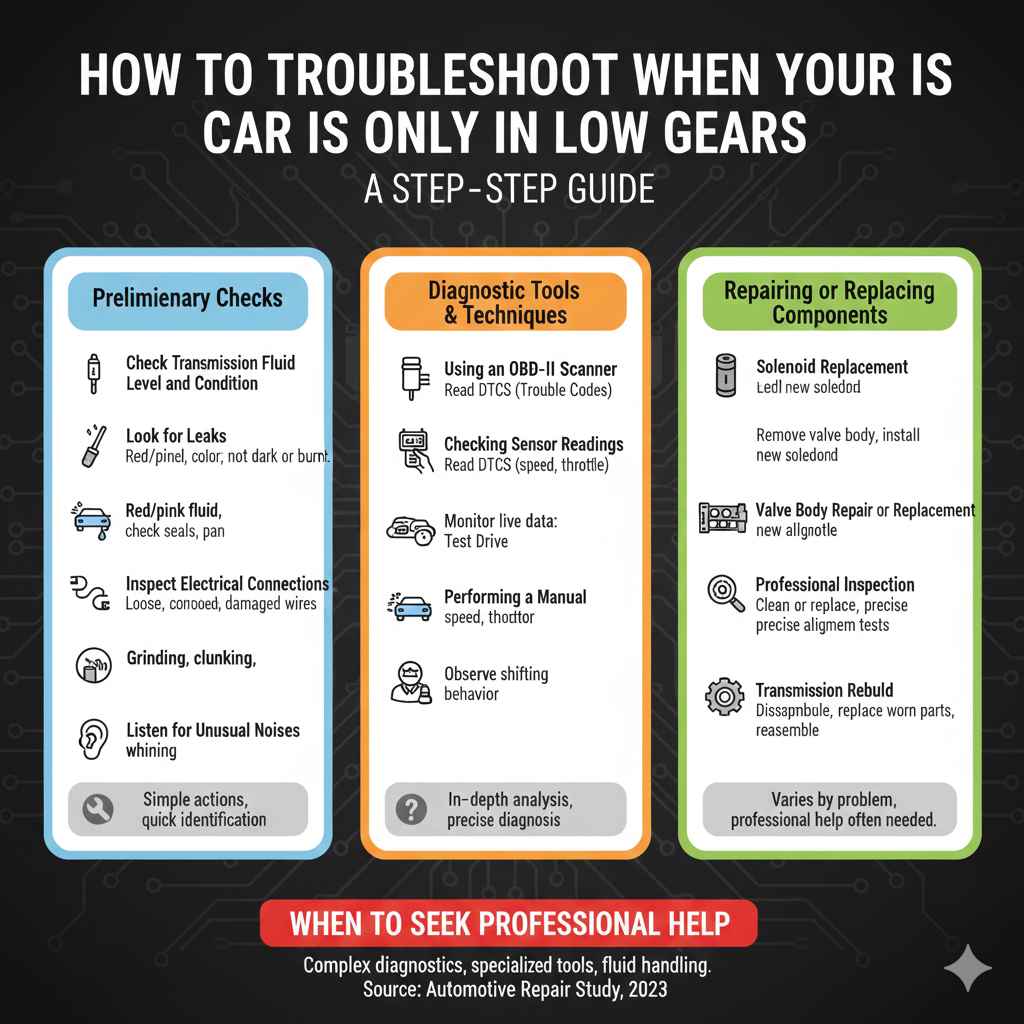
- Check Transmission Fluid Level and Condition: The transmission fluid should be at the correct level and look clean. Use the dipstick to check the level, making sure the fluid is not dark or burnt. Low or dirty fluid is a common cause of transmission problems. If the fluid is low, add the correct type. If it’s dirty, you’ll probably need to get a transmission fluid flush.
- Look for Leaks: Check underneath the car for any signs of fluid leaks. Transmission fluid is typically red or pink and can leak from seals, the pan, or other components. Leaks lead to a drop in fluid level, which can cause shifting issues. If you see a leak, find where it’s coming from and get it fixed.
- Inspect Electrical Connections: Check the connectors and wiring near the transmission and ECU. Look for any loose connections, corrosion, or damaged wires. A poor electrical connection can disrupt communication and cause shifting problems. Clean or replace any damaged connections.
- Listen for Unusual Noises: When you start the car and shift gears, listen for any grinding, clunking, or whining sounds. These noises might point to internal transmission problems. These sounds can provide vital clues to the problem’s source.
Diagnostic Tools and Techniques
When the initial checks don’t give you the answer, it’s time to get a little more in-depth with your investigation. Using diagnostic tools, such as an OBD-II scanner, can quickly identify problems. Interpreting the information these tools provide can help you understand what is wrong and what steps you’ll need to take to fix the issue. These tools provide information that you will not otherwise have.
- Using an OBD-II Scanner: An OBD-II (On-Board Diagnostics II) scanner is a device that connects to your car’s diagnostic port (usually under the dashboard) to read diagnostic trouble codes (DTCs). These codes can tell you about any issues detected by the ECU. Use the scanner to read the codes and look up their meanings to narrow down the problem.
- Checking Sensor Readings: Many scanners can also display live data from various sensors. You can monitor sensor readings, like vehicle speed or throttle position, while the car is running. This can help you determine whether a sensor is malfunctioning. A faulty sensor can be found by comparing its readings to known values.
- Performing a Manual Test Drive: While driving the car, pay attention to how it shifts. Note when and how the car struggles to change gears. Test driving can provide clues by identifying which gears are involved. Note the speeds at which the gear changes should occur, and see if they change at all.
- Professional Inspection: A professional mechanic can perform a more comprehensive inspection. They can check the transmission’s internal components, perform pressure tests, and use more advanced diagnostic tools. If you’re not comfortable working on your car, it’s best to take it to a professional.
Repairing or Replacing Transmission Components
After finding the cause of the problem, you’ll need to repair or replace the broken components. The specific repair will vary depending on the problem and the type of transmission. Repairs can range from replacing a sensor to rebuilding the entire transmission. Understanding the work required to fix the issue is critical. For some repairs, such as those that involve rebuilding the transmission, it is better to leave them to a professional mechanic.
- Sensor
- Solenoid Replacement: A solenoid replacement might involve removing the transmission pan and the valve body to access the solenoids. Once the bad solenoid is removed, the new one can be installed. This repair often requires careful work.
- Valve Body Repair or Replacement: If the valve body is clogged or damaged, you may be able to clean it. In other cases, it might need to be replaced. Valve body repair is typically a task for experienced mechanics because of the need for precise alignment and fluid sealing.
- Transmission Rebuild: If there’s major internal damage to the transmission, a rebuild is required. This involves disassembling the transmission, replacing worn or damaged parts, and reassembling it. This is usually best left to a professional mechanic.
Frequently Asked Questions
Question: Why is my car stuck in low gears?
Answer: When your car only drives in 1st, 2nd, and reverse, the issue is often related to problems within your transmission. This might include issues such as damaged components, like worn-out clutches or broken gears, valve body problems, or solenoid malfunctions. Also, electrical issues, such as faulty sensors or problems with the ECU, might affect gear shifting. Low, dirty, or incorrect transmission fluid levels can also be a cause.
Question: Can I drive my car if it’s only in low gears?
Answer: It’s generally not a good idea to drive the car very far if it is stuck in low gears. Limiting your speed will prevent more problems with the transmission, and driving in this state can be dangerous, depending on road conditions. It’s best to have the car inspected and repaired by a professional mechanic as soon as possible.
Question: What does “limp mode” mean?
Answer: “Limp mode” is a protection setting in the car’s computer that limits the car’s performance to protect the engine or transmission from further damage. It usually involves using only a few gears to keep the car moving. Limp mode is activated when the ECU detects a fault, such as a sensor malfunction or other problems within the transmission.
Question: How much does it cost to fix a transmission that’s stuck in low gears?
Answer: The cost to fix a transmission that’s stuck in low gears can vary a lot, depending on the specific problem. Replacing a sensor or solenoid might be a relatively inexpensive fix. A more complex repair, like replacing the valve body or rebuilding the transmission, can be much more expensive, sometimes costing thousands of dollars. The best way to know the cost is to get a professional diagnostic evaluation.
Question: Where should I take my car to get it fixed?
Answer: It’s best to take your car to a trusted mechanic or a transmission repair shop. A good mechanic will have the tools and experience to diagnose the problem accurately and make the correct repairs. Ensure the shop has experience with your car’s make and model. Check online reviews to make sure you will receive quality service.
Final Thoughts
Discovering your Car Only Drives in 1st, 2nd, and Reverse: Causes can be a frustrating experience. But, by understanding the possible causes, like transmission problems, electrical issues, and fluid problems, you’re better prepared to approach the issue. Carefully go through your car to start troubleshooting. Remember to first look at the fluid levels and check for leaks, along with using an OBD-II scanner to read any trouble codes.
While some issues may require professional help, getting a basic understanding of what’s happening can empower you. If you get stuck, it’s always best to seek assistance from a qualified mechanic who can diagnose and repair the problem. Knowing the basics and taking action will help keep your car on the road and running smoothly.