Oldtimer Rumble Seat Spoke Wheels Photos Guide
A true rumble seat shows up in the body shape and rear access. Look for a hinged rear deck or trunk lid, an external step or handle, and no fixed rear bench; period-correct spoke wheels usually show narrow rims, wire spokes, hub caps, and era-matched brake and hub details. Miss those cues and you can misidentify a body conversion or fit the wrong wheels, which hurts value and authenticity. This guide shows how to read photos for rumble seat hardware, body lines, wheel construction, and common signs of later swaps.
What a true rumble seat looks like
Rear-mounted seat placement
The seat sits at the back of the car, exposed to open air or partly enclosed by the rear bodywork. On many prewar roadsters and coupes, the rear passenger area folds up from the tail of the car rather than opening from a side door.
In photos, the easiest clue is the rear deck. A true rumble seat usually shares space with what would otherwise be the trunk or rear luggage compartment, so the seating area appears as an opening in the tail rather than a normal cabin extension.
Access from the back of the car
Look for a rear lid, hinge line, latch, and often a step or grab point at the back. Access is from the rear, not through a conventional door opening.
If the photo shows a rear seat reached by a side door or a fully enclosed back seat, that points away from a rumble seat. The access path matters as much as the seat itself.
Body styles that commonly used it
Prewar roadsters and some coupes are the most common bodies to carry a rumble seat. The feature appears most often on small-body open cars and on coupes with a rear compartment built into the tail.
Oldtimer is the term many European enthusiasts use for a classic or vintage vehicle, often generally referring to older models, sometimes pre-1940 in practice. For photo review, keep the U.S. body-style label and the European search term separate, because the visible clues are the same even when the vocabulary differs.
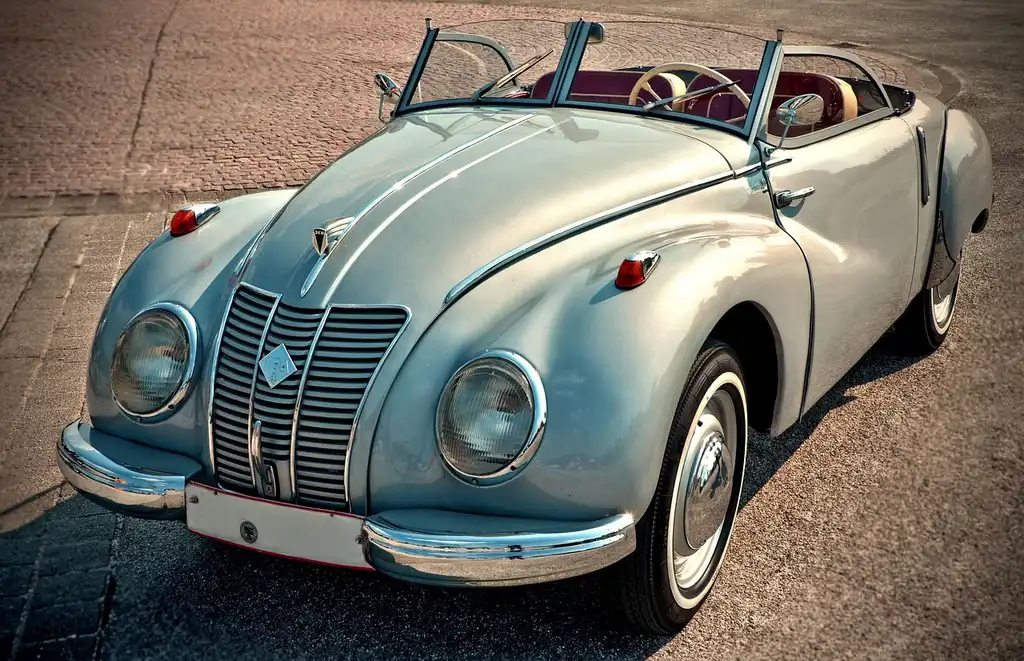
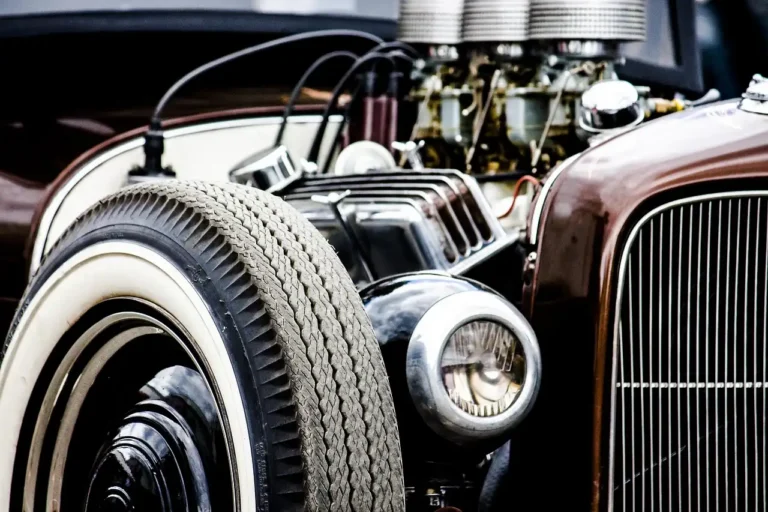
Spoke wheels are identified by construction, not by age alone. In photos, look for thin wire or spoke members radiating from the hub to a narrow rim, plus hub and center details that match the car’s period rather than a later swap. Plenty of cars wear replacement wire wheels, so one clear wheel shot is not enough.
Wire versus spoke appearance
On vintage cars, “spoke wheels” usually points to wire wheels or wire-spoked wheels. The spokes are thin, evenly spaced, and visible between the hub and the rim. By contrast, pressed-steel wheels have solid discs and no open spoke pattern at all.
Wood artillery wheels are another common source of confusion. They have spokes too, but the spokes are broad wooden members, not metal wires. A narrow metal rim with many thin radial wires is the clue you want.
Hub shape and rim clues
The hub area should look period-correct for the make and brake package. A tall, modern-looking hub or an obviously recent center cap can mean later replacement wheels, especially if the rest of the car is prewar.
Rim profile matters. Period wire wheels often have a slimmer look than later aftermarket units, and the finish should suit the era. Bright chrome on a car that originally used painted or nickel-finished hardware is a common mismatch.
Signs of later replacements
Watch for wheels that sit with a different offset than the fenders expect, mismatched hubs on the same car, or adapter hardware that looks newer than the rest of the chassis. A wheel swap can be clean enough to fool a quick glance.
A common first-timer mistake is assuming a shiny replacement wire wheel is factory-correct for an oldtimer rumble seat coupe. Suppose a 1930 coupe shows beautiful wire wheels, but one hub cap is a later generic type and the brake drums look newer than the body fittings. That is a strong hint that the wheels may be replacements rather than factory-installed equipment.
Rumble seat photos checklist
Use this checklist when you are sorting a forum photo, auction image, or archive shot. The goal is to document visible evidence, not to force a model name from a single angle.

| Body style | Seat access point | Wheel type | Hub style | Likely era cues | Common authenticity red flags | Model-by-model note |
|---|---|---|---|---|---|---|
| Roadster | Rear deck lid, rear step, or tail opening | Wire/spoke or pressed steel | Small cap, period lug pattern, no modern adapter look | Prewar open body, exposed rear compartment | Fixed rear bench, modern wheel offset, later latch hardware | Note whether the tail opens to a true seat or only luggage space |
| Coupe | Rear lid with folding seat access | Wire/spoke common on higher-trim cars | Hub cap style should match the chassis year | 1930s closed body with rear compartment | Coachbuilt-looking rear seat with no exterior opening | Record whether the rear opening is factory-looking or added later |
| Convertible | Rear opening behind the main cabin | Wire/spoke or period steel wheels | Cap, hub, and brake drum should align | Late prewar, often with mixed trim | Roadster body altered into a rumble-seat style | Check if the rear bodywork follows factory seams |
| Roadster or coupe with swap parts | Any rear opening plus questionable hardware | Aftermarket or mismatched wire wheels | Wrong cap diameter or modern center detail | Photos with restored or modified trim | Non-original seat hinges, incorrect wheel count, altered fenders | List every mismatch before calling it original equipment |
This kind of log helps when comparing a forum photo against a Flickr group photo pool. The “Rumble Seat” pool had 269 photos, 29 members, and was created on May 25th, 2009; its description calls the rumble seat an obsolete automotive feature. The “A Car with Rumble Seat” group had 39 photos, was created on December 18th, 2011, and asks members to limit posts to pictures with the rumble seat open.
How can you tell a rumble seat from a rear seat?
A true rumble seat opens to the outside and lives in the tail of the body. A rear seat in a sedan, coupe, or coachbuilt body sits inside the cabin or behind a fixed divider, with normal interior access rather than a folding rear deck and exterior latch.
Open rear compartment versus enclosed seating
If the rear passenger space is enclosed under roof and glass, it is usually a rear seat, not a rumble seat. The rumble seat is exposed or partly exposed, and the passenger sits in the open rear compartment.
That distinction matters on photos of restored cars. Some interiors get trimmed to resemble a rumble seat, but if the body never had an exterior opening and rear deck hardware, it is not the same feature.
Folding lid, step, and latch clues
Look for a rear lid that folds down to create the seat opening, plus a latch, hinge line, and often a step or grab handle for access. These parts are visible in most clear rear three-quarter photos.
Suppose a car shows a rear-facing seat cushion but no external lid, no hinge seam, and no step at the tail. That points more toward a rear compartment or coachbuilt rear seating arrangement than a true rumble seat.
Common false positives in photos
Some coupes and custom bodies have small rear compartments that look seat-like from one angle. Others have luggage carriers or folding panels that confuse the eye. You need a rear view, a side view, and a close-up of the latch area before you decide.
Which oldtimers commonly had rumble seats and spoke wheels?
Prewar roadsters and 1930s coupes are the most familiar oldtimers with this combination, especially in U.S. makes. In European oldtimer usage, the term can cover a broader set of classic cars, but the visual check remains the same: rear opening for the seat and wire or spoke wheels that fit the period.
Prewar roadsters
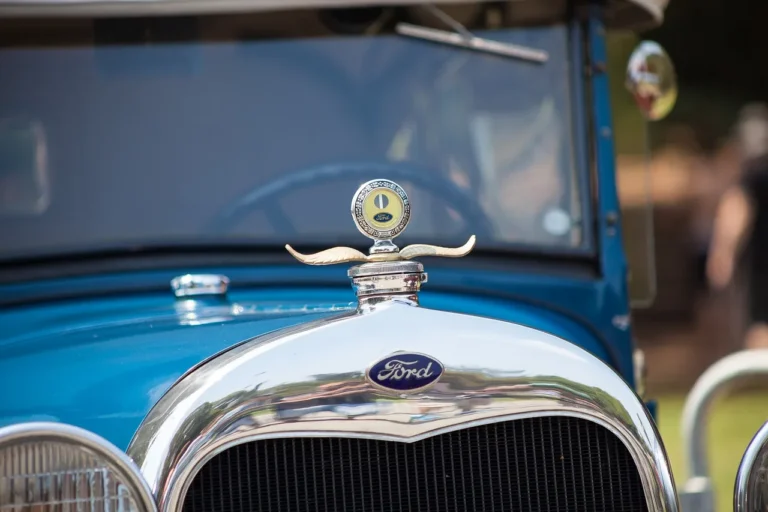
Open cars from the late 1920s and 1930s often paired a rumble seat with wire wheels. The pool examples include a 1928 Ford Model A Roadster with a rumble seat and a 1930 Packard 745 Roadster.
Those two examples are useful because they show the combination in different price classes. One is a common Ford body; the other is a higher-end Packard roadster with similarly period-appropriate wheel treatment.
1930s coupes
Coupes can be harder to judge because the rear opening is more integrated into the body. The pool examples include a 1930 Model A Ford Deluxe Coupe, a 1936 Ford entry, and a 1939 Ford Convertible.
When you compare those cars side by side, the seat opening, tail shape, and wheel style should all fit the same era. A coupe with a rumble seat but modern wheels is a mixed message and should be documented that way.
U.S. makes versus European usage
U.S. prewar terminology is more specific about body style and rear access. European collectors may call the car an oldtimer and still use the same wheel and seat clues, but the label alone does not prove a rumble seat.
That separation helps when browsing archive photos from mixed communities. A caption can say oldtimer, prewar, or vintage, while the actual identification still depends on the body opening, seat hardware, and wheel construction.
What makes a wheel period-correct?
Period-correct means the wheel matches the car’s era, body, and hardware, not just that it looks old. Original equipment usually aligns with the hub, brake, lug pattern, and rim profile. A later swap may fit the axle but still look wrong in several visible places.
Original equipment versus swap
Start with the wheel’s proportions. Factory wheels should sit naturally under the fender and align with the brake hardware. If the car looks too tall, too wide, or oddly spaced, the wheels may be replacement items.
Check all four corners. Mixed wheel types on the same vehicle are a strong authenticity warning, especially when one wheel has a different hub cap or spoke count from the rest.
Center cap and hub differences
The center cap is often the fastest clue. A cap that looks too modern, too generic, or too polished can signal a later swap, even if the spokes themselves appear old.
Hub details matter on close-up photos. The visible hub should match the car’s period brake arrangement and not show extra adapters, modern fasteners, or obvious conversion parts.
Rim profile and finish clues
Original or period-correct wheels usually have a finish that suits the car’s trim level: painted, nickel, or other period-appropriate treatment. Chrome can be correct on some restorations, but it should not be assumed from a single glossy photo.
A car with a correct-looking rumble seat but shiny aftermarket wheels is still a mixed-restoration car. Document both parts separately.
How should you photograph and document one?
Take the car from angles that prove the seat opening, wheel construction, and hardware relationship. One front shot or one glamour image will not do the job. You need the rear body, the wheel face, and the mounting details in the same set.
Rear three-quarter view
This view shows the tail, the seat access point, and one or two wheels in context. It is the best starting photo for sorting a true rumble seat from a rear compartment.
Close-up of the seat opening
Photograph the hinge line, latch area, deck edge, and step or grab point. If the opening has non-original trim, mismatched fasteners, or obvious filler work, those details should be visible in the image.
Hub and wheel detail shot
Get a straight-on wheel photo with the hub centered in frame. That makes the spoke pattern, hub cap shape, rim edge, and any replacement hardware easier to compare against archive images.
Notes for archive comparison
Write down the body style, wheel type, hub style, and any red flags you see. Then compare your notes with community archives, forum threads, and Flickr group photo pools that organize cars by feature and model.
Frequently asked questions
What cars came with a rumble seat?
Prewar roadsters and some coupes are the main body styles associated with rumble seats. Ford, Packard, and similar era makes appear often in photo archives, but the feature depends on body configuration, not just brand. Check for rear access hardware before assuming the car qualifies.
How do I identify a rumble seat on an oldtimer?
Look for a rear opening, hinge line, latch, and a seat area accessed from the back of the car. On an oldtimer, the label alone is not enough. The visible body opening and rear deck hardware are what separate a true rumble seat from a standard rear compartment.
What are spoke wheels called on vintage cars?
They are usually called wire wheels or spoke wheels, depending on the source. In photo work, the safest term is the one that matches what you can see: a wire-spoked wheel with a visible hub and narrow rim. Solid wheels are a different construction entirely.
How can I tell if my old car has original wire or spoke wheels?
Check the hub cap, lug pattern, rim profile, and how the wheel sits under the fender. Original or period-correct wheels should match the car’s brake hardware and era. A mismatched hub, modern adapter, or different finish across corners points to a later replacement.
Which prewar cars commonly had rumble seats and spoke wheels?
Prewar roadsters and 1930s coupes are the most common combinations.
How should I photograph a rumble seat and spoke wheels for documentation?
Use a rear three-quarter view, a close-up of the seat opening, and a straight-on wheel shot. Then add notes on body style, hub style, and any non-original hardware. That set gives other enthusiasts enough evidence to judge whether the car is genuine, altered, or mixed.
What is the difference between a rumble seat and a roadster rear seat?
A rumble seat opens from the rear and sits in the tail of the car. A roadster rear seat may be part of the cabin arrangement or a later conversion, often with different access and no true exterior deck opening. The body seams and latch points usually tell the story.
Are rumble seat cars rare or uncommon today?
They are uncommon enough that you do not see them every day, but they are not mythical. The surviving cars are mostly in enthusiast circles, restoration shops, and archives. Rarity varies by make and body style, so the safest answer is to treat each car as a specific case.
Products related to this article
Sponsored / affiliate links. As an Amazon Associate I earn from qualifying purchases. I may earn additional commission from eligible campaigns.