Carpet Cleaner for Car Seats: How to Pick and Use One
The best carpet cleaner for car seats is a fabric-safe, pH-balanced spray built for automotive upholstery — not a diluted household carpet shampoo, which can leave a sticky residue behind or discolor the foam padding underneath cloth seats.
Stained seats are one of the fastest ways to knock money off a car’s trade-in value, and using the wrong cleaner can make a stain permanent instead of lifting it — some all-purpose carpet shampoos are alkaline enough to set a protein-based stain like coffee or blood rather than remove it. This guide covers what actually separates a good carpet cleaner for car seats from a bad one, how to use one step by step without soaking the padding, which stains need a different approach, and one cleaner worth buying if you don’t already have one on hand.
What Makes a Carpet Cleaner Safe for Car Seats
Car seat fabric sits on top of foam padding, and that padding is the reason most household carpet cleaners are a bad match for a car interior. A carpet cleaner made for wall-to-wall home carpet is designed to be used with heavy water and a wet-vac extraction machine that pulls the moisture back out. A car seat has nowhere for that water to go — it soaks straight into the foam, and foam that stays damp for more than a day or two starts to smell like mildew and can take a week or longer to fully dry out.
A cleaner built specifically for automotive fabric and carpet is formulated to work with light misting and a brush instead of soaking, is usually pH-balanced closer to neutral so it won’t strip factory fabric protectant or fade dyed upholstery, and is safe on the mixed materials common in a car interior — cloth, vinyl trim, and the plastic door panels a spill often reaches too.
MADE FOR CAR INTERIORS
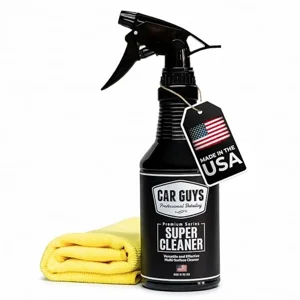 |
CarGuys Interior Car Cleaner – $19.98 A pH-balanced, fabric-safe stain remover made specifically for car seats and carpet — not a repurposed home carpet shampoo — and it’s formulated safe for cloth, vinyl, and leather trim in the same cabin.
|
How to Clean Car Seats With a Carpet Cleaner
The order of these steps matters more than the specific cleaner you use — skipping the vacuum step or over-wetting the fabric is what causes most of the problems people run into.
- Vacuum first. Loose dirt and grit act like sandpaper once they get wet, grinding into the fabric fibers instead of lifting out. A crevice tool along the seams and seat tracks catches what a regular nozzle misses.
- Test on a hidden spot first. Try the underside of the headrest or a strip along the bottom of the seat. Wait five minutes and check for any color change before treating the visible area.
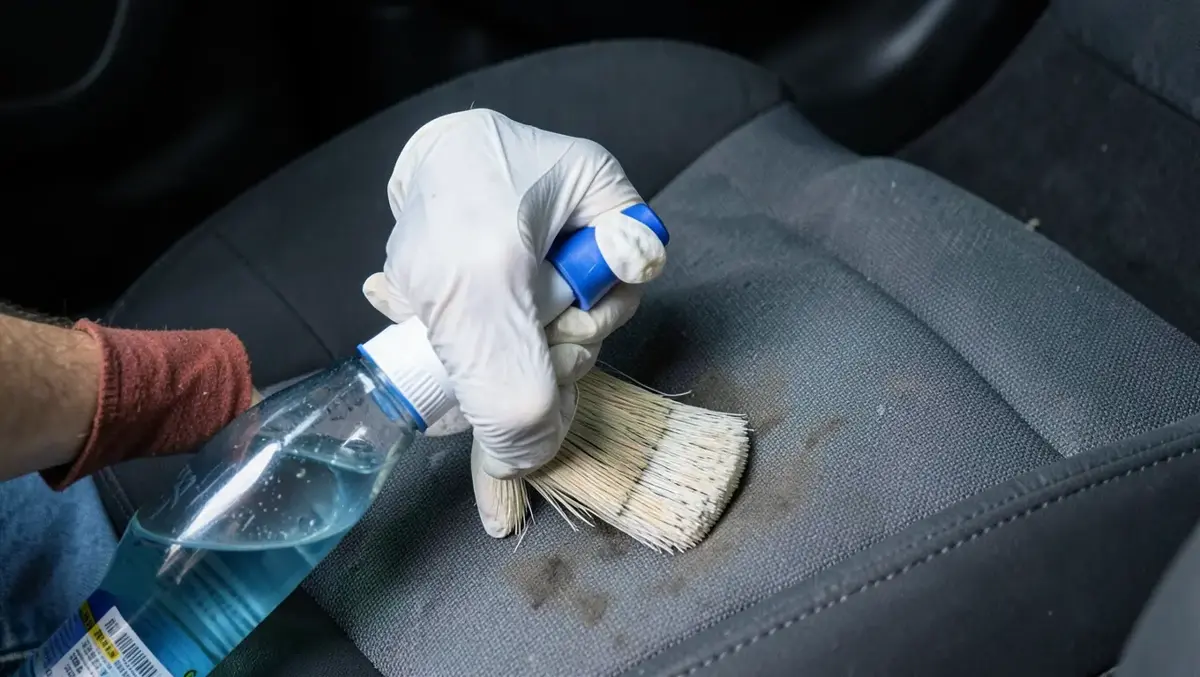
- Apply a light, even mist. Spray the cleaner directly onto the stain rather than soaking a wide area — a fine, even coat is enough for a foam-backed pH-balanced formula to work.
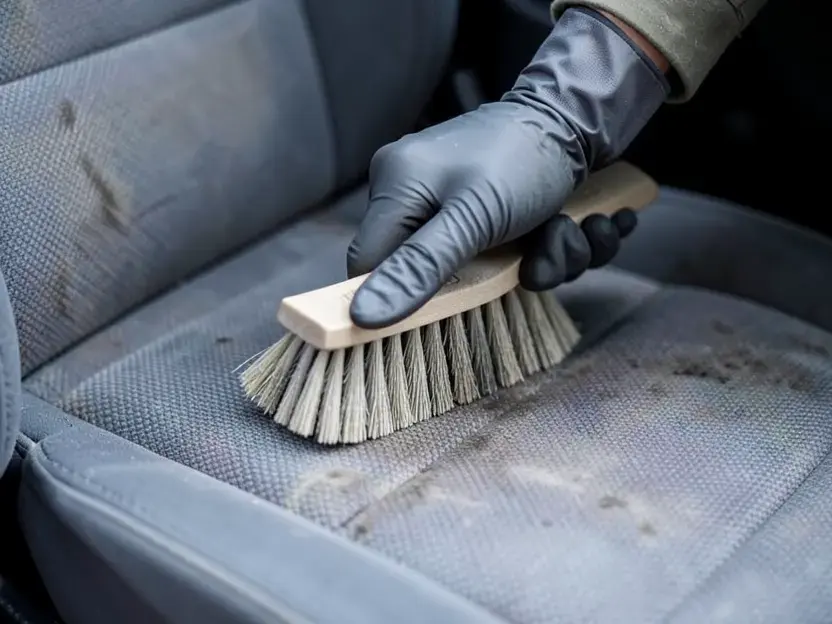
- Agitate with a soft brush. A stiff-bristle detailing brush or an old toothbrush for tight spots works the cleaner into the weave without tearing the fibers. Work in small circles rather than back-and-forth scrubbing.
- Blot, don’t rub, to lift the residue. A clean microfiber towel pressed and lifted repeatedly pulls the loosened dirt and cleaner out of the fabric. Rubbing pushes it back in and can spread the stain.
- Let it air dry with the windows cracked. Airflow speeds up drying and keeps the cabin from developing that damp-carpet smell. Avoid sitting on the seat or closing the car up tight until it’s fully dry, usually a few hours for a light mist application.
Cloth, Vinyl, and Leather: Which Cleaners Work on Each
Not every carpet cleaner belongs on every seat material, and using the wrong one is one of the most common mistakes people make when they treat their whole interior with a single bottle.
| Seat Material | Safe to Use a Carpet/Fabric Cleaner? | What to Use Instead |
|---|---|---|
| Cloth or fabric | Yes — this is what carpet and upholstery cleaners are made for | N/A |
| Vinyl trim and door panels | Usually safe, but check the label first | An all-purpose interior cleaner if the carpet cleaner leaves streaking |
| Genuine or bonded leather | No — most carpet cleaners are too harsh and will dry out or crack leather over time | A dedicated leather cleaner and conditioner |
| Suede or Alcantara | No — liquid cleaners can leave permanent water spots or matting | A suede-specific brush and cleaner, or professional detailing |
If your car has a mixed interior — cloth seats with leather-wrapped armrests, for example, which is common on mid-trim vehicles — treat each material with its own product rather than assuming one cleaner covers everything.
Treating Specific Car Seat Stains
A general-purpose carpet cleaner handles most everyday spills, but a few stain types respond better to a slightly different approach before you bring the spray bottle out.
| Stain | Pre-Treatment Before the Carpet Cleaner |
|---|---|
| Coffee or soda | Blot up as much liquid as possible first — sugar residue left behind attracts more dirt if it isn’t fully removed |
| Grease or oil | Sprinkle cornstarch or baking soda on the spot for 15 minutes to absorb the oil before spraying cleaner over it |
| Blood | Use cold water only, never hot — heat sets protein-based stains like blood permanently |
| Pet accidents | An enzymatic cleaner made for pet stains first, then a fabric carpet cleaner for any remaining residue and odor |
| Ink | Dab (don’t rub) with rubbing alcohol on a cloth before treating with the carpet cleaner, working from the outside of the stain in |
For odors that linger after the stain itself is gone — especially from spills that soaked into the foam padding — a carpet cleaner alone often isn’t enough. Our guide on how to remove smell from car carpet covers the deeper cleaning steps for odor that’s made it past the surface.
What to Look for When Buying a Carpet Cleaner for Car Seats
Most carpet cleaners marketed for cars look similar on the shelf, but a few details actually matter once the bottle is in your hand.
- Foaming vs. spray formula. Foaming cleaners cling to vertical seat backs better and are less likely to over-saturate the padding, which makes them a slightly safer default for cloth seats.
- No bleach or strong solvents. Bleach-based cleaners can permanently fade dyed fabric, and strong solvents can soften or cloud nearby plastic trim. Check the ingredient list, not just the marketing copy.
- Multi-surface safety, if you want one bottle for everything. A cleaner rated safe for carpet, cloth, and floor mats saves you from buying three separate products for one interior detail.
- Bottle size relative to how often you’ll use it. A 16 to 22 fl oz bottle is enough for several full-interior cleanings if you’re just doing spot treatment, but a family car with kids or pets that gets a full detail every month or two will go through a bottle faster.
- Real reviews, especially negative ones. A pattern of complaints about a lingering chemical smell or a sticky residue after drying is worth more than the star rating alone.
Frequently Asked Questions
How Do You Clean Car Seats With a Carpet Cleaner?
Vacuum the seats first to remove loose dirt, test the cleaner on a hidden area, apply a light mist rather than soaking the fabric, agitate gently with a soft brush, blot the residue out with a clean microfiber towel, then let the seat air dry with the windows cracked before using the car normally.
Is Carpet Cleaner Safe for All Car Seat Materials?
No. Carpet and upholstery cleaners are made for cloth and most fabric interiors, and many are also fine on vinyl trim. Genuine leather, bonded leather, suede, and Alcantara should be cleaned with a product made specifically for those materials instead — a standard carpet cleaner can dry out leather or leave permanent water spots on suede.
Can a Carpet Cleaner Remove Old, Set-In Stains From Car Seats?
Often, but not always in one pass. Fresh spills usually lift with a single treatment, while stains that have been sitting for weeks or months may need two or three treatments, a longer dwell time before agitating, or an enzymatic pre-treatment for organic stains like food, blood, or pet accidents.
How Often Should Car Seats Be Cleaned With a Carpet Cleaner?
A full interior clean every three to six months is a reasonable baseline for most drivers, with spot treatment as soon as a spill happens rather than waiting for the next scheduled clean. Cars with kids, pets, or frequent food and drinks in the cabin usually need spot cleaning monthly and a full clean closer to every eight to ten weeks.
Can You Use a Regular Household Carpet Cleaner on Car Seats?
It’s not recommended. Household carpet cleaners are designed to be used with a lot of water and pulled back out with a wet-vac extraction machine — a car seat has no way to drain that moisture, so it soaks into the foam padding underneath and can cause mildew or a lingering damp smell. A cleaner made specifically for automotive fabric uses less water and dries faster.
Does Carpet Cleaner Also Remove Odors From Car Seats?
A carpet cleaner removes surface-level odors that come from the stain itself, but it usually isn’t enough on its own for odors that have soaked into the foam padding, such as smoke, pet accidents, or spilled milk left too long. Those deeper odors typically need an enzymatic cleaner or a longer treatment cycle to fully break down.
Conclusion
A carpet cleaner made for automotive fabric — not a repurposed household carpet shampoo — is the safer, faster-drying choice for car seats, and the process matters as much as the product: vacuum first, mist lightly, agitate gently, blot instead of rub, and let it dry with the windows cracked. Match the cleaner to the seat material, treat tougher stains like blood, oil, or pet accidents with the right pre-treatment first, and a clean every three to six months keeps most interiors from ever needing a deep restoration.
Products related to this article
Sponsored / affiliate links. As an Amazon Associate I earn from qualifying purchases. I may earn additional commission from eligible campaigns.
 nekhfs Car Carpet Cleaner Scrub Tool, Automotive Carpet Cleaning Brush for Interior Detailing, Floor Mat Dirt Remover, Deep Cleaning Accessory for Cars, Trucks, SUVs and RVs
 Leather Cleaner for Car Interior - 2 Pack Leather Seat Cleaner & Conditions Car Seats, Dashboard, Furniture & More, Restores Shine, About 120g per Bottle