Clear Coat Protectant for Cars: Types, Uses & How Long It Lasts
A clear coat protectant is a wax, sealant, or ceramic spray applied over a car’s clear coat to shield the paint from UV rays, water spots, oxidation, and light contamination. Depending on the type, one application can protect the paint for anywhere from a few weeks to several years.
Not every “protectant” works the same way or lasts the same amount of time, and using the wrong one for your situation means reapplying more often than you need to (or paying for durability you’ll never use). Below is what each type actually does, how long it realistically lasts, how to apply it, and when your clear coat is telling you it needs help.
Quick Answer
A clear coat protectant is any product — wax, paint sealant, or ceramic spray — that forms a barrier over your car’s clear coat to block UV damage and repel water and dirt. Wax lasts about 1–3 months, paint sealants last 3–6 months, and ceramic spray coatings typically last 6–12 months, versus 2–5+ years for a professionally applied ceramic coating.
What Is a Clear Coat Protectant for Cars?
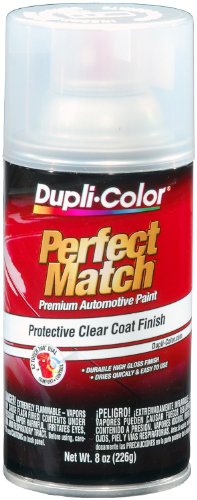
Your car’s paint is made up of several layers, and the clear coat is the outermost one — a transparent layer that sits above the colored base coat and gives the paint its gloss. It’s also the layer that takes the most direct hit from sunlight, rain, road salt, bird droppings, and tree sap. A clear coat protectant adds a sacrificial barrier on top of that layer so contaminants and UV rays hit the protectant instead of bonding directly to your paint.
“Clear coat protectant” isn’t one single product — it’s a category that includes traditional car wax, synthetic paint sealants, and ceramic spray coatings. They all do the same basic job (protect and add gloss), but they’re built differently, bond differently to the paint, and last for very different lengths of time, which is why picking the right one matters more than picking the most expensive one.
Easy DIY Ceramic Topper
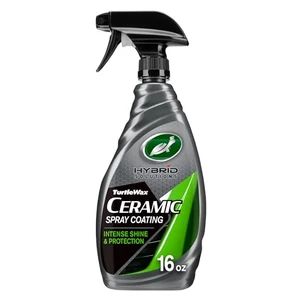 |
Turtle Wax Hybrid Solutions Ceramic Spray Wax Coating – $15.00 A spray-and-wipe ceramic topper that gives DIY-friendly protection between full details, no buffer or curing time required.
|
Wax vs. Paint Sealant vs. Ceramic Coating: Which Type Should You Use?
The three main categories differ mainly in how they bond to the paint. Wax and sealant sit on top of the clear coat and wear away with washing, heat, and weather. Ceramic products (especially professionally applied ones) chemically bond to the clear coat itself, which is why they hold up so much longer.
| Protectant Type | How It Works | Typical Duration | Best For |
|---|---|---|---|
| Carnauba or synthetic wax | Sits on top of the clear coat, adds warmth and gloss | 1–3 months (up to ~6 months for ceramic-infused wax) | A quick shine before a show, sale, or event |
| Paint sealant | Synthetic polymer that bonds lightly to the surface | 3–6 months | Daily drivers that need longer protection than wax without the cost of ceramic |
| Ceramic spray coating (DIY) | Silica-based “topper” adds a thin hydrophobic layer | 6–12 months, depending on prep and climate | DIY owners who want strong water beading without a professional install |
| Professional ceramic coating | Chemically bonds to the clear coat after paint correction | 2–5+ years | New or recently corrected paint, long-term protection |
Marketing claims for DIY ceramic sprays (some list “50 wash” ratings or similar) describe lab conditions on properly prepped paint. In everyday use, dust, harsh car-wash soap, and skipped maintenance washes will shorten that window, so treat those numbers as a best-case ceiling rather than a guarantee.
How to Apply a Clear Coat Protectant
The steps below apply to consumer wax, sealant, and DIY ceramic spray products. Professionally applied ceramic coatings require paint correction and controlled conditions, so those are typically installed by a trained detailer rather than at home.
- Wash the car thoroughly. Use a pH-neutral car soap and the two-bucket method to avoid grinding dirt into the paint.
- Clay bar the paint if it feels rough. Run your hand over a clean, dry panel — if it feels gritty rather than glass-smooth, a clay bar or clay mitt will pull out bonded contaminants before you seal them in.
- Work in the shade on a cool panel. Direct sun or a hot hood makes most protectants flash-dry too fast, leaving streaks or high spots.
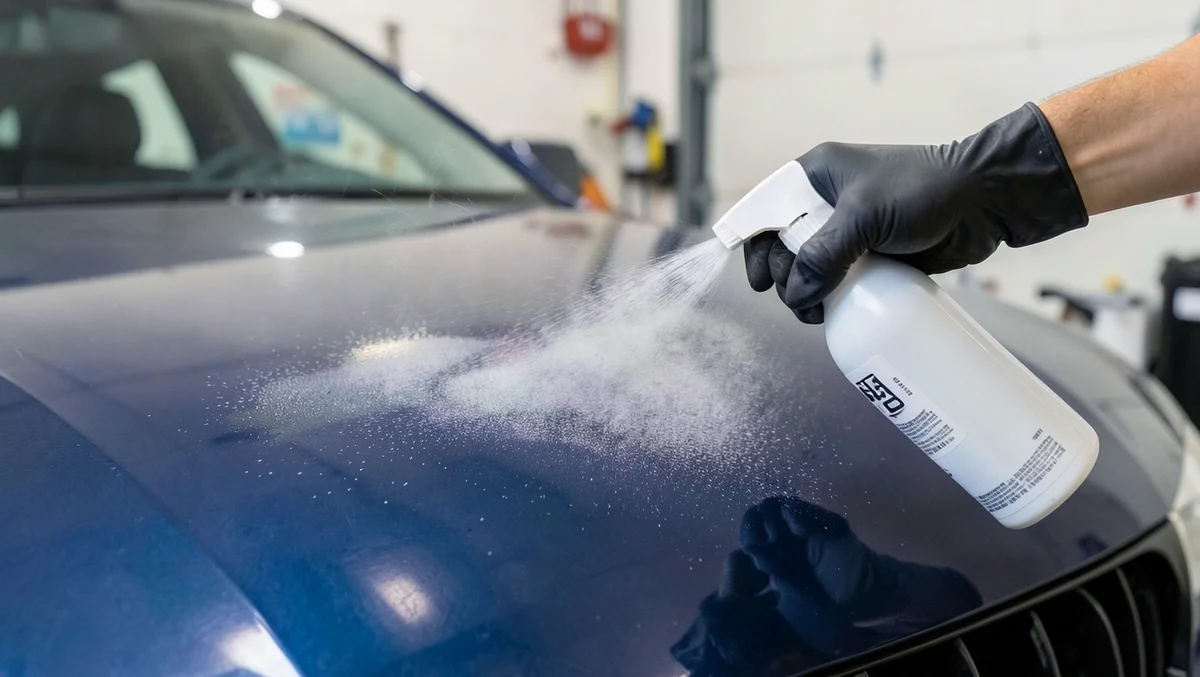
- Apply in thin, even sections. Spray or wipe one panel at a time rather than the whole car at once — this keeps the product from drying before you can buff it off.
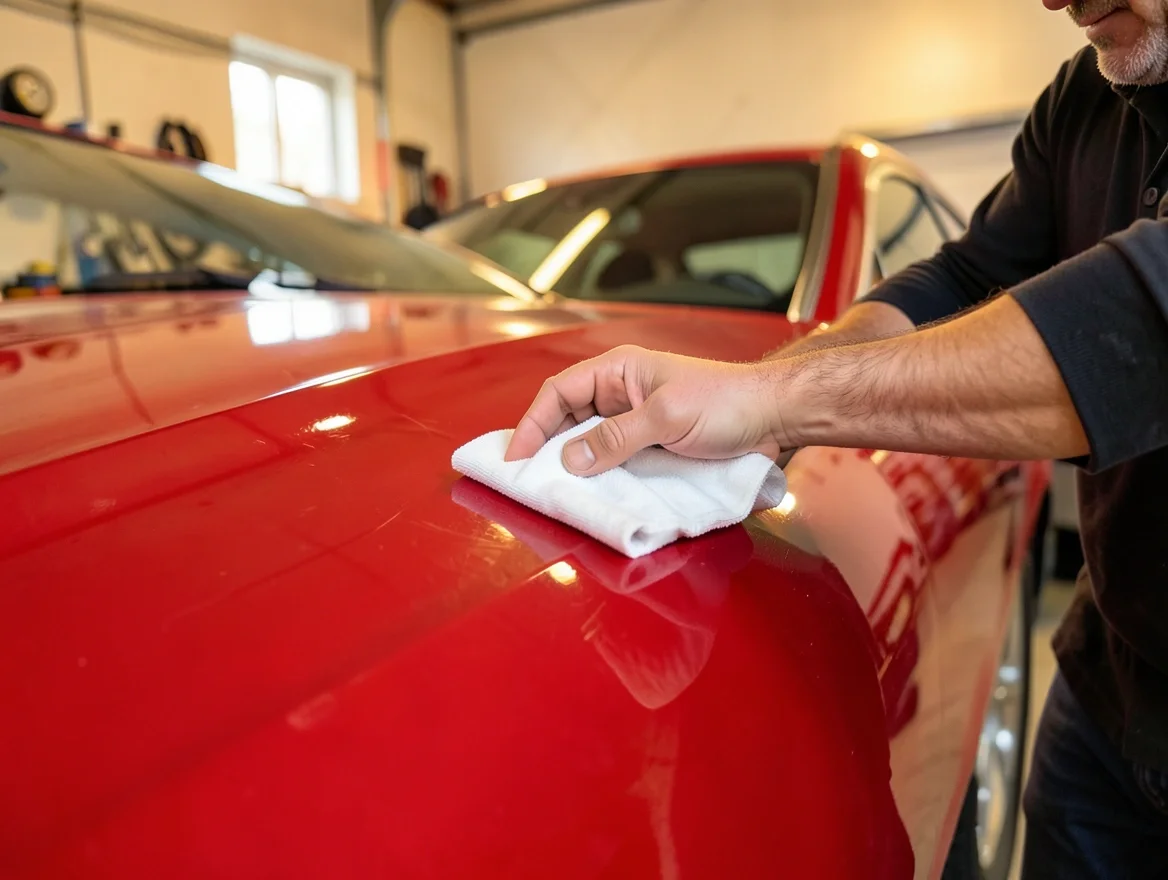
- Buff off with a clean microfiber towel. Follow the product’s specific dwell time (this varies by brand), then buff to a haze-free finish using light, overlapping passes.
- Let it cure before washing. Most wax and sealant products need at least 24 hours to fully bond; ceramic sprays often specify a shorter window, so check the label.
Signs Your Clear Coat Needs Protection
You don’t have to guess when it’s time to reapply. Watch for these signs:
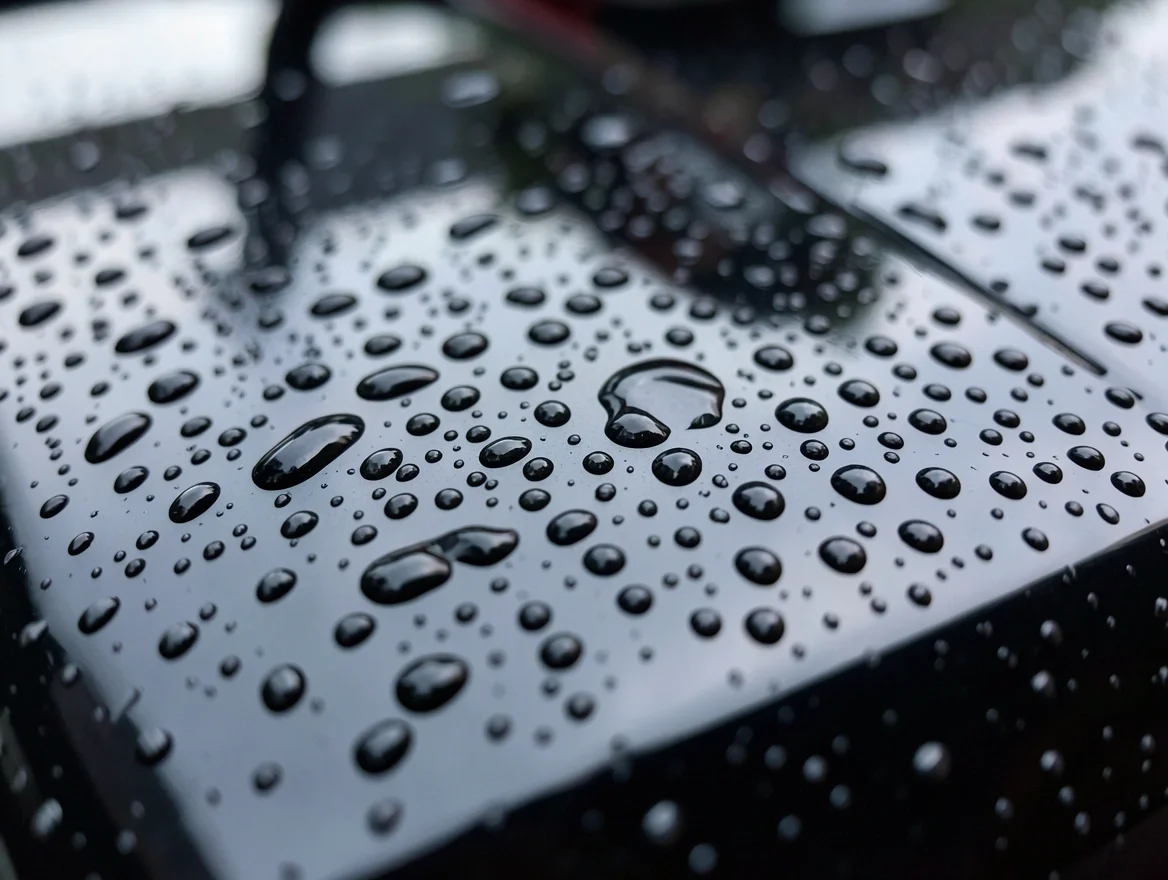
- Water no longer beads up — it sheets flat across the panel instead of forming tight droplets.
- The paint looks slightly dull or hazy even right after a wash.
- Fine swirl marks and light scratches become more visible under direct light.
- Bird droppings, tree sap, or bugs are harder to wipe off and start etching the surface if left too long.
If any of that goes unaddressed for years, the paint can move past dullness into full oxidation, and in the worst cases the clear coat itself starts to crack and peel. That’s a different repair job entirely — see what to do when clear coat is peeling off your car if you’re already past the point a protectant alone can fix.
Frequently Asked Questions
What Is the Difference Between a Clear Coat Protectant and Car Wax?
Car wax is one type of clear coat protectant. “Clear coat protectant” is the broader category, which also includes longer-lasting synthetic paint sealants and ceramic coatings. Wax typically lasts 1 to 3 months, while sealants and ceramic products last considerably longer.
Does a Clear Coat Protectant Really Block UV Damage?
Yes, to a meaningful degree. UV exposure breaks down the resins in a clear coat over time, causing fading and eventually cracking. A protectant layer adds a barrier that absorbs or reflects some of that UV energy, slowing the breakdown — though it can’t stop it completely, especially on a car that’s parked outside year-round.
How Long Does a Ceramic Spray Coating Actually Last on a Car?
Most consumer ceramic spray “toppers” are marketed for 6 to 12 months, but real-world durability depends heavily on paint prep, climate, and how often the car is washed with harsh soap. Professionally applied ceramic coatings use a different, thicker resin and require paint correction first — those typically last 2 to 5 years or more.
Can I Apply Clear Coat Protectant Myself?
Yes. Consumer wax, sealant, and ceramic spray products are designed for DIY use — wash and clay the car first, apply the product, then buff it off with a clean microfiber towel. Professional-grade ceramic coatings are more technical and are usually best left to a trained installer.
Do I Still Need to Wax My Car If I Use a Ceramic Spray Coating?
Not underneath it — the ceramic coating itself provides the gloss and protection. Many owners do layer a ceramic spray “topper” every few months over an existing wax or sealant base to boost water beading and shine between full detail sessions.
What Happens If I Never Protect My Car’s Clear Coat?
Without any protection, the clear coat is left exposed to UV rays, acid rain, bird droppings, tree sap, and road grime. Over months and years, this leads to oxidation — a dull, chalky look — and eventually clear coat cracking or peeling, which usually requires sanding and repainting rather than a simple polish to fix.
The Bottom Line
There’s no single “best” clear coat protectant — there’s the right one for how you use your car. If you just want a quick shine before an event, wax does the job. If you drive daily and want protection that outlasts a few car washes, a paint sealant or DIY ceramic spray is the better trade-off between cost and durability. If you have new or recently corrected paint and want to protect it for years rather than months, a professionally applied ceramic coating is worth the investment.
Products related to this article
Sponsored / affiliate links. As an Amazon Associate I earn from qualifying purchases. I may earn additional commission from eligible campaigns.