Best Air Compressor for Painting Cars: PSI and CFM Explained
A 6 to 13 gallon oil-free compressor delivering 4 to 5 CFM at 90 PSI handles touch-up spray jobs and small panel repairs, but a full basecoat and clearcoat repaint needs a shop compressor pushing at least 14 CFM continuously.
The three portable units compared here (a 6-gallon BOSTITCH pancake, an 8.1-gallon Nessxa, and a 13-gallon VEVOR) all fall into the first category, which covers most DIY spray jobs. Match the tank size and CFM output to the actual job instead of chasing the highest PSI number on the box, since PSI has almost nothing to do with how much paint a spray gun can atomize.
CFM Matters More Than PSI When You Are Spray Painting
Most low-volume low-pressure (LVLP) spray guns made for touch-up and panel work draw 4 to 8 CFM at 25 to 40 PSI, while a full-size HVLP gun spraying an entire hood or door needs 10 to 15 CFM to keep the pattern from starving mid-pass. A good rule of thumb is to pick a compressor rated at least 30 percent above your gun’s peak CFM draw, since real-world output usually runs a bit below the number stamped on the tank. If you are not sure what your own project needs, work out the exact SCFM for your paint job before you buy a compressor to match it.
The three compressors below top out at 1.5 to 2 horsepower and 4 to 4.6 CFM, which puts them squarely in touch-up and small-panel territory rather than a continuous full basecoat and clearcoat job on an entire vehicle. A single-stage motor like these has to shut off and refill the tank once pressure drops, so plan on working in short bursts with a few seconds of recovery time rather than one continuous pass across a fender. For a full repaint, most body shops step up to a 60-gallon, two-stage compressor running 14 to 18 CFM instead. Pair whichever tank you choose with a spray gun built for automotive work, since the gun’s air cap size affects how much CFM actually gets used.
1. BOSTITCH 6-Gallon Pancake Air Compressor Kit
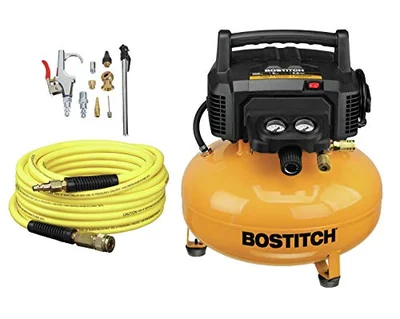
The BOSTITCH Air Compressor Kit, Oil-Free, 6 Gallon, 150 PSI, Quiet Lightweight Pancake Air Compressor (BTFP02012-WPK) is a solid pick for touch-ups and single-panel jobs. It needs no daily oil maintenance, so there is no risk of an oil stain ruining a fresh coat of paint. At 29 pounds with a narrow tank, it is easy to carry and store. The high-flow regulator and dual couplers help keep pressure steady while a spray gun is running. As with any air tool, actual run time between refills will vary with your gun and technique, so check the CFM math above before relying on it for anything bigger than a panel.
See the current price on the BOSTITCH kit here.
2. Nessxa 8.1-Gallon Ultra-Quiet Air Compressor
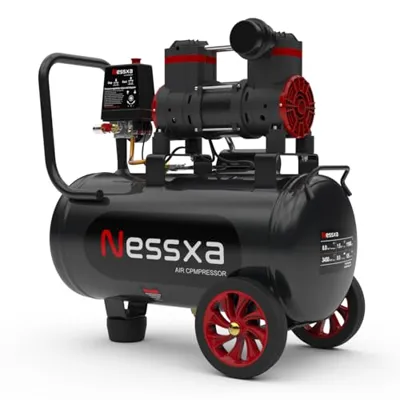
The Nessxa 8.1 Gallon Ultra Quiet Air Compressor is built for people who regularly do car repair, spray painting, or woodwork nailing. It suits both DIY owners and technicians who want a reliable, low-noise compressor with a bit more tank than the pancake models.
Pros:
- Ultra quiet operation at only 70dB
- Oil-free design for maintenance-free use
- 1.5HP motor rated at 4.52 CFM
- Compact footprint for easy storage
- Wheeled base for moving between jobs
Cons:
- Capped at 115 PSI maximum pressure
- Not sized for continuous heavy-duty use
The Nessxa compressor’s 1.5HP motor delivers a rated 4.52 CFM, which lines up with a typical LVLP touch-up gun. The oil-free design means less maintenance and no oil to accidentally spray into your paint. Despite its compact footprint, the 8.1-gallon capacity gives you a reasonable buffer before the tank needs to refill mid-job.
Its standout feature is 70dB operation, noticeably quieter than most compressors in this class, which matters if you are working in an attached garage or near neighbors. It still gives you enough air volume for short, continuous spray passes on a single panel without constant refilling.
Check availability for the Nessxa compressor here.
3. VEVOR 13-Gallon Air Compressor (2 HP)
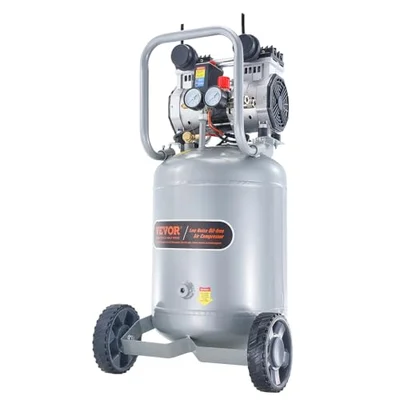
The VEVOR 13-Gallon Air Compressor, 2HP, 4.6 SCFM@90PSI, Oil-Free Tank, 66dB Quiet Operation (maximum pressure 125 PSI) is the largest of the three, and it shows in how long it runs between refills. The 13-gallon tank paired with the 2HP motor builds air in under 3 minutes, and a reinforced valve system helps it hold steady output through longer or more intense tasks. It runs oil-free at 66dB, so it is still workshop-friendly, and it rolls on two 7-inch reinforced wheels, which makes it the easiest of the three to move between an indoor bay and outdoor setup.
View the VEVOR listing and current price here.
Frequently Asked Questions
What Is the Best Compressor for Car Painting?
There is no single best size for every job. For touch-ups or single panels, the BOSTITCH 6-gallon pancake or the Nessxa 8.1-gallon unit both work well and are easy to store. For bigger jobs, the VEVOR 13-gallon compressor and its 2 HP motor give you more air volume between refills. None of these three replace a full shop compressor for a complete basecoat and clearcoat repaint on an entire vehicle.
How Quiet Is the VEVOR Air Compressor?
The VEVOR 13-gallon air compressor runs at about 66 decibels, which is noticeably quieter than a typical single-stage compressor and close to normal conversation level. That makes it a reasonable choice for a home garage or an attached workshop where noise matters.
Can I Use These Compressors for Auto Repair?
Yes. All three run oil-free and produce enough PSI for tire inflation, pneumatic tools, and touch-up spray painting. None of them are sized for continuous heavy-duty shop use, so plan on some recovery time between tasks on a larger job.
Are These Compressors Oil-Free?
Yes, all three compressors reviewed here are oil-free, so there is no oil to check, top off, or accidentally spray into your paint through a contaminated air line.
How Portable Are These Air Compressors?
The BOSTITCH pancake unit is the lightest and easiest to carry by hand. The Nessxa and VEVOR models are heavier but both roll on built-in wheels, so moving them around a garage or between job sites is still manageable for one person.
Is a 6-Gallon Air Compressor Big Enough to Paint a Whole Car?
Not for a full basecoat and clearcoat job. A 6-gallon tank at 4 to 5 CFM is sized for touch-ups, small panels, and primer coats on single parts, not for spraying an entire vehicle without stopping. A whole-car repaint calls for a 50 to 60 gallon, two-stage shop compressor that can keep up with continuous spray time.
Conclusion
Choosing the right compressor for painting a car comes down to matching CFM and tank size to the actual job, not just picking the highest PSI number on the box. The BOSTITCH 6-gallon pancake is compact and effective for small touch-ups. The Nessxa 8.1-gallon unit trades a little size for quieter, longer runs. The VEVOR 13-gallon compressor’s 2 HP motor gives you the most air volume of the three, which helps on bigger panel jobs.
None of the three replace a full shop compressor for a complete repaint, but for touch-ups, primer coats, and single panels, any of them will get the job done. Whichever tank you choose, pair it with a properly matched spray gun so the CFM you are paying for actually reaches the paint.
Products related to this article
Sponsored / affiliate links. As an Amazon Associate I earn from qualifying purchases. I may earn additional commission from eligible campaigns.