Thin Blue Line Decal for Car: Meaning and Top Picks
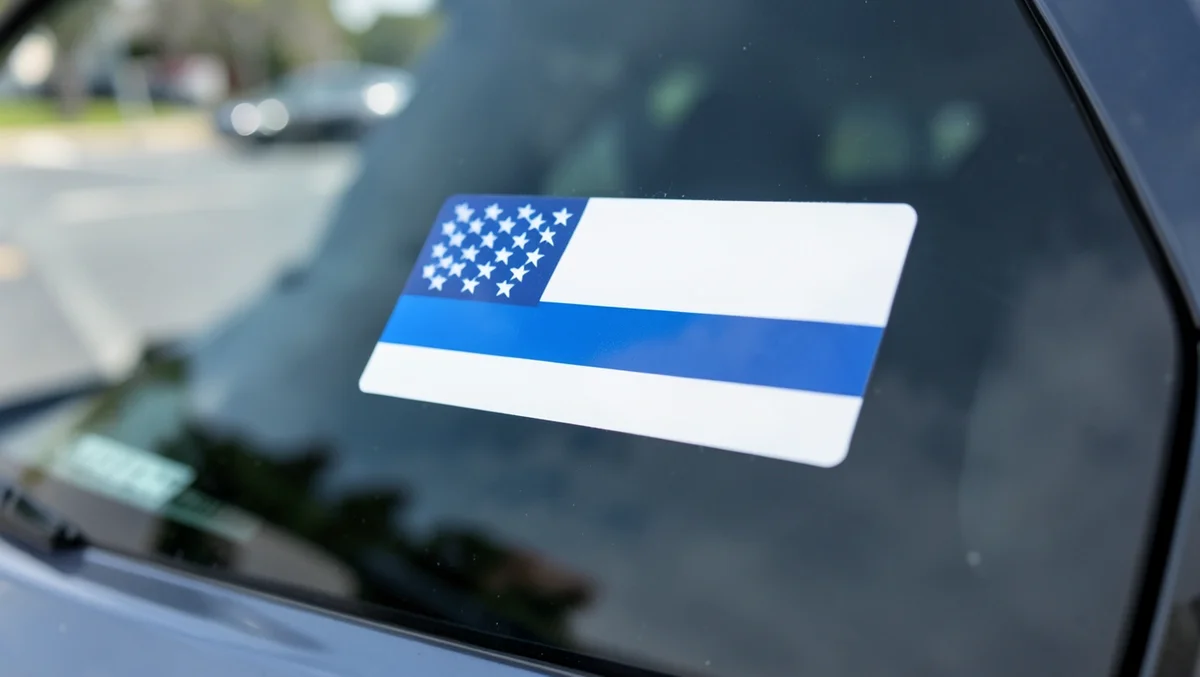
A thin blue line decal for a car is a black-and-white American flag sticker with one blue horizontal stripe, used to show support for police officers and law enforcement. It is legal to display on a personal vehicle in every U.S. state, though individual police departments set their own rules about using it on marked patrol cars.
Drivers put these decals on their cars for different reasons: some are current or retired officers, some have family members in law enforcement, and others simply want to show appreciation for the job. Below are the meaning and history behind the design, an honest look at why it is sometimes controversial, what the law actually says about displaying it, and a few well-reviewed decals if you are ready to buy one.
Top Thin Blue Line Decals for Your Car
All three of these are real, in-stock decals on Amazon at the time of writing, sized for a car or truck window or bumper.
BEST VALUE 3-PACK
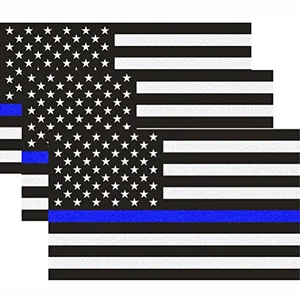 |
Reflective US Flag Decal Pack, Thin Blue Line (3-Pack) – $5.69 A reflective 5 x 3 inch vinyl decal that is easy to apply to a car or truck window and comes three to a pack.
|
BEST METAL DESIGN
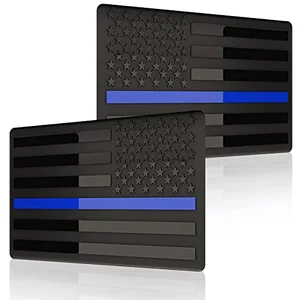 |
Embossed 3D Metal Thin Blue Line Decal, Matte Black (Pair) – $8.99 A raised, embossed metal-finish decal pair with a matte black background, built to look less like a paper sticker.
|
MOST DURABLE PICK
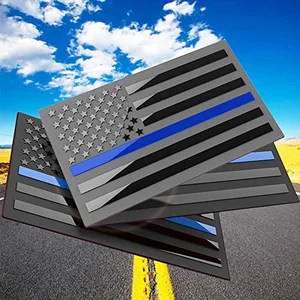 |
3-Pack Metal American Flag Emblem Decal, Thin Blue Line – $9.95 Three metal-finish emblem decals designed to resist fading, cracking, and peeling in sun and weather.
|
What Does the Thin Blue Line Decal Mean?
The design places a single blue horizontal stripe between two black stripes, usually layered over a black-and-white version of the American flag. In the common interpretation, the black above the blue line represents the public, the black below represents lawbreakers, and the blue line itself represents police officers standing between the two. People display the decal to show respect for law enforcement, and it is especially associated with honoring officers who were killed or injured in the line of duty.
The idea is older than the flag itself. The phrase traces back to the “thin red line,” a 19th-century description of British soldiers holding a defensive position against much larger odds, and American police adopted a “thin blue line” version of the phrase decades before the modern flag existed. The specific black-and-white flag design most people picture today was created in 2014 by Andrew Jacob, then a University of Michigan student, through his company Thin Blue Line USA.
Is the Thin Blue Line Decal Controversial?
Yes, in some contexts, and it is worth knowing why before you buy one. Most people who display the decal are showing genuine support for police officers and honoring those killed in the line of duty, and it remains a widely popular symbol for that reason. At the same time, following the 2020 protests over police killings, critics argued the flag had also been adopted by some anti-reform and extremist groups as a symbol of opposition to police accountability. That association led a handful of police departments, including the Los Angeles Police Department and departments in Tacoma, Washington and Bend, Oregon, to restrict or remove the imagery from official patrol cars, uniforms, and buildings.
Whether the decal reads as a tribute to law enforcement or as a political statement often comes down to the viewer and the setting. There is no single “correct” interpretation, and reasonable people who care about police officers land on different sides of the debate. That said, the decal itself is not illegal or restricted for private car owners anywhere in the United States, which is a separate question from how individual departments choose to use it on official equipment.
Is It Legal to Display One on Your Car?
Yes. Displaying a thin blue line decal on your own personal vehicle is protected speech in the United States, and no state law bans private citizens from using it. The practical limits are the same ones that apply to any bumper sticker or window decal: it cannot block your view out of the windshield or mirrors, and it should not cover required items like your license plate, taillights, or registration and inspection stickers.
You may see people claim the decal is illegal because it “alters” the American flag. That claim mixes up two different things. The U.S. Flag Code does discourage using the flag’s colors or design in an altered form for commercial or decorative purposes, but the Flag Code is a set of etiquette guidelines with no enforcement mechanism against private citizens, not a criminal law. It has never been used to prohibit a private car decal.
The rules are different for marked police vehicles. Individual departments set their own policy on what officers can add to a patrol car, and as noted above, some allow thin blue line decals while others have banned them. If you are an officer wondering whether you can put one on a department vehicle, check with your own agency rather than assuming the answer that applies to a personal car.
How to Apply a Thin Blue Line Decal to Your Car
- Wash and dry the spot where the decal will go so it is free of dust, wax, and grease.
- Peel back a small section of the backing paper and line up that edge where you want the decal to sit.
- Slowly peel away the rest of the backing while pressing the decal down from the center outward.
- Smooth out any air bubbles with a credit card, squeegee, or the edge of a plastic scraper.
- Wait at least 24 hours before running the car through a wash so the adhesive can fully set.
Frequently Asked Questions
What Does the Thin Blue Line Decal Mean?
It is a symbol of support for police officers. A single blue stripe between two black stripes represents officers standing between the public and lawbreakers, and it is often used to honor officers killed or injured on duty.
Who Created the Thin Blue Line Flag?
The black-and-white flag design was created in 2014 by Andrew Jacob, a University of Michigan student at the time, through his company Thin Blue Line USA. The underlying “thin blue line” phrase for police is older and traces back to the British “thin red line.”
Is the Thin Blue Line Decal Controversial?
Yes, in some contexts. Supporters see it as honoring police officers, while critics argue it has also been adopted by groups opposed to police reform, which has led a few departments to restrict its use on official vehicles.
Is It Legal to Put a Thin Blue Line Decal on My Personal Car?
Yes. No U.S. state bans private citizens from displaying this decal on their own vehicle. It only has to follow the same rules as any other sticker: it cannot block your view or cover your license plate.
Can Police Officers Display the Thin Blue Line on a Patrol Car?
It depends on the department. Some agencies still allow or sponsor the decal on marked units, while others, including the LAPD and departments in Tacoma, Washington and Bend, Oregon, have removed it from official vehicles. Officers should check their own department policy.
How Do I Apply a Thin Blue Line Decal to My Car?
Clean the surface, peel back a small edge of the backing, line it up, then slowly remove the rest of the backing while smoothing the decal down from the center outward to avoid bubbles.
Conclusion
A thin blue line decal is a simple way to show support for police officers, and it is legal to put on your own car anywhere in the United States. It is worth knowing that the symbol carries different meanings for different people, and that police departments themselves are split on whether to use it on official vehicles. Once you have decided it is right for you, pick a decal sized for your window or bumper, clean the surface well, and take your time applying it so it goes on straight and bubble-free.
Products related to this article
Sponsored / affiliate links. As an Amazon Associate I earn from qualifying purchases. I may earn additional commission from eligible campaigns.