De-Steam Car Windows: The Best Proven Method
To de-steam your car windows quickly, turn your defroster on high, switch on the air conditioning (A/C) to dry the air, and turn off the air recirculation button to bring in fresh, dry outside air. Set the temperature to hot, as warm air absorbs moisture more effectively. This combination clears fog in seconds.
Getting into your car only to find the windows completely fogged up is frustrating. It’s also unsafe. You can’t drive anywhere if you can’t see. Many drivers get this wrong, using settings that make the problem worse. But don’t worry, there’s a simple, proven method that works every time. I’m here to walk you through it, step-by-step. Let’s clear things up for good.
Understanding the Fog: Why Do Car Windows Steam Up?
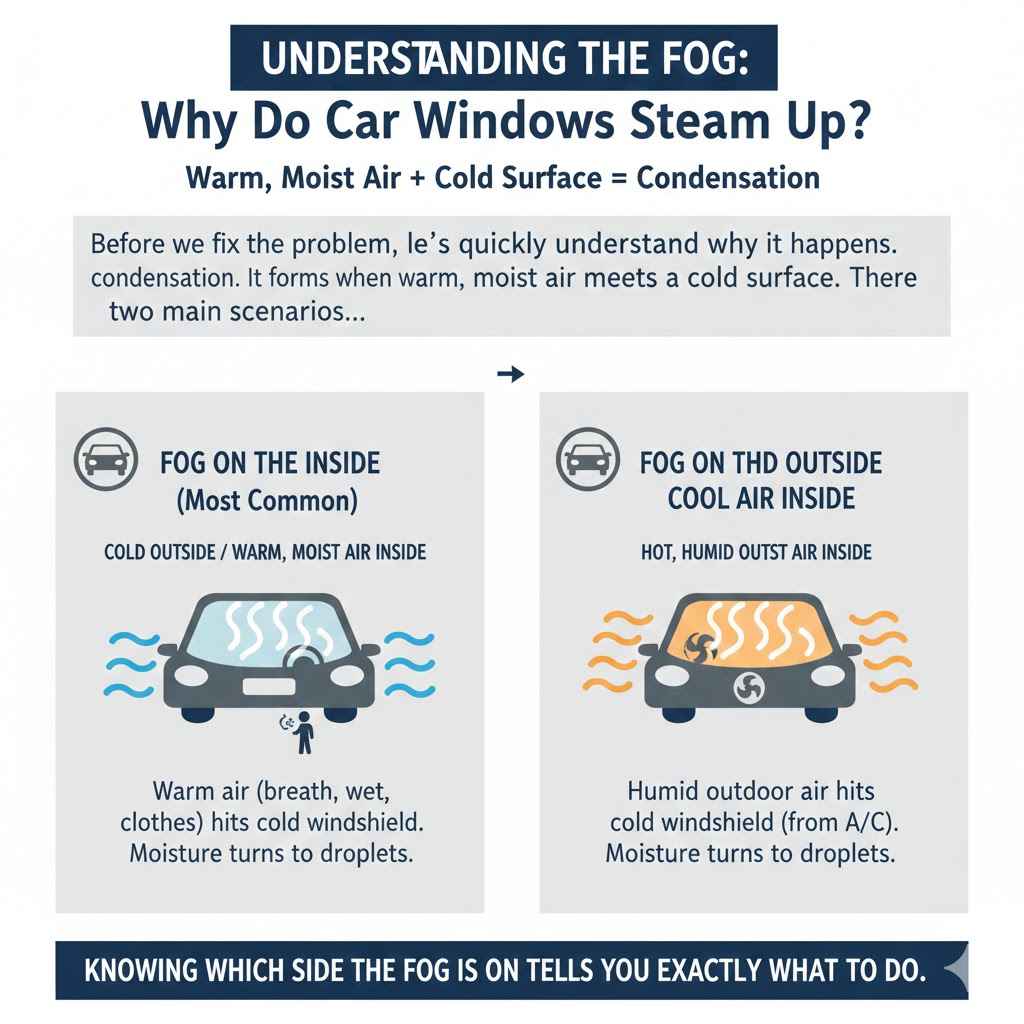
Before we fix the problem, let’s quickly understand why it happens. Fog on your car windows is just condensation. Condensation forms when warm, moist air meets a cold surface. It’s the same reason your bathroom mirror fogs up after a hot shower.
There are two main scenarios for foggy car windows:
- Fog on the Inside (Most Common): This happens when it’s cold outside. The air inside your car is warmer and holds more moisture from your breath and any wet items like coats or umbrellas. When this warm, moist air hits your cold windshield, the moisture turns back into tiny water droplets, creating fog.
- Fog on the Outside: This happens on hot, humid days. Your car’s interior is cool from the A/C, making your windshield colder than the humid air outside. When the warm, moist outdoor air hits your cool windshield, it creates fog on the exterior surface.
Knowing which side the fog is on tells you exactly what to do. The most common problem, especially in cooler weather, is fog on the inside. So let’s tackle that first with the absolute best method.
The Best Proven Method to De-Steam Your Windows (For Fog Inside)
When you’re in a hurry and can’t see a thing, you need a fast and reliable solution. Forget wiping the glass with your sleeve—that just smears the moisture around and leaves streaks. Follow these five simple steps to clear your view safely and quickly. This method works by tackling both temperature and moisture at the same time.
Step 1: Turn Your Defroster On Full Blast
The first thing to do is direct air straight to the problem area. Look for the button on your climate control panel that has a symbol of a windshield with wavy arrows pointing up. This is your front defroster button.
- Press this button.
- Turn the fan speed up to the highest setting.
This will send a powerful stream of air directly onto the inside of your windshield, starting the evaporation process immediately. Don’t worry about the temperature just yet; getting the air moving is the most important first step.
Step 2: Turn on Your Air Conditioning (Yes, Even in Winter!)
This is the secret trick that many people miss. They think, “Why would I want cold air when I’m already cold?” But your car’s A/C system does more than just cool the air; it also acts as a powerful dehumidifier. It pulls moisture out of the air.
Press the A/C button. You should see a light turn on to indicate it’s active. By running the A/C, you are actively drying the air that’s being blown onto your windshield. Dry air can absorb much more moisture than damp air, which dramatically speeds up the defogging process. Think of it as a tiny dehumidifier for your car.
Step 3: Turn the Temperature Up High
Now that your A/C is on and drying the air, you can turn the heat up. Hot air can hold significantly more moisture than cold air. By blowing hot, dry air onto your windshield, you are doing two things:
- Warming the glass: This raises the temperature of the windshield closer to the air temperature inside the car, making it harder for condensation to form.
- Absorbing moisture: The hot, A/C-dried air acts like a sponge, soaking up the moisture from the glass much faster.
So, turn your temperature dial all the way to the red or hot side. You’ll have hot, dry air clearing your windshield in no time.
Step 4: Switch Off Air Recirculation (This is Key!)
This is arguably the most critical step. Your car has a button with a symbol of a car with a U-turn arrow inside it. This is the air recirculation button. When it’s on, your car reuses the air already inside the cabin. When it’s off, it pulls fresh air in from outside.
For defogging, you MUST turn recirculation OFF. Why? The air inside your car is filled with moisture from your breath. Recirculating it just keeps blowing that same wet air around. By turning recirculation off, your car pulls in the colder, drier air from outside. Your system then heats this dry air and blows it on the windshield. This constant supply of fresh, dry air is essential for clearing the fog and keeping it away.
Step 5: Crack a Window for a Quick Boost
If you’re in a real hurry, cracking one or two windows open by just an inch can make a big difference. This creates an escape route for the humid air inside your car, allowing the dry, fresh air from your vents to replace it even faster. It helps equalize the temperature and humidity between the inside and outside of your car. You only need to do this for a minute or two until the defroster takes over.
Recirculated Air vs. Fresh Air: The Great Defogging Debate
Many drivers are confused about whether to use recirculated air or fresh air. Let’s make it simple. Each setting has a specific purpose, and using the wrong one will make your foggy window problem much worse.
Recirculating the air inside your car is great for a few things: cooling the car down quickly on a hot day (because you’re re-cooling already cooled air) or avoiding breathing in dust or fumes from outside. But for defogging, it’s your enemy.
Here’s a simple breakdown to help you remember:
| Feature | Recirculated Air (Button ON) | Fresh Air (Button OFF) |
|---|---|---|
| Air Source | Uses the air already inside your car. | Pulls new air in from outside. |
| Moisture Level | High. It traps the moisture from your breath inside. | Low. Cold, outside air is much drier. |
| Best For Defogging? | No. This will make fog worse or clear it very slowly. | Yes! This is the correct setting for defogging. |
| Why? | It keeps circulating the same humid air against the cold glass. | It replaces the humid interior air with dry exterior air. |
Remember this simple rule: To get rid of moisture, you need to replace moist air with dry air. Always use the fresh air setting to de-steam your windows.
What About Fog on the OUTSIDE of Your Windshield?
Sometimes, on a hot and humid day, you might find that fog forms on the outside of your glass. This happens when you’ve been running your A/C on high, making your windshield very cold. The warm, moist air outside then condenses on the cold surface.
The solution here is the opposite of what you’d do for interior fog. Wiping it away is the quickest fix.
- Turn on your windshield wipers. A few swipes will usually clear it right up.
- Adjust your climate control. The fog formed because your windshield was too cold. Turn your A/C down slightly or direct the vents away from the windshield for a moment. This will allow the glass to warm up just enough to prevent more fog from forming on the outside.
Driver visibility is critical for safety. The National Highway Traffic Safety Administration (NHTSA) sets standards for windshields to ensure they provide a clear view. Keeping your windows free of fog is a fundamental part of safe driving.
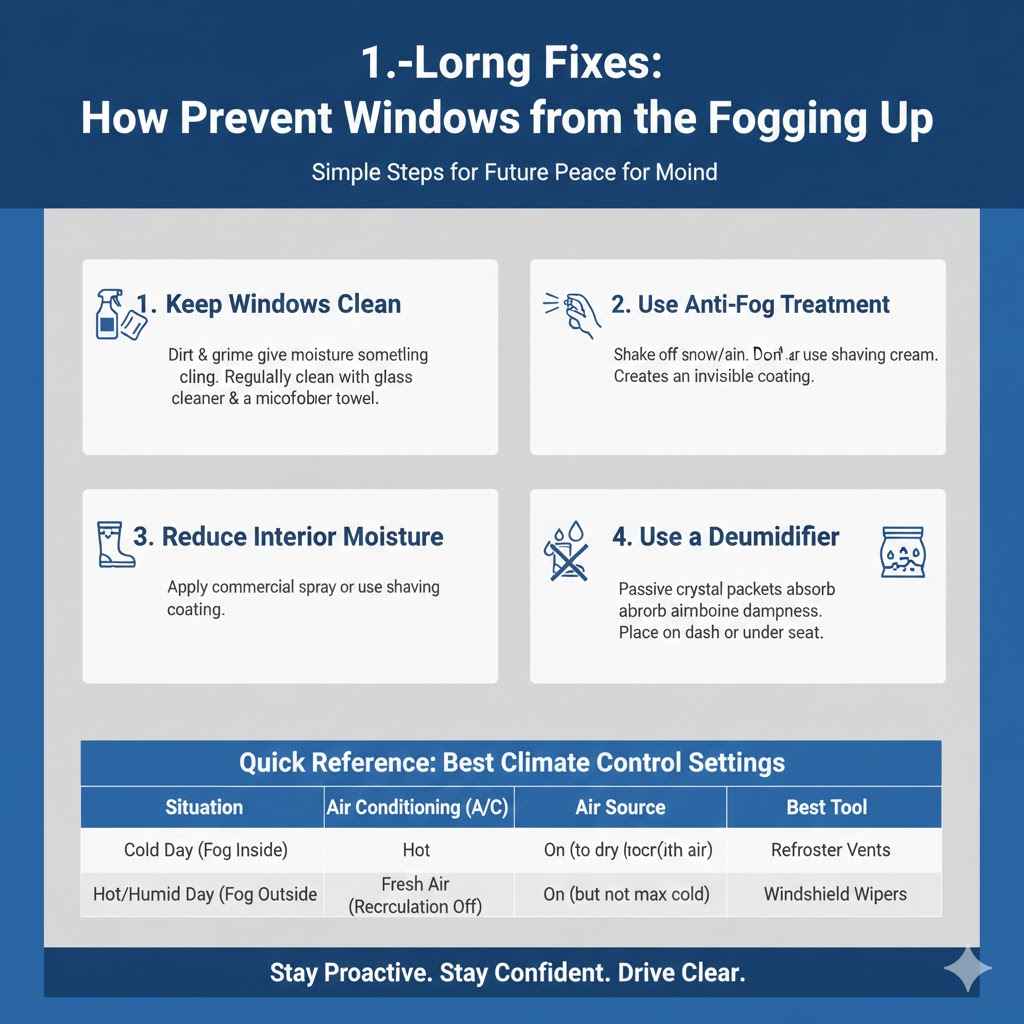
Long-Term Fixes: How to Prevent Windows from Fogging Up
Clearing fog is one thing, but preventing it from happening in the first place can save you time and frustration. Here are some simple habits and tricks you can use to keep your windows clear day after day.
- Keep Your Windows Clean (Inside and Out). Dirt, dust, and grime on the inside of your windshield give moisture particles something to cling to. A clean window fogs up less easily. Use a quality automotive glass cleaner and a microfiber towel to clean the inside of your windows regularly. You’ll be surprised at how much of a difference this makes.
- Use an Anti-Fog Treatment. There are many commercial anti-fog sprays and wipes available. These products create an invisible coating on the glass that prevents water droplets from forming. You can also try a simple home remedy: apply a small amount of shaving cream to the inside of the glass, wipe it all over with a paper towel, and then buff it completely clear with a clean microfiber cloth.
- Reduce Moisture Inside Your Car. The less moisture you bring into your car, the less fog you’ll have to deal with.
Shake off snowy boots and wet umbrellas before getting in.
Don’t leave damp towels, gym clothes, or wet coats in your car overnight.
If you have rubber floor mats, empty any standing water that has collected in them.
- Use a Dehumidifier. For cars that are prone to dampness, a passive dehumidifier can work wonders. You can buy products filled with silica crystals (the same stuff found in small packets in new shoes) that absorb moisture from the air. Place one on your dashboard or under a seat. Some are even reusable—you can dry them out in a microwave and use them again.
- Check for Leaks. If you constantly have foggy windows or a musty smell, you might have a water leak. Check the seals around your doors, windows, and sunroof. A damp carpet is a major red flag. A small leak can let in a lot of moisture, creating a persistent fog problem.
Here’s a quick reference table for the best settings depending on the situation:
| Situation | Temperature Setting | Air Conditioning (A/C) | Air Source | Best Tool |
|---|---|---|---|---|
| Cold Day (Fog Inside) | Hot | On (to dry the air) | Fresh Air (Recirculation Off) | Defroster Vents |
| Hot/Humid Day (Fog Outside) | Slightly Warmer / Less Cold | On (but not max cold) | Recirculated Air (is fine) | Windshield Wipers |
Frequently Asked Questions (FAQ)
Why does my A/C help defog windows in winter?
This is a great question because it seems strange to use A/C when it’s cold. The key is that your car’s air conditioning system is an excellent dehumidifier. It pulls moisture out of the air before that air gets blown onto your windshield. So even when you have the heat turned up, the A/C is working to deliver hot, DRY air, which is the perfect recipe for clearing fog quickly.
Is it faster to use hot air or cold air to clear fog?
Hot air is faster. While cold air from your A/C is very dry, hot air has a huge advantage: it can hold much more moisture. So, the best combination is to use the A/C to dry the air and the heater to warm it up. This super-powered hot, dry air will absorb the condensation from your windshield much more effectively than cold air alone.
What’s the difference between the front and rear defroster buttons?
They work in completely different ways. The front defroster (windshield symbol) uses your car’s fan and climate system to blow air onto the glass. The rear defroster (rectangular symbol with wavy arrows) activates a grid of thin electrical wires embedded in the rear glass. These wires heat up, like a toaster, and melt frost or evaporate fog directly off the surface. Some cars also have these heating wires in the side mirrors.
Can I just use a cloth to wipe the fog away?
You can, but it’s not a good idea. Wiping with a cloth, your hand, or a sleeve just smears the moisture around. It leaves streaks and oily residue on the glass, which can cause terrible glare from headlights at night. This residue also gives new fog a perfect surface to form on, so the problem will come back even faster. It’s always better to use your car’s climate system.
Why does my windshield fog up on the outside?
This happens on warm, humid days when you are running your A/C on a high setting. Your A/C makes the windshield glass very cold. When the hot, moist air outside touches the cold glass, it condenses into fog on the exterior surface. The quickest fix is to use your windshield wipers to clear it and turn your A/C temperature up slightly so the glass isn’t quite so cold.
How do I stop my windows from fogging up in the first place?
Prevention is all about controlling moisture. The best ways are to keep the inside of your windows perfectly clean, avoid bringing wet items like umbrellas or snowy boots into the car, and use a reusable car dehumidifier pack. On damp days, you can also run your defroster on a low setting with the A/C on to proactively keep the air inside dry.
Does using fresh air instead of recirculated air use more fuel?
The main factor affecting fuel consumption is the A/C compressor, not the air source. Running the A/C does use a small amount of extra fuel. However, the difference in fuel use between pulling in fresh air versus recirculating cabin air is practically zero. For safety and clear visibility, the tiny cost of running your defroster correctly is always worth it.
Conclusion: Drive with Confidence and Clarity
A foggy windshield isn’t just an annoyance; it’s a serious safety hazard. But as you can see, the solution is simple and based on a little bit of science. You don’t need any special tools or mechanical skills to master your car’s climate controls and keep your windows crystal clear.
Just remember the magic formula for interior fog: Defroster on high, A/C on, heat up, and fresh air in. By understanding why your windows fog up and how each button on your dashboard helps fix it, you’re in complete control. You can handle this common problem with confidence, ensuring you have a safe, clear view of the road ahead every time you get behind the wheel.
So next time you see that frustrating fog appear, take a deep breath (but not on the glass!), follow these simple steps, and watch it vanish in seconds. Stay safe and drive clear!