Best Floor Liners for Cars: Based on Specs and Reviews
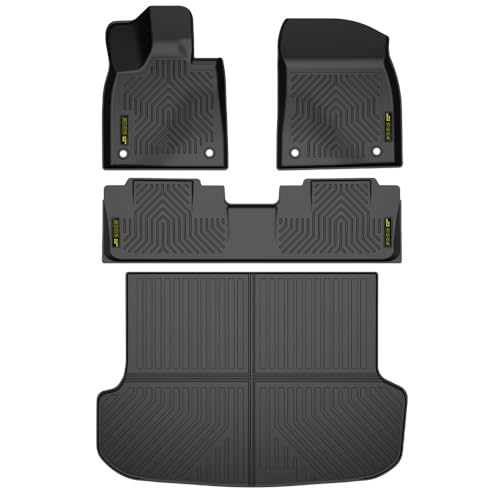
The best floor liners are vehicle-specific, high-wall TPE or rubber mats with factory retention points. Choose exact-fit liners for winter, family spills, and muddy use, and skip universal mats. Poor fit lets slush, crumbs, and salt reach carpet, where stains, corrosion, and odor get expensive fast. This guide compares top all-weather liners by fit strategy, protection depth, cleanup, and value so you can pick the right set for your use case.
Quick comparison
| Product | Badge | Best for | Price | ||
|---|---|---|---|---|---|
 |
Motor Trend FlexTough Beige Floor Mats for Cars & Cargo MatMotor Trend | Our pick | Full set · Beige · Universal fit | $83.90
Price as of 19 Oct 2026
|
View |
 |
WeatherTech FloorLiner HP Custom Fit Floor Mats for ToyotaWeatherTech | Upgrade pick | Custom fit · Black · TPE compound | $248.90
Price as of 19 Oct 2026
|
View |
 |
BDK Floor Mats, 4-Piece All-Weather Car Mat with UniversalBDK | Budget pick | 4-piece set · Black · Universal fit | $23.48
Price as of 19 Oct 2026
|
View |
The biggest split is between true custom liners and trim-to-fit mats. Custom designs usually win on anchor alignment, pedal clearance, and rear-seat coverage; trim-to-fit options win on price and flexibility, but they ask you to accept more edge trimming and a looser finished look.
Floor liner decision matrix
This matrix compares mat types by failure mode, not just by brand name. A higher score means less likely to let salt, sludge, or debris escape into the carpet, but the highest-coverage option is not always the easiest to clean or install.
| Mat type | Coverage height | Sidewall containment | Retention security | Install difficulty | Cleanability | Odor risk | Winter performance | Value | Best for |
|---|---|---|---|---|---|---|---|---|---|
| Vehicle-specific custom liner | 5 | 5 | 5 | 3 | 4 | 4 | 5 | 3 | Winter commuting, family cars |
| Maximum-coverage premium liner | 5 | 5 | 4 | 2 | 3 | 4 | 5 | 2 | Pets, snow belt, heavy spill duty |
| Trim-to-fit heavy-duty mat | 3 | 3 | 3 | 4 | 4 | 3 | 4 | 5 | Budget buyers, second cars |
| Universal low-cost mat | 2 | 2 | 2 | 5 | 4 | 2 | 3 | 5 | Lowest-cost temporary protection |
| Universal trim-to-fit premium mat | 3 | 3 | 4 | 4 | 4 | 4 | 5 | 3 | Mixed weather, exact-fit compromise |
For commuting, the best balance is a vehicle-specific liner with factory anchor points. For snow, choose the tallest sidewalls you can tolerate without making the mat awkward to pull out. For pets and kids, coverage past the footwell matters more than a pretty finish.
How we chose
The comparison below focuses on fit strategy, not brand cachet. A liner that covers more carpet can still lose if it blocks the dead pedal, interferes with the accelerator, or slides because the retention hardware does not match the vehicle.
We also weighed cleanup burden and ownership cost. That means how often you may need to pull the mat out, the chance of odor, and whether a warranty or durable material offsets a higher sticker price over time.
Say your commute includes salted slush for four months a year. A liner with high walls and a clean anchor fit will usually pay off faster than a bargain mat that leaves the carpet edges exposed and stains the front footwell after one bad storm.
What is the difference between floor liners and floor mats?
Floor liners are shaped to the vehicle floor and usually have raised edges, deeper channels, and anchor cutouts. Floor mats are broader and flatter, often universal or trim-to-fit, so they are easier to buy but less exact around pedals, rails, and footwell contours.
Custom-fit liners versus universal mats
Custom-fit liners such as WeatherTech FloorLiner, Husky Liners Weatherbeater, and 3W mats are designed around a specific cabin shape. That usually means better coverage at the dead pedal, better rear-seat fit, and fewer gaps where salt or crumbs can escape.
Universal mats and trim-to-fit sets are more forgiving on price and availability. They can be a smart answer for a work truck, a second vehicle, or a lease you do not want to spend heavily on, but they rarely match a molded liner for exact fit.
Where all-weather rubber, TPE, vinyl, and PVC fit
Rubber and rubber blends usually bring low price and good winter grip. TPE mats tend to be lighter, cleaner-looking, and easier to wipe down, while vinyl and PVC can make sense when the priority is broad coverage and moisture resistance rather than a luxury finish.
That material choice affects odor risk and flexibility in cold weather. WeatherTech’s standard FloorLiner uses a patented high-density tri-extruded material, while WeatherTech FloorLiner HP is a TPE compound. BDK’s mats are PVC, and WeatherTech Universal Trim-to-Fit mats are marketed without harmful PVCs and with sub-zero resistance.
WeatherTech FloorLiner: best overall
WeatherTech FloorLiner HP is the best overall choice for buyers who want a vehicle-specific fit with strong containment and a clean look. WeatherTech FloorLiners are custom-made for specific makes and models, and Road & Track says they have near-perfect fit and easy cleaning.
The main strength is fit strategy. A laser-measured custom liner with high containment walls is less likely to bunch underfoot, slip on the carpet, or leave a strip of exposed carpet along the sill or center tunnel.
Where the HDTE material helps is cleanup and removal. WeatherTech’s standard FloorLiner uses a patented high-density tri-extruded material, and FloorLiner HP shifts to a durable TPE compound. That matters if you remove the mats often to dump out winter grit.
The drawback is price. It also asks more of the buyer up front: you need the exact vehicle application, and the premium fit can be more than some owners need for an older commuter or a vehicle that sees only light use.
Why its laser-measured fit matters
Laser-measured fit reduces the usual failure modes: curled edges, anchor mismatch, and pedal interference. If a mat drifts even a little, the exposed strip at the accelerator side or the seat-rail edge becomes a place for salt and spilled drink residue to collect.
For winter states, that exact fit is useful because slush tends to track into the same areas every day. The liner should reach where your shoes land, not just the center of the footwell.
Where the HDTE material helps
The standard FloorLiner material is built for durability and easier cleanup than carpet, and the HP version uses a TPE compound that keeps the mat structured while still allowing removal. Compared with softer, floppier mats, that structure helps the liner keep its shape after repeated wash-downs.
If you want a mat that looks controlled rather than bulky, this is the right lane. The tradeoff is that premium structure usually means a premium price.
Who should pick FloorLiner HP instead?
Pick FloorLiner HP if you want the cleaner TPE look and you value ease of removal more than maximum stiffness. It makes sense for drivers who clean the cabin often and want a mat that feels easier to pull, shake, and reinstall.
If you are choosing mainly for broad coverage and winter containment, the standard FloorLiner remains the stronger fit-first option. The HP version is better when the priority is a polished appearance with a simpler wipe-down routine.
TuxMat: best for maximum coverage
TuxMat is the best choice when maximum coverage matters more than price. Car and Driver tested it through a full Michigan winter in a long-term BMW i4, and it is praised for extending well beyond the floorpan for broader protection.
That extra reach is useful for winter salt, ride-share traffic, and family use where dirt lands outside the deepest part of the footwell. TuxMat’s full-set 1st and 2nd row coverage can catch messes that smaller liners leave exposed.
The drawback is obvious: premium coverage brings premium cost, and maximum coverage can make removal and cleaning more awkward. More surface area means more edges to lift, more contours to rinse, and more time to dry before reinstalling.
Full-set first and second row coverage
Full cabin coverage is the point here. TuxMat’s shape is designed to protect more of the floor around the seat bases and footwell edges, which helps if rear passengers drag in snow or kids drop snacks across the second row.
That broader shield can matter in vehicles with light-colored carpet. It also helps if your passenger side collects water from boots or umbrellas that are set down before they are fully dry.
Waterproof vinyl and lifetime limited warranty
TuxMat uses waterproof vinyl construction and carries a lifetime limited warranty. That pairing fits buyers who want a premium long-term buy and are willing to pay for the wider safety margin around spills and wet footwear.
The honest downside is that premium vinyl coverage is not the easiest format for every owner. It can feel more involved to remove and rinse than a lower-coverage liner with a simpler footprint.
When the premium price makes sense
Choose TuxMat if your top problem is mess spread, not just mess volume. If rear-seat spills, melted snow, or pet debris regularly reach beyond the molded footwell, the extra coverage can save more carpet than a smaller liner can.
That premium is harder to justify for a solo commuter who mainly wants front-row protection. In that case, a cleaner-fitting custom liner may be the smarter value.
Which all-weather mats are best for winter and snow?
The best winter mats are the ones that keep slush inside the tray, stay anchored on wet carpet, and can be pulled out without cracking or curling in the cold. WeatherTech FloorLiner, Husky Liners Weatherbeater, and WeatherTech Universal Trim-to-Fit all make sense in different price and fit brackets.
Husky Liners Weatherbeater
Husky Liners Weatherbeater is a strong winter pick for buyers who want custom fit by vehicle with anti-slip retention. Husky’s StayPut Nibs and ProGard formula are built to keep the liner from wandering, and the line comes in front and rear configurations with a lifetime guarantee.
The strength is retention. A mat that stays put is less likely to bunch under your heel or slide when the cabin is damp. The drawback is that a vehicle-specific line can still be less expansive than premium maximum-coverage options.
WeatherTech Universal Trim-to-Fit mats
WeatherTech Universal Trim-to-Fit mats are a sensible answer when you want winter durability without paying for a molded custom set. The Drive names them the top overall pick and describes them as heavy duty and durable, with patented grip and sub-zero resistance.
Their weakness is fit precision. Trim-to-fit is not the same as exact-fit. If you need a liner that maps tightly around a dead pedal or across a complicated center tunnel, universal sizing will usually leave more compromise.
A common first-timer mistake is buying a universal mat and expecting custom coverage around the accelerator and seat rails. The result is often a mat that protects the center of the floor well enough, but leaves edges, anchors, or side contours less protected than expected.
Motor Trend FlexTough and BDK for budget winter duty
Motor Trend FlexTough is the better budget winter choice if you want a universal trim-to-fit set with deep-dish construction and a rubber blend. It is positioned as a full set for front and rear use, so it works for drivers who need a low-cost barrier against snow slush and job-site dirt.
BDK All-Weather Rubber Floor Mats are the very low-price option. Road & Track lists them as the best value pick, and they use PVC material with raised ridges and an edge lip. They are available in four color options: black, clear, beige, and gray.
Both can handle winter duty, but neither should be mistaken for a premium custom liner. Expect a simpler fit, a less refined finish, and more trimming or repositioning if your footwell has unusual shapes.
Are WeatherTech floor liners worth it?
WeatherTech floor liners are worth it when you want a vehicle-specific fit, high containment walls, and easier cleanup than carpet or loose mats can provide. They make the most sense for winter use, leased vehicles you still want to keep clean, and drivers who dislike mats shifting underfoot.
FloorLiner versus FloorLiner HP
FloorLiner is the more established molded option, built around WeatherTech’s high-density tri-extruded material. FloorLiner HP shifts to a TPE compound and is aimed at buyers who want a cleaner look and easier handling without giving up custom fit.
Both are in the premium lane. The HP version may feel easier to remove and reinstall, while the standard FloorLiner is the more classic high-wall answer for buyers who care most about deep containment and a proven fit profile.
Fit, removal, and cleanability tradeoffs
Road & Track says WeatherTech FloorLiners have near-perfect fit and easy cleaning. That is the main reason to buy them. The compromise is price, and in some cabins the higher sidewalls can make drying and removal a little more involved than with flatter mats.
If your biggest issue is a mat that will not stay where you put it, the premium is easier to justify. If you only need light protection for a fair-weather commuter, the return on spending more is smaller.
When the premium is justified
WeatherTech makes the most sense when a bad fit would create a costly problem. Think of winter salt working into carpet seams, or wet boots tracking grit into a car that carries children every day.
If you need maximum containment and a tailored fit, the money is easier to defend. If your main goal is simple stain resistance, a lower-priced universal mat may be enough.
Which one should you buy?
Start with use case, then fit, then price. For commuting, choose WeatherTech FloorLiner or WeatherTech FloorLiner HP. For pets and kids, TuxMat is the stronger coverage play. For trucks and muddy work use, Husky Weatherbeater or Motor Trend FlexTough make the most sense. For the tightest budget, BDK is the lowest-cost entry.
Best for commuting
Choose a vehicle-specific liner with clean retention and a matte, low-bulk look. 3W floor mats also belong in this conversation because their clean fit, premium appearance, logo presence, and long-term test usage appeal to drivers who want the cabin to look finished rather than utilitarian.
The drawback with premium-looking mats is that they can cost more than their practical benefit if your commute is short and the weather is mild. In that case, value matters more than perfection.
Best for pets and kids
Pick TuxMat if you want the widest net for spilled drinks, muddy paws, and snack fallout. The extra coverage helps when messes move beyond the floorpan, especially in second-row use where kids tend to kick debris into odd corners.
If you do not need full coverage, a custom-fit WeatherTech or Husky set may be easier to clean day to day. Less surface area usually means faster rinse-and-dry cycles.
Best for trucks and muddy work use
For trucks, a custom-fit Husky Weatherbeater or a heavy-duty trim-to-fit option can be the smarter call, especially if you want coverage that handles boots and tools without paying for a luxury finish. The Drive also notes that Husky Liners Weatherbeater Series is designed to fit a variety of trucks.
Lasfit is worth a look if you want a matte finish, fit around wheel wells, attachment points, and a rear trunk liner option. The drawback is that pricing sits closer to premium options, so it is not the cheapest route to work-truck protection.
Best value under a budget
BDK is the lowest entry point if price is the main constraint, and Motor Trend FlexTough is the better pick when you want more substantial coverage and a deep-dish design without stepping into premium pricing. Road & Track names BDK its best value pick, while The Drive names WeatherTech Universal Trim-to-Fit the top overall pick among universal options.
A budget mat works when you accept that it may need more trimming, more adjustment, and more frequent replacement. If you keep a vehicle for years, the cheapest set is not always the cheapest ownership path.
Fit-check checklist before you buy
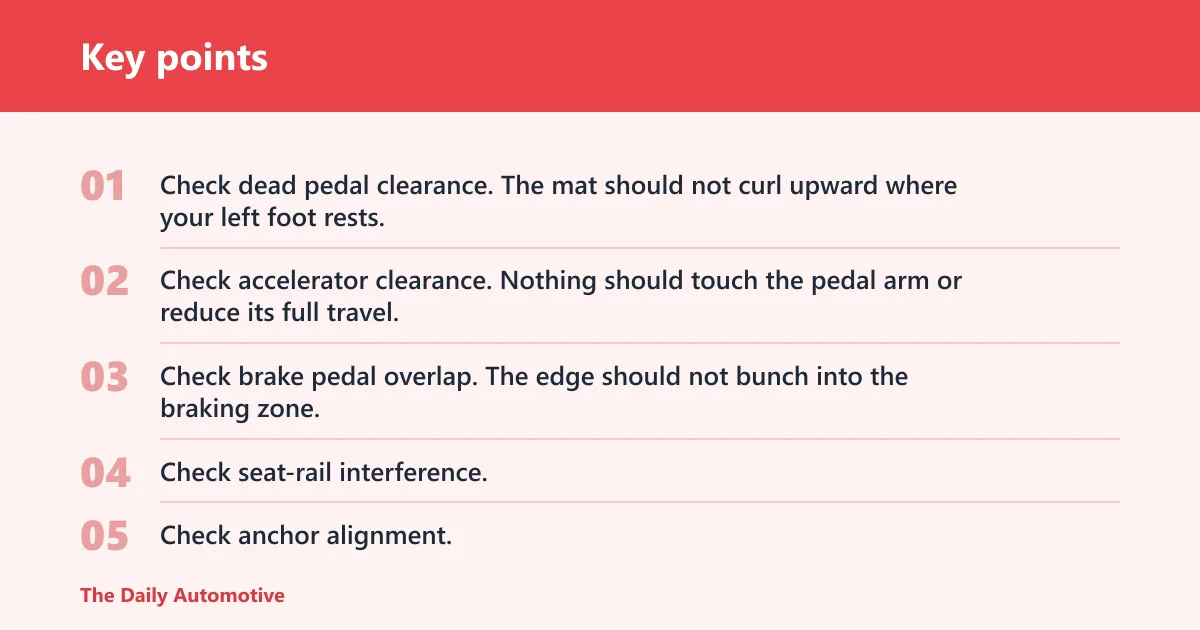
- Check dead pedal clearance. The mat should not curl upward where your left foot rests.
- Check accelerator clearance. Nothing should touch the pedal arm or reduce its full travel.
- Check brake pedal overlap. The edge should not bunch into the braking zone.
- Check seat-rail interference. The mat should not ride up on a rail or snag when the seat moves.
- Check anchor alignment. Factory posts or hooks should meet the mat’s retention points cleanly.
- Check rear-seat coverage. Make sure the second row covers the center hump and passenger foot zones, not just the flat middle.
Suppose your truck has a tall dead pedal and a narrow accelerator opening. A universal mat can look close on paper but still need trimming near the left edge, while a vehicle-specific liner often drops in with less trial and error.
Maximum coverage can become a downside when cleanup matters more than containment. More wall height and more molded corners can trap grit if you do not remove the mats often, so the right choice depends on how much dirt you expect and how often you want to clean it.
Frequently asked questions
What are the best floor liners for cars?
The best floor liners are vehicle-specific models with high sidewalls, stable retention, and clean coverage around the dead pedal and center tunnel. WeatherTech FloorLiner, Husky Liners Weatherbeater, and TuxMat stand out for different reasons: fit, retention, and maximum coverage. Pick based on your worst mess, not just brand reputation.
Which all-weather car mats are best for winter and snow?
For winter and snow, choose a custom-fit liner with strong retention and tall walls. Husky Liners Weatherbeater is a solid winter pick, WeatherTech FloorLiner is the premium fit-first option, and WeatherTech Universal Trim-to-Fit works if you want durable protection on a tighter budget.
Do universal trim-to-fit mats actually fit well?
They fit well enough for many drivers, but not as precisely as custom liners. Universal trim-to-fit mats can handle winter grime and daily wear, yet they usually need more adjustment around the accelerator, dead pedal, and seat rails. They are a compromise, not a match for exact-fit.
Are TPE floor mats better than rubber mats?
Neither material is universally better. TPE often looks cleaner, can be easier to handle, and may offer better cold-weather flexibility. Rubber and rubber blends can feel heavier-duty and may suit work use better. The right pick depends on coverage, odor tolerance, and how often you remove the mats.
What floor liners give the most coverage?
TuxMat gives the most coverage among the options covered here. It extends well beyond the floorpan and includes full first- and second-row coverage, which helps when spills or snow track beyond the deepest part of the footwell. The tradeoff is price and a more involved cleaning routine.
Products related to this article
Sponsored / affiliate links. As an Amazon Associate I earn from qualifying purchases. I may earn additional commission from eligible campaigns.