Best Ceramic Glass Coatings for Cars (2026): We Compared
For most DIY drivers, Griot’s Garage Ceramic Glass Coating Kit is the best starting point because it keeps rain visibility strong, stays simple to apply, and works well on windshield glass. If you want the toughest wear claim, Invisible Glass 95151 Ceramic Glass Coating Kit is the harder-wearing pick, but it demands better prep and gives first-time users less margin for error.
Quick comparison
| Product | Badge | Best for | Price | ||
|---|---|---|---|---|---|
 |
Nano Quick Coat Restores, Quick Coat Restore Nano Spray forGeneric | Our pick | 300ml (2×150ml) · Multi-surface spray · Paint/Glass/Wheels | $19.99
Price as of 24 Oct 2026
|
View |
 |
Malcm 9H Hardness Nano, Super Ceramic Coating for Cars,CarMalcm | Also great | 30ml · Glass coating kit · 9H hardness | $10.99
Price as of 24 Oct 2026
|
View |
The trade-off is plain: the easiest coating is not always the one with the longest service life. On a daily-driven car, the right pick depends on how much time you can spend cleaning the glass and how much risk you will accept if the wipe-off is late or uneven.
How we chose
These three picks were compared on three practical points: water behavior in rain, application risk on glass, and upkeep after installation. The 1-5 scores below are editorial comparisons based on the product descriptions in this article, not lab-tested measurements. That keeps the focus on what a daily driver needs, not on brand reputation alone.
Marketing claims matter, but only after fit is clear. A coating that sounds strong on paper can be a poor match for a curved windshield, a tinted side window, or a commuter car that sees constant wiper use and winter grime.
Decision matrix
| Product | Rain visibility | Ease of application | Durability claim | Tint compatibility | Beginner risk | Best for |
|---|---|---|---|---|---|---|
| Griot’s Garage Ceramic Glass Coating Kit | 5/5 | 4/5 | 3/5 | 4/5 | 2/5 | Daily drivers that need a balanced windshield and side-window treatment |
| Adam’s Polishes Graphene Glass Coating | 4/5 | 5/5 | 3/5 | 4/5 | 1/5 | First-time users who want the simplest install path |
| Invisible Glass 95151 Ceramic Glass Coating Kit | 4/5 | 2/5 | 5/5 | 3/5 | 4/5 | Drivers who want a more serious wear claim and can prep carefully |
Griot’s Garage Ceramic Glass Coating Kit: best for daily drivers
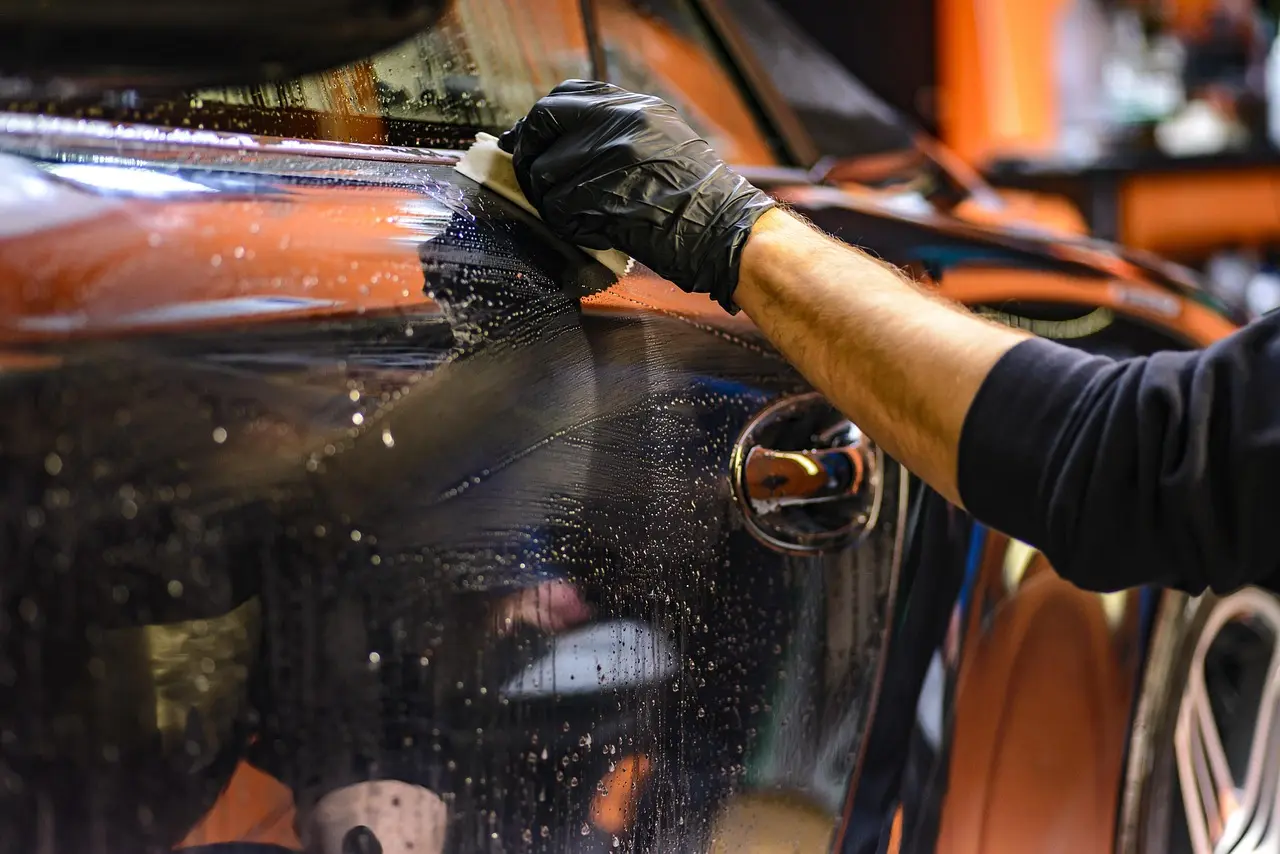
Griot’s Garage Ceramic Glass Coating Kit is the safest all-around pick for most DIY drivers because it is an SiO2-based formula made for windshield and window use, with strong water beading and visibility improvement claims. If you want a coating that makes sense on a commuter car, this is the cleanest middle ground.
Its value is practical, not flashy. The coating is built for glass surfaces, and the hydrophobic behavior matters most when rain is light to moderate, wipers are active, and road spray keeps hitting the windshield.
The main drawback is prep sensitivity. If the glass still has road film, old residue, or embedded contamination, the coating can bond unevenly and leave haze or patchy water behavior behind.
Water behavior and visibility
Griot’s Garage is the strongest match when the goal is better visibility in rain without turning the windshield into a high-maintenance job. Its beading behavior helps water break up and move off the glass faster, which is useful on highway spray and in stop-and-go traffic.
Beading and sheeting are not the same. Beading forms smaller droplets that can lift and roll away, while sheeting lets water pull into larger moving sheets; either can improve visibility, but the driver wants predictable movement rather than a windshield that smears water back across the sweep path.
Where it fits best
A common first-timer mistake is choosing the product with the biggest durability promise and then skipping decontamination. Say your sedan has 60,000 miles of winter road film on the glass; even a good coating can underperform if that film is still on the surface before application.
This kit fits daily drivers, garage-kept cars, and winter-use vehicles that need a real glass treatment rather than a quick temporary repellent. It is less attractive if you want the shortest install time or if you are applying to glass that is already difficult to clean.
Adam’s Polishes Graphene Glass Coating: best for easy application
Adam’s Polishes Graphene Glass Coating is the easiest of the three to recommend for a first-time user because it uses graphene-oxide ceramic technology and comes with a microfiber applicator style approach. That matters when the main priority is to finish the windshield cleanly without a long wait.
Its hydrophobic and abrasion-resistant positioning is appealing for owners who want a low-friction install. It is the most forgiving option here when the goal is fast application, not the longest wear promise.
The trade-off is that easy install does not automatically mean the strongest long-term protection. If you want fewer reapplications over time, this is not the most aggressive long-wear pick in the group.
Why the easy install matters
The lower-friction install changes the workflow. A less demanding wipe-on install lowers the chance of overworking the surface, forgetting a section, or letting the product flash unevenly on a hot windshield.
That makes it well suited to drivers who want a clean result without a lengthy curing window. It is also the better choice for people who do not want to spend extra time managing wipe-off timing on curved glass.
When it beats the others
Suppose your car sits outside, you have one free hour, and you need the front glass ready the same day. Adam’s is the better fit if application risk matters more than pushing for the longest claimed service life.
Its drawback is simple: the easier install comes with a less forceful durability story than the semi-permanent style option in this group. If the goal is maximum wear, look harder at the more serious coating below.
Invisible Glass 95151 Ceramic Glass Coating Kit: best for long wear
Invisible Glass 95151 Ceramic Glass Coating Kit is the most serious long-wear option here. It is positioned as a professional-grade ceramic glass coating with a 9H diamond hardness claim and a semi-permanent coating profile for windshields and windows. That hardness wording is a marketing claim, not a directly standardized way to compare consumer coatings across brands.
That makes it attractive for drivers who want to recoat less often. The trade-off is that a stronger wear claim usually comes with less forgiveness during prep and application, which raises the chance of streaking or uneven bonding if the surface is not ready.
This is the least beginner-friendly pick in the group. It asks for more patience, more prep discipline, and better wipe-off timing than the easier-to-apply choices.
What the hardness claim does and does not mean
The 9H diamond hardness claim signals a tougher-seeming surface, but it does not mean the glass becomes scratch-proof. Daily wipers, dirty blades, winter grit, and improper towel use can still mar the surface if the installer is careless.
For a high-mileage commuter, the benefit is not fantasy-level armor. It is a more durable treatment that may stay in place longer if the prep step is thorough and the windshield sees regular maintenance.
Why beginners should be careful
Professional-grade labeling can tempt first-time users into rushing the process. That is where trouble starts: missed residue, uneven leveling, and visible haze along the edge of the wipe pattern.
If the car has a heavily curved windshield or old glass film, this is the product most likely to punish sloppy prep. It is better for someone who is willing to spend more time on the surface before the coating goes down.
How to apply ceramic glass coating to car windows
Application should start with clean, decontaminated glass and end with a streak-free wipe-down. The coating itself is only part of the job; the prep step decides whether the product bonds evenly or leaves haze, chatter, or weak spots behind. Follow the product label for dwell time, cure window, temperature range, and any wiper restrictions after application.
- Wash the glass and dry it completely.
- Use a dedicated glass cleaner to remove film and residue.
- Decontaminate the surface if the windshield feels rough or has stubborn buildup.
- Apply the coating in small sections so you can control wipe-off timing.
- Level the product with a clean microfiber towel before it flashes unevenly.
- Inspect under good light for streaks, missed edges, or residue.
Prep details that matter
The towel choice matters. A clean, low-lint microfiber is the safer tool for final leveling because it helps avoid dragging grit back over the glass. Dirty towels are a fast way to create fine streaks that show up at night.
Removal timing matters too. Leave a coating on too long and it can haze; wipe too soon and you may not level the film evenly enough for consistent water behavior. If the label advises avoiding wipers during the cure window, follow that guidance before putting the car back into regular use.
Is ceramic glass coating better than rain repellent?
Ceramic glass coating is better when you want a longer-lasting treatment and you are willing to prep properly. A simpler rain repellent is often smarter when you want faster installation, lower failure risk, and less time spent on surface correction before the first drive.
The main difference is durability versus convenience. Ceramic glass coatings usually ask more of the installer, while simpler repellents are easier to refresh and easier to abandon if the result is not what you want.
Beading versus sheeting in heavy rain
In heavy rain, the best result is not always the most dramatic bead. Small beads can improve water movement, but if they are too fine or inconsistent, the windshield can still need constant wiper input.
Sheeting can help large amounts of water move off the glass more quickly, while beading can make smaller droplets easier to clear. The practical question is which behavior gives you the cleanest view at speed, in your weather, on your windshield shape.
Failure cases to watch
Streaking usually points to poor leveling, dirty glass, or using too much product. Wiper chatter often shows up when the surface feels slick in one area and grabby in another, which is common after uneven application.
Uneven bonding can happen on neglected windshields, especially if old film or decontamination residue remains. Hazing is often the last warning sign that the wipe-off timing or towel choice was wrong.
Which one should you buy?
Choose Griot’s Garage Ceramic Glass Coating Kit if you want the most balanced daily-driver option. It is the cleanest fit for windshield and side-window use when visibility matters and you do not want a complicated install.
Choose Adam’s Polishes Graphene Glass Coating if you want the easiest install and the least setup friction. It is the best match for a first-time user or for someone who values quick application more than the hardest wear claim.
Choose Invisible Glass 95151 Ceramic Glass Coating Kit if you are willing to trade more application risk for a longer-wear claim. It makes the most sense for careful users who are prepared to do the prep work and live with a more exacting process.
For heavily curved windshields, or for cars that see a lot of winter grime, the safer buy is usually the coating that is easier to level cleanly. A stronger claim only helps if the surface prep is already solid.
Frequently asked questions
What is the best ceramic glass coating for cars?
For most DIY drivers, the best ceramic glass coating is the one that balances rain visibility, simple application, and realistic upkeep. Griot’s Garage Ceramic Glass Coating Kit is the strongest all-around pick here because it is made for glass, beads well, and is less demanding than a more aggressive semi-permanent coating.
Which ceramic glass coating lasts the longest on windshields?
Among the three picks compared here, Invisible Glass 95151 has the strongest long-wear positioning because it is described as a professional-grade coating with 9H diamond hardness and a semi-permanent profile. That said, the longest claim only matters if the windshield is cleaned and prepped carefully before application.
How do you apply ceramic glass coating to car windows?
Start with clean, decontaminated glass, then apply the coating in small sections and level it before it flashes unevenly. Use a clean microfiber towel for wipe-off, and inspect the surface in good light. Skipping prep is the fastest route to haze and patchy water behavior.
Do ceramic glass coatings work on tinted windows?
Some do, but the product instructions matter more than generic marketing claims. Check the label of the coating you buy before applying it to tinted windows, rather than assuming all ceramic glass products are automatically compatible.
How long does ceramic glass coating last on car glass?
Durability varies by product, climate, wiper use, and prep quality. Among the three picks compared here, Invisible Glass 95151 is positioned as the longest-wear option, while the other two are framed more as balanced daily-use choices. Those claims are not guarantees, and daily use can shorten them.
Which ceramic glass coating is easiest to apply?
Adam’s Polishes Graphene Glass Coating is the easiest of this group to apply because it uses a microfiber applicator approach and has no curing time claim. That makes it the least stressful pick for a first-time user or anyone who wants a faster install with less room for timing mistakes.
Products related to this article
Sponsored / affiliate links. As an Amazon Associate I earn from qualifying purchases. I may earn additional commission from eligible campaigns.