Do Amish Drive Cars? Buggies, Hired Drivers and Exceptions
Most Amish do not own or personally drive cars, but the full answer depends on which community you mean. Old Order Amish, the largest and most traditional group, travel by horse-drawn buggy and generally will not sit behind the wheel of a car themselves — though they routinely ride as passengers in cars driven by hired non-Amish drivers. A smaller number of more liberal Amish-related affiliations, such as Beachy Amish congregations, do own and drive cars, often painted black to keep a plain appearance.
This split confuses a lot of people, and it’s easy to see why. “The Amish” are not one single, uniform group with one rulebook. Each community follows its own Ordnung — an unwritten set of church-specific guidelines — and those rules can differ noticeably from one settlement to the next, even within the same state. Below is what actually determines whether a given Amish family drives, rides, or walks.
Why Most Amish Don’t Drive Cars
The avoidance of car ownership isn’t about the vehicle itself — it’s about what owning one would do to community life. Amish faith and culture put a high value on simplicity, humility, and staying close to family and neighbors. A car offers speed and independence, which can pull people away from their local church district and toward the outside world faster than the community wants to allow.
Two ideas come up again and again when Amish leaders explain the rule:
- Humility over status. A car can become a symbol of wealth or personal pride, which runs against the Amish emphasis on staying modest and equal within the community.
- Slower travel keeps people close. A buggy realistically limits how far a family can go in a day. That built-in limit means more time spent with neighbors, more shared meals, and more face-to-face contact — things like barn-raisings, where an entire community builds a barn together in a single day, depend on everyone staying local.
It’s worth noting this is a community decision, not a rule handed down from a single national authority. Each church district’s bishop and ministers, together with the congregation, decide what the local Ordnung allows — which is exactly why car use varies so much between different Amish groups.
How Amish People Actually Get Around
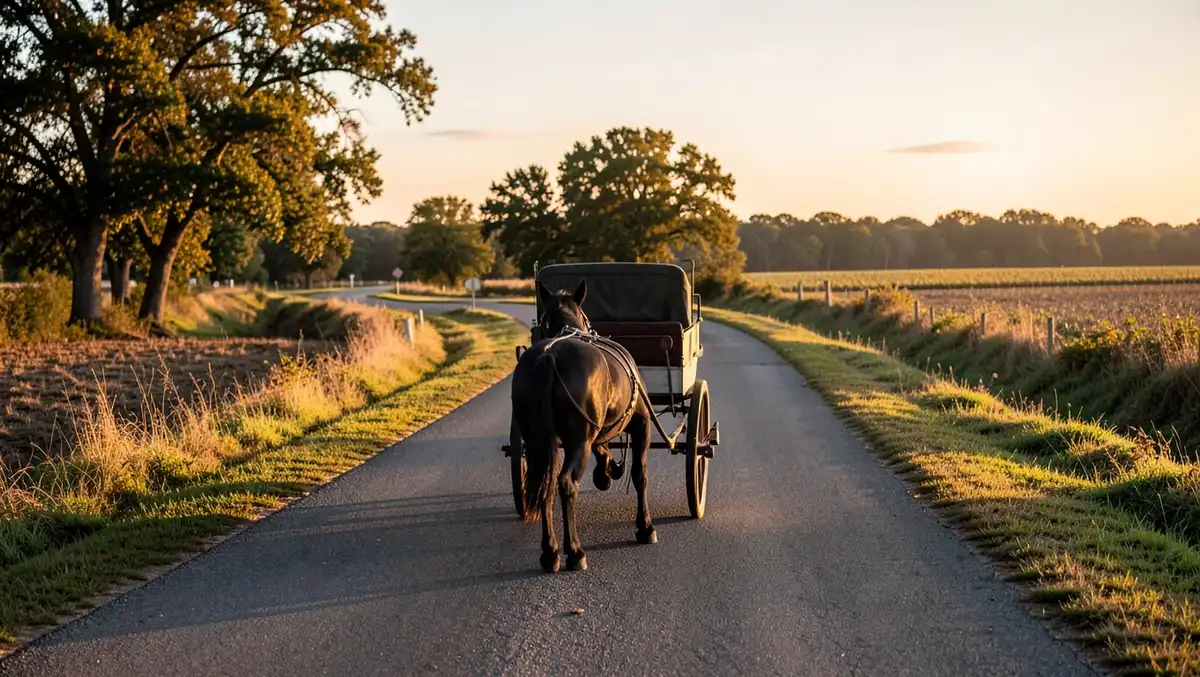
The horse-drawn buggy is still the everyday standard in most Old Order communities. Buggies are typically black or gray, built to be practical rather than showy, and used for trips to church, the market, or a neighbor’s farm. Drivers on rural highways in Amish country regularly encounter buggy-crossing warning signs like the one below.
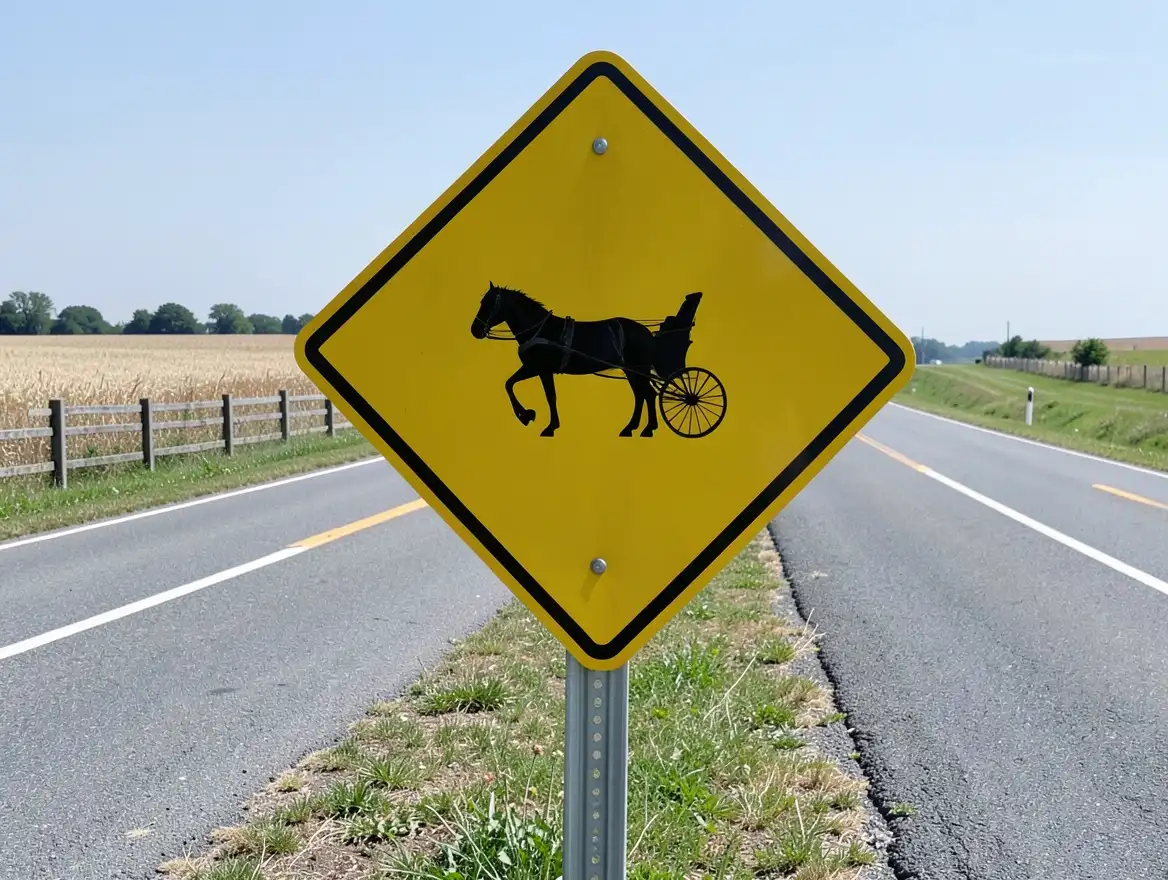
For shorter trips, many Amish communities also allow bicycles, and some permit push-scooters (a foot-propelled scooter, not a motorized one). Both are quiet, don’t require fuel, and let someone get to a nearby job or visit a friend faster than walking — without crossing the line into owning a motor vehicle.
The “Amish Taxi”: Riding in Cars Driven by Others
Here’s the part that surprises most people: not driving a car is not the same as never riding in one. Hiring a non-Amish driver — often called an “Amish taxi” — is a normal, widely accepted part of Amish life. Some drivers run this as an actual side business built around a regular route of Amish clients; others are simply English (non-Amish) neighbors, friends, or business contacts who provide rides when asked.
Common, generally accepted reasons for hiring a driver include:
- Medical appointments that are too far or too urgent for a buggy
- Business trips, such as hauling goods to market or meeting suppliers
- Large shopping trips for bulk goods or building supplies
- Family and social visits, especially to relatives in other states
- Emergencies, where speed matters more than tradition
The distinction the Ordnung is protecting is about ownership and control, not the ride itself. Riding as a passenger doesn’t give a person the independence, status, or convenience that owning and personally driving a car would — so most Old Order communities allow it while still prohibiting car ownership.
Not All Amish Are the Same: Which Groups Actually Own Cars
The single biggest misconception about this topic is treating “the Amish” as one group with one answer. There’s a real spectrum:
- Old Order Amish — the most traditional and numerically largest group. No personal car ownership or driving; buggies and hired drivers only.
- New Order Amish — still use horse-and-buggy for daily transportation like Old Order communities, but tend to be more permissive on a few other fronts, such as allowing air travel in more circumstances.
- Beachy Amish and Old Beachy Amish — these are more progressive, car-driving affiliations that split off from Old Order groups decades ago. They do own and personally drive cars, along with using electricity and telephones. Many Old Beachy congregations still keep a distinctly plain look by requiring member-owned cars to be painted a single, unadorned color — usually black — earning them the informal nickname “black bumper” churches.
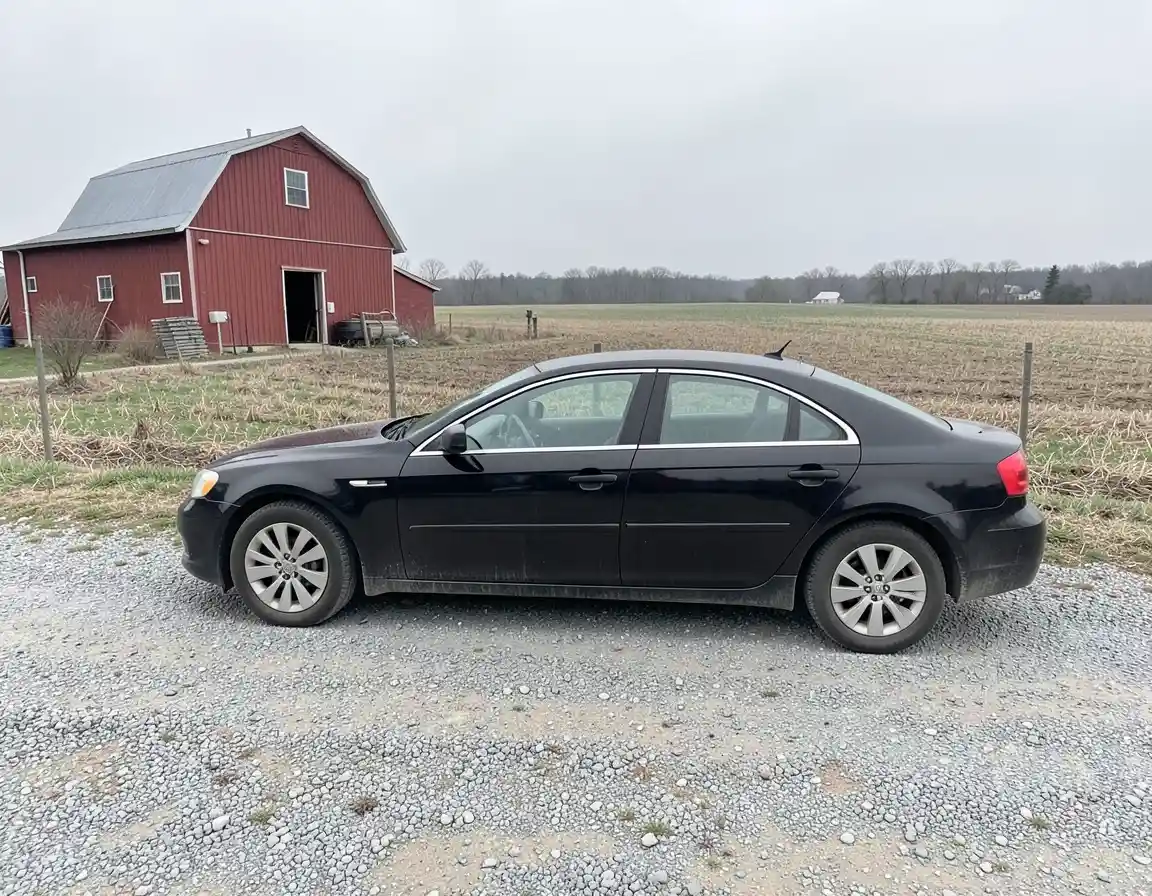
Because Beachy and Old Beachy congregations are technically distinct church affiliations from Old Order Amish (some describe them as “Amish Mennonite”), you’ll sometimes see conflicting answers online depending on which group a particular source is describing. When someone says “I know Amish people who drive,” this is almost always who they mean.
Amish and Modern Technology, More Broadly
Cars aren’t the only piece of modern technology Amish communities weigh carefully. The general pattern is the same across the board: a tool is judged by whether it strengthens or weakens family and community life, not by whether it’s “new.”
Many Old Order communities allow battery-powered tools, generators for specific farm or shop tasks, and even solar panels — but decline a direct connection to the public power grid, and personal, always-on internet or cellphone access is usually off the table. A business phone kept in a shed or outbuilding for calling customers is common; a smartphone carried in every pocket generally is not. As with car use, exactly where that line sits is set by each local church district, not by a single national Amish authority.
Frequently Asked Questions
Can Amish people ride in cars?
Yes. Most Amish communities do not allow owning or personally driving a car, but riding as a passenger in a car driven by a non-Amish person — often called an “Amish taxi” — is common and generally accepted for medical trips, business, shopping, and family visits.
Do Amish people have Social Security numbers?
Most Amish adults do have a Social Security number, since one is required to file for the religious exemption in the first place. What many Amish don’t have is Social Security tax withholding or benefits: self-employed Amish who work only for fellow church members can file IRS Form 4029 to be exempt from paying into and receiving Social Security and Medicare, based on their religious objection to accepting outside insurance. That exemption doesn’t apply to Amish employed by a non-Amish employer.
What do Amish use instead of cars?
Horse-drawn buggies are the main method of daily transportation in most Old Order communities, along with bicycles and push-scooters for shorter trips. For longer or more urgent travel, Amish families commonly hire a non-Amish driver rather than owning a vehicle themselves.
Do Amish people fly on airplanes?
It depends on the church district, but it’s more common than most people assume. Most Old Order Amish churches discourage or ban routine air travel because it’s seen as an unnecessary, worldly convenience — but New Order Amish congregations, which take a more relaxed stance on travel, generally do permit flying. Across nearly every affiliation, flying is allowed for genuine emergencies, such as an air ambulance flight for a medical crisis, or for essential long-distance family and business travel that would otherwise be impractical.
Do any Amish own cars?
Yes, but not Old Order Amish, who make up the majority of the Amish population. Car ownership is generally limited to more liberal, related affiliations such as Beachy Amish and Old Beachy Amish congregations, some of which require member-owned cars to be a single plain color, usually black.
The Bottom Line
“Do Amish drive cars?” doesn’t have one universal answer, and that’s the whole point. Most Old Order Amish will never personally own or drive a car, relying instead on horse-drawn buggies, bicycles, and hired drivers for anything a buggy can’t handle. A smaller number of more liberal Amish-related groups, like Beachy Amish congregations, do own and drive cars — often deliberately plain, black ones. Neither approach is about rejecting the modern world out of ignorance; each is a deliberate choice made by that community to protect the kind of close-knit, faith-centered life its members value.
For a broader look at everyday Amish transportation habits, see our companion guide, Do Amish People Drive Cars? Essential Facts Revealed.
Products related to this article
Sponsored / affiliate links. As an Amazon Associate I earn from qualifying purchases. I may earn additional commission from eligible campaigns.