Top Rated 5 Custom Gauges for Cars
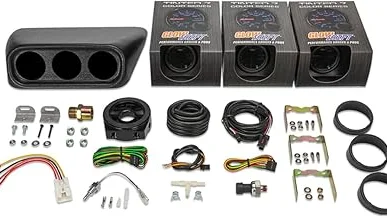
A top custom-gauge option starts with the Auto Meter triple console because it combines oil pressure, water temperature, and voltage in a compact 2.3125-inch cluster that fits classic and custom dash work. For the cleanest fit, choose the gauge layout from the build first, then match the sender type and mounting depth. This guide compares five gauge layouts, what each monitors, and which builds they suit best.
Top pick and quick verdict


Quick picks
| Product | Best for | Gauge layout | Sender type | Mounting style | Key listing detail | One drawback |
|---|---|---|---|---|---|---|
| Auto Meter triple console | Classic builds that need a compact three-gauge cluster | Oil pressure, water temperature, voltage | Mechanical Bourdon tube movement | Triple console / cluster | 2.3125-inch gauge set | Mechanical routing takes more planning |
| WATERWICH kit | Daily drivers and turbo street cars that want a basic monitoring trio | Oil pressure, water temperature, voltage | Electrical sender system | Generic three-gauge install | Tracks the three core metrics | Sender placement matters more than with a mechanical gauge |
| Dyno Racing kit | Space-conscious custom dashes | 52mm triple-gauge layout | Electrical sender system | 52mm cluster | Uses a 52mm triple-gauge layout | 52mm fit still needs depth and bezel checks |
| ESUPPORT gauge | Single-function coolant monitoring | Water temperature | Electrical sender system | Single-gauge mount | 52mm digital water temp gauge | One gauge does not cover charging or oil pressure |
| General Auto Pro Bosch Style Line 2-inch triple gauge kit | OEM-style builds that want a familiar face pattern | Triple gauge format | Check the manufacturer’s listing for your model | 2-inch cluster | Bosch Style Line 2-inch triple gauge kit | Style match matters if the rest of the dash is modern |
Which custom gauge layout fits your build?
Choose the gauge layout from the build, not the catalog photo. Classic cars often need a compact triple cluster with a face style that matches the dash. Turbo street cars commonly need oil pressure and coolant temperature first. Daily drivers benefit from voltage visibility. Track builds need quick readability and low distraction.
Classic car dash space and bezel match
A classic dash often rewards a small, integrated cluster more than a wide digital panel. The Auto Meter triple console and the General Auto Pro Bosch Style Line 2-inch triple gauge kit fit that brief better than a scattered set of single gauges. The goal is a layout that looks planned, not bolted on.
Turbo street car monitoring priorities
Turbo cars punish weak cooling and poor oil control. Oil pressure and water temperature should sit near the top of the list, with voltage close behind if the car uses a high-output fan, fuel pump, or ignition setup. The WATERWICH kit fits that logic because it covers all three core readings in one package.
Daily driver visibility and charging-system checks
A daily driver needs readable gauges more than a race-style cluster. Voltage matters because charging problems often show up there before a roadside failure. A 52mm digital gauge like the ESUPPORT water temp unit works if the cabin lighting is low, but the main job is still clear reading at a glance.
Track build placement and fast reading
Track use rewards a layout that the driver can read without searching. That points toward a compact 52mm arrangement, clear lighting, and a mounting position in the A-pillar or upper dash where the line of sight stays clean. A full multi-gauge panel only helps if the driver can see it under load.
Custom gauge decision matrix
This matrix maps the build to the layout, sender type, and specs that matter most. It also shows what goes wrong when the wrong gauge type lands in the wrong dash.
| Build type | Available dash space | Driving goal | Best layout | Sender type | Must-have specs | Failure case if chosen wrong |
|---|---|---|---|---|---|---|
| Classic car | Tight dash opening, shallow cluster depth | Period-correct look with real engine monitoring | Triple cluster in 2-inch / 52mm format | Mechanical for oil pressure if routing space allows | Oil pressure, water temperature, voltage; matching bezel style | Oversized pods can block trim, or an off-style face can look out of place |
| Turbo street car | Moderate dash space, often with an A-pillar pod | Catch heat and boost-related stress early | Three-gauge cluster centered on oil pressure and coolant temperature | Electrical sender system for easier routing | Fast reading, backlighting, sender compatibility, enough depth for the pod | Heat-soaked senders or poor hose routing can skew readings when the car is loaded |
| Daily driver | Limited spare space, clean dash preferred | Spot charging or cooling problems early | Single gauge plus voltmeter or a compact triple kit | Electrical sender system | Voltage visibility, readable night lighting, simple mounting | Too many gauges can clutter the dash and distract from the road |
| Track build | Upper dash, pod, or console mount | Read critical data at a glance | 52mm cluster with clear illumination | Mechanical or electrical, depending on space and heat exposure | Oil pressure, coolant temperature, brightness, secure mounting | Bad viewing angle or deep cup fitment makes the gauge hard to read in motion |
Product reviews
Auto Meter triple console
The Auto Meter triple console ranks first because it bundles the three readings that matter most to many builds: oil pressure, water temperature, and voltage. The cluster uses a mechanical Bourdon tube movement for the mechanical gauges, while voltage is handled as part of the same compact package.
The main fitment note is size. The unit is a 2.3125-inch gauge set, so it suits compact cluster openings better than a loose multi-gauge spread. For a classic dash, that scale can be exactly right. For a cramped modern cabin, check depth before buying and confirm pod clearance against your dash.
WATERWICH kit
The WATERWICH kit is the most straightforward three-gauge answer for a driver who wants the core trio without building a custom panel from separate parts. It tracks oil pressure, water temperature, and voltage, which keeps the monitoring logic simple for a turbo street car or a daily driver that needs basic health checks.
Because this is an electrical kit, sender placement and grounding matter. If the sender sits where heat soaks or the wiring route is compromised, the gauge can mislead you. For this kind of set, routing and grounding matter as much as the face on the dash.
Dyno Racing kit
The Dyno Racing kit uses a 52mm triple-gauge layout, which makes it a useful fit for cars built around common custom gauge openings. That size works well when the dash has limited room and the builder wants a consistent face size across the cluster.
Its main advantage is packaging. The drawback is also packaging. A 52mm cluster still needs enough depth behind the dash, and the bezels must clear the surrounding trim. If the opening is shallow or irregular, the layout can look cramped fast.
ESUPPORT gauge
The ESUPPORT gauge is a 52mm digital water temp gauge, so it suits drivers who want a single, direct coolant reading without a larger cluster. Digital readouts can be easier to read in some low-light cabins, especially when the driver wants one number instead of scanning a needle.
This is a coolant-only gauge. It will not cover charging-system visibility or oil pressure.
General Auto Pro Bosch Style Line 2-inch triple gauge kit
The General Auto Pro Bosch Style Line 2-inch triple gauge kit is for buyers who want a familiar OEM-like look in a compact format. The 2-inch size helps it fit more custom and classic dashboards than a larger cluster, and the Bosch-style face is useful when the dash design needs to stay conservative.
The tradeoff is that style consistency matters. If the rest of the cabin uses modern digital lighting or an aggressive motorsport theme, the Bosch-style cluster may look out of step.
What should you look for in a custom gauge kit?
Start with fitment, then move to the signal path. A good custom gauge kit should match your dash opening, your monitoring goal, and the sender style the car can support. The wrong choice can create a clean-looking cluster that reads badly or a technically correct setup that never fits the opening.
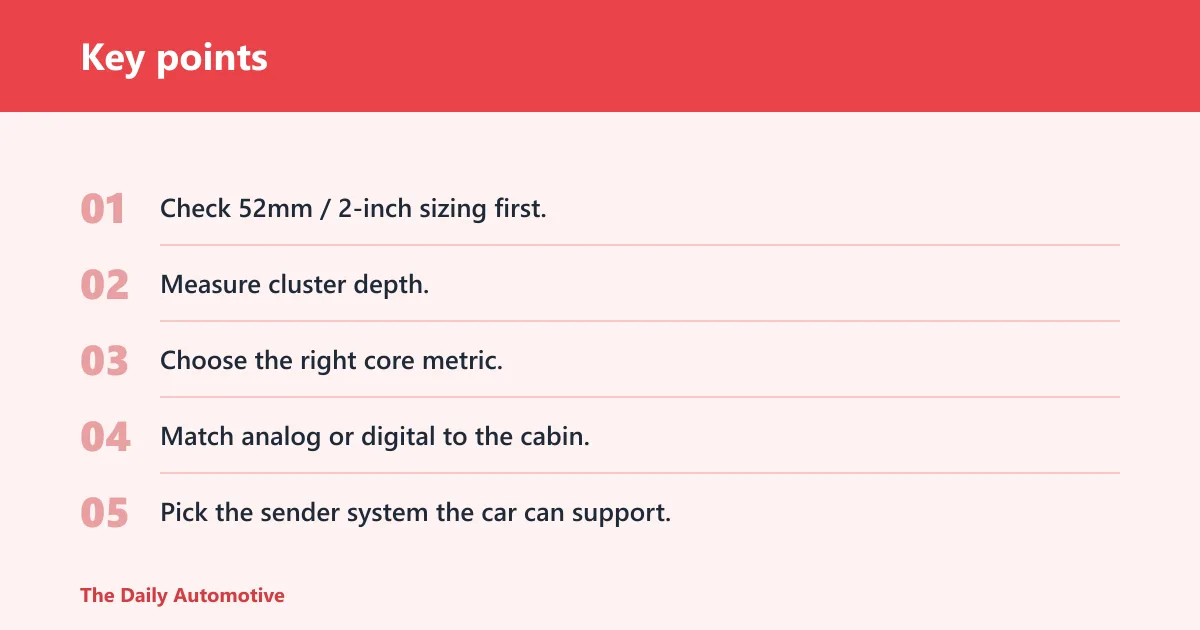
- Check 52mm / 2-inch sizing first. Many custom gauge setups use that diameter because it fits space-conscious clusters and pods.
- Measure cluster depth. A gauge can fit the face opening and still hit ducting, braces, or the back of the dash.
- Choose the right core metric. Oil pressure matters for engine health, coolant temperature tracks cooling performance, and voltage shows charging-system behavior.
- Match analog or digital to the cabin. Analog suits a classic look. Digital works well when you want a bright, numeric readout.
- Pick the sender system the car can support. Mechanical gauge movement uses a capillary tube or Bourdon tube and does not need electrical power for reading, but it still needs a physical line routed through the firewall. Electrical sender systems typically use a resistance-based signal and are often easier to wire in cramped cabins.
- Check mounting style. An A-pillar pod or dash pod can improve visibility, but the angle must stay clear of airbags and the driver’s view.
A common first-time buyer mistake is choosing a custom boost gauge without checking whether it matches the vehicle’s sensor range and mounting space. Suppose a turbo street car has room for a 52mm cluster but the sender is mounted where heat soak is severe. The gauge may still light up, but the reading can drift when the engine bay gets hot.
Another common mistake is mixing visual style with actual function. Picture a classic car with a tight dash opening and a deep housing behind it. A gauge that looks perfect online may still collide with the dash frame unless the installation depth is checked before purchase.
Mechanical movement versus electrical sender systems
Mechanical gauge movement is the better fit when heat resistance and direct reading matter more than easy wiring. It uses a capillary tube or Bourdon tube, so the gauge itself does not need electrical power to read. Electrical sender systems are easier to wire in cramped cabins, but sender placement and grounding still matter for accurate readings.
That tradeoff matters in both classic and turbo builds. Mechanical setups can be harder to route cleanly through the firewall. Electrical setups simplify installation, but the sender must live in the right place if the reading is to stay trustworthy.
Analog versus digital displays
Analog gauges are still the better fit for many classic and custom interiors because the pointer is easy to scan without studying numbers. Digital gauges help when the cabin is dark or when the driver wants a precise readout. The better choice is the one that matches the dash style and the way you drive.
For a track build, digital can help if the display is bright and fast to read. For an older dash, analog often looks more natural and blends with the rest of the cabin. Either way, illumination should be checked at night before the gauge goes into the car.
Can you mix and match gauge brands in one cluster?
Yes, but only if the sender, illumination, and mounting style all line up. Mixed-brand clusters can work well when the sensors are compatible and the face styling is close enough to look intentional. They can fail visually or electrically when the signal type does not match the gauge or when the bezels clash.
The safest approach is to keep one ecosystem for a full cluster when possible. That makes sensor matching easier and reduces the chance that one gauge uses a different illumination tone or mounting depth than the others. If you mix brands, confirm sender threads, resistance range, and pod clearance before assembly.
Sender compatibility and signal matching
An electrical gauge only reads correctly if the sender matches its signal range. A mechanical gauge needs the right physical routing and seal points. Mixing brands without checking those details can create a cluster that looks finished but reads wrong.
Illumination color and face styling
Face styling matters more than many shoppers expect. A mixed cluster can look uneven if the bezels, pointer color, or backlight tone do not match. That is especially true in a custom dash where the gauges sit close together and every mismatch is visible.
When a mixed-brand cluster causes fitment or readout problems
Problems usually show up in two places: depth and signal. One gauge may sit too deep for the pod, or one sender may not share the same calibration logic as the others. That can leave the driver with one gauge that is hard to read and another that is hard to trust.
How hard is it to install aftermarket gauges in a car?
Installation ranges from straightforward to tedious depending on the sender type, pod location, and the amount of wiring or tubing the car needs. A single 52mm gauge in an open pod can be manageable. A full cluster in a tight dash with firewall routing takes more planning and more careful fitment checks.
Follow the vehicle and product manual, never work under a vehicle held only by a jack, keep items out of airbag zones and the driver’s view, and check local laws.
Ownership cost beyond the gauge face
The gauge itself is only part of the budget. Pod or console mounting, senders, wiring, adapters, calibration, and replacement parts all add up. A bargain face can turn expensive if the car needs extra fittings, a different sender, or a custom mount to clear the dash structure.
Frequently asked questions
What are the best custom gauges for cars?
The best custom gauges for cars are the ones that fit the build, the dash, and the sender system. For a compact three-gauge setup, the Auto Meter triple console is the strongest all-around pick here. For a simpler electrical trio, the WATERWICH kit fits the same core monitoring job.
Which gauge types do I need for a custom car build?
Most builds start with oil pressure, coolant or water temperature, and voltage. That trio covers engine health and charging-system visibility. A turbo street car may lean harder on oil pressure and temperature, while a daily driver can prioritize voltage if the goal is catching alternator or battery issues early.
Are analog or digital aftermarket gauges better?
Neither is universally better. Analog is usually easier to blend into a classic or vintage-style dash. Digital works well when you want a clear number, especially in low light. If you care most about the interior look, analog often wins. If you care most about quick numeric reading, digital does.
What size gauges fit most custom car dashboards?
52mm, or 2-inch, is the common size to start with for many custom installs. It fits a lot of pods and compact clusters without swallowing the dash. Still, the opening and depth matter more than the number alone. Always check bezel clearance and the space behind the panel.
Do custom gauges for classic cars need different sensors?
Often, yes. Classic cars can favor mechanical gauge movement because it avoids some wiring complexity and can tolerate heat well. Electrical sender systems still work, but the sender location and grounding need care. The right answer depends on the dash space, firewall layout, and how original the interior needs to look.
Products related to this article
Sponsored / affiliate links. As an Amazon Associate I earn from qualifying purchases. I may earn additional commission from eligible campaigns.