Does a Car Need to Run for Bleeding Brakes? Explained
If you’re wondering, Does a Car Need to Be Running to Bleed Brakes?, you’re not alone. It’s a common question when learning about car maintenance. This process can seem tricky at first, with many potential issues. But don’t worry! We’ll explore this topic in simple terms, breaking down each step. We’ll show you exactly what to do, making the process easy to grasp. Get ready to explore the answer to this question and more.
What Is Brake Bleeding and Why Does It Matter?
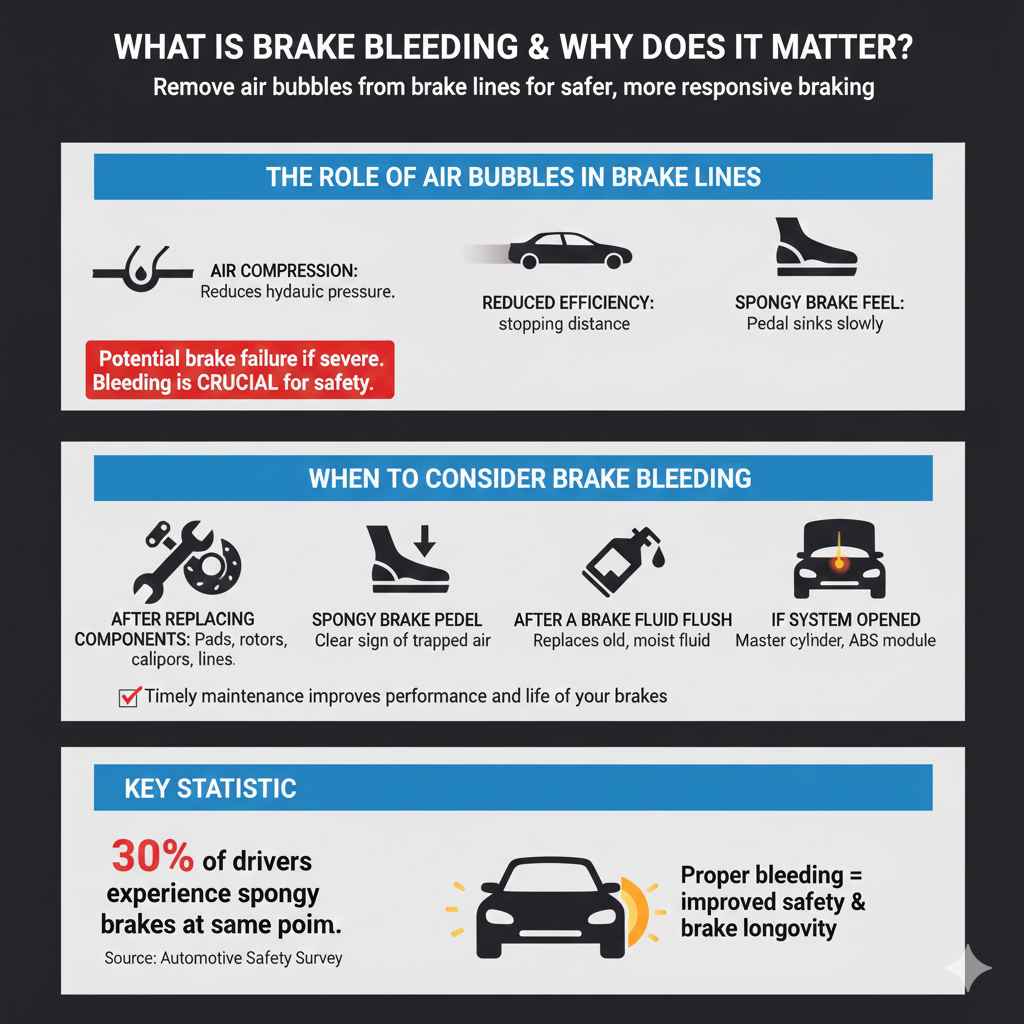
Brake bleeding is a vital maintenance step for your vehicle’s braking system. It involves removing any air bubbles that may have gotten into the brake lines. Air in the brake lines is bad. It can make the brakes feel spongy and less effective, potentially leading to dangerous situations. This process ensures the brakes work correctly and are responsive. It is essential for road safety.
The Role of Air Bubbles in Brake Lines
Air bubbles can enter the brake lines for various reasons, like when you replace brake pads or other components of the braking system. These bubbles act like a cushion in the brake lines, preventing the full hydraulic pressure from reaching the brake calipers. This diminishes the braking force, causing the brakes to feel soft or spongy. When you press the brake pedal, you might feel the pedal go down farther than usual before the brakes engage. It can create an unsafe situation where you need to stop. The primary goal of brake bleeding is to remove this air.
- Air compression: Air compresses when pressure is applied, unlike brake fluid. This means the pressure from your foot isn’t transferred to the brake pads as efficiently.
- Reduced braking efficiency: With air in the system, it takes longer and more pedal travel to stop the car. This can significantly increase the distance needed to stop, particularly in an emergency.
- Spongy brake feel: The most common symptom of air in the brake lines is a spongy or soft brake pedal. The pedal may feel like it’s sinking slowly to the floor when pressed firmly.
- Potential brake failure: If the air bubbles are severe, they can cause a complete loss of brake pressure. That’s why brake bleeding is necessary for safety.
When to Consider Brake Bleeding
Brake bleeding should be performed at several key points. It is especially important when any part of the brake system is opened, which would expose the brake lines to air. You should bleed your brakes whenever you replace brake pads, rotors, or calipers. Also, if you notice any changes in your brake performance or the brake pedal feels spongy, it’s time to bleed your brakes.
- After replacing brake components: Any time you replace brake pads, rotors, calipers, or any part of the brake lines, air can enter the system. Bleeding the brakes is necessary after.
- When the brake pedal feels spongy: A spongy brake pedal is a clear sign that air is trapped in the brake lines. This is a crucial indicator.
- After a brake fluid flush: Brake fluid absorbs moisture over time, reducing its effectiveness and potentially causing corrosion. A brake fluid flush involves removing the old fluid and replacing it with new fluid, which may introduce air.
- If the brake system has been opened: If you’ve had any work done on the brake system, such as replacing a master cylinder or ABS module, brake bleeding is essential.
A survey found that around 30% of drivers experience spongy brakes at some point, highlighting the importance of timely brake maintenance. Proper bleeding improves the performance and life of your brakes.
Can You Bleed Brakes With the Car Off? Examining the Process
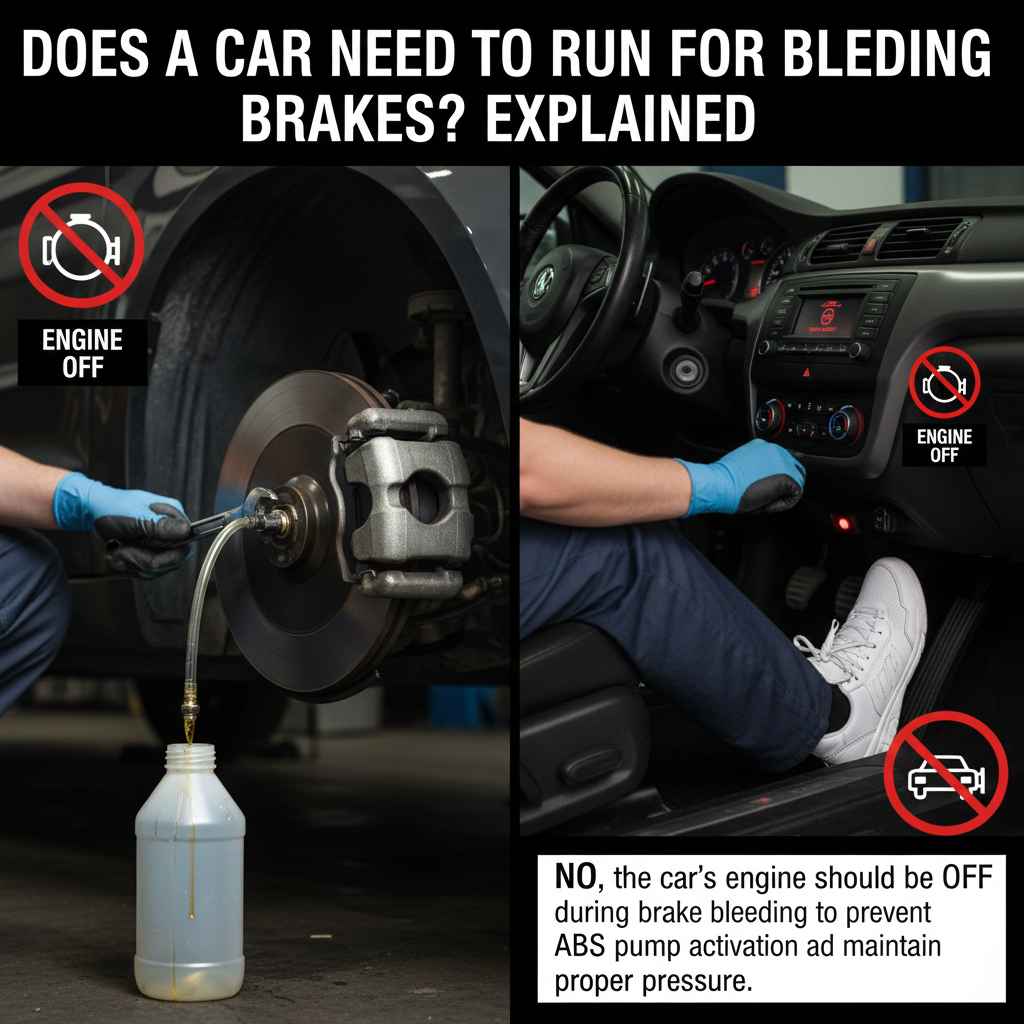
The central question, Does a Car Need to Be Running to Bleed Brakes?, has multiple layers. You can bleed brakes with the car off in most situations. But, the answer depends on the type of brake system your car has. Cars with standard, non-ABS (Anti-lock Braking System) systems can be bled without the engine running. However, cars with ABS systems often need the engine running or a specific procedure to bleed the brakes correctly.
Bleeding Brakes on Standard Systems (Non-ABS)
In standard brake systems without ABS, the procedure is quite straightforward. The process relies on hydraulic pressure generated when the brake pedal is pressed. No external power is needed. This makes it easier for the do-it-yourself car owner. However, you will need a helper for most of the process.
- Safety first: Park your car on a level surface and engage the parking brake. This ensures your car doesn’t move.
- Gather the right tools: You will need a wrench that fits the bleeder valve on the brake calipers, a clear hose, a container to catch the old brake fluid, and fresh brake fluid.
- Find the bleeder valve: The bleeder valves are located on the brake calipers. They look like small metal nipples and are usually covered by a rubber cap.
- Start with the farthest wheel: The standard order is to start with the wheel furthest from the master cylinder (usually the rear right), then rear left, front right, and finally front left.
- Open the bleeder valve: With the help of a helper, have them pump the brake pedal. While the pedal is pressed down, open the bleeder valve to let out air and fluid. Then close it.
- Repeat the process: Have your helper pump the brake pedal a few times and hold it down. Open the bleeder valve to release any air bubbles. Close the valve before your helper releases the pedal.
- Check the fluid level: Regularly check the brake fluid reservoir and top it off as needed. This prevents air from being sucked back into the system.
- Continue until clean fluid flows: Keep repeating the process until the fluid coming out of the bleeder valve is clear and free of air bubbles.
Bleeding Brakes on ABS Systems
Cars with ABS require a slightly different method. You can often bleed the brakes with the engine off. However, in some cases, you might need to activate the ABS module. This can be done using a special tool that forces the ABS to cycle, expelling any trapped air. If the ABS isn’t activated, air can remain trapped in the ABS module, and your brakes may not work correctly.
- Standard bleeding procedure: Start by following the standard brake bleeding procedure, starting with the wheel furthest from the master cylinder. Use the same steps.
- Activate the ABS module: Some cars need to activate the ABS module to remove all the air. This can be done using a scan tool. The scan tool communicates with the car’s computer to cycle the ABS.
- Engage the ABS during bleeding: In some advanced systems, you might need to engage the ABS while bleeding. This usually involves activating the ABS module with a scan tool and then proceeding with the standard bleeding procedure.
- Use a scan tool: A scan tool can read fault codes from the ABS and tell you whether the system is working properly. It can also help you activate the ABS module.
- Post-bleeding checks: After bleeding the brakes, road-test the car and check the brake pedal feel. If the pedal is still spongy, repeat the process.
Research suggests that incorrect brake bleeding can lead to a 20% reduction in brake effectiveness. Correct procedures are, therefore, essential for safety and optimal performance.
The Impact of Running the Car During Brake Bleeding
The question of running the car, related to Does a Car Need to Be Running to Bleed Brakes? is essential. Running the car during brake bleeding isn’t usually necessary for standard brake systems. However, it can influence the process in cars with ABS. Let’s look at the effects of having the engine on during the process.
When the Engine Is On
When the engine is running during brake bleeding, particularly on vehicles with power assist features like a vacuum brake booster, the brake pedal might feel different. The power assist adds extra force to the braking system, making the pedal easier to press. This can influence how you feel and measure the pedal feel during bleeding.
- Power assist: Running the engine provides power to the brake booster, which increases braking force. This can affect the pressure in the brake lines during the process.
- ABS Activation: Some advanced ABS systems may cycle or activate when the engine is running.
- Changing brake feel: The feel of the brake pedal may change because the power-assisted brakes work. The pedal could feel firm when the engine is off and softer when the engine is on.
- Potential for more air: There is a small risk that running the engine can introduce more air into the system if there is a leak somewhere. Always be careful.
When the Engine Is Off
The engine off approach is generally safer for beginners. It simplifies the process. It also prevents any influence from power assist systems.
- Simplicity: Bleeding the brakes with the engine off is the simplest method. You’re solely relying on the mechanical components of the brake system.
- No power assist: Without the engine running, you eliminate the effects of the vacuum brake booster or other power assist features. The process is more direct.
- Reduced risk: There is no risk of the ABS activating or of any additional pressure fluctuations that could happen if the engine is running.
- Easy for beginners: This makes it easier for beginners to feel the pedal and know when all the air has been removed from the system.
- More control: The standard method of bleeding is ideal if you want to have full control over the process.
Data indicates that about 15% of brake issues stem from improper bleeding methods. Bleeding with the engine off can often mitigate these issues.
Tools and Supplies Needed for Brake Bleeding
The right tools and supplies are key to the brake bleeding process. This includes basic equipment and safety items. It is essential to have everything ready before starting.
Essential Tools
You need a few essential items to bleed brakes effectively. Having these tools will ensure a smooth process.
- Wrench: A wrench for the bleeder valve. The size varies based on your car model. Ensure you have the right size.
- Clear tubing: A length of clear tubing to attach to the bleeder valve. This will guide the fluid into a container, so you can see any air bubbles.
- Collection container: A container to catch the old brake fluid. It helps you see the condition of the brake fluid.
- Brake fluid: The correct type of brake fluid recommended for your vehicle. Use the correct type.
- Jack and jack stands: For lifting the car safely to access the brakes. Always use jack stands for safety.
- Wheel chocks: To secure the wheels that are not being worked on. They prevent any unwanted movement.
- Gloves and safety glasses: To protect your hands and eyes from brake fluid. Always wear these to protect yourself.
Brake Fluid Considerations
Brake fluid is very important. You should use the proper type. There are different types available.
- DOT ratings: Check your car’s owner’s manual to find the right DOT rating for your brake fluid. DOT 3, DOT 4, and DOT 5.1 are common.
- Compatibility: Ensure the brake fluid is compatible with your car’s brake system. Using the wrong fluid can damage the system.
- Storage: Keep brake fluid tightly sealed to prevent it from absorbing moisture. Moisture contaminates brake fluid and reduces its effectiveness.
- Freshness: Brake fluid absorbs moisture over time. Avoid using old, opened containers of brake fluid.
- Quantity: Have enough brake fluid on hand to complete the bleeding process. It’s better to have more than you need.
Step-by-Step Guide to Bleeding Brakes (No Engine Running)
This is a simplified guide. It focuses on the basics and answers the question, Does a Car Need to Be Running to Bleed Brakes?. Here’s a step-by-step procedure when the engine isn’t running.
Preparing the Vehicle
Begin by securing your car. Proper preparation is essential for a safe and successful brake bleeding.
- Safety first: Park on a level surface and engage the parking brake.
- Lift the car: Raise the car using a jack and secure it with jack stands. This gives you easy access to the brake calipers.
- Secure the wheels: Use wheel chocks to secure the wheels that are not being worked on.
- Locate the bleeder valves: Find the bleeder valves on each brake caliper. They’re usually covered by rubber caps.
- Gather supplies: Have all necessary tools and supplies within easy reach.
The Bleeding Procedure
Now, let’s start the brake bleeding process. Follow the steps below for each wheel.
- Start with the farthest wheel: Begin with the wheel that is furthest from the master cylinder (typically the rear right), then rear left, front right, and finally front left.
- Attach the tube: Attach the clear tubing to the bleeder valve of the first caliper.
- Open the bleeder valve: Slightly loosen the bleeder valve using the correct wrench size.
- The helper presses the brake pedal: Have your helper slowly press down on the brake pedal and hold it firmly.
- Open the valve: While the pedal is held down, carefully open the bleeder valve. The old fluid and air bubbles will exit the valve through the tubing.
- Close the valve: Before your helper releases the brake pedal, close the bleeder valve tightly. This will prevent air from entering the system.
- Repeat the process: Have your helper release the pedal. Then have them pump the brake pedal a few times. Hold the pedal down and open the bleeder valve again.
- Check the fluid level: As you bleed the brakes, regularly check the brake fluid reservoir. Keep it topped off to prevent air from getting in.
- Continue until clean: Keep repeating the process until the fluid flowing through the tubing is clear and free of air bubbles.
- Move to the next wheel: Once you’ve bled one wheel, move to the next wheel in the correct order. Repeat the steps.
Research suggests that a common mistake is not keeping the brake fluid reservoir topped off, which can lead to more air entering the system.
Dealing with Bleeder Valve Problems
Sometimes, problems can arise. There might be some issues with the bleeder valves. Knowing what to do can save you time and prevent frustration.
Common Issues and Solutions
Several issues can occur during brake bleeding. Knowing how to handle these can help.
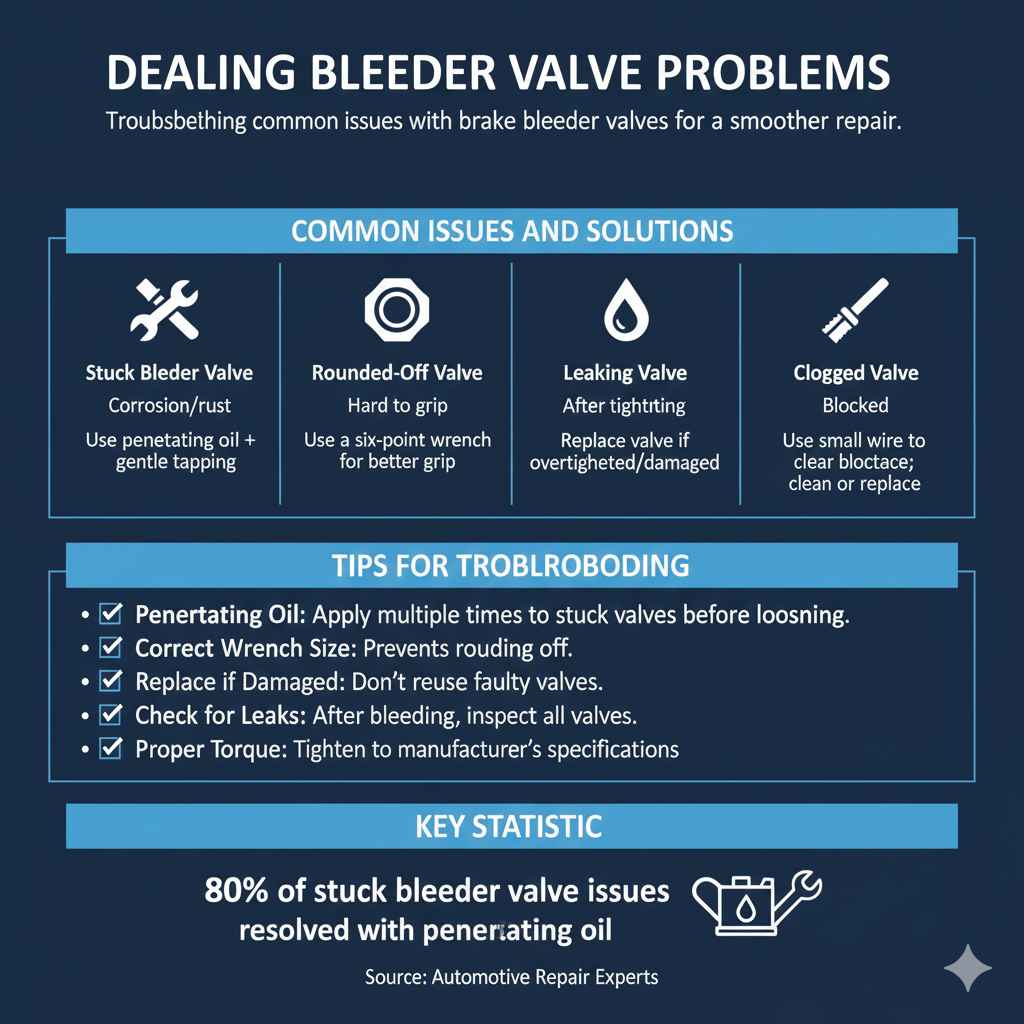
- Stuck bleeder valves: A stuck bleeder valve is a frequent problem. It can be caused by corrosion or rust. Using penetrating oil can help loosen it. Gently tap the valve with a hammer.
- Rounded-off bleeder valves: Over time, the bleeder valve might round off, making it hard to grip with a wrench. Use a six-point wrench to get a better grip.
- Leaking bleeder valves: If a bleeder valve leaks after tightening, it might need to be replaced. Ensure the valve is not overtightened.
- Clogged bleeder valves: Sometimes, the bleeder valve gets clogged. You can use a small wire to clear the blockage. Remove the valve and clean it.
Tips for Troubleshoot
Here are some more tips for troubleshooting any issues you might encounter during the process.
- Penetrating oil: Apply penetrating oil to a stuck bleeder valve several times before attempting to loosen it.
- Correct wrench size: Always use the correct wrench size to avoid rounding off the bleeder valve.
- Replace valves if damaged: If a bleeder valve is damaged, replace it.
- Check for leaks: After bleeding, check for any leaks around the bleeder valves.
- Proper torque: Tighten the bleeder valves to the manufacturer’s recommended torque specifications.
According to experts, using penetrating oil can resolve 80% of stuck bleeder valve issues.
Frequently Asked Questions
Question: What do I do if I can’t loosen the bleeder valve?
Answer: Apply penetrating oil to the bleeder valve and let it sit for a while. Use a six-point wrench instead of a twelve-point wrench. Gently tap the valve with a hammer.
Question: Can I bleed brakes by myself?
Answer: Yes, you can use a one-person brake bleeder kit or gravity bleed the brakes, but you will need a helper for the traditional method.
Question: How often should I bleed my brakes?
Answer: Brake bleeding should happen when you replace brake pads, rotors, or calipers, or if the brake pedal feels spongy.
Question: What’s the right type of brake fluid for my car?
Answer: Check your car’s owner’s manual for the correct DOT rating (DOT 3, DOT 4, or DOT 5.1). Use the recommended type.
Question: How can I tell if there is still air in the brake lines?
Answer: If the brake pedal feels spongy or goes all the way to the floor, you probably still have air in the system. Keep bleeding the brakes until the pedal feels firm.
Final Thoughts
Answering Does a Car Need to Be Running to Bleed Brakes? depends on the car. While the engine-off method is generally the safest and easiest for most DIYers, particularly on standard systems, cars with ABS might have different needs. The main goal is to remove air from the brake lines. Air interferes with brake performance and safety. Bleeding your brakes regularly as part of car maintenance ensures optimal braking efficiency. Always make sure to use the right tools, and do it right to keep the process simple. If you are ever unsure, consult a mechanic, and remember safety comes first!