How to Deter Rodents from Your Car Engine: Methods and Evidence
To deter rodents from a car engine, remove what draws them in, close the gaps they use, and keep checking, because the agency and extension pages back sanitation, sealing and traps, not any single spray or gadget. Rats gnaw the insulation on engine wires, and CDC warns that droppings and nests in a vehicle carry health risks during cleanup. This guide compares each deterrent method by how it is meant to work, what UC IPM, EPA, CDC and product makers actually say, and the caution that goes with it, then walks through an engine bay inspection and safe cleanup.
Why Rodents Love Your Car Engine
CDC says rodents may build nests in vehicles, especially ones used infrequently, and can enter the passenger compartment through ducting, rusted areas and cable conduit. The UC IPM Pest Note on rats says rats commonly gnaw the insulative sheaths of engine wires, causing significant malfunctions and expensive mechanical repairs. Its house mouse note adds that mice run along wire cables and fit through openings 3/8 inch wide.
Engine Bay Rodent Spray Pick
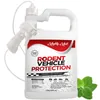 |
Mighty Mint Rodent Repellent Vehicle Spray, 1 Gallon (128 oz)
|
As an Amazon Associate we earn from qualifying purchases. Spec-based pick from the listing, not a hands-on test.
An engine bay offers shelter, cables to run along and soft nest material, so the plan is to remove those rather than rely on a smell. See how mice get into a car.
Comparison of Rodent Deterrent Methods
Evidence level means how strongly the cited pages support each method.
| Method | Meant to work by | What the sources say | Evidence level | Caution |
|---|---|---|---|---|
| Remove food and nest sites | Giving rodents no reason to stay | UC IPM: sanitation is fundamental for rats and must be ongoing. CDC: leave no food in the car | Strong | UC IPM says it seldom completely controls house mice alone |
| Seal gaps with metal | Blocking entry | UC IPM: exclusion is the most successful and permanent form of house mouse control; seal openings over 1/4 inch | Strong (for buildings) | Written for buildings; ask a mechanic before adding material near hot or moving parts |
| Weighted car cover touching the ground | Sealing the vehicle off | UC IPM Rats recommends a cover that touches the ground all around | Strong (one extension page) | UC IPM says neighborhood rodent management is likely still needed |
| Snap traps | Killing rodents that arrive | UC IPM: safest, most effective, most economical for rats. CDC: snap traps and poison baits are effective in stopping access into vehicles | Strong | Keep away from children and pets; wear gloves |
| Rodenticide bait stations | Poison eaten by the rodent | EPA: tamper-resistant stations only, follow the label. UC IPM: poisoned mice often die inside the treated structure | Strong that it kills | Toxic to pets, wildlife and people; no engine-bay use is covered |
| Peppermint oil sprays | Scent said to irritate rodents | Maker claim: Mighty Mint calls its spray a proven deterrent. UC IPM notes on mice and rats do not list scent repellents | Limited (maker claim) | Skin-sensitizer warning on the maker SDS; avoid breathing mist |
| Mothballs | Odor annoys mammals | ICWDM: annoy mammals only at high odor levels, flammable, often had no effect. Label: airtight container only | None (advised against) | Unlawful against the label; poisons children and pets |
| Ultrasonic and electronic units | Sound or vibration said to drive rodents off | UC IPM: very limited use; directional; mice get used to repeated sounds; little evidence any such device works | None to limited | The UC IPM statement covers sound devices in general |
Keep Your Car Clean
Food goes first. CDC says to leave no food anywhere in the car, and UC IPM says house mice can survive in very small areas on limited food, so a crumb layer under a seat is enough. See preventing rodents in the car cabin for the interior.
Where you park matters too. UC IPM lists woodpiles, trash piles, garbage cans and compost piles as rat burrow or nest sites, and the EPA page on identifying and preventing rodent infestations advises removing leaf piles and deep mulch and keeping garbage in tight-lidded containers. A weighted car cover only works if it touches the ground all around, and our guide to keeping mice away from cars compares more parking setups.
Seal Entry Points
Both UC IPM notes call exclusion the most successful, longest-lasting control and set the size at holes over 1/4 inch. Material choice is where fixes fail: UC IPM says steel wool plugs are temporary and may rust, wire screen or sheet metal hold up, and plastic, rubber, vinyl, foam, wood and caulk are gnawable. These notes are written for buildings; ask a mechanic before putting material in an engine bay. If wiring is already chewed, see how to protect car wires from rodent chewing.
Use Natural Repellents
Peppermint oil is the one natural repellent with an engine-bay product behind it. Mighty Mint’s product page calls its spray a proven natural deterrent, lists auto engine and cables among recommended uses, and says to use it before rodents have nested. Those are the maker’s claims; the UC IPM mouse and rat notes list sanitation, exclusion, trapping and rodenticides, not scent repellents. The maker’s safety data sheet (6/5/2025) lists a 25(b) minimum risk pesticide with 3 to 5 percent peppermint oil, a skin-sensitization warning and a note that the material is not combustible.
Mothballs are not a natural repellent and should stay out of the engine bay: the Internet Center for Wildlife Damage Management calls them pesticides to be used only as labeled and notes they are flammable, and the National Pesticide Information Center says off-label use is illegal and can harm people, pets or the environment.
Try Commercial Repellents
Sprays are covered above. For electronic units UC IPM is blunt: sound devices of any kind have little evidence behind them against established mice or rats, and mice quickly grow used to repeated sounds. Wire wraps and tapes sold with hot-pepper (capsaicin) claims are not evaluated in the UC IPM, EPA or CDC pages cited here, so any effectiveness claim comes from the seller. Treat any of these as an addition to sealing and traps.
Use Traps Strategically
Trapping is the one active method the extension sources endorse. UC IPM calls snap traps the safest, most effective and most economical option for rats, and a great first step for mice. For mice it says to set traps along walls and behind objects, no more than about 10 feet apart, with a small amount of bait; for rats, roughly 10 to 20 feet apart, and rats may ignore new traps for several days. No page covers trapping on an engine itself. See rat protection for cars for the vehicle side.
EPA says to place traps and baits only where children and pets cannot reach them, use only tamper-resistant stations for poison, and promptly dispose of dead rodents. If a rodent may be inside the vehicle, see how to get a rodent out of your car.
How to Safely Clean Rodent Droppings and Nests from Your Engine Bay
The CDC page on cleaning up after rodents has a section for vehicles and advises consulting a qualified mechanic for help. CDC says hantaviruses can spread when fresh urine, droppings or nesting materials are stirred up into the air and breathed in, which is why sweeping and vacuuming are off the list. Steps, in order:
- Open the hood, doors and trunk in a ventilated space for 20 minutes.
- Wear plastic gloves and a long-sleeved shirt; check the air intakes and filters before starting the engine.
- Remove the battery cables before inspecting the engine compartment, to avoid shock.
- Do not vacuum or high-pressure spray droppings or contaminated surfaces before disinfecting.
- Spray the droppings and nesting material with disinfectant until fully soaked and let it sit for 5 minutes, or as long as the label says. CDC accepts a household disinfectant labeled as such, or fresh bleach solution at 1.5 cups of bleach per gallon of water.
- Pick the material up with paper towels, discard it, and clean the surrounding area with more disinfectant.
- If nesting material is in the air intake, remove it and the air filter, discard both, and fit a new filter.
- Reconnect the battery when the area is dry, then wash gloved hands, remove the gloves and wash with soap and warm water.
CDC adds that dead rodents and nests go in a tied plastic bag, then a second bag, then a covered garbage can. For an odor that lingers, see how to get mouse odor out of a vehicle. For heavy infestations CDC recommends coveralls, goggles, gloves and a HEPA-filter respirator, which is a job for a professional.
Check Your Car Regularly
This checklist combines CDC’s vehicle steps with sign descriptions from CDC and UC IPM.
| Check | What to look for | Source |
|---|---|---|
| Droppings | Pointed at one end and often containing hair; found anywhere rodents have been, often out of plain sight | CDC rodent control page |
| Gnaw marks | Distinct tooth marks; on wood, rat marks are about 1/6 inch versus about 1/12 inch for mice | CDC; UC IPM Rats |
| Nests | Shredded paper or other fibrous material in sheltered corners; check the air intake and filter | UC IPM House Mouse; CDC |
| Odor | A musky smell is commonly linked with mice, strongest in large or long-term infestations | UC IPM House Mouse |
Mistakes and Myths About Deterring Rodents
| Myth or mistake | What the sources say |
|---|---|
| Peppermint oil always works | Support for engine-bay peppermint spray in the cited pages is the maker’s claim; UC IPM does not list scent repellents as a control for mice or rats. |
| Mothballs under the hood will keep mice away | ICWDM does not recommend mothballs against wildlife, says they are flammable and often had no effect when owners tried them; labels allow airtight-container use only. |
| An ultrasonic unit solves it | UC IPM says there is little evidence any sound, magnetic or vibration device drives established mice or rats away. |
| A car cover is enough | UC IPM says the cover must touch the ground all around and that neighborhood rodent management is likely still needed. |
| Vacuum or sweep the droppings first | CDC says never vacuum or sweep droppings or nests; disinfect first. |
When to Call a Professional
Call a licensed pest control professional for a heavy infestation, for rodents in ducts, or when you do not know where they are entering. CDC says to contact a professional exterminator when rodents have accessed ventilation systems. Call a qualified mechanic if the inspection finds chewed wiring, and ask your insurer about coverage before authorizing repairs: see does car insurance cover rodent damage.
Frequently Asked Questions
Why do rodents keep coming back to my car engine?
Usually because shelter, food or nesting material is still there or an entry route is still open. UC IPM says roof rats have strong nest-site affinity: if nest sites are not removed, they return.
Are natural repellents safe for my car?
The cited pages do not test any scent repellent under a hood. One maker lists the engine bay and cables among recommended uses and its safety data sheet calls the product non-combustible, but the sheet also carries a skin-sensitization warning. Read the label of the exact product and keep it off parts the label does not clear.
How often should I check my car for rodents?
No source sets an interval. UC IPM says rats are active all year, so periodic checks make sense, and CDC singles out vehicles used infrequently as likely nesting sites. If a car sits for weeks, check under the hood and the air intake before the first start.
Can I use mothballs to deter rodents?
No. The Internet Center for Wildlife Damage Management does not recommend them for nuisance wildlife for legal and safety reasons and says they are flammable. The University of Florida says the label permits use only in an airtight container.
What should I do if I find a nest in my engine?
Do not vacuum or sweep it. Per CDC, air the vehicle out, wear gloves, disconnect the battery cables, soak the nest with disinfectant for 5 minutes, wipe up and bag it, and replace the air filter if the nest is in the intake. See the cleanup steps above, and have a mechanic check for chewed wiring.
Do ultrasonic rodent repellers work under the hood?
UC IPM says ultrasonic sound has very limited use in rodent control because it is directional and loses intensity with distance, and that there is little evidence sound, magnetic or vibration devices drive established mice or rats away.
Wrapping It Up
Deterring rodents is a layered job. The sources back sanitation, sealing, a ground-touching car cover and traps, leave peppermint sprays at the maker’s claim, advise against mothballs, and give little support to ultrasonic gadgets. Clean nests with CDC’s disinfectant steps and have chewed wiring checked by a mechanic.
- What this guide does not cover: repair costs, squirrels, raccoons and other wildlife, or insurance terms. Ask a mechanic for estimates and your insurer about coverage.
Products related to this article
Sponsored / affiliate links. As an Amazon Associate I earn from qualifying purchases. I may earn additional commission from eligible campaigns.