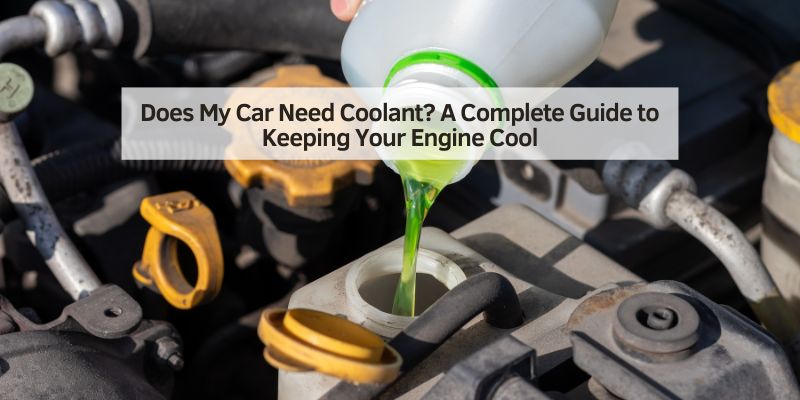
Why Does My Car Need More Coolant? Normal vs. Leak Signs
Yes, every car needs coolant to keep the engine from overheating or freezing — and losing a small amount over time is normal. But if you’re topping it off every few weeks, that’s not normal wear; it almost always means a leak, and ignoring it risks a blown head gasket. Below, learn how to tell normal coolant loss from a real leak, how to check your level, and exactly what to do next.
Quick Answer: Yes, all cars need coolant — it prevents overheating, freezing, and corrosion inside the engine. Losing about 2-3 ounces a year is normal evaporation. Needing to add coolant every few weeks or every month is NOT normal and usually points to a leak (external, like a cracked hose, or internal, like a leaking head gasket).
Why Does My Car Need More Coolant? Normal Loss vs. a Leak
A car losing coolant isn’t automatically a problem. Coolant naturally evaporates and expands/contracts through heat cycles, so a small drop is expected — roughly 2 to 3 ounces per year, or about a quarter of a percent of your system’s total capacity every 4 to 6 months, according to HC Auto & Body’s guidance on coolant loss. If your level drops that slowly, a quick top-off once or twice a year is nothing to worry about.
Needing to add coolant every few weeks or every month is a different story. That kind of frequent, repeated loss almost always means the system has a leak somewhere, not ordinary consumption. The table below breaks down what’s normal, what isn’t, and where to look.
| Loss Pattern | What It Means | What to Check |
|---|---|---|
| Down ~2-3 oz per year | Normal evaporation and heat-cycle loss | Nothing — just monitor at oil changes |
| Down slightly every few months | Borderline — watch it, could be a very slow leak | Check reservoir level monthly for 2-3 months |
| Down every few weeks / needs monthly top-offs | Active external or internal leak | Hoses, radiator, water pump, reservoir cap, head gasket |
| Level drops with no puddle anywhere | Likely an internal leak | Head gasket, cracked block, oil dipstick (milky oil) |
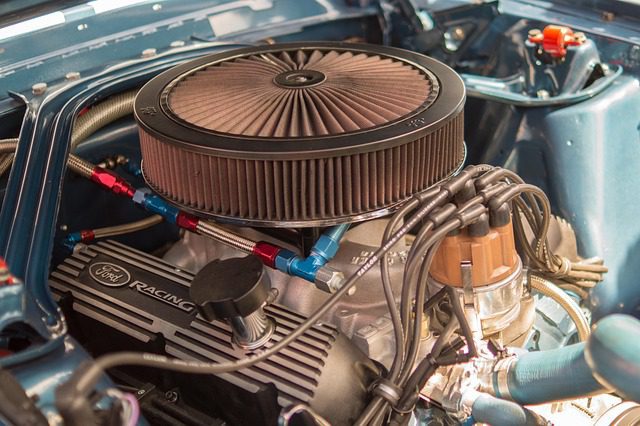
Leaks come in two forms. External leaks are the ones you can usually see or smell — a puddle under the car, a sweet smell, or a visibly cracked hose or radiator seam. But some external leaks are small enough to hide: a pinhole in a hose or a hairline crack in the radiator can leak just enough to need a monthly top-off without ever leaving a visible puddle, since it may evaporate off a hot engine before it hits the ground.
Internal leaks are the more serious case, and the most common cause is a leaking or blown head gasket, which lets coolant seep into the combustion chamber or mix with the engine oil. If you’re losing coolant with no visible puddle and you also notice white exhaust smoke, a sweet smell from the tailpipe, or milky/frothy oil on the dipstick, stop driving and get the head gasket checked before it turns into a much more expensive repair.
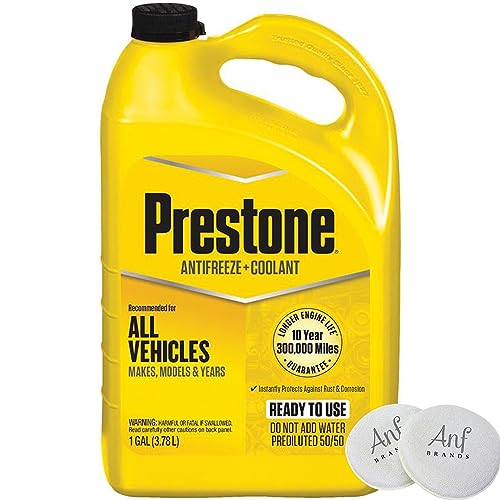
Our Pick: (1 Gallon) – Prestone AF2100 Antifreeze and Coolant: 50
Best for: Anyone who just needs to top off or fully refill their coolant system
Why we picked it: Pre-mixed 50/50 ready-to-use formula — no measuring or mixing distilled water yourself, and it’s compatible with most gasoline engines.
Main drawback: Not universal — check your owner’s manual for the correct coolant color/spec before buying.
View Our Pick on Amazon ($23.00)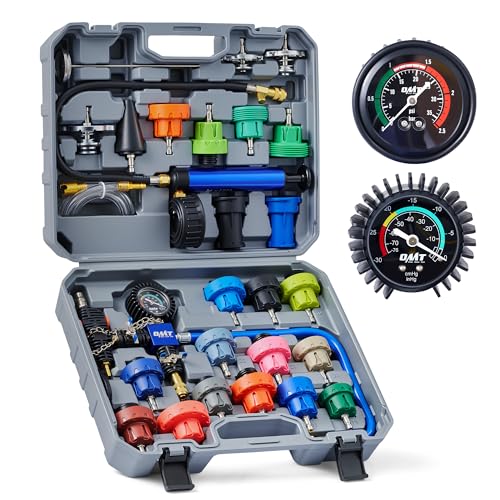 |
Orion Motor Tech Coolant Pressure Tester Kit, 33pc Master Co Best for: Pinpointing a pressure-side leak yourself Why: Pressurizes the system like a mechanic would, so you can watch for the exact spot losing pressure. Drawback: Takes some patience — you’re watching a gauge, not getting an instant readout. Check on Amazon ($71.99) → |
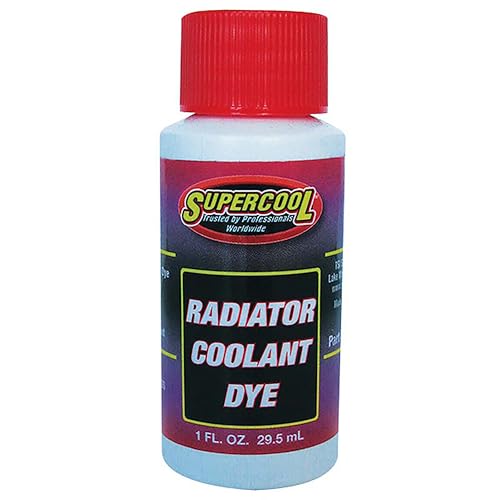 |
TSI Supercool Synthetic U/V Leak Detection Dye, 1 oz, 1 Appl Best for: Finding a slow leak that never leaves a puddle Why: Add the dye, run the engine, then shine the UV light along hoses and seams — it glows right at the leak point. Drawback: Needs a UV flashlight (sold separately) to actually see the glow. Check on Amazon ($6.50) → |
 |
Gates 31413 Radiator Cap Tester Adapter Best for: Testing whether a worn radiator cap is the actual cause Why: A cap that can’t hold rated pressure is a sneaky, easy-to-miss cause of frequent coolant loss. Drawback: Adapter-specific — confirm it fits your radiator’s cap size first. Check on Amazon ($21.09) → |
What Is Coolant and Why Does Your Car Need It?
Let’s start with the basics. Coolant, also called antifreeze, is a liquid that circulates through your car’s engine and radiator to keep things from overheating. It’s like the blood in your car’s cooling system, absorbing heat from the engine and releasing it through the radiator. I remember the first time I learned about coolant—it was after my old sedan started steaming on a hot summer day. Not fun!
Coolant does more than just prevent overheating. It also protects your engine from freezing in cold weather, stops corrosion inside the cooling system, and lubricates parts like the water pump. Without enough coolant, your engine can overheat, leading to serious damage like a warped head gasket or even a seized engine. Trust me, I’ve seen the repair bills for those, and they’re not pretty. So, knowing whether your car needs coolant is key to avoiding big problems.
Signs Your Car Needs Coolant
How do you know if your car is low on coolant? I’ve learned to spot the warning signs after a few close calls. Here are the most common clues that your car might need a coolant top-up:
- Temperature Gauge Spiking: My dashboard’s temperature needle once crept into the red zone during a long drive. That’s a big red flag that your coolant might be low or not circulating properly.
- Steam or Smoke from the Hood: If you see steam, like I did that one summer, it means your engine is overheating, likely due to low coolant.
- Sweet Smell: Coolant has a sweet, syrupy smell. If you notice it around your car, you might have a leak.
- Low Coolant Warning Light: Many modern cars have a warning light that looks like a thermometer or a liquid container. Mine lit up once, and sure enough, the coolant was low.
- Puddles Under the Car: If you spot a green, orange, or pink puddle under your engine, it’s likely a coolant leak. I found one under my car after parking on a hot day.
- Heater Not Working: If your car’s heater blows cold air, it could mean low coolant, since the heater relies on it to warm up.
If you notice any of these, it’s time to check your coolant. Ignoring them can lead to expensive repairs, like the $1,200 I once paid for a new radiator after neglecting a leak.
How to Check If Your Car Needs Coolant
Checking your coolant level is easier than you might think. I do it every couple of months, and it only takes a few minutes. Here’s how I check mine:
- Park on a Flat Surface and Let the Engine Cool: Never open the coolant reservoir or radiator cap when the engine is hot. I made that mistake once and got a sunburn—ouch!
- Locate the Coolant Reservoir: It’s usually a plastic tank near the radiator with “min” and “max” lines. On my car, it’s on the driver’s side, but check your owner’s manual if you’re unsure.
- Check the Level: Look at the side of the reservoir. If the coolant is below the “min” line, you need to add more. Mine was barely visible once, so I knew it was time to act.
- Inspect the Coolant’s Condition: Good coolant is bright and clear (usually green, orange, or pink). If it looks murky or rusty, it’s time to flush and replace it.
- Check for Leaks: Look under the car and around the radiator for any signs of dripping coolant.
If the level is low or the coolant looks bad, don’t wait—address it right away. I learned that lesson after putting off a top-up and ending up stranded on the side of the road.
Types of Coolant and Choosing the Right One
Not all coolants are the same, and picking the wrong one can cause problems. I found this out when I grabbed a random bottle at the auto store and later learned it wasn’t right for my car. Here’s a quick breakdown of common coolant types:
| Coolant Type | Description | Best For |
|---|---|---|
| Inorganic Additive Technology (IAT) | Green, traditional coolant with silicates. Older formula, needs frequent changes. | Older vehicles (pre-1990s). |
| Organic Acid Technology (OAT) | Orange or red, longer-lasting, silicate-free. | Most modern cars (GM, Ford, etc.). |
| Hybrid Organic Acid Technology (HOAT) | Yellow or orange, combines OAT and IAT benefits. | Chrysler, European, and Asian vehicles. |
| Phosphate-Free OAT | Specially formulated for European cars, no phosphates. | BMW, Mercedes, Volvo. |
Check your owner’s manual to find the right coolant for your car. For example, my Honda needs a specific HOAT coolant, and using the wrong type could damage the cooling system. If you’re unsure, stick with what the manufacturer recommends or ask a mechanic. I always keep a bottle of the right coolant in my garage for quick top-ups.
How to Add Coolant to Your Car
If your coolant is low, topping it up is straightforward. Here’s how I do it:
- Make Sure the Engine Is Cool: I wait at least an hour after driving to avoid burns.
- Open the Reservoir Cap: Twist it off slowly. If there’s pressure, wait longer.
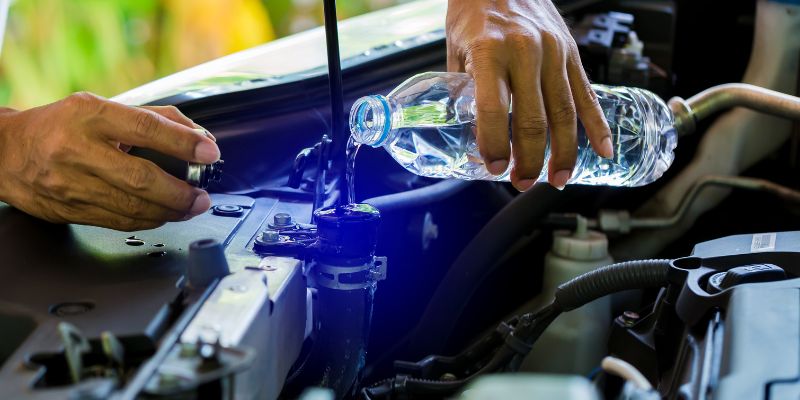
- Mix Coolant with Water (if Needed): Most coolants need to be diluted with distilled water—usually a 50/50 mix. I buy pre-mixed coolant to save time, but you can mix your own. Never use tap water; it can cause corrosion.
- Pour Slowly: Add coolant until it reaches the “max” line. I use a funnel to avoid spills.
- Secure the Cap and Check for Leaks: Run the engine for a few minutes, then check the level again.
I topped off my coolant last month, and it took less than 10 minutes. Just be careful not to overfill, as that can cause pressure issues.
When to Flush and Replace Coolant
Coolant doesn’t last forever. Over time, it loses its ability to prevent corrosion and regulate temperature. I learned this after skipping a flush for too long, which led to sludge in my radiator. Most manufacturers recommend flushing every 2–5 years or 30,000–50,000 miles, but check your manual for specifics. Here’s how I know it’s time for a flush:
- The coolant looks dirty or rusty.
- The engine runs hotter than usual.
- It’s been more than 2 years since the last flush.
A flush involves draining the old coolant, cleaning the system, and refilling it with fresh coolant. I’ve done it myself, but it’s messy, so I often take it to a shop. A professional flush costs $100–$200, but it’s worth it to keep the cooling system in top shape.
Common Coolant Problems and How to Fix Them
I’ve run into a few coolant-related issues over the years. Here are the most common problems and what I did about them:
- Leaks: A small leak in my radiator hose caused a puddle under my car. I used a sealant as a temporary fix and replaced the hose later. Check hoses, the radiator, and the water pump for leaks.
- Overheating: Low coolant was the culprit when my car overheated. I topped it up and fixed a small leak to solve the problem.
- Corrosion or Sludge: Dirty coolant can clog the system. A flush fixed this for me, but severe cases might need a new radiator.
- Wrong Coolant Type: Mixing incompatible coolants can cause gelling. I drained and flushed the system to correct this mistake.
If you’re unsure about a problem, take your car to a mechanic. I once thought a small leak was no big deal, but it turned into a bigger issue that cost me more to fix.
Tips for Maintaining Your Coolant System
Keeping your coolant system in good shape is easy if you stay proactive. Here’s what I do to avoid problems:
- Check the coolant level every 2–3 months or before long trips.
- Use the right coolant type for your car.
- Inspect hoses and the radiator for wear or leaks regularly.
- Flush the system on schedule, even if it seems fine.
- Keep a bottle of pre-mixed coolant in your trunk for emergencies.
These habits have saved me from breakdowns and kept my engine running smoothly for years.
When to Call a Professional
While I love tackling car maintenance myself, some coolant issues are best left to pros. If you find a major leak, suspect a damaged water pump, or notice persistent overheating, take your car to a mechanic. I tried fixing a radiator leak myself once and ended up making it worse. A professional can diagnose issues like a bad thermostat or head gasket, which are tricky to handle at home. Expect to pay $100–$500 for repairs, depending on the problem.
My Personal Experience with Coolant
Let me share a quick story. A few years ago, I was driving my old SUV on a hot day when the temperature gauge shot up. I pulled over, popped the hood, and found the coolant reservoir nearly empty. I’d ignored a small puddle under my car for weeks, thinking it was no big deal. Big mistake! After topping up the coolant and fixing a leaky hose, I learned to check my levels regularly. Since then, I’ve avoided any major issues by staying on top of maintenance. It’s a small effort that saves a lot of headaches.
Cost of Coolant Maintenance
Coolant maintenance is one of the cheaper parts of car ownership. A gallon of coolant costs $10–$30, and pre-mixed versions are around $15–$25. A DIY top-up is free if you have the tools. Professional flushes run $100–$200, and repairs for leaks or damaged parts can range from $100 to over $1,000 for major issues like a new radiator. I budget about $50 a year for coolant maintenance, and it’s kept my car in great shape.
Why Coolant Matters for Your Car’s Longevity
Taking care of your coolant isn’t just about avoiding breakdowns—it’s about protecting your engine for the long haul. A well-maintained cooling system prevents corrosion, reduces wear on parts, and keeps your car running efficiently. When I sold my last car, the buyer was impressed by how clean the engine was, thanks to regular coolant flushes. Proper coolant care can also boost your car’s resale value, which is a nice bonus.
Conclusion
So, does your car need coolant? If your levels are low, the coolant looks dirty, or you’re seeing signs like overheating or leaks, the answer is probably yes. I’ve learned through experience that keeping an eye on your coolant is one of the easiest ways to avoid big engine problems. By checking levels regularly, using the right coolant, and staying on top of flushes, you can keep your car running smoothly for years. It’s not hard, and it doesn’t cost much—just a little time and attention. I hope my tips make it easy for you to take care of your car’s cooling system. Grab a flashlight, pop the hood, and give your coolant some love. Your engine will thank you!
Frequently Asked Questions
How often should I check my car’s coolant level?
I check mine every 2–3 months or before long trips. It takes just a minute and can catch problems early.
Can I use water instead of coolant?
I wouldn’t. Water doesn’t have the anti-corrosion or anti-freeze properties of coolant. I use a 50/50 coolant-water mix for best results.
What happens if I drive with low coolant?
I did this once, and my engine overheated. Low coolant can cause serious damage, like a warped head gasket, so top it up ASAP.
How do I know if my coolant is bad?
If it’s murky, rusty, or smells off, it’s time to flush it. I noticed mine looked cloudy once, and a flush fixed it right up.
Can I mix different types of coolant?
I made this mistake, and it caused gelling. Stick to the type your car’s manual recommends to avoid problems.
How much does it cost to fix a coolant leak?
It depends. A simple hose fix cost me $150, but radiator or water pump repairs can run $300–$1,000 or more.
Is it normal to need to add coolant to my car?
A small amount, yes — about 2 to 3 ounces a year from normal evaporation and heat cycling. Needing to top off every few weeks or every month is not normal and means you have a leak, either external (a hose, radiator, or water pump) or internal (most often the head gasket). Don’t just keep topping it off; find and fix the source.
Products related to this article
Sponsored / affiliate links. As an Amazon Associate I earn from qualifying purchases. I may earn additional commission from eligible campaigns.