Does Antifreeze Help Air Conditioner In Car: Proven Best?
Quick Summary: No, antifreeze does not help your car’s air conditioner and should never be used in the AC system, as it can cause significant damage. The car’s AC system uses a specialized refrigerant for cooling, not antifreeze.
Is your car’s AC blowing warm air when you need it most? It’s tempting to explore every option to get that cool breeze back. You might have heard whispers about using antifreeze in your car’s air conditioning system, perhaps from a friend or an online forum. It sounds like a simple fix, right? Well, let’s clear the air on this common misconception. As your go-to guide for DIY car care, I’m here to tell you the truth about antifreeze and your car’s AC. We’ll break down exactly why this idea is a myth and what you should do to keep your cabin cool and comfortable this summer. Get ready to understand your car’s cooling system better and save yourself from costly mistakes.
Understanding Your Car’s Air Conditioning System
Before we talk about antifreeze, let’s quickly explore how your car’s air conditioning system actually works. It’s a closed-loop system, meaning the same fluid circulates through it continuously. The magic behind cool air is a special chemical called refrigerant. This refrigerant undergoes changes in pressure and temperature as it travels through different components like the compressor, condenser, expansion valve, and evaporator.
Here’s a simplified breakdown of the process:
- Compressor: This is like the heart of the system. It pumps the refrigerant, increasing its pressure and temperature.
- Condenser: Located at the front of your car, often in front of the radiator, it releases heat from the high-pressure refrigerant to the outside air, turning it into a high-pressure liquid.
- Expansion Valve (or Orifice Tube): This restricts the flow of refrigerant, causing a significant drop in its pressure and temperature as it becomes a low-pressure liquid.
- Evaporator: Situated inside your car’s dashboard, this component absorbs heat from the cabin air. As the cold, low-pressure refrigerant flows through it, it evaporates into a gas, chilling the air that’s then blown into your car.
- The refrigerant then returns to the compressor to start the cycle again.
This intricate dance of pressure and phase changes is crucial for cooling. Each part of the system is designed to work with a specific type of refrigerant, most commonly R-134a or the newer R-1234yf, and operates under particular pressure conditions. It’s a delicate balance that keeps your cabin cool.
What is Antifreeze and What’s Its Job?
Antifreeze, also known as engine coolant, is a vital fluid for your car’s engine. Its primary purpose is to prevent the engine from overheating in hot weather and freezing in cold weather. It achieves this by raising the boiling point and lowering the freezing point of the water in the cooling system.
Antifreeze is typically a mixture of ethylene glycol or propylene glycol and water. These glycols have special properties that make them excellent at heat transfer and preventing freezing. Your car’s engine generates a massive amount of heat during combustion, and the coolant absorbs this heat, circulating through the radiator where it’s cooled by airflow. This keeps your engine operating at its optimal temperature, which is crucial for performance and longevity.
Key functions of antifreeze include:
- Freeze Protection: Prevents the engine’s coolant from freezing and expanding, which could crack the engine block or radiator.
- Boiling Protection: Raises the boiling point of the coolant, preventing it from boiling over in hot conditions, which can also lead to overheating.
- Corrosion Inhibition: Contains additives that protect the various metal components of the cooling system from rust and corrosion.
- Lubrication: Provides lubrication for the water pump, which is essential for circulating the coolant.
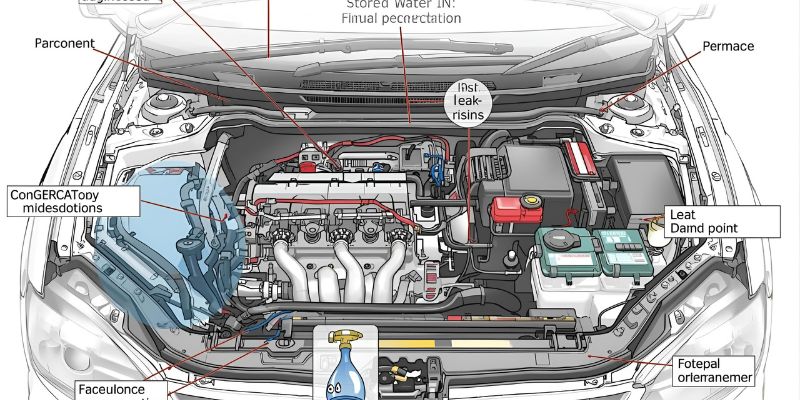
You’ll find antifreeze circulating through the engine block, cylinder heads, water pump, thermostat, hoses, and radiator – a completely separate system from your AC. Understanding these distinct roles is key to avoiding potential damage.
Why Antifreeze is NOT for Your Car’s Air Conditioner
Now, let’s get to the core of it: why, oh why, should you never put antifreeze in your car’s air conditioning system? The simple answer is that they are designed for entirely different purposes and operate with different fluids. Mixing them can lead to serious, expensive problems.
Here’s why it’s a recipe for disaster:
- Wrong Chemical Properties: AC refrigerants are specifically engineered to change states (liquid to gas and back) at the temperatures and pressures involved in air conditioning. Antifreeze is designed to remain a liquid and transfer heat in a much narrower temperature range within the engine. Its chemical composition is completely incompatible with the AC system’s requirements.
- Damage to Seals and Hoses: The materials used in AC hoses and seals are designed to be compatible with specific refrigerants and specialized lubricating oils. Antifreeze, particularly ethylene glycol, can degrade, swell, or corrode these rubber and plastic components. This leads to leaks and system failure.
- Clogging and Blockages: If antifreeze were introduced into the AC system, its thicker consistency compared to refrigerant would immediately start to cause issues. It could clog the very fine passages within components like the expansion valve or the accumulator, preventing the refrigerant from circulating properly. This would completely shut down your AC’s cooling ability.
- Contamination of Refrigerant: Even a tiny amount of antifreeze can contaminate the entire refrigerant charge. This contamination can render the refrigerant ineffective and damage costly components like the AC compressor. A contaminated system often requires a complete flush and recharge, which can be very expensive.
- Lubrication Issues: AC compressors require a specific type of oil (like Ester oil or PAG oil) to lubricate their internal moving parts. Antifreeze does not contain these lubricants and would starve the compressor of the necessary lubrication, leading to rapid wear and eventual failure. For more information on refrigerant oils, check out resources from organizations like the Automotive Fleet and Energy Engineers (AFEE) which discusses lubricant compatibility in automotive systems.
- System Pressure Imbalance: The AC system operates within a defined pressure range. Introducing a fluid with different thermodynamic properties like antifreeze would completely disrupt this balance, potentially leading to over-pressurization in some areas and under-pressurization in others, causing seals to blow out or components to seize.
Think of it like trying to lubricate your car’s engine with transmission fluid – they might both be liquids, but they have different jobs and different formulations that make them absolutely unsuitable for each other’s applications. The same principle applies to antifreeze and your car’s AC refrigerant.
Common AC Problems and Their Actual Causes
If your car’s AC isn’t working as it should, there are several common culprits unrelated to antifreeze. Understanding these can help you pinpoint the issue and seek the correct solution.
Low Refrigerant Level
This is perhaps the most common reason for weak or no cooling. Over time, tiny leaks can develop in the system, allowing the refrigerant to escape. When the level gets too low, the system can’t produce enough cold air. This isn’t a sign to add antifreeze; it’s a sign that there’s a leak that needs to be found and repaired, and then the system needs to be recharged with the correct refrigerant.
Faulty Compressor
The AC compressor is the powerhouse of the system. If it fails, the refrigerant won’t be pumped, and you won’t get any cooling. Symptoms can include a clicking sound when you turn on the AC, or no engagement of the compressor clutch at all. Unlike adding antifreeze, a faulty compressor needs to be replaced by a qualified mechanic.
Blocked Condenser
The condenser needs good airflow to dissipate heat. If it’s blocked by debris like leaves, dirt, or plastic bags, it can’t do its job effectively. This can lead to reduced cooling performance, especially when the car is idling or moving slowly. Cleaning the condenser is a relatively simple DIY task.
Problems with the Blower Motor or Fan
The blower motor is what actually pushes the cold air into your cabin. If it’s not working or is weak, you might get some cooling, but it won’t reach you effectively. Similarly, issues with the condenser fan or radiator fan can prevent proper heat exchange.
Leak in the System
As mentioned, leaks are a primary cause of low refrigerant. These can occur in hoses, seals, O-rings, or even internal components. A professional can detect these leaks using specialized equipment and then repair them before recharging the system.
What To Do When Your Car’s AC Isn’t Cooling
If you’re experiencing problems with your car’s air conditioning, don’t panic, and definitely don’t reach for the bright green or orange jug of antifreeze. Here’s a sensible, step-by-step approach:
Step 1: Perform Basic Visual Checks
Start with what you can easily see. Check if the AC compressor clutch is engaging. When you turn on the AC, you should hear a distinct “click” from the engine bay, and you might see the center part of the pulley on the AC compressor start to spin. If you don’t hear or see this, it could indicate an electrical issue, a lack of refrigerant, or a faulty compressor.
Next, inspect the condenser (the radiator-like unit at the front of your car). Is it packed with dirt, leaves, or road debris? If so, carefully clean it. You can use a hose with moderate pressure or compressed air. Be gentle to avoid damaging the delicate fins. This can sometimes improve performance significantly.
Step 2: Check Cabin Air Filter
A clogged cabin air filter can severely restrict airflow into the cabin, making your AC seem weak, even if it’s producing cold air. Locate your cabin air filter (often behind the glove box) and check its condition. If it’s dirty, replace it. This is a very common and easy DIY fix. You can find guides on how to access and replace your specific car model’s cabin air filter online – resources like ItStillRuns.com offer general instructions that can point you in the right direction.
Step 3: Consider Adding Refrigerant (with caution!)
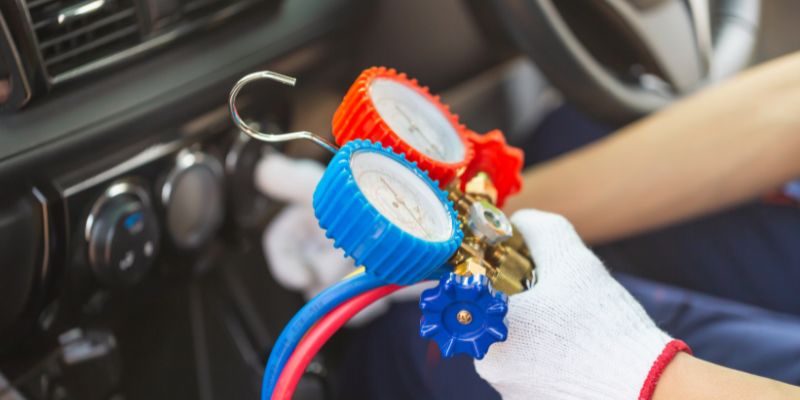
If you suspect low refrigerant and the visual checks don’t reveal an obvious problem, you might consider adding refrigerant. However, this should be done with extreme caution. You can purchase AC recharge kits from auto parts stores. These kits typically include a can of refrigerant and a gauge.
Important Considerations for DIY Recharge:
- Use the Correct Refrigerant: Make sure you buy the refrigerant specified for your car (usually R-134a or R-1234yf). The type is commonly listed on a sticker under the hood or in your owner’s manual. Using the wrong type can cause damage.
- Read Instructions Carefully: Follow the instructions on the can precisely. Overcharging the system can be just as bad, if not worse, than having too little.
- Check Gauge Readings: The gauge on the can will tell you the system pressure before and during charging. Pay close attention to the recommended pressure range for your vehicle.
- Leaking? Recharge isn’t a permanent fix: If your system is leaking, simply adding refrigerant is like putting a bandage on a bleeding wound. The refrigerant will escape again, and you’ll be back to square one, potentially causing damage in the process. It’s always better to find and fix the leak first.
If you’re unsure at any point, it’s always best to leave refrigerant handling to the professionals.
Step 4: Seek Professional Help for Complex Issues
If the above steps don’t solve the problem, or if you suspect a faulty compressor, a major leak, or electrical issues, it’s time to visit a trusted mechanic. They have specialized equipment to:
- Accurately diagnose the exact problem.
- Detect even the smallest refrigerant leaks.
- Perform a system evacuation and flush if necessary.
- Properly recharge the system with the correct amount of refrigerant and oil.
- Replace faulty components like the compressor, condenser, or expansion valve.
Repairing AC systems can be complex due to the specialized tools and knowledge required to handle refrigerants safely and effectively. For instance, improper handling of refrigerants can not only damage your car but also have environmental implications. Organizations like the U.S. Environmental Protection Agency (EPA) outlines the regulations and requirements for handling refrigerants under Section 609 of the Clean Air Act, highlighting the need for certified technicians.
Can Antifreeze Damage AC Components? A Look at Materials
Yes, antifreeze can absolutely damage AC components. The materials used in your car’s AC system are designed to withstand specific chemical conditions. Let’s look at what happens when antifreeze comes into contact with them:
| AC System Component | Material Example | Impact of Antifreeze Contact |
|---|---|---|
| AC Hoses (Low & High Pressure) | Synthetic Rubber (e.g., EPDM) | Antifreeze (especially ethylene glycol) can swell, soften, and degrade the rubber, leading to leaks and hose failure. It can also break down the barrier layers designed to prevent refrigerant permeation. |
| O-Rings and Seals | Nitrile Rubber (NBR), HNBR (Hydrogenated Nitrile Butadiene Rubber), or Viton | Antifreeze can cause these seals to swell or become brittle, leading to leaks. It can also wash away essential lubricating oils, causing seals to dry out and crack. |
| AC Compressor Internals | Steel, Aluminum, Bronze | Antifreeze lacks the specific lubricating properties (like PAG or Ester oils) that AC compressors need. This leads to increased friction, wear, overheating, and ultimately compressor failure. |
| AC Receiver-Drier or Accumulator | Aluminum, Steel, Desiccant Material | Antifreeze can clog the desiccant material, rendering it ineffective at removing moisture. Moisture is a major enemy of AC systems, and its presence can lead to corrosion and ice blockage. |
| AC Condenser and Evaporator | Aluminum, Copper | While less susceptible to chemical breakdown, antifreeze’s viscosity can lead to blockages in the fine tubes. Furthermore, if it becomes contaminated with moisture or impurities from the engine coolant system, it could potentially accelerate corrosion compared to clean refrigerant oil. |
The table above illustrates the fundamental incompatibility. The AC system relies on a very clean, dry environment where refrigerant and specialized oil can cycle without contamination or degradation. Antifreeze introduces both foreign chemicals and lubrication deficiencies that are detrimental.
Antifreeze vs. Refrigerant: Side-by-Side Comparison
To further cement the difference, let’s compare antifreeze and refrigerant directly:
| Feature | Antifreeze (Engine Coolant) | Refrigerant (AC Refrigerant) |
|---|---|---|
| Primary Function | Regulate engine temperature (prevent freezing/overheating) | Facilitate cooling by absorbing and releasing heat through phase changes |
| Key Components | Ethylene Glycol or Propylene Glycol, Water, Corrosion Inhibitors | Specific chemical compounds (e.g., R-134a, R-1234yf) |
| Operating Environment | Engine block, radiator, heater core, heater hoses | AC compressor, condenser, expansion valve, evaporator, AC lines |
| Lubrication | Contains additives that lubricate water pump | Requires specialized AC compressor oil (PAG/Ester) |
| Physical State Change | Primarily remains liquid; boiling point elevated | Undergoes rapid phase changes (liquid to gas and gas to liquid) to transfer heat |
| Effect of Contamination | May reduce efficiency, potentially cause plugging of heater core | Severe damage to compressor, loss of cooling, system blockage, seal degradation |
| DIY “Additive” Potential | No; usually requires specific type and mixture, often topped off with 50/50 blend. | Possible with caution (kits available), but often indicates a leak that needs repair. NEVER mix with antifreeze. |
This comparison highlights just how different these fluids are. Their very natures are opposed when it comes to automotive systems.
So, What’s the “Best” Way to Fix a Car AC?
The “proven best” way to fix a car AC that isn’t cooling is to identify the root cause and address it correctly. Here’s a summary of the best practices:
- Diagnose Properly: Don’t guess! If you’re not comfortable, let a qualified mechanic do it. They have the tools to measure pressures, find leaks, and check electrical components.
- Fix Leaks First: If there’s a refrigerant leak, it must be repaired before recharging the system. Adding refrigerant to a leaking system is temporary and can be harmful.
- Use the Correct Refrigerant and Oil: Only use the refrigerant type specified for your vehicle (check owner’s manual or under the hood sticker). Ensure the correct type and amount of AC compressor oil are used during repairs.
- Evacuate and Recharge: After repairs, the system needs to be evacuated (all air and moisture removed) using a vacuum pump and then recharged with the precise amount of refrigerant and oil specified by the manufacturer.
- Regular Maintenance: Keep the condenser clean and replace your cabin air filter regularly.
For a deep dive into AC system maintenance and common issues from a technical perspective, you might find resources from automotive engineering societies or reputable technical service publications helpful, though often these are geared towards professionals.

Frequently Asked Questions (FAQ)
Q1: Can I put antifreeze in my car’s AC if it’s low on refrigerant?
A1: Absolutely not. Antifreeze is for your engine’s cooling system. Putting it in your AC will damage the system’s seals, hoses, and compressor, leading to very expensive repairs.
Q2: My AC is blowing warm air. Is it always a refrigerant problem?
A2: Not always. While low refrigerant is common, other issues like a faulty compressor, a blocked condenser, a bad blower motor, or electrical problems can also cause warm air.
Q3: How do I know if my car’s AC needs refrigerant?
A3: Typically, the AC will blow less cold than usual, warm air may come out, or you might hear hissing sounds. A pressure gauge attached to the AC system is the most accurate way to determine refrigerant levels.
Q4: Is it safe for me to add refrigerant myself?
A4: It can be done with caution, but it’s risky. You need to use the correct refrigerant type, not overcharge the system, and ensure there are no leaks. If you’re unsure, it’s best left to a professional.
Q5: What happens if I accidentally mix antifreeze with AC refrigerant?
A5: Mixing them will contaminate the AC system. Antifreeze can break down rubber components, clog the system, and severely damage the expensive AC compressor. The entire system will likely need to be professionally flushed and recharged.
Q6: How often should my car’s AC system be serviced?
A6: There isn’t a strict schedule for AC service like an oil change. However, it’s good to have it inspected if you notice any performance changes, or at least every few years to check refrigerant levels and look for minor leaks.
Conclusion
Navigating car maintenance can sometimes feel complex, but understanding the core functions of different vehicle systems is your first step to confident DIY. We’ve explored how your car’s air conditioning system relies on a specific refrigerant and specialized oils to provide cool air, and how antifreeze serves an entirely different, though equally important, role in your engine’s cooling system. The answer is clear: antifreeze is never the solution for an AC problem. Using it in your AC system will lead to damage, contamination, and costly repairs.
If your car’s AC isn’t performing as it should, always revert to proper diagnostic steps. Check for simple issues like a dirty condenser or cabin air filter. If the problem persists, consult with a qualified mechanic who has the right tools and expertise to handle refrigerant safely and effectively. By understanding what your AC needs and what it definitely doesn’t, you can keep your cool, on the road and in your wallet. Stay comfortable and enjoy those cool drives!