Best AC Refrigerant Recharge Hose Kits for R-134a Cars
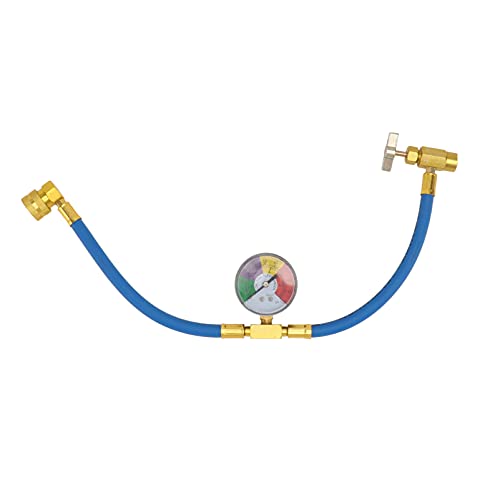
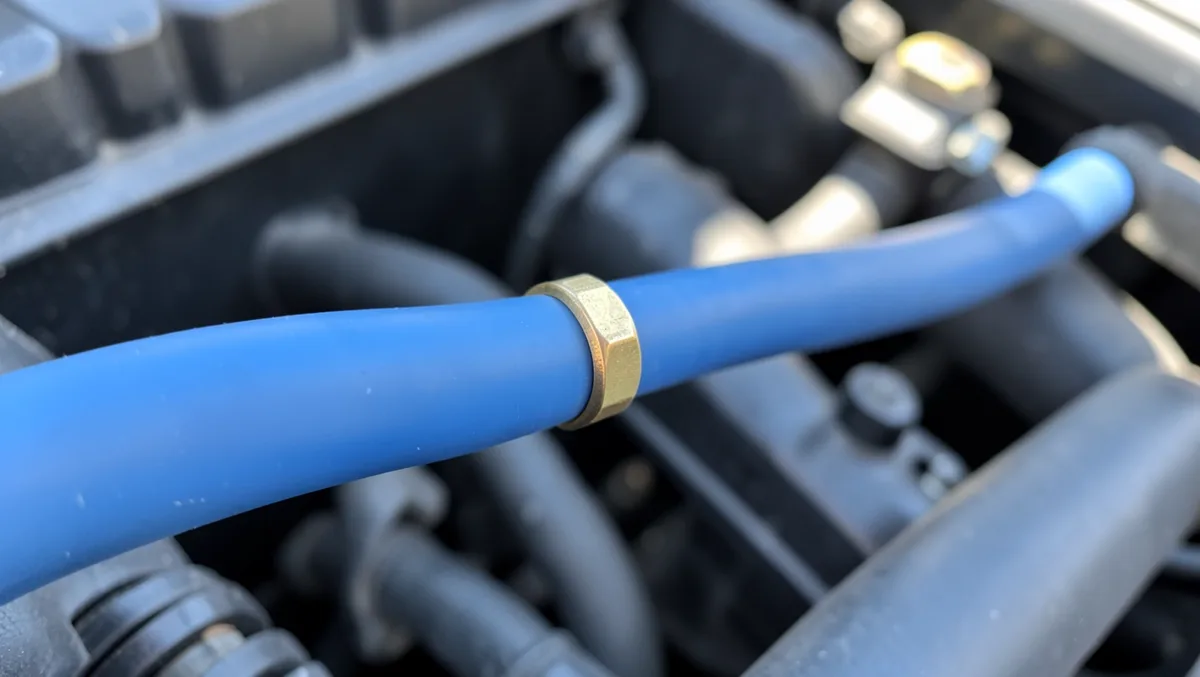
An AC refrigerant hose connects a can of R-134a refrigerant to your car’s low-pressure service port so you can recharge a warm-but-not-cold AC system yourself.
Car AC systems lose a little refrigerant every year through seals and fittings, and once the level drops too far the compressor cycles less often and the vents stop blowing cold. A recharge hose kit lets you top it off in the driveway for the price of one can of refrigerant plus a $13 to $25 hose-and-gauge tool, instead of a shop visit. Below are three real hose kits currently sold on Amazon: an A/C Pro reusable gauge and hose, a SURIEEN can-tap kit, and an Aupoko kit, along with what each one does well and where it falls short.
One thing matters before you buy any of these: they are all built for R-134a systems. If your car uses the newer R-1234yf refrigerant (common on many 2013-and-newer models), the service port has a different fitting and none of these hoses will connect to it. Check the AC system label under your hood first, or see our R-1234yf refrigerant guide if that is what your car takes. If your AC needs more than a top-off, such as a full retrofit or a replaced compressor, a recharge hose will not cover that, and our guide to A/C kits for cars covers those larger jobs instead.
A/C Pro Arctic Freeze Reusable Gauge and Hose
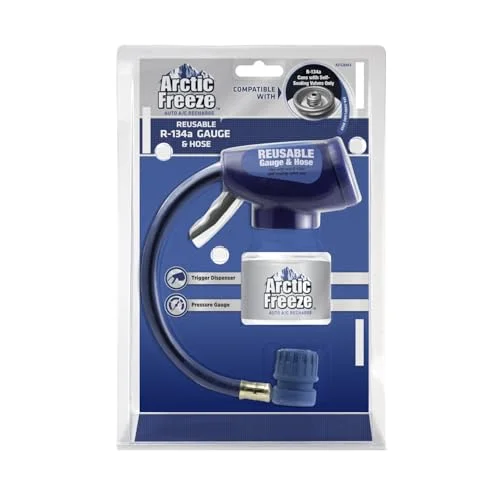
This is the pick to reach for if you want one gauge-and-hose tool you can reuse for years rather than a single-use hose. The A/C Pro Arctic Freeze Reusable Gauge and Hose pairs a built-in pressure gauge with a trigger dispenser, and it is made specifically for R-134a cans with self-sealing valves — it is not designed for older puncture-style cans, so double-check what type of can you are buying before you connect it.
Pros:
- Reusable trigger-dispenser design, not a throwaway single-use hose
- Built-in pressure gauge for reading the low-side charge as you go
- Backed by the A/C Pro brand name, which also sells the recharge cans themselves
- Compact enough to keep in a glovebox or garage shelf
Cons:
- Only works with self-sealing valve R-134a cans, not the older piercing style
- Priced higher than the simpler can-tap kits below
- Does not include the refrigerant can itself
Because the gauge is built into the dispenser body instead of sitting on a separate hose loop, there is one less connection point that can leak. That matters on a tool you are meant to keep and reuse across multiple recharges rather than throw away after one can. The trade-off is that it only works with modern self-sealing cans, so if you already have an older can with a piercing valve, one of the kits below will fit it instead.
To buy this product, click here.
Surieen AC Charge Hose With Gauge
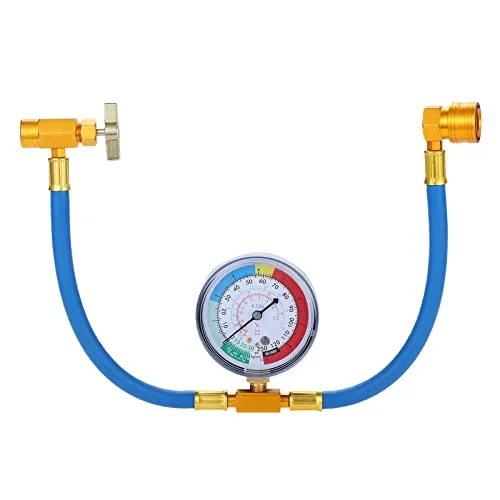
At around $13.49, the SURIEEN AC Charge Hose with Gauge is the least expensive option here, which makes it a reasonable choice if you only expect to recharge your AC once and do not want to spend more on a reusable dispenser. The kit pairs a can-tap valve with an inline pressure gauge, so you can still watch the low-side reading while you dispense.
Pros:
- Lowest price of the three kits reviewed here
- Inline gauge for monitoring pressure while recharging
- Simple design with no reusable dispenser mechanism to maintain
Cons:
- Built for R-134a systems only
- Requires basic familiarity with reading a low-side pressure gauge
The gauge is the part that matters most here: it lets you stop adding refrigerant once the reading lands in the normal range for the outside temperature, instead of guessing based on how long you have been pressing the trigger. Overfilling a system is a real risk with any can-tap kit, and a gauge is the only way to catch it before it happens — see the FAQ below on what an overcharged AC system actually does to your car.
To buy this product, click here.
Aupoko AC Refrigerant Recharge Hose
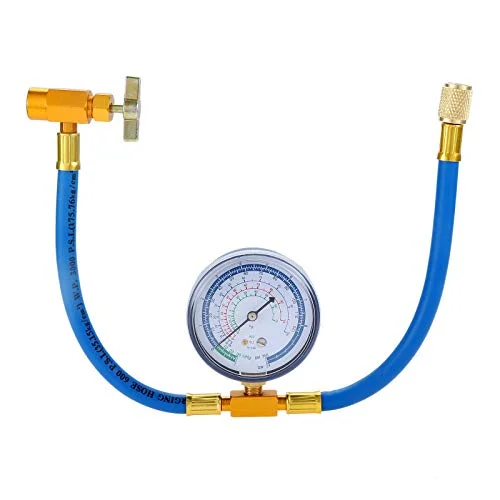
The Aupoko AC Refrigerant Recharge Hose is a close match to the SURIEEN kit above in both price and layout: a can-tap valve, a flexible hose, and an inline gauge. Amazon’s own listing lists it as compatible with R-134A, R-12, and R-22 systems, though R-12 and R-22 have not been used in new US cars for decades, so in practice most buyers will be using this on an R-134a system.
Pros:
- Inline pressure gauge for monitoring the charge
- Lightweight hose and valve assembly that is easy to store in a trunk or toolbox
- Priced close to the SURIEEN kit, giving you a second budget option
Cons:
- Basic can-tap design, not a reusable trigger dispenser
- Gauge accuracy on budget kits like this can drift, so cross-check readings if something seems off
If you are choosing between this and the SURIEEN kit above, the honest answer is that they solve the same problem in almost the same way, so pick whichever is in stock or priced lower on the day you are buying. Either one gets you a working gauge and a way to dispense a self-sealing R-134a can into your car’s low-pressure port.
To buy this product, click here.
Frequently Asked Questions
How Do I Use an AC Recharge Hose?
Connect the hose to the low-pressure port on your car’s AC system — it is the smaller of the two service ports under the hood, usually near the firewall or the AC accumulator. Screw the other end onto a can of R-134a refrigerant, start the engine with the AC on max, and dispense in short bursts while watching the gauge. Stop once the reading matches the normal range for the current outside air temperature, which is usually printed on a chart on the gauge face or the can itself.
Can I Recharge My Car AC Myself?
Yes. A DIY recharge kit like the ones above includes everything you need: a hose, a gauge, and a valve to dispense the can. Follow the kit’s instructions for connecting to the low-pressure port and adding refrigerant in short bursts. Regular AC maintenance and catching a low charge early can prevent bigger compressor problems down the line.
What Is a Self-Sealing Valve, and Do I Need EPA Certification to Use One?
A self-sealing valve automatically closes when you disconnect the hose from the can, so refrigerant does not keep hissing out into the air. It is both an environmental and a cost issue: R-134a is a greenhouse gas, and every ounce that escapes is refrigerant you paid for and now have to buy again. As for certification, small self-sealing cans of 2 pounds or less — the size sold at auto parts stores for DIY use — are specifically exempt from the EPA’s Section 609 sales-restriction rule that otherwise requires showing a certification card to buy larger quantities. That exemption covers buying and using the can yourself; it does not apply if you are recovering refrigerant instead of adding it, which has its own certified-equipment requirement covered in our guide to legally removing refrigerant from a car.
Is the Gauge Important in a Recharge Kit?
Yes. The gauge is what keeps you from overcharging the system, which is the single biggest risk with a DIY recharge. Adding too much refrigerant raises head pressure, can trip the compressor’s safety cutoff, and in some cases forces liquid refrigerant into parts of the system designed to only handle gas — see our guide to what happens when a car AC is overcharged for the full breakdown. Always choose a kit with a working gauge, and stop dispensing once the reading matches the target range for the outside temperature.
Does My Car Use R-134a or R-1234yf?
Check the AC system label, which is usually a sticker on the underside of the hood or near the AC compressor. It lists the refrigerant type and the fill amount. R-134a was the standard in nearly all US cars from the mid-1990s through the early 2010s. R-1234yf has been phasing in since around 2013 and is now common on many newer models. The two use different, incompatible service port fittings specifically so an R-134a hose like the ones above cannot be connected to an R-1234yf system by mistake.
Will an R-134a Recharge Hose Work on a Car That Uses R-1234yf?
No. R-1234yf systems use a different service port size and thread than R-134a systems, a deliberate design choice to stop the two refrigerants from being cross-connected. None of the three hose kits reviewed above will fit an R-1234yf port. If your car takes R-1234yf, see our R-1234yf refrigerant guide for cans and hoses built for that system instead.
Conclusion
Choosing the right AC refrigerant hose comes down to how often you plan to use it and how much you want to spend. The A/C Pro Arctic Freeze Reusable Gauge and Hose costs more but is built to be reused across multiple recharges, with a trigger dispenser and a built-in gauge. The SURIEEN AC Charge Hose with Gauge and the Aupoko AC Refrigerant Recharge Hose are both simpler, cheaper can-tap kits that get the job done for a one-time top-off.
All three are built for R-134a systems only, so confirm what refrigerant your car actually takes before you buy. Whichever kit you choose, keep an eye on the pressure gauge while dispensing, stop once the reading matches the normal range for the outside temperature, and you can safely bring a warm AC system back to blowing cold in your own driveway.
Products related to this article
Sponsored / affiliate links. As an Amazon Associate I earn from qualifying purchases. I may earn additional commission from eligible campaigns.