How Much Oil Does a 2.0L Engine Take From Empty
Figuring out how much oil to add can feel tricky, especially when you’re new to car care. You might wonder, How Much Oil Does a 2.0L Engine Take From Empty? It’s a common question, and sometimes the answer isn’t right in front of you. Don’t worry!
We’ll break it down super simply, step-by-step, so you know exactly what to do. Get ready to learn the easy way.
Understanding Engine Oil Capacity
Knowing your engine’s oil capacity is super important for keeping it running smoothly and preventing damage. When an engine is completely empty of oil, it means it needs a full refill. This isn’t something that happens often, but if you’ve just had a major repair or are starting from scratch, it’s the starting point.
We’ll cover why knowing the exact amount matters and what can happen if you get it wrong.
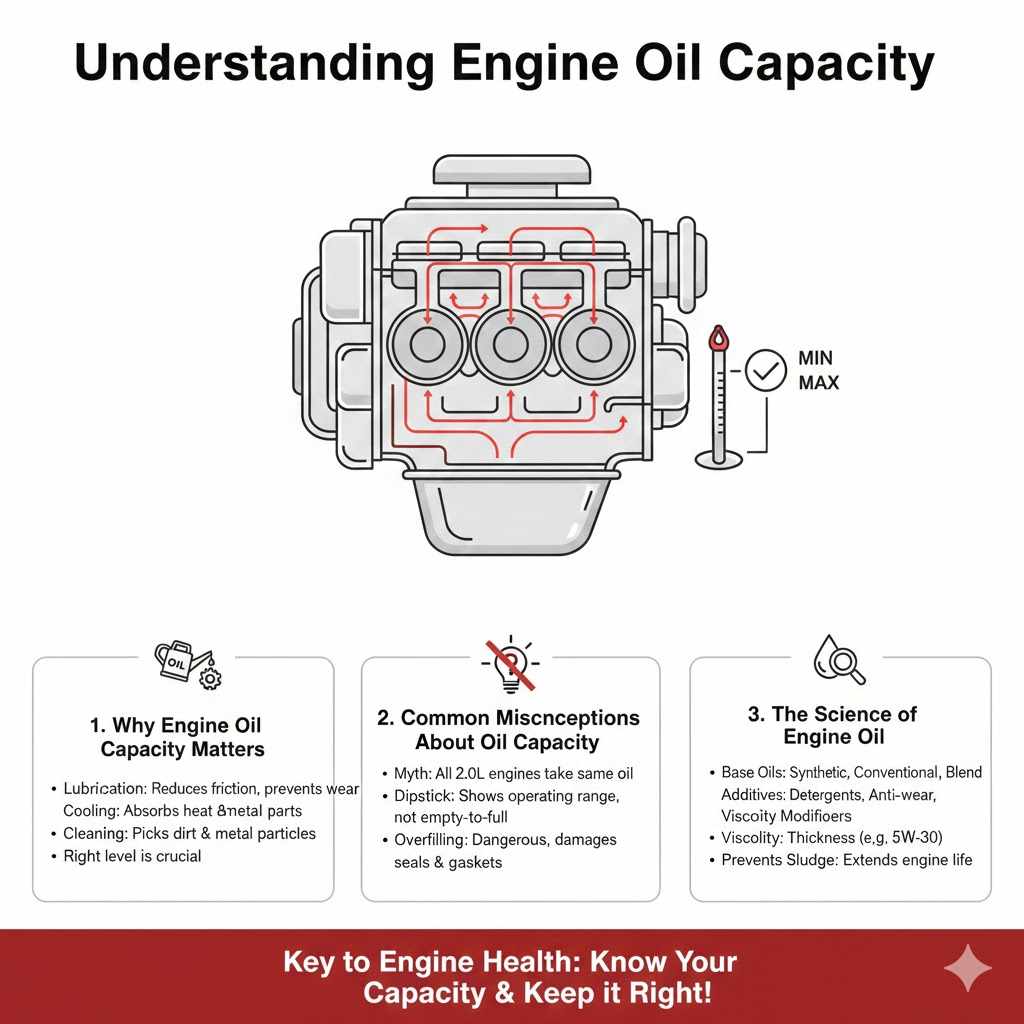
Why Engine Oil Capacity Matters
Engine oil is like the blood of your car. It does a lot of jobs, like keeping parts from rubbing together, cleaning them, and helping to cool the engine down. If there isn’t enough oil, these jobs don’t get done right.
This can cause parts to wear out faster, and in bad cases, the engine can even break down completely.
- Lubrication is a big deal. Oil creates a slick layer between moving metal parts in your engine. This stops them from grinding against each other, which would cause a lot of heat and wear. Imagine two pieces of sandpaper rubbing together nonstop – that’s what happens without good lubrication.
- Cooling is another key role. As parts move, they create friction and heat. Oil absorbs some of this heat and carries it away from the hottest spots, helping to keep the engine at a safe temperature. Without enough oil, the engine can overheat quickly, leading to serious damage.
- Cleaning your engine is also part of the oil’s job. As it circulates, it picks up tiny bits of metal and dirt that can build up over time. This keeps the engine’s passages clear and prevents clogs. The oil is then filtered to remove these particles.
Getting the oil level just right is crucial. Too little oil means it can’t do its jobs properly, and too much oil can also cause problems. It’s like drinking water; a little too much or too little can be bad for you.
Your car’s engine needs the perfect amount to work best.
Common Misconceptions About Oil Capacity
People sometimes think all engines take the same amount of oil, or that just filling it until the dipstick looks full is enough. This isn’t true. Different engines, even within the same car model year, can have different oil needs.
Also, a dipstick shows the oil level when the engine has been running or sitting for a while, not necessarily when it’s completely empty.
- The idea that all 2.0L engines take a set amount is a myth. While many might be close, specific designs and engine components can alter the exact oil capacity. It’s like saying all shirts are the same size; they aren’t.
- Another common thought is that if you can see oil on the dipstick, you’ve added enough. However, a dipstick is designed to show a safe operating range, not an empty-to-full measurement. When an engine is completely empty, the dipstick might not show anything, making it hard to know where to start.
- Some folks believe adding a bit extra oil is always better, thinking more protection is good. This is actually dangerous. Overfilling an engine can cause oil to get into places it shouldn’t, like the exhaust system, and can also create too much pressure, damaging seals and gaskets.
These misunderstandings can lead to putting in too much or too little oil, both of which can harm your engine. It’s important to get the right information so you can take the best care of your car. We’ll show you how to find the precise amount for your specific engine.
Finding Your 2.0L Engine’s Specific Oil Needs
Every car is a little different, and that’s especially true for engine oil. While we’re focusing on 2.0L engines, the exact amount of oil needed can change based on the car’s make, model, and even the specific year it was made. Finding this exact number is the first step to a successful oil change.
Consulting Your Owner’s Manual
The best place to find out exactly how much oil your 2.0L engine takes is your car’s owner’s manual. This book is like a guide written by the people who built your car, so it has all the important details about its care. It will tell you the exact capacity in quarts or liters.
- Your owner’s manual is the most accurate source. It’s created by the manufacturer, who knows your car’s engine inside and out. This avoids guesswork and potential mistakes.
- Look for a section on maintenance or specifications. You’ll usually find information about fluid capacities, including engine oil. It will likely list the amount needed for an oil change and sometimes a slightly different amount if you’re also changing the oil filter.
- Make sure you’re looking at the correct information for your specific car. If you have multiple vehicles, double-check you’re referencing the manual for the one you’re working on.
If you can’t find your physical manual, most car manufacturers have digital versions available on their websites. You can usually download a PDF copy by entering your car’s make, model, and year. This makes accessing this vital information very easy.
Locating Information Online
If your owner’s manual is lost or you can’t find it, the internet is a great resource. Many automotive websites and forums offer detailed specifications for different car models. You can often find the exact oil capacity for your 2.0L engine by doing a quick search.
- Websites dedicated to car maintenance often have databases of oil capacities. Searching for ” 2.0L oil capacity” should give you results.
- Online forums where car owners discuss repairs and maintenance can also be very helpful. Other drivers with the same car might have already found and shared this information. Be sure to verify information from forums with other sources if possible.
- Many auto parts stores also have online tools where you can enter your car’s details to find out what parts and fluids are compatible, including the correct oil capacity.
When searching online, be sure to include your car’s exact year and model to get the most accurate information. Sometimes, even small changes between model years can affect the oil capacity. It’s always good to cross-reference information from a few different online sources if you’re unsure.
Understanding Oil Filter Effects
When you change your engine oil, you should also change the oil filter. The oil filter helps keep the oil clean by trapping dirt and debris. Because the filter holds some oil itself, you’ll need a little bit more oil to fill the engine completely when you replace it.
- The oil filter is a small, cylindrical canister that screws onto the engine. It’s full of filtering material that traps contaminants from the oil.
- When you remove the old filter, some oil will drain out with it. The new filter, when installed dry, will then fill up with oil as soon as you start the engine. This means the total oil capacity of the engine system is slightly higher when the filter is included.
- Manufacturers often specify two oil capacities: one for just an oil change (draining the oil pan) and a slightly larger one for an oil and filter change. Always aim for the larger capacity when you’re doing a full service.
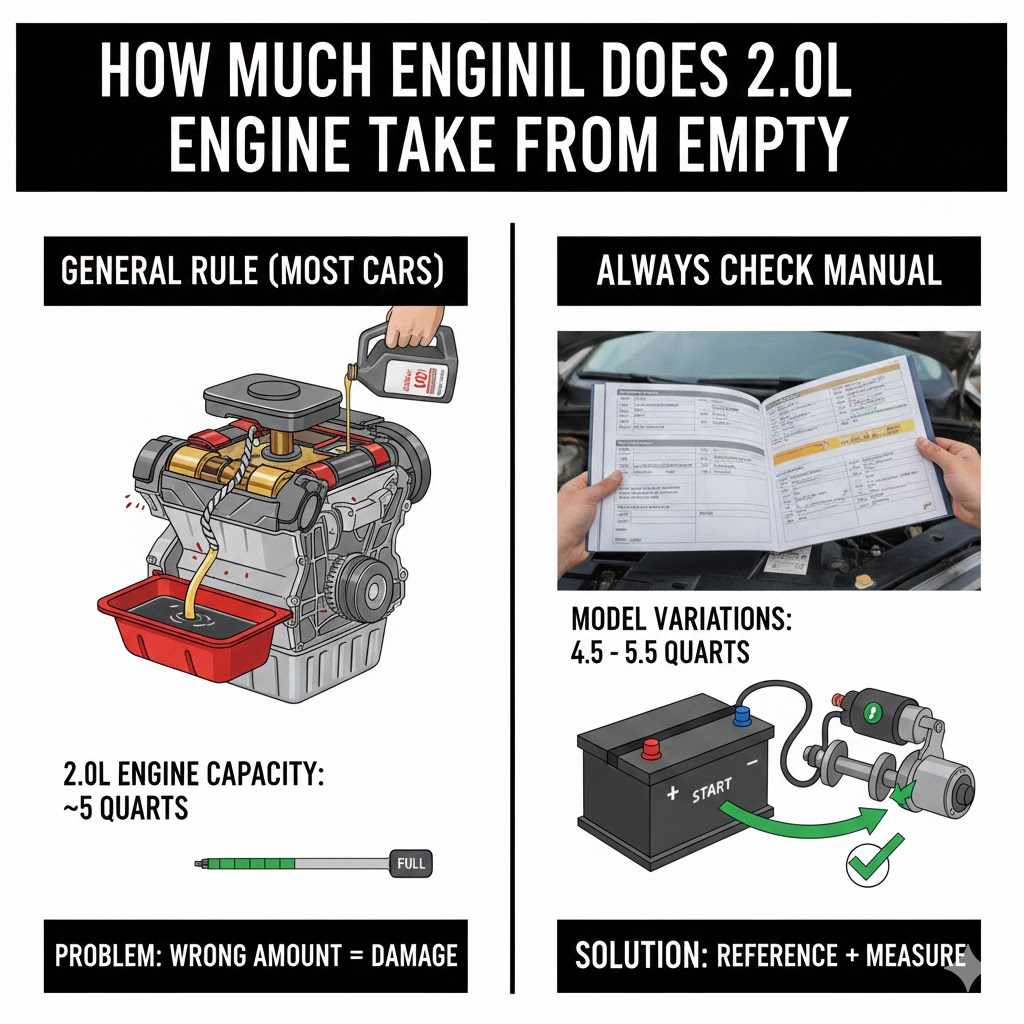
For a 2.0L engine, the difference might be around half a quart or a liter. So, if your manual says 4.5 quarts for a drain and fill, it might say 5 quarts for a drain, fill, and filter change. Always check your manual for these specifics to ensure you add the correct total amount.
How Much Oil Does a 2.0L Engine Take From Empty?
Now, let’s get to the main question: How Much Oil Does a 2.0L Engine Take From Empty? When an engine is truly empty, it means it has no oil at all. This is a rare situation, usually happening after a complete engine flush or if the oil was drained and the filter was also removed without refilling. In this state, you’ll need the full capacity of the oil pan plus the amount the oil filter can hold.
Typical Oil Capacity Ranges for 2.0L Engines
Most 2.0L engines, across various car brands and models, tend to fall within a general range for oil capacity. This range usually accounts for the oil in the pan and the oil filter. Understanding this general range can give you a good starting point, but remember, your car’s manual is the ultimate guide.
| Engine Type | Typical Oil Capacity (Quarts) | Typical Oil Capacity (Liters) |
|---|---|---|
| 2.0L 4-Cylinder (Gasoline) | 4.0 – 5.5 Quarts | 3.8 – 5.2 Liters |
| 2.0L Turbocharged 4-Cylinder (Gasoline) | 4.5 – 6.0 Quarts | 4.3 – 5.7 Liters |
As you can see from the table, turbocharged engines often require slightly more oil. This is because the turbocharger itself has an oil system that needs to be filled, and the overall operating temperatures can also influence the required volume for optimal performance and cooling. These are just general figures.
- A common 2.0L gasoline engine in a sedan might need around 4.5 quarts of oil. This amount is usually listed in the owner’s manual for a drain and fill with filter change.
- A performance-oriented 2.0L turbocharged engine, perhaps found in a sport compact car, might call for 5.5 quarts or even more. The turbocharger adds complexity and requires more oil to ensure its high-speed components are properly lubricated and cooled.
- Some smaller, more compact 2.0L engines might use closer to 4 quarts. These engines are designed for fuel efficiency and may have a less complex oiling system compared to their more powerful counterparts.
When an engine is completely empty, it will need the full amount. If your manual states your 2.0L engine takes 5 quarts with a filter change, then from completely empty, it will indeed take 5 quarts. The term “empty” here means no oil remaining in the pan or lines.
Real-World Examples of 2.0L Engine Oil Capacities
Let’s look at a couple of popular 2.0L engines and their typical oil needs. These examples show how manufacturers specify oil capacity, usually for a complete oil and filter change.
- Honda Civic Si (2.0L K20C1 Engine): This sporty compact car’s 2.0L turbocharged engine typically requires 5.4 US quarts (5.1 liters) of oil when the oil filter is also replaced. If the engine were completely empty of oil and the filter removed, it would need this full amount.
- Volkswagen Golf GTI (2.0L TSI Engine): Many generations of the Golf GTI use a 2.0L turbocharged TSI engine. Depending on the specific model year and engine revision, these typically call for around 5.8 US quarts (5.5 liters) of oil for a complete oil and filter change. Again, from a bone-dry state, this is the amount needed.
These examples highlight that even within the “2.0L engine” category, capacities can vary by a significant margin. This is due to differences in engine design, the presence and size of a turbocharger, and the oil pan’s volume.
Calculating Oil Needed From Completely Empty
To determine precisely How Much Oil Does a 2.0L Engine Take From Empty?, you need to add the capacity of the oil pan and the capacity of the oil filter. Your owner’s manual will usually provide the total capacity for an oil and filter change. This figure represents the amount needed to fill the engine when it’s completely empty.
- If your owner’s manual states that your 2.0L engine requires 4.5 quarts for an oil and filter change, this is the amount you need to add when the engine is completely empty. The manual’s figure for a filter change already accounts for the oil the filter holds.
- If you’re performing an oil change where you’ve drained the oil pan but not
- When an engine is truly empty, it means all old oil has been drained, and the oil filter has been removed and replaced. The capacity listed in your manual for an oil and filter change is the exact amount you’ll need. No special calculation is needed beyond finding that number.
Think of it this way: the total volume your engine’s lubrication system can hold when everything is refilled is the “empty” capacity. This ensures all passages, the oil pan, and the filter are full, providing optimal lubrication from the moment you start the engine.
The Process of Adding Oil to an Empty Engine
Adding oil to a completely empty engine is similar to a regular oil change, but you are starting from scratch. It requires careful attention to detail to ensure you add the correct amount and that all parts of the oiling system are filled properly.
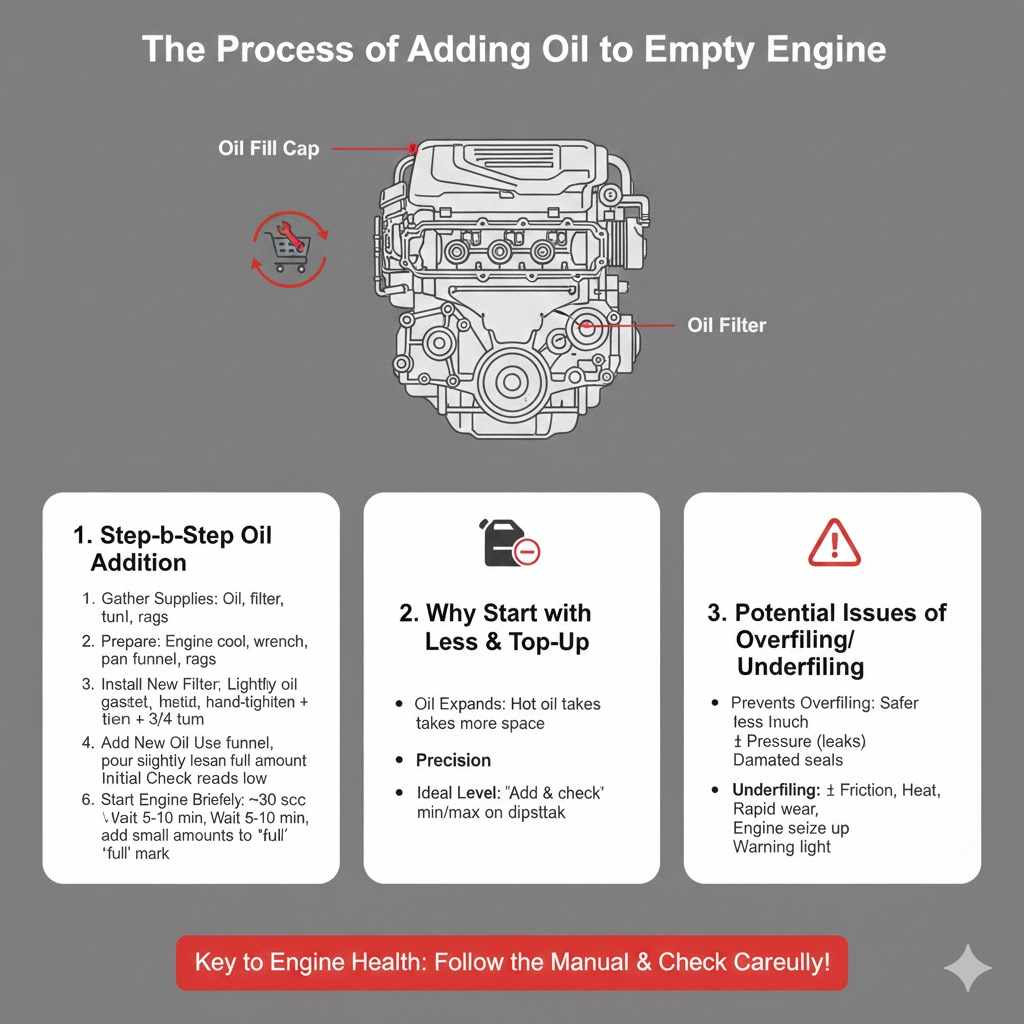
Step-by-Step Oil Addition
Here’s a straightforward way to add oil if your 2.0L engine is completely empty. Remember to have your owner’s manual handy.
- Gather Your Supplies: You’ll need the correct type and amount of engine oil specified in your owner’s manual, a new oil filter for your car, a wrench to remove the old filter (if applicable), a drain pan, a funnel, and rags.
- Prepare the Engine Bay: Make sure the engine is cool before you start. Locate the oil fill cap on top of the engine and the oil drain plug on the bottom of the oil pan.
- Install New Oil Filter: If you’re replacing the oil filter, remove the old one. Lightly coat the rubber gasket on the new oil filter with a bit of new oil. Screw the new filter on by hand until snug, then give it about a three-quarters turn more. Do not overtighten.
- Add New Oil: Remove the oil fill cap. Insert your funnel into the fill opening. Carefully pour in the amount of oil recommended in your owner’s manual for an oil and filter change. It’s better to add slightly less than the full amount initially.
- Initial Check: After adding the oil, replace the oil fill cap. Wait a few minutes for the oil to settle into the oil pan. Check the dipstick. If the engine was truly empty, the dipstick will likely read very low or show nothing.
- Start Engine Briefly: Start the engine and let it run for about 30 seconds to a minute. This allows the oil to circulate and fill the new oil filter.
- Final Check and Top-Off: Turn off the engine and wait about 5-10 minutes for the oil to drain back into the pan. Pull out the dipstick, wipe it clean, reinsert it fully, and pull it out again. Check the oil level. It should be within the “full” mark. If it’s a little low, add oil in small amounts (e.g., a quarter quart at a time) and recheck until it reaches the full mark.
It’s crucial not to overfill. Adding a little less than the full capacity first and then topping up after running the engine is the safest approach to ensure you hit the exact “full” mark without going over.
Why Starting with Less and Topping Up is Smart
When you’re unsure of the exact “empty” capacity or if your manual isn’t perfectly clear, it’s always safer to start with a little less oil than the full recommended amount. This prevents overfilling, which can be more damaging than being slightly underfilled initially.
- Oil expands slightly when it gets hot during engine operation. If you fill it exactly to the “full” line when the engine is cold, it might creep above the “full” mark once it’s warmed up, potentially causing issues.
- Pouring in the full amount all at once makes it harder to gauge the exact level. By adding about 80-90% of the estimated capacity first, you can then carefully add small amounts until you reach the ideal level on the dipstick after running the engine.
- This “add and check” method ensures precision. You are actively monitoring the oil level as it stabilizes, giving you better control and peace of mind that you haven’t exceeded the recommended capacity.
The goal is to have the oil level sit perfectly between the “add” and “full” marks on the dipstick when the engine is at operating temperature and has been turned off for a few minutes. This is the sweet spot for optimal engine health.
Potential Issues of Overfilling or Underfilling
Both too much and too little oil can cause significant problems for your 2.0L engine. It’s essential to get the level right every time.
- Overfilling: If you put too much oil in, the crankshaft can whip the excess oil into a foam. This foamy oil doesn’t lubricate well and can lead to increased wear on engine components. It can also cause pressure to build up in the crankcase, potentially blowing out seals and gaskets, leading to leaks. The catalytic converter can also be damaged if oil gets into the exhaust.
- Underfilling: If there isn’t enough oil, the engine parts won’t be adequately lubricated. This leads to increased friction, heat, and rapid wear. In severe cases, the engine can seize up, meaning it stops working entirely, often requiring a very expensive repair or replacement. Low oil levels can also cause the oil pressure warning light to come on, which is a critical sign to stop the engine immediately.
A car’s owner’s manual is the definitive source. Follow its recommendations closely for the type of oil and the exact capacity to keep your 2.0L engine running reliably for years to come.
Frequently Asked Questions
Question: How much oil does a 2.0L engine typically take if I’m just draining the oil and not changing the filter?
Answer: If you are only draining the oil and not replacing the filter, you will typically need about half a quart (or half a liter) less than the full capacity recommended for an oil and filter change. However, it is highly recommended to change the oil filter with every oil change for optimal engine protection.
Question: Can I use a different type of oil if I can’t find the exact one recommended for my 2.0L engine?
Answer: It’s best to stick to the oil type recommended in your owner’s manual. Using the wrong viscosity or type of oil can affect lubrication, engine performance, and potentially cause damage. If you can’t find the exact type, look for an oil that meets the same specifications and viscosity grade.
Question: What happens if I put too much oil in my 2.0L engine?
Answer: Overfilling your engine with oil can cause significant problems. The excess oil can aerate, meaning it becomes foamy, which reduces its lubricating effectiveness. It can also create too much pressure in the crankcase, leading to leaks from seals and gaskets, and can even damage the catalytic converter.
Question: How often should I check the oil level in my 2.0L engine?
Answer: It’s a good practice to check your engine oil level at least once a month, and also before any long road trips. Many drivers also check it every time they refuel their vehicle to ensure it’s always at the optimal level.
Question: Where can I find out the exact oil capacity for my specific 2.0L engine if I don’t have the owner’s manual?
Answer: You can usually find this information on the car manufacturer’s official website, often in a digital version of the owner’s manual. Alternatively, automotive parts websites and forums dedicated to your car model can be reliable sources for this data.
Conclusion
When your 2.0L engine is completely empty, it will need the full oil capacity listed in your owner’s manual for an oil and filter change. This figure accounts for all the oil the system holds, including the filter. Always consult your manual for the exact amount and the correct oil type to ensure your engine runs perfectly.
Products related to this article
Sponsored / affiliate links. As an Amazon Associate I earn from qualifying purchases. I may earn additional commission from eligible campaigns.