
Does Mileage Matter on a Car? The 12,000-Mile Rule Explained
Mileage matters on a car, but it’s not the deciding factor most buyers assume: a well-maintained 120,000-mile vehicle can outlast a neglected 60,000-mile one. Buying on mileage alone risks overpaying for a low-mileage car with a spotty service history, or skipping a reliable high-mileage one for thousands less. This guide covers how mileage affects resale value, the 12,000-mile-a-year benchmark used by dealers and insurers, and what to actually check before buying.
Quick Answer
Yes, mileage matters — it’s a major factor in a car’s price, wear, and resale value. But condition and maintenance history matter more than the odometer number alone. The average driver puts on about 12,000–14,000 miles a year, so use that benchmark to judge whether a car’s mileage fits its age.
Importance Of Mileage
Mileage is one of the first things buyers and appraisers check because it estimates how much wear a car’s parts have absorbed. A car showing 40,000 miles has generally used up less of its engine, transmission, brakes, and tires than one showing 120,000 miles — which is why lower-mileage cars usually command a higher resale price.
Resale value follows the same logic: buyers assume a low-mileage car has more useful life left, so sellers can ask more for it. High-mileage cars typically sell for less because buyers price in the assumption of more near-term repairs.
But mileage is an estimate, not a guarantee. Two cars with the identical odometer reading can be in very different mechanical shape depending on how they were driven and maintained — which is exactly what the rest of this guide breaks down.
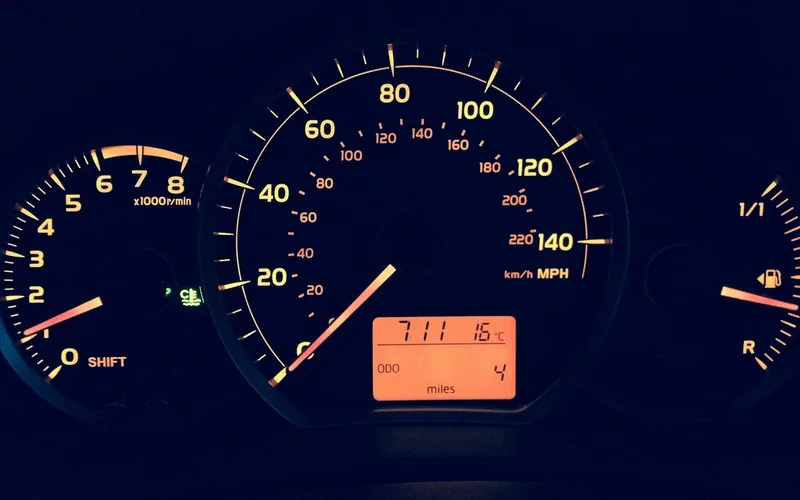
How Many Miles Should a Car Have Per Year? The 12,000-Mile Benchmark
The average U.S. driver puts on roughly 12,000 to 14,000 miles a year, depending on the data source. The Federal Highway Administration’s Highway Statistics report tracks national vehicle-miles-traveled data every year, while consumer sources like CARFAX use a simpler 12,000-mile-a-year baseline as the industry rule of thumb for judging used cars.
To use the benchmark, divide the odometer reading by the car’s age in years. A 5-year-old car showing around 60,000 miles is right in line with average use. The same car at 30,000 miles was likely driven mostly short, light-duty trips — good news for wear, but check that fluids and rubber components weren’t left to age past their service interval anyway. At 100,000 miles, it was driven roughly twice the national average, which isn’t automatically bad but is worth pairing with a service-history check before you commit.
📊 The average American driver logs about 14,263 miles per year, according to Federal Highway Administration data — Source: FHWA Highway Statistics, Table VM-1 (2024)
Evaluating A Used Car
A vehicle’s service history tells you more than the odometer alone. Look for documented oil changes, brake service, and tire rotations — consistent records are the clearest sign a car was cared for, regardless of how many miles are on it.
Then inspect the mechanical basics yourself: check the engine bay for leaks or corrosion, listen for unusual noises on a test drive, and check brake pedal feel and tire tread depth. Inside the cabin, worn-out seat bolsters, a sagging headliner, or a heavily worn steering wheel can suggest more real-world use than the odometer admits — a possible sign of a rolled-back reading.

Best Pre-Purchase Inspection Tool Pick
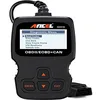
ANCEL AD310 OBD2 Scanner
Plugs into any 1996-or-newer car’s OBD-II port and reads or clears the check-engine light’s trouble codes in seconds — no subscription or app required.
- Best for: quickly checking why a check-engine light is on before you buy or sell
- Why we picked it: reads and clears generic OBD-II codes on any 1996-or-newer vehicle with zero setup
- Main drawback: no live sensor data streaming — for deeper diagnostics you’ll want a step-up scanner
Compare more pre-purchase inspection scanners
 Option 1 MOTOPOWER MP69033
|
 Option 2 FOXWELL NT301
|
 Option 3 Innova 5210
|
As an Amazon Associate we earn from qualifying purchases.
High Vs. Low Mileage
High-mileage cars are usually priced lower and, if service records back it up, can still have plenty of life left — modern engines are built to run well past 150,000 miles with regular maintenance. The tradeoff is a higher chance of needing wear-item repairs soon, like belts, hoses, suspension bushings, and eventually a transmission or major engine service.
Low-mileage cars typically look newer, need fewer immediate repairs, and often still carry more of the factory warranty. The tradeoff is a higher purchase price for the mileage saved, and — less obviously — a car that sat mostly unused can develop its own problems: dried-out rubber seals, a weak 12-volt battery, or fuel-system deposits from sitting for long stretches.
When Mileage Doesn’t Tell the Whole Story
Two cars with the same mileage can have completely different mechanical futures. A commuter car that spent its life on the highway generally sees gentler wear than a delivery vehicle that logged the same miles in stop-and-go traffic, because highway driving keeps the engine at a steady, efficient RPM while city driving means constant heating, cooling, and braking cycles.
Maintenance discipline matters even more than drive type. iSeeCars’ annual Longest-Lasting Cars study, which tracks which vehicles are statistically most likely to reach 250,000 miles, found that a well-maintained vehicle’s odds of hitting that mark are dramatically higher than an average car’s.
“The 2025 iSeeCars Longest-Lasting Cars list features vehicles with between a 9.1% and 39.1% predicted chance of reaching 250,000 miles. With the average car having a 4.8% chance of reaching 250,000 miles, even the lowest-ranked model…is still nearly twice as likely to see that odometer reading.”
Mileage And Maintenance Costs
Higher-mileage cars generally need more frequent repairs simply because more parts are approaching the end of their service life at the same time — timing belts, water pumps, and suspension components all have mileage-based replacement intervals, often clustering around 60,000–100,000 miles.
Budgeting for this matters more than avoiding high mileage altogether. Setting aside even $50–$100 a month for a higher-mileage used car covers most routine wear-item repairs, and a pre-purchase inspection with a scan tool like the one above can flag which of those repairs are coming up soon. Some components, like the 12-volt battery, wear on a roughly fixed timeline regardless of mileage — see how long car batteries typically last for specifics.
Fuel Efficiency
Mileage itself doesn’t directly cause worse fuel economy — a neglected 40,000-mile car with a clogged air filter and underinflated tires can get worse gas mileage than a well-maintained 150,000-mile one. What actually drives fuel economy down over time is deferred maintenance: worn spark plugs, a failing oxygen sensor, or dragging brakes, all of which become more common as a car accumulates miles without regular service.
Before assuming an older, higher-mileage car will cost more at the pump, check when the air filter, spark plugs, and oxygen sensor were last replaced — fixing those often closes most of the fuel-economy gap.
Does Mileage Affect Car Insurance?
Yes, mileage can affect your insurance premium. Insurers price policies partly on estimated annual mileage because more time on the road statistically means more accident exposure. Driving fewer miles going forward — even in a higher-mileage car — can qualify you for a lower rate. Some insurers, including Progressive, offer usage-based programs that price a policy on actual miles driven rather than the odometer’s total lifetime count.
Technology And Mileage
Mileage impacts car value and performance, but higher mileage doesn’t automatically mean more wear and tear than a car deserves for its age. Always weigh mileage alongside maintenance history.
Advancements In Engineering
Newer engineering advancements have made cars last longer. Better materials make engines run smoother, and modern engines are more efficient. These improvements help cars go further with less wear and tear per mile than older designs.
Impact On Longevity
High mileage can still affect a car’s lifespan. Parts like brakes and tires wear out over time regardless of the engine’s condition. Regular maintenance is key to keeping a car running well — a well-maintained car can rack up many miles without major problems.
Mileage Vs. Age
Old cars with low mileage can still be in good shape if they were driven carefully and stored properly. Such cars often need less mechanical maintenance since the engine and drivetrain aren’t as worn. This can save money on repairs, though aged rubber and plastic parts still need checking regardless of mileage.
Newer cars with high mileage may have been used heavily, which can mean more wear and tear and more frequent repairs. But they still benefit from newer technology and safety features, which can make them more reliable day-to-day than an older, low-mileage car. For a breakdown of exactly what mileage counts as “high” for a car’s specific age, see our guide on what is considered high mileage for a car.
Tips For Buyers
Mileage on a car can influence its value and future repairs. Lower mileage often means less wear, but the car’s history and maintenance records matter just as much. If you’re weighing a specific number on the odometer, our guide on how many miles on a car is too many breaks down the lifetime thresholds by vehicle type.
Inspecting The Car
Check the car for any signs of wear. Look at the tires, brakes, and engine — these parts can show how much the car has actually been used. A well-maintained car can last longer, even with high mileage. Always take a test drive and listen for any unusual noises. Feel how the car handles; it can give you a good idea of its condition. Check the service history and ask for receipts or a logbook — this can show whether the car has been taken care of.
Questions To Ask The Seller
- How many owners has the car had?
- Has the car ever been in an accident?
- What is the reason for selling the car?
- Can I see the service records?
- Has the car had any major repairs?
- Is there any warranty left?
- How often was the oil changed?
- Was most of the mileage from highway driving or city/stop-and-go driving?
Frequently Asked Questions
Does High Mileage Affect Car Performance?
Yes, high mileage can affect car performance. Increased wear and tear can lead to decreased efficiency. Regular maintenance is crucial.
Should I Buy A Car With High Mileage?
Buying a high-mileage car can be risky. It’s essential to check its maintenance history. A well-maintained high-mileage car can still be reliable.
What Is Considered High Mileage For A Car?
Generally, over 100,000 miles is considered high mileage. However, this can vary based on the car’s make and model.
How Does Mileage Impact Car Resale Value?
Higher mileage often lowers a car’s resale value. Buyers typically prefer cars with lower mileage for better reliability.
Is Mileage Or Age More Important When Buying A Used Car?
Mileage generally matters more than age. A 3-year-old car driven 60,000 miles has more wear than a 10-year-old car driven 80,000 miles at a slower pace, even though the older car has more calendar years on it. That said, very old low-mileage cars have their own risks — aged rubber seals, hoses, and belts — so check both the odometer and the build year.
How Many Miles A Year Is Considered Normal?
About 12,000 to 14,000 miles a year is considered normal for a typical U.S. driver. Divide a used car’s total mileage by its age to see how it compares — a car well above that pace was likely driven hard or used for commuting or rideshare work, while one well below it may have sat unused for long stretches.
Does High Mileage Affect Car Insurance Rates?
Yes. Many insurers factor in estimated annual mileage when pricing a policy, since more time on the road means more accident exposure. Driving fewer miles going forward, even in a higher-mileage car, can qualify you for a lower rate through usage-based or low-mileage discount programs.
Conclusion
Mileage does matter, but it’s a starting point, not the final answer. A well-documented service history, a clean pre-purchase inspection, and an understanding of how the car was actually driven tell you more than the odometer number by itself. Use the 12,000-mile-a-year benchmark to judge whether a car’s mileage fits its age, then let the inspection and paperwork make the final call.
Products related to this article
Sponsored / affiliate links. As an Amazon Associate I earn from qualifying purchases. I may earn additional commission from eligible campaigns.