Jump Starter vs Battery Charger: Which One to Use?
Use a jump starter for a dead or very low 12V battery when you need the engine running right away. Use a charger for a weak or flat battery that can stay connected for a while. Use a maintainer for vehicles that will be stored for a while. Pick the wrong tool, and you can strand yourself, waste cash, or shorten battery life. This guide shows which one belongs in the trunk, which one stays in the garage, and how to handle jump starts, charging, and long-term storage.
Jump starter vs battery charger: the core trade-off
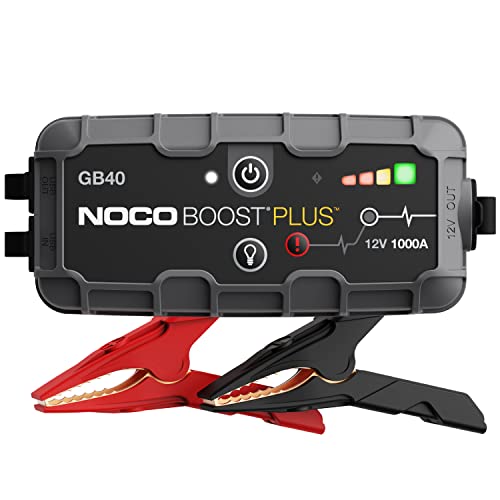
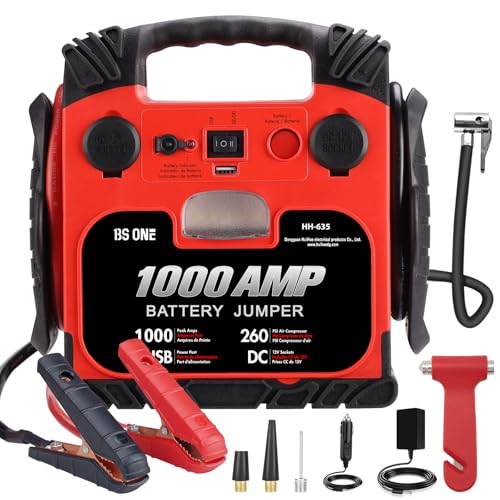
The split is simple. A jump starter gives a short burst of high current so the starter motor can turn the engine over right away. A battery charger puts energy back into the battery over time. One gets you moving. The other handles recovery, maintenance, and storage charging.
That matters because battery failures come in different forms. A battery can be lightly drained, deeply discharged, or simply worn out. A jump starter may get the car running, but it does not repair battery health. A charger can recover a usable battery, but it needs wall power and patience.
| Decision factor | Jump Starter | Battery Charger | Winner |
|---|---|---|---|
| What it does | Provides high cranking current for a short burst | Recharges a battery over time | Tie |
| Power source | Portable battery pack | Mains power | Jump Starter |
| Speed to usable state | Immediate start attempt | Hours, depending on battery condition | Jump Starter |
| Effect on battery health | Does not restore battery health | Can recover a flat but serviceable battery | Battery Charger |
| Best for storage | Emergency use, not long-term storage | Maintenance charging and recovery charging | Battery Charger |
| Roadside convenience | Small, trunk-friendly, self-contained | Requires wall power and more time | Jump Starter |
| Safety aids | Often includes spark protection and reverse-polarity protection | Often includes charging protection features | Tie |
What the table means in practice
If the car is stuck in a parking lot, portability wins. If the car is home in the garage and the battery is flat, charging wins because the battery gets real recovery time. A jump starter is the rescue tool. A charger is the repair and maintenance tool.
Why battery health changes the answer
A weak battery and a dead battery are not the same problem. A weak battery may still accept a charge and return to normal service. A deeply discharged, sulfated, or aged battery may need testing or replacement instead of more charging.
Where a trickle charger or maintainer fits
A trickle charger or maintainer belongs with vehicles that sit for long periods. It keeps an already healthy battery topped up during storage, seasonal downtime, or infrequent use. It is not meant to rescue a car that will not start after being left flat for days.
What a jump starter does and what it cannot do
A jump starter is a portable 12V emergency starting device. It supplies a short blast of high cranking current so the starter motor can turn the engine. Many models also include USB output and an LED flashlight, but those are side features, not the main job.
Peak current and starting current are the spec that matters
For a jump starter, the important number is peak current or starting current, measured in amps. That output has to suit the engine size and whether the vehicle is gasoline or diesel. A small gasoline car needs less starting current than a larger diesel.
As one example, Topdon JumpSurge 3000 delivers 3,000 A starting current and is supported for gasoline engines up to 9 liters and diesel engines up to 7 liters. Noco GB40 is rated at 1,000 A and is suitable for gasoline engines up to 6 liters and diesel engines up to 3 liters.
Battery capacity is not the same as cranking performance
Portable jump starters are also described by battery capacity in mAh or Wh. That tells you how much energy the pack stores, which affects how many starts it can provide per charge. It does not, by itself, tell you how hard the pack can crank an engine.
That mistake leads to bad buys. A large-capacity pack with weak starting current may still struggle on a big engine. A smaller pack with strong current may start the car well but offer fewer attempts before it needs recharging.
Boost mode helps with extremely depleted batteries
Some jump starters include boost mode. That can help when the vehicle battery is so low that the pack’s normal safety logic will not detect it or will refuse to output. It is useful, but it is not a fix for a failed battery.
Why a jump starter can crank an engine but leave the battery flat
The starter pack’s job ends once the engine fires. If the vehicle battery is badly discharged, aged, or internally damaged, the car may start and then fail again on the next attempt. That is the failure case many drivers miss: the jump worked, but the battery still needs charging, testing, or replacement.
What a battery charger does and what it cannot do
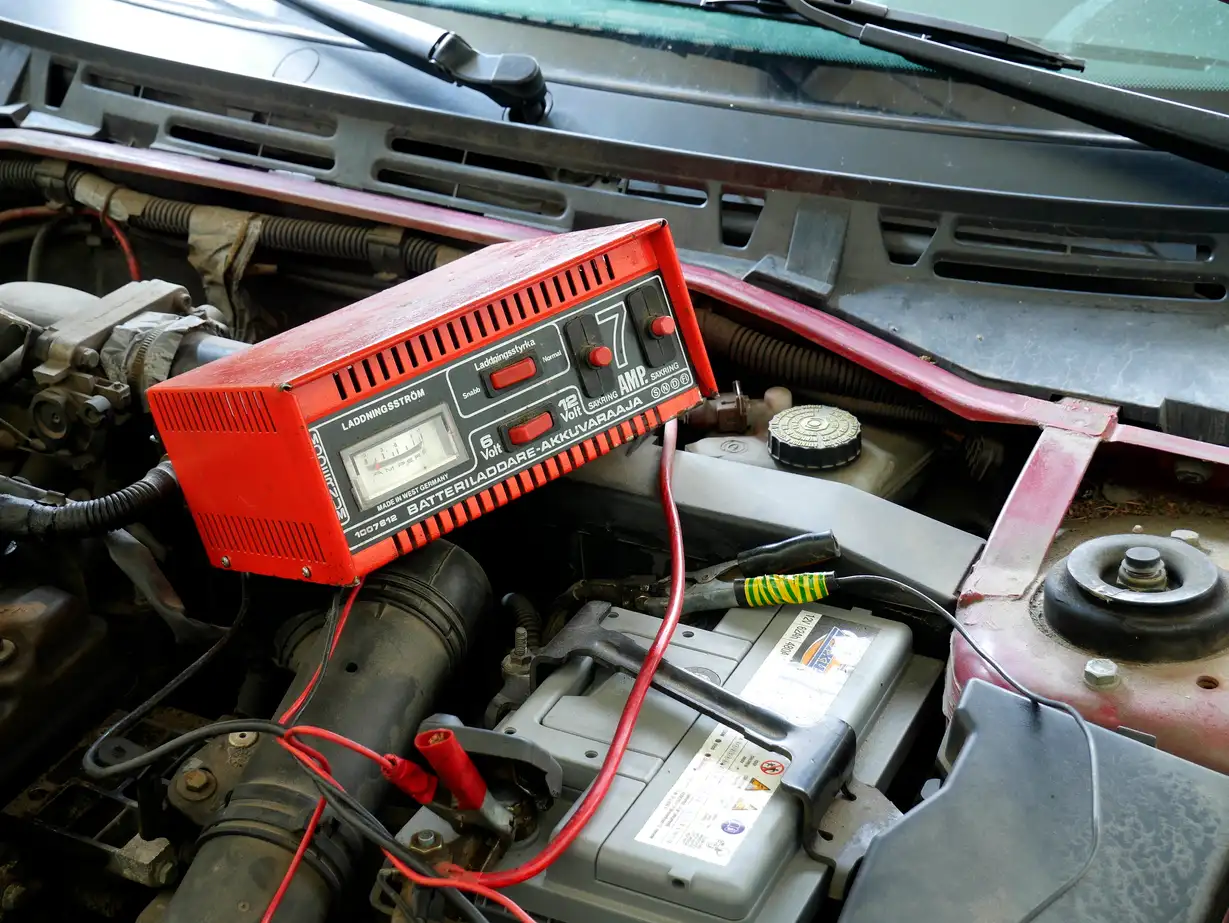
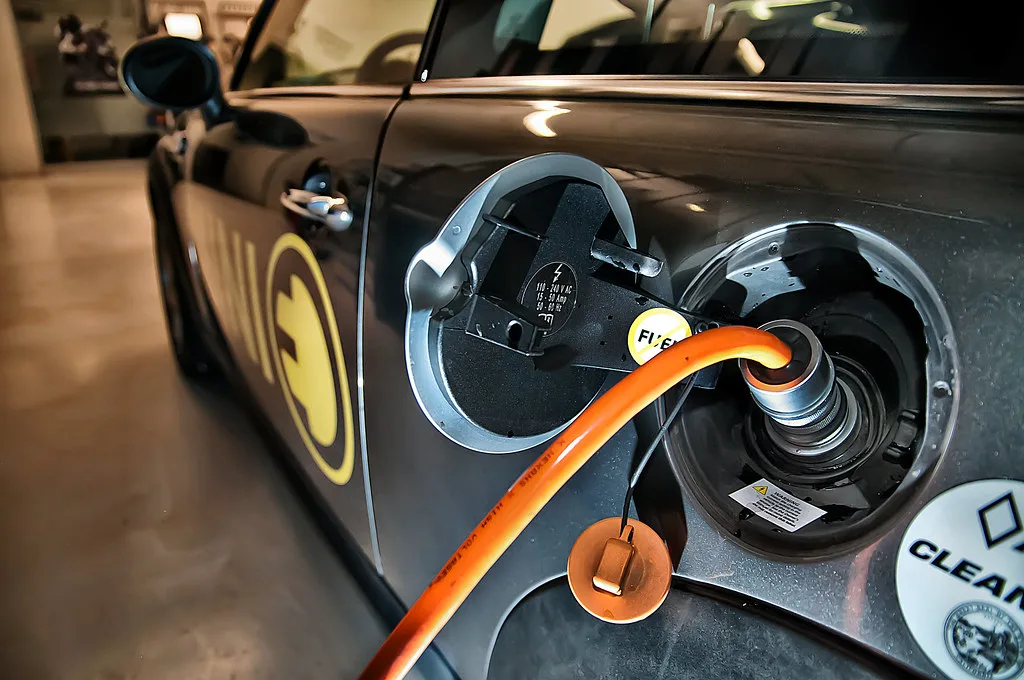
A battery charger recharges a flat battery over time from wall power. It is built for recovery charging, maintenance charging, and storage charging. It is not an instant-start device, and it is not meant to crank the engine by itself.
When charging is the right move
Use a charger when the battery is flat but the car can stay parked for hours. That is the right tool for a battery that was drained by lights, short trips, or sitting too long. It is also the better choice when the battery is weak but not dead enough to need roadside rescue.
When a maintainer is better than a full charger
If the vehicle is parked for weeks or used seasonally, a maintainer is the cleaner fit. It holds the battery at a healthy state without overcharging it. That makes sense for project cars, motorcycles, boats, caravans, and garage queens.
When charging will not save the battery
If the battery is sulfated, heavily aged, swollen, or repeatedly fails after a full charge, replacement may be the right answer. Charging an exhausted battery again and again can waste time and money. Testing should come before more guessing.
Can a jump starter be used as a battery charger?
No, not in the way a battery charger works. A jump starter is built to deliver a short blast for starting, not a controlled charge cycle that restores battery health over time. Its USB output can charge a phone or small device, but that is a different job from charging a 12V vehicle battery.
What USB powerbank outputs can and cannot power
Many jump starters include USB ports, and some include USB-C PD output such as Topdon JumpSurge 3000 with USB-C PD 45W. That is useful for phones, tablets, and some laptops. It does not make the unit a substitute for a proper battery charger.
Why car battery charging and phone charging are different jobs
The vehicle battery is part of the starting and charging system. It needs controlled charging and often longer recovery time. A USB port is only a convenience feature for small electronics, and it should not be treated as a way to revive a dead car battery.
When a jump starter is still useful after the engine starts
After a successful start, the jump starter can stay in the trunk as emergency insurance. Some owners also use it to power small devices, and models like Topdon JumpSurge 3000 add 7 active protection features and IP64 protection. That still does not change its main role: getting the vehicle moving now.
Choose a jump starter if… / choose a battery charger if…
Choose a jump starter when the car is stranded away from mains power and you need a start attempt immediately. Choose a battery charger when the battery is weak or flat at home and you can leave it connected for hours. Choose a maintainer when the vehicle will sit for long periods and the battery should stay topped up.
Choose a jump starter if…
- You want roadside emergency starting in the trunk.
- You drive a commuter car and need a quick rescue before work.
- You own a diesel or larger engine and need to match starting current carefully.
- You want added convenience features like USB output or a flashlight, but only as extras.
Choose a battery charger if…
- The car is parked at home and can stay connected for hours.
- The battery is flat after sitting, short trips, or lights left on.
- You want to recover battery health rather than just start the engine once.
- You are dealing with a seasonal or stored vehicle that needs maintenance charging.
Choose replacement instead of either tool if…
- The battery will not hold a charge after recovery charging.
- The vehicle starts only after a long drive, then fails again the next morning.
- The battery is visibly damaged, swollen, or repeatedly tests weak.
Six real-world battery scenarios: which tool to use
These are the cases drivers run into most often. The right answer depends on whether the battery needs a start, a recovery charge, or long-term maintenance. If the battery looks old or keeps failing, test it before buying another tool.
| Scenario | Correct tool | Expected time to usable state | When to test or replace the battery |
|---|---|---|---|
| Commuter car will not start before work | Jump starter | Minutes | Test the battery within 24 hours; replace if it cannot hold charge |
| Weekend car parked for three weeks | Battery charger | Several hours | Test after a full charge; replace if voltage drops quickly again |
| Winter diesel with a weak 12V battery | Battery charger first, jump starter only for emergency start | Hours for charging; minutes for emergency start | Test before cold weather returns; replace if cranking stays slow |
| Motorcycle in storage | Trickle charger or maintainer | Ongoing maintenance | Test at the start of the riding season |
| Car left with the lights on overnight | Jump starter if leaving immediately; charger if parked at home | Minutes or several hours | Test after recovery; replace if it repeatedly fails after a full charge |
| Battery starts only after a long drive but fails again the next morning | Battery test, then charger or replacement | Hours if recoverable | Test immediately; replace if sulfated or if it will not retain charge |
Commuter car that will not start before work
This is jump starter territory. The driver needs a fast start and probably does not have time to wait for charging. If the car needs repeated jumps, the battery should be tested soon because the pack is only masking the fault.
Weekend car parked for three weeks
This is a charger job. A flat battery from sitting is often recoverable if it has not been abused too many times. If the car is seasonal, a maintainer is better than repeating full discharge and recharge cycles.
Winter diesel with a weak 12V battery
Cold weather raises the demand on the starting system, and diesel engines usually need more starting current. A charger is the better first move at home. Keep a jump starter for emergencies, but match it to the engine size and diesel duty before buying.
Motorcycle in storage
A maintainer is the correct tool here. Motorcycles spend more time parked than running, and a low-current maintainer keeps the battery ready without constant supervision. That is better than waking it up from a dead state each season.
Car left with the lights on overnight
If the driver is stranded, use a jump starter. If the car is parked at home, the charger is the cleaner choice because the battery may need several hours of recovery. If this happens often, the battery or charging system should be checked.
Battery starts only after a long drive but fails again the next morning
That usually means the battery is tired, sulfated, or no longer holding charge. A charger may buy time, but replacement often ends the cycle. If the battery cannot stay healthy after a proper charge, stop treating it as a simple discharge problem.
Frequently asked questions
jump starter vs battery charger
A jump starter is for immediate engine starting. A battery charger is for restoring battery energy over time. If the car is stranded, use the jump starter. If the car can sit for hours and the battery needs recovery, use the charger. They solve different problems.
jump start vs battery charger
Jump starting gets the engine cranking now, while charging rebuilds battery state more slowly. The jump start is the roadside fix. The charger is the home fix. If the battery fails again after a jump, that points to a deeper battery or charging-system issue.
jump box vs battery charger
A jump box is another name for a portable jump starter. It uses internal battery power to deliver starting current, not a full charge cycle to the vehicle battery. A battery charger plugs into wall power and works over time. They are not interchangeable.
can a jump starter be used as a battery charger
Not for the vehicle battery itself. A jump starter can provide USB power for phones and other small electronics, but that is a separate function. It can help start the car, then maybe charge a phone, but it cannot restore a flat 12V battery like a proper charger.
jump starter vs trickle charger
A jump starter is for emergency starts. A trickle charger or maintainer is for keeping a healthy battery topped up during storage or long parking periods. If the vehicle sits for weeks, a maintainer is the better fit. If the vehicle will not start right now, the jump starter wins.
is a battery charger the same as a jump starter
No. A battery charger restores battery energy over hours, while a jump starter gives a short burst of current to crank the engine. One needs wall power and time. The other is portable and built for quick rescue. The job they do is different.
noco jump starter vs battery charger
A Noco jump starter, such as the GB40 or GBX155 line, is still a jump starter: it is built for starting current, not battery recovery. The charger category remains the right tool for recharging a weak or flat battery at home. Brand name does not change the function.
Products related to this article
Sponsored / affiliate links. As an Amazon Associate I earn from qualifying purchases. I may earn additional commission from eligible campaigns.