Does The AC Make Your Car Leak? The Essential Facts
Yes, your car’s AC is designed to make your car leak a small puddle of plain water, which is completely normal. This is just condensation from the system working hard to cool you down. However, if the fluid is colored, oily, or has a distinct smell, it could signal a more serious problem that needs your attention.
It’s a hot day. You’ve been running your car’s air conditioner to stay cool. You park, get out, and notice a small puddle forming under your car. Your heart might skip a beat. Is something broken? Is this going to be an expensive repair? Don’t worry! More often than not, this little puddle is a perfectly normal sign that your AC is doing its job correctly.
I’m Md Meraj, and I’m here to help you understand what’s happening with your car in simple, easy-to-follow terms. We’ll look at why your AC creates water, how to tell if the leak is normal or a sign of trouble, and what simple steps you can take to check it yourself. Let’s get you feeling confident about what’s going on under your vehicle.
Is a Puddle Under Your Car a Bad Sign? Understanding Normal AC Leaks
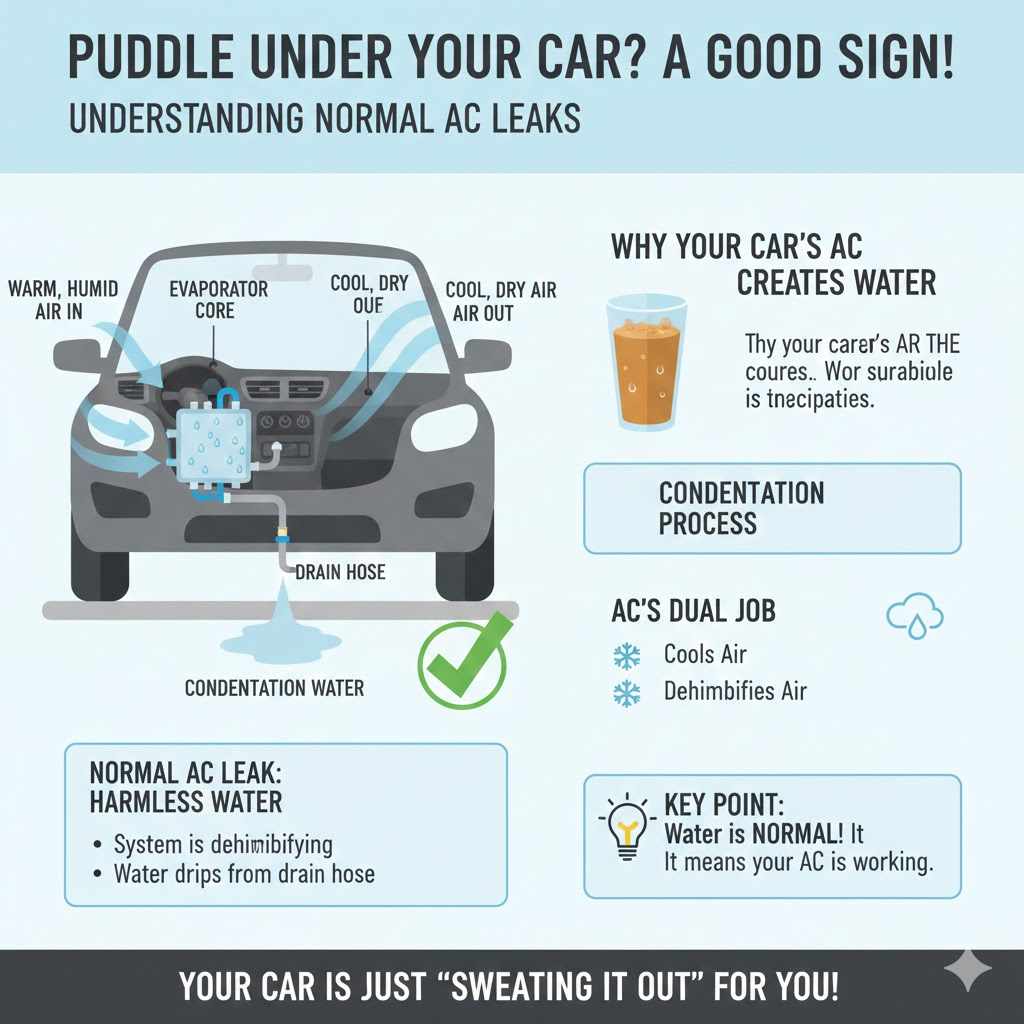
Seeing any kind of liquid under your car can be alarming. We’re often taught that leaks are bad news. But in the case of your air conditioning system, a small puddle of water is usually a very good sign. It means the system is successfully removing heat and humidity from your car’s cabin, which is exactly what it’s supposed to do.
Think of it like a cold glass of iced tea on a warm, humid day. You’ll notice little beads of water forming on the outside of the glass. This is condensation. Your car’s AC system works in a very similar way. It has a component called an evaporator core, which gets extremely cold. As the warm, humid air from inside your car blows over this cold core, the moisture in the air condenses into water, just like on your iced tea glass.
Why Your Car’s AC Creates Water in the First Place
This process is essential for making you comfortable. The AC doesn’t just cool the air; it also dehumidifies it. That’s why running the AC can help clear up a foggy windshield even on a cool, rainy day.
The water that collects on the evaporator core needs to go somewhere. Car manufacturers designed a simple solution: a small rubber or plastic drain hose that leads from the evaporator housing (usually located behind the dashboard) down through the floor of the car. This hose allows the condensed water to safely drip out onto the ground underneath your vehicle, typically near the front passenger side area. So, that harmless puddle is just your car sweating it out for you!
Normal Drip or Serious Leak? How to Tell the Difference
The key to peace of mind is knowing how to distinguish the normal AC water drip from a leak that signals a real problem. The good news is that it’s usually very easy to tell them apart. Different fluids in your car have unique colors, smells, and textures. A quick and careful inspection can tell you almost everything you need to know.
Before you get worried, take a moment to observe the puddle. What color is it? Does it have a smell? How does it feel? The table below is your cheat sheet for identifying common car fluids. The most important fluid to look for in this situation is water, which should be clear, odorless, and thin.
| Fluid Type | Color | Smell | Texture | What It Could Mean |
|---|---|---|---|---|
| Normal AC Condensation | Clear | Odorless (like water) | Thin, like water | Perfectly Normal. Your AC is working correctly. |
| Coolant / Antifreeze | Bright Green, Pink, Orange, or Blue | Sweet, syrupy smell | Slightly slimy or slick | A leak in the cooling system (radiator, hoses, water pump). This needs attention soon. |
| Engine Oil | Light Brown to Black | Oily, sometimes burnt | Slippery and thick | An engine oil leak from a gasket, seal, or drain plug. Should be checked by a mechanic. |
| Brake Fluid | Clear to Yellowish-Brown | Slightly oily, distinct chemical smell | Very slippery, similar to oil | Serious Safety Issue. A brake fluid leak is dangerous. Do not drive the car. Get it towed. |
| Transmission Fluid | Red or Brown | Oily, slightly sweet or tart | Slippery and oily | A leak from the transmission seals or lines. Needs professional diagnosis. |
| Power Steering Fluid | Red or Light Brown | Slightly burnt, like marshmallow | Thin and oily | A leak in the power steering system. Can make steering difficult. |
Your 3-Step Guide to Inspecting the Puddle Under Your Car
Feeling empowered to check things yourself is a great first step in car care. This simple, three-step process will help you confidently determine what kind of fluid is leaking from your car. You don’t need any special tools—just a few minutes and a piece of paper.
Step 1: Observe the Puddle From a Distance
First, take a look at where the puddle is located. A normal AC drip is almost always located towards the front of the car, usually a bit to the passenger side of the center. If the puddle is directly under the engine in the front-center, it could be oil. If it’s near one of the wheels, it might be brake fluid. Just noting the location can give you a big clue.
Step 2: The Paper Towel Test
This is the most effective and safest way to identify the fluid. Don’t use your bare hands, as some car fluids can be harmful. Grab a clean, white paper towel or a piece of cardboard and slide it under the leak to catch some of the drips. If you can’t wait for it to drip, you can gently dab the paper in the existing puddle.
Once you have a sample, observe it closely:
-
- Is it clear and odorless? Congratulations, it’s just water from your AC. You have nothing to worry about.
- Is it brightly colored (green, pink, orange)? This is almost certainly coolant. Your car is losing the fluid that keeps the engine from overheating.
- Is it dark brown or black and oily? This is engine oil. You should check your oil level immediately.
- Is it reddish and oily? This is likely transmission or power steering fluid.
Step 3: Check Your Car’s Fluid Levels
If the paper towel test showed anything other than water, your next step is to check the fluid reservoirs under the hood. This can confirm your suspicions. Make sure your car is turned off, cool, and parked on a level surface before you begin.
- Engine Oil: Pull out the dipstick, wipe it clean, re-insert it fully, and pull it out again. Check the level against the “Full” and “Add” marks.
- Coolant: Look for the translucent plastic coolant reservoir. It will have “Min” and “Max” lines. The coolant level should be between them. Never open the radiator cap on a hot engine.
- Brake Fluid: The brake fluid reservoir is usually a small, clear container on the driver’s side. It also has “Min” and “Max” lines.
If any of these fluids are low, it confirms you have a leak in that specific system. Topping it off might be a temporary fix, but you should schedule an appointment with a mechanic to find and repair the source of the leak.
When an AC Leak Is More Than Just Water
While water dripping is normal, there are times when your AC system can have a real, problematic leak. This usually involves the refrigerant, which is the gas/liquid that does the actual cooling. A refrigerant leak is not something you’ll see as a puddle, but it creates noticeable symptoms.
Identifying a Refrigerant Leak
Refrigerant (often known by brand names like Freon) is a chemical that circulates through your AC system. When it leaks, your AC will stop blowing cold air. This is the #1 sign of a refrigerant problem.
Here’s how to spot a potential refrigerant leak:
- AC Blows Warm Air: If your AC is on full blast but only warm or slightly cool air is coming out, you are likely low on refrigerant.
- Oily Residue Around AC Lines: The refrigerant in your car is mixed with a special type of oil to lubricate the AC compressor. If there’s a leak, this oil will escape with the refrigerant, leaving a greasy film on AC hoses, fittings, or components under the hood.
- Hissing Sounds: You might hear a faint hissing sound from the dashboard or engine bay when the AC is running, which could be refrigerant escaping from a crack or bad seal.
Refrigerant leaks are bad for both your car and the environment. Most modern car refrigerants are regulated substances. According to the U.S. Environmental Protection Agency (EPA), releasing them into the atmosphere is harmful. That’s why these leaks must be repaired by a certified professional who has the equipment to safely handle and recharge the system.
Common Culprits: What Causes Abnormal AC Leaks?
If you’ve determined your leak isn’t just water, or if water is showing up inside your car, there are a few common causes. Let’s explore the most likely suspects, starting with one you might be able to fix yourself.
The Most Common Issue: A Clogged AC Drain Hose
This is by far the most frequent “abnormal” AC leak. Remember that drain hose we talked about? Over time, it can get clogged with dirt, leaves, insects, or other debris. When the hose is blocked, the condensation water has nowhere to go. It backs up in the evaporator housing behind your dashboard.
Eventually, this water will find another way out—usually by overflowing and leaking onto the floor of your car, typically on the passenger side. If you suddenly find a wet carpet or a musty, mildew smell inside your car, a clogged drain hose is the first thing you should suspect.
How to Find and Unclog Your AC Drain Hose (A Simple DIY Fix)
Fixing a clogged drain hose is a great beginner-friendly DIY task that can save you a trip to the mechanic. Here’s a simple guide:
- Locate the Drain Hose: The hose usually pokes out from the vehicle’s firewall in the engine bay, on the passenger side. It often looks like a small, black rubber elbow pointing downward. In some vehicles, you may need to access it from underneath the car.
- Safety First: Make sure your car is parked securely on a level surface with the parking brake on. If you need to get underneath, use jack stands for safety—never rely on a jack alone.
- Clear the Blockage: You can often clear the clog with a simple tool. A piece of stiff wire (like a straightened coat hanger, but be gentle not to puncture the hose) or a blast of compressed air can dislodge the debris.
- Confirm It’s Clear: Once you think it’s clear, run your AC for a few minutes. You should see water start to drip freely from the hose onto the ground. A sudden gush of water is a good sign you’ve cleared a significant blockage.
Other Potential AC System Problems
If the drain hose isn’t the issue, the problem might be more complex and likely requires a professional. These issues often involve leaks of refrigerant, not water.
- Leaking Evaporator Core: The evaporator core itself can corrode and develop pinhole leaks. This is an expensive repair because the entire dashboard usually has to be removed to access it.
- Damaged O-Rings and Seals: Your AC system has many connection points sealed with small rubber O-rings. Over time, these can dry out, crack, and leak refrigerant.
- Corroded Lines or Hoses: The metal lines and rubber hoses that carry refrigerant can be damaged by road salt, debris, or simple aging, leading to leaks.
- Leaking Compressor Shaft Seal: The AC compressor is the heart of the system. Its main shaft has a seal that can wear out and become a major source of refrigerant leaks.
How Much Does It Cost to Fix an AC Leak?
The cost of fixing an AC leak can vary dramatically, from a simple, free DIY fix to a repair bill that runs over a thousand dollars. It all depends on what is leaking and where it is located.
Here’s a breakdown of potential costs to give you a better idea of what to expect.
| Type of Repair | Typical Cost (Professional Repair) | DIY Difficulty | Notes |
|---|---|---|---|
| Unclogging AC Drain Hose | $75 – $150 | Easy | Often a simple labor charge. Many car owners can do this themselves for free. |
| AC System Evacuate & Recharge | $150 – $300 | Advanced (Requires special equipment) | This is needed after any repair that opens the refrigerant system. It finds small leaks and refills the refrigerant. |
| Replacing a Leaky Hose or Line | $200 – $500 | Moderate to Advanced | Cost depends on the location and accessibility of the hose. |
| Replacing O-Rings or Seals | $100 – $400 | Moderate | The parts are cheap, but labor to access them can add up. |
| Replacing AC Compressor | $800 – $1,500+ | Advanced | A major repair involving an expensive part and significant labor. |
| Replacing Evaporator Core | $1,000 – $2,000+ | Very Advanced | The part isn’t always expensive, but the labor is very high due to dashboard removal. |
Simple Tips to Keep Your Car’s AC System Healthy
A little preventive maintenance can go a long way in preventing costly AC repairs down the road. You don’t have to be a mechanic to keep your system in good shape.
- Run Your AC Regularly: Even in the winter, run your AC for about 10 minutes at least once a month. This circulates the refrigerant and oil, which keeps the seals lubricated and prevents them from drying out and cracking.
- Use the Recirculation Button Wisely: On very hot days, using the “Recirculate” setting helps the AC cool the cabin faster and reduces strain on the system. However, on long trips, switch back to fresh air occasionally to prevent the air from becoming stale.
- Keep the Condenser Clear: The AC condenser looks like a thin radiator and is located at the very front of your car. Keep it clear of leaves, bugs, and road debris by gently hosing it off occasionally. Good airflow is essential for efficient cooling.
- Replace Your Cabin Air Filter: A clogged cabin air filter restricts airflow, making your AC system work harder. Replace it according to your vehicle’s maintenance schedule, or about once a year. This is another easy and cheap DIY job.

Frequently Asked Questions (FAQ)
Why is my car leaking water on the passenger side?
This is the most common sign of a normal AC system at work. The AC drain hose is typically located on the passenger side of the vehicle, so this is where the condensation drips out. If the water is inside the car on the passenger floor, it means the drain hose is likely clogged.
Can a car AC leak cause overheating?
No, a normal water leak from the AC will not cause your car to overheat. However, if the fluid you see is coolant (usually green, pink, or orange), then you have a cooling system leak. This type of leak absolutely can and will cause your engine to overheat if not fixed promptly.
Is it safe to drive with an AC refrigerant leak?
While it’s not immediately dangerous to you in the way a brake fluid leak is, it’s not a good idea. The AC system will stop working, which can be uncomfortable and unsafe in extreme heat. More importantly, leaking refrigerant is bad for the environment, and the lack of lubricating oil can cause expensive damage to the AC compressor if you continue to run it.
How much water is a normal amount for an AC to leak?
The amount of water can vary greatly depending on the weather. On a very hot and humid day, your AC works much harder and can produce a surprisingly large puddle of water after you park. On a dry day, you may see only a few drips or none at all. A steady drip or a small puddle after driving is completely normal.
Why does my car AC smell bad when I turn it on?
A musty or mildew-like smell is often caused by mold or bacteria growing in the dark, damp environment of the evaporator core and drain pan. This problem can be worse if your drain hose is partially clogged and not draining efficiently. There are special automotive AC cleaning products that can help eliminate the odor.
Does running the AC use more gas?
Yes, it does. The AC compressor is run by the engine via a belt, which puts an extra load on it. This requires the engine to burn more fuel. The effect is more noticeable in city driving and less so on the highway. However, for most modern cars, the impact on fuel economy is relatively small.
Can I just refill the AC refrigerant myself with a can from the store?
While DIY refrigerant recharge kits are available, they are often a temporary fix and can sometimes cause more harm than good. If your system has a leak, the new refrigerant will just leak out again. Overcharging the system with too much refrigerant can also damage the compressor. It’s best to have a professional diagnose the leak and fill the system to the correct pressure.
Final Thoughts: Stay Cool and Confident
Seeing a puddle under your car doesn’t have to be a moment of panic. Now you know that most of the time, especially on a hot day, it’s just your air conditioner doing its job perfectly. That little pool of clear water is a sign that you’re staying cool and comfortable inside.
By learning to identify the difference between normal condensation and a real fluid leak, you’ve taken a huge step toward becoming a more confident car owner. Remember the simple paper towel test—it’s your best friend for quickly diagnosing a leak. And if you do find a problem like a clogged drain hose, you have the knowledge to tackle it yourself or explain the issue clearly to a mechanic.
Your car communicates with you in many ways. Understanding what it’s trying to tell you saves you stress, money, and time. So, the next time you see that puddle, take a calm look, remember what you’ve learned here, and enjoy the cool, comfortable ride.