Durable Car Audio Noise Suppressors: Isolator vs. Power Filter
Durable car audio noise suppressors come in two types: RCA ground loop isolators for hum and alternator whine, and 12V power filters for noise on the power line — using the wrong one fixes nothing. A mismatched pick wastes money, and cheap isolators can shave bass response or add distortion. This guide covers how to tell the two apart, how to install one, and which durable models hold up.
Insert your Affiliate Disclosure reusable block here.
Ground Loop Isolator vs. Power Filter: Which Noise Suppressor Do You Need?
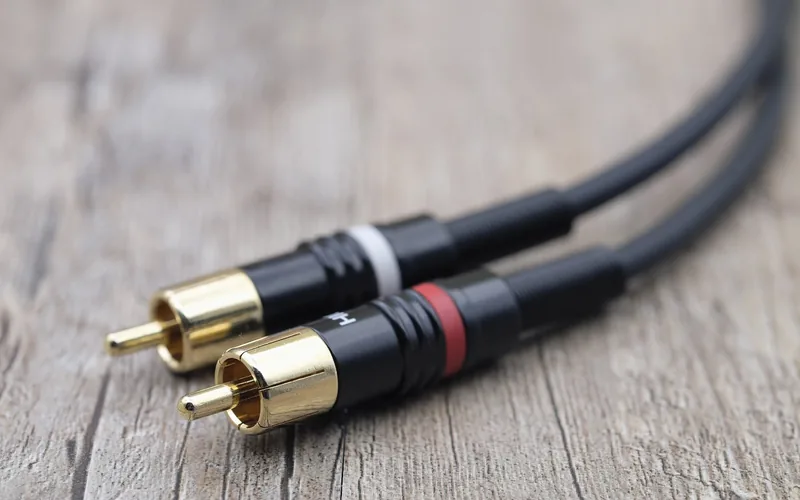
An RCA ground loop isolator is a small transformer-based device that breaks the electrical ground connection between your head unit and amplifier while still passing the audio signal. Because DC current can’t cross a transformer, it stops the hum and buzz that happen when the source and speakers share slightly different ground points — the classic cause of alternator whine that rises and falls with engine RPM.
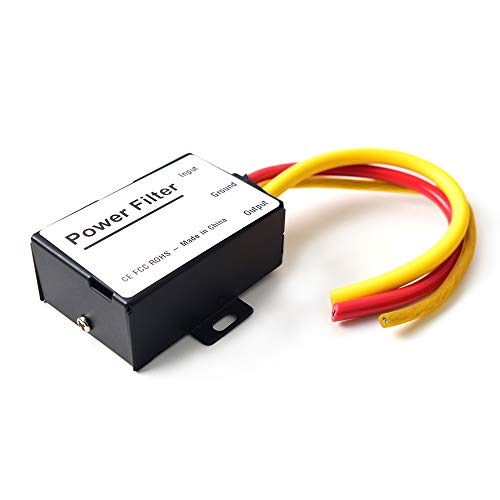
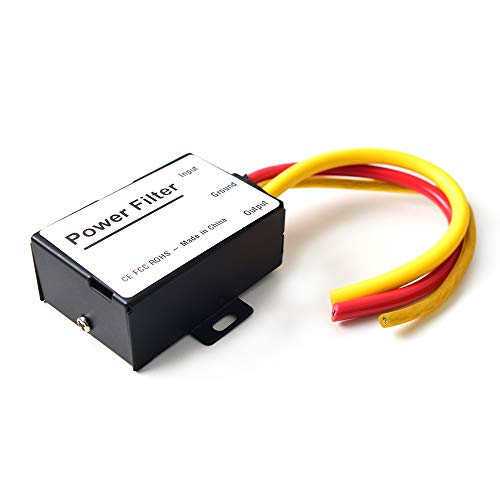
A 12V power filter is a different device entirely. It installs inline on the vehicle’s 12V power feed — between the battery or fuse box and the stereo or amplifier — and filters electrical interference (EMI) that’s riding on the power line itself, not the signal cables. If your noise is still there even with the RCA source unplugged, a power filter is the fix, not an isolator.
Use this table to match your symptom to the right device before you buy anything:
| Symptom | Best Fix | Where It Connects | Typical Price |
|---|---|---|---|
| Hum or buzz that rises and falls with engine RPM | RCA ground loop isolator | Inline on the RCA cables, between head unit and amp | $9–$26 |
| Noise present even with the RCA source unplugged | 12V power filter | Inline on the 12V power feed to the stereo or amp | $11–$20 |
| Hum only when headlights, A/C, or charging ports are on | Try the isolator first, then the power filter | RCA path or power line, depending on the source | $9–$26 |
| Noise unaffected by unplugging any electrical accessory | Not a noise-suppressor problem — check speaker wiring and chassis grounds first | N/A | N/A |
Is Alternator Whine the Same Thing as a Ground Loop?
Not exactly. A true ground loop happens when two components in the same system are grounded at different points, creating a small voltage difference that gets amplified as hum. Alternator whine is technically noise injection — interference from the charging system finding its way into the signal path — but it shows up the same way a ground loop does and responds to the same fix. That’s why an RCA ground loop isolator is still the right first thing to try for a whine that tracks engine RPM, even though the two problems aren’t identical under the hood.
How to Install an RCA Ground Loop Isolator
Installing a ground loop isolator takes about 15 minutes and only requires basic hand tools. Here’s the process:
- Turn off the stereo and disconnect the battery: Shut down the audio system, then disconnect the negative battery terminal so you’re not working on a live circuit.
- Locate the amplifier’s RCA inputs: Find where the RCA cables from the head unit (or line output converter) plug into the amplifier.
- Unplug the RCA cables from the amplifier: Disconnect them at the amp side only — leave the head-unit end connected.
- Plug the RCA cables into the isolator’s input side: Match left and right channels to their color-coded jacks.
- Run a new short RCA cable from the isolator’s output to the amplifier: Most isolators include this cable; keep the run as short as possible.
- Ground the isolator if it requires one: Some models self-ground through the RCA shield; others need a wire run to a bare metal chassis point or the amp’s negative terminal — check the instructions that came with your specific unit.
- Reconnect the battery and test: Play music at a normal volume and rev the engine to confirm the whine is gone.
A 12V power filter installs differently — it doesn’t touch the RCA cables at all. Instead, its three leads wire inline on the power feed: one to the battery or fuse box (12V+), one to the power wire going into the stereo or amp, and one to a bare metal ground point. Because it’s treating power-line noise rather than signal-path noise, don’t substitute it for an isolator if your symptom is RPM-linked whine on the RCA path — see the table above to confirm which device matches your noise before wiring anything in.
Our Picks: Durable Car Audio Noise Suppressors
These four picks cover both device types from the table above — RCA ground loop isolators for signal-path noise, and 12V power filters for noise on the power line.
Best Ground Loop Isolator Pick
RECOIL MGLI 2-Channel RCA Ground Loop Noise Isolator
A permalloy-transformer RCA isolator built to cut alternator whine and hum between a head unit and amplifier.
- Best for: Alternator whine or hum between a head unit and amplifier
- Why we picked it: Uses high-fidelity permalloy transformers for a flatter frequency response than typical isolators, and the listing is upfront that it’s not a fix for radio static or antenna noise
- Main drawback: Only treats RCA-path noise — won’t help if the noise is coming through the 12V power line instead
Compare more noise suppressor options
 Power Filter Pick Car Power Filter EMI Noise Ground Loop Isolator Suppressor, 12V
|
 Brand-Name Pick BOSS Audio B25N Car Sound Noise Filter, Ground Loop Isolator
|
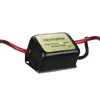 High-Power Pick InstallBay by Metra 30 Amp High Power Noise Filter
|
As an Amazon Associate we earn from qualifying purchases.
Does a Noise Suppressor Actually Hurt Sound Quality?
Sometimes, yes — and it’s worth knowing before you install one. A ground loop isolator works by passing your audio signal through a transformer, and cheap transformers don’t pass every frequency equally well. The tradeoff shows up most in the bass region, where a poor-quality isolator can measurably thin out low end even while it successfully kills the hum.
📊 Automotive noise testing under CISPR 25 covers conducted emissions from 150 kHz to 108 MHz — the same band that carries AM/FM radio and GPS reception, which is why alternator and ignition noise so reliably lands inside the frequencies your car stereo picks up. Source: TÜV SÜD, CISPR 25 Automotive Component EMC Testing
“Made from High Fidelity Permalloy Transformers to minimize signal loss, unlike other old ground loop isolators with HUGE DISTORTION under 100Hz.”
That quote is a manufacturer describing its own part, but it points at a real, verifiable difference between isolator models: the transformer inside is what determines whether you lose bass response along with the hum. If you’re running a subwoofer off the same signal path, that tradeoff matters more than it does for a single dash speaker — see our guide on wiring a subwoofer in your car for how the RCA path feeds into a sub-specific amp.
A 12V power filter doesn’t touch the audio signal at all, so it carries none of this risk — another reason to confirm which device your symptom actually calls for before you buy. If your noise problem started right after a fresh install, it’s also worth double-checking the rest of the wiring; our guide to wiring car audio the right way covers the grounding mistakes that cause hum in the first place.
Frequently Asked Questions
What is a car audio noise suppressor?
A car audio noise suppressor is either an RCA ground loop isolator or a 12V power filter — two different devices that both reduce unwanted electrical noise in a car stereo system, but that fix different noise sources.
What’s the difference between a ground loop isolator and a power line noise filter?
A ground loop isolator installs on the RCA signal cables between your head unit and amplifier and fixes hum caused by mismatched grounds. A power line noise filter installs inline on the 12V power feed and fixes electrical interference riding on the power circuit itself. They target different points in the system and aren’t interchangeable.
How does a ground loop isolator work?
It contains a small transformer with two coils separated by a magnetic core. Your audio signal crosses from the input coil to the output coil as a magnetic field, with no direct electrical connection between the two sides. Because DC current can’t pass through a transformer, the ground loop that was causing the hum gets broken along with it.
Is alternator whine the same as a ground loop?
Not technically. A ground loop is a mismatched-ground voltage difference; alternator whine is noise injection from the charging system into the signal path. They sound the same, both track engine RPM, and both respond to an RCA ground loop isolator — so in practice, treat them the same way.
Will a ground loop isolator hurt my sound quality?
It can, especially in the bass region, if the isolator uses a low-quality transformer. Isolators built with better transformer cores (permalloy is one example) keep the frequency response flatter. This tradeoff is one more reason to confirm you actually have a ground loop problem, rather than installing an isolator as a guess.
Are noise suppressors easy to install?
An RCA ground loop isolator is one of the easier car audio installs — it plugs inline on cables you already have and takes about 15 minutes. A 12V power filter is slightly more involved since its three wires connect to the battery feed, the stereo’s power wire, and a ground point rather than plugging into an existing cable.
Do noise filters work with all car stereos?
Most work with any car stereo, amplifier, or subwoofer setup that uses standard RCA connections or a 12V power feed. The exception is aftermarket 3.5mm auxiliary setups, which need an isolator sized for that connector rather than RCA — check our guide on why 3.5mm AUX isn’t working in a car stereo if that’s your specific setup.
Conclusion
The fastest way to fix car audio noise is matching the device to the symptom: an RCA ground loop isolator for hum and alternator whine that tracks engine RPM, a 12V power filter for noise that’s still there with the RCA source disconnected. Install the wrong one and you’ll spend $10–$25 without fixing anything. If your noise doesn’t clear up after trying the right device, the problem is likely in the wiring itself — see our guide on getting rid of engine noise in a car stereo fast for the next troubleshooting steps.
Products related to this article
Sponsored / affiliate links. As an Amazon Associate I earn from qualifying purchases. I may earn additional commission from eligible campaigns.