Embracing Simplicity in a Car-Centric Lifestyle Guide
Keep one job per cabin zone, cap loose items to a small number, and reset the car at each fuel stop so it returns to ready state quickly. Skip that, and the cabin becomes a rolling junk drawer, which wastes time, adds stress, and makes simple tasks harder. This guide shows how to set up storage, routines, and reset points so your car stays functional and calm.
Why a simpler car setup works
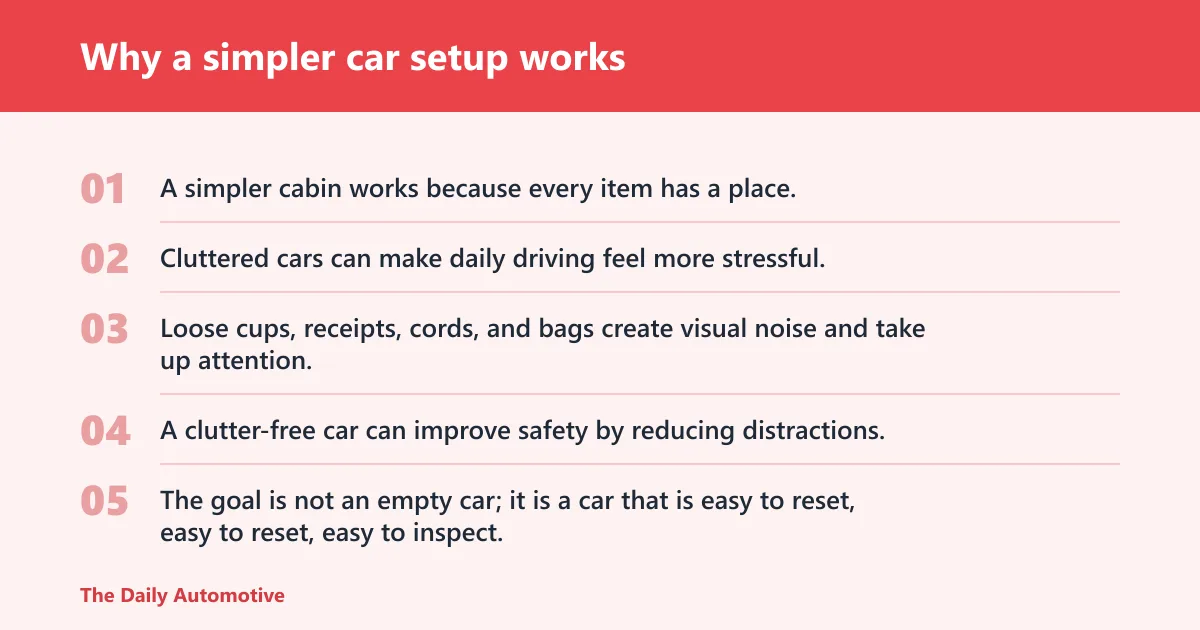


A simpler cabin works because every item has a place, fewer objects move around the interior, and you spend less time searching while driving. Cluttered cars can make daily driving feel more stressful, while a decluttered car supports a calmer, more intentional routine.
That matters in real use. Loose cups, receipts, cords, and bags create visual noise and take up attention. A clutter-free car can improve safety by reducing distractions, and a clutter-free car can make cleaning and maintenance easier.
What simplicity should never sacrifice
Simplicity should not remove access. The goal is not an empty car; it is a car that is easy to reset, easy to inspect, and ready for ordinary needs. Keep emergency gear reachable, paperwork separated, and tools stored where you can get them without unloading half the trunk.
Minimalism can improve organization by giving items designated places. In a car, that means one container for paperwork, one for roadside items, one for seasonal gear, and a hard limit on loose cargo in the cabin.
What should stay in your car every day?
Keep the items that you would need on an ordinary day, plus the gear that protects you when a trip goes wrong. That usually means core emergency tools, roadside basics like a spare tire and jack, and only the seasonal items that are currently useful where you drive.
Core emergency gear
The essential kit should include jumper cables, a first aid kit, a flashlight, and other emergency items such as flares, as appropriate. Those items are mentioned as the baseline because they cover common roadside problems without filling the cabin with duplicates or specialty tools.
Roadside basics like the spare tire and jack
A spare tire and jack are standard roadside essentials. Keep them accessible, secured, and checked as part of routine maintenance. If the jack or wrench is buried under shopping bags, it is not really ready.
Seasonal items to rotate in and out
Water, a blanket, an ice scraper, gloves, a charger, or a sun shade should rotate by season and climate. Keep only what is plausible for the next few weeks. Winter driving often calls for an ice scraper and blanket; hot-weather driving can justify extra water and a phone charger.
Say your car carries two reusable grocery bags, a stroller, a jumper pack, a gym bag, and a tote of winter gear. That is already more than one zone can hold cleanly. Move the winter gear to the trunk bin, keep the stroller folded in one fixed spot, and return the jumper pack to the emergency kit after use.

How do you decide what stays and what goes?

Use a few filters: frequency of use, seasonality, and safety priority. Keep items you use often, rotate items that matter only in certain weather, and remove anything that has no clear purpose. If an object fails all three tests, it does not belong in the car.
The keep, store, rotate, remove decision rule
- Keep: Used most days, needed quickly, or tied to safety.
- Store: Needed sometimes, but not every trip.
- Rotate: Seasonal or climate-specific items that should change over time.
- Remove: Trash, duplicates, dead electronics, and one-off carryouts that no longer have a job.
When two items do the same thing, keep the better one and remove the duplicate from the vehicle. Two umbrellas, three charging cables, and a stack of receipts are clutter, not preparedness.
One-page inventory matrix for a low-clutter car
This matrix gives every common item a job. Use it once, then review it after school runs, grocery trips, or trips to the hardware store, when clutter usually sneaks back in.
| Item | Frequency of use | Seasonality | Safety priority | Action | Best storage spot |
|---|---|---|---|---|---|
| Registration and insurance paperwork | Rare | Year-round | High | Keep | Glove compartment organizer |
| Jumper cables | Rare | Year-round | High | Keep | Emergency kit in trunk |
| First aid kit | Rare | Year-round | High | Keep | Trunk organizer |
| Flashlight | Occasional | Year-round | High | Keep | Emergency kit |
| Emergency flares | Rare | Year-round | High | Keep | Emergency kit |
| Ice scraper | Seasonal | Cold weather | Medium | Rotate | Trunk organizer |
| Blanket | Seasonal | Cold weather | Medium | Rotate | Trunk organizer |
| Water bottle | Occasional | Hot weather | Low | Rotate | Rear seat pocket or trunk bin |
| Extra charger cable | Frequent | Year-round | Low | Keep one | Glove compartment organizer |
| Fast-food trash | One-time | Year-round | None | Remove | Trash bin at next stop |
Daily reset checklist
- Remove trash from cupholders, seats, and door pockets.
- Return chargers, sunglasses, and small items to their assigned spot.
- Move shopping bags, gym clothes, and school papers out of the cabin.
- Check that the emergency kit is still complete and reachable.
- Make sure the spare tire, jack, and trunk gear are secured.
How do you organize the glove box and trunk?
Use the glove box for small, flat, high-priority items and the trunk for everything that should not move around the cabin. A glove compartment organizer controls space and separates paperwork from loose objects. A trunk organizer holds tools, cleaners, and seasonal gear so they do not shift while driving.
Glove compartment organizer basics
Small pouches or containers work well in the glove compartment because they separate registration papers, insurance cards, manuals, and a spare charging cable. Keep only the items you may need quickly, and avoid turning the glove box into a second junk drawer.
Paperwork should sit in one pouch. Tools and emergency items should not mix with receipts or old parking slips. That separation saves time during traffic stops, inspections, and repairs.
Trunk organizer options and collapse-friendly layouts
A collapsible trunk organizer is useful because it holds groceries, cleaning supplies, emergency gear, and seasonal items without hard walls taking over the entire trunk. When not needed, collapse it so you recover space.
Put heavy items low and toward the back of the trunk. Keep the emergency kit in one side compartment, the ice scraper or blanket in another, and grocery bags in a section that can be emptied quickly after errands.
How do you stop your car from getting cluttered again?
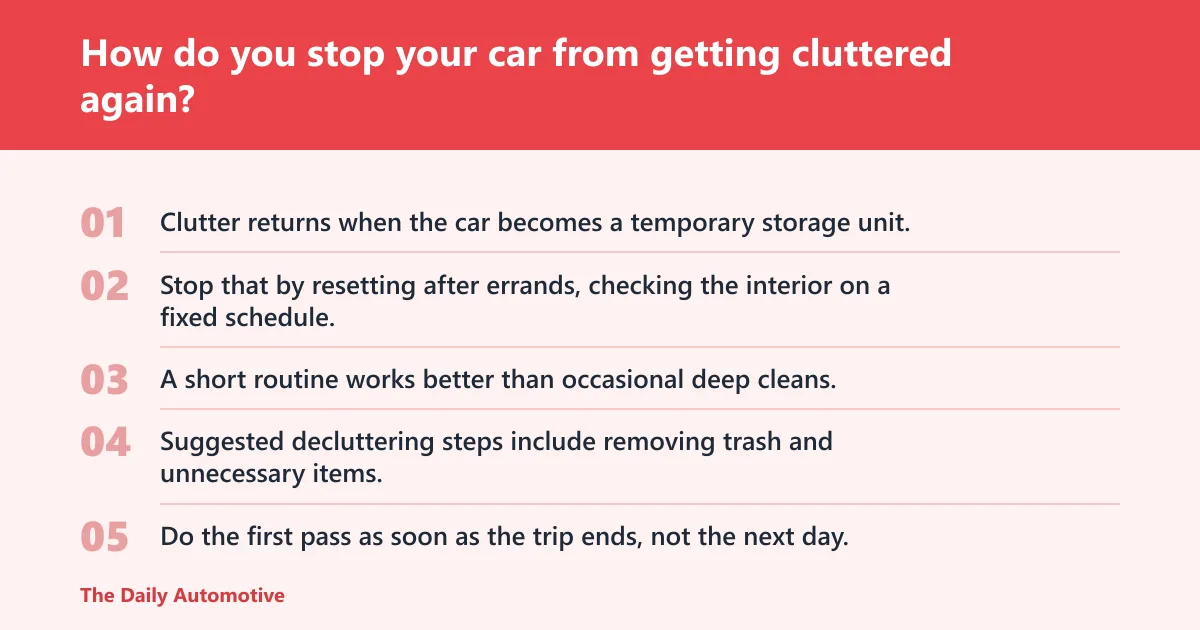
Clutter returns when the car becomes a temporary storage unit. Stop that by resetting after errands, checking the interior on a fixed schedule, and limiting what comes into the cabin in the first place. A short routine works better than occasional deep cleans.
A quick cleanout routine after errands and school runs
Suggested decluttering steps include removing trash and unnecessary items, vacuuming the interior, wiping surfaces, and re-sorting essentials into compartments. Do the first pass as soon as the trip ends, not the next day. The longer trash sits, the more likely it is to spread.
A common first-timer mistake is unloading the passenger seat and then placing the same items right back after the next stop. Instead, assign each category a home: food bags out, paperwork to the glove box, sports gear to the trunk bin, and nothing loose on the floor.
A weekly reset that takes minutes, not an hour
Once a week, empty cupholders, check door pockets, inspect the trunk organizer, and remove anything without a clear purpose. This is also the time to replace used tissues, low batteries, or empty water bottles. The routine should be short enough that you do not postpone it.
For families, pick one fixed reset point, such as the driveway on Sunday evening. For commuters, use the parking lot before the final stop home. For rideshare drivers, a reset between shifts keeps the cabin ready for the next rider. For road-trippers, do a full reset after each overnight stop.
Failure-case walkthroughs
After a school run, a backpack, snack wrappers, a library book, and a sports bottle can spread across the rear seat in ten minutes. The fix is simple: one rear-seat bin for kid gear, one trash bag for wrappers, and one rule that nothing stays on the seat overnight.
After a shopping trip, bags often move from the trunk to the back seat, then remain there for days. Put groceries straight into the designated trunk zone, and return reusable bags to the same hook or bin every time. The car stays cleaner when items move in one direction only.
What are the benefits of a clutter-free car?
The main benefits are lower stress, less searching, easier cleaning, and safer driving. Cluttered cars can make daily driving feel more stressful, while a decluttered car supports a calmer routine. Less weight can also help fuel efficiency, though the effect depends on how much unnecessary cargo you remove.
Fuel efficiency impact
Unnecessary weight in a car can affect fuel efficiency. Removing bulky junk, extra cases of water, or tools you do not need every day can lighten the load. Do not expect dramatic savings from a few pounds, but a lighter car is still a more efficient car.
Cleaner cabin, easier maintenance
A tidy interior makes vacuuming and wiping surfaces faster. It also makes damage easier to spot. Spills, worn mats, and warning lights are harder to ignore when the car is not packed with loose objects.
Does decluttering a car improve safety?
Yes. A clutter-free car can improve safety by reducing distractions and keeping emergency gear accessible. Loose items can roll under pedals, block mirrors, or force you to reach away from the wheel. Fewer objects in motion means fewer interruptions while driving.
Safety tradeoffs to watch
Do not remove the wrong things in the name of minimalism. The spare tire, jack, jumper cables, first aid kit, flashlight, and emergency flares belong in the vehicle because they support roadside readiness. What should go is the stuff that has no clear purpose or a better home elsewhere.
What is a minimalist car maintenance routine?
A minimalist car maintenance routine keeps the vehicle reliable without filling it with extras. Check tire pressure, change the oil according to the manufacturer recommendation, and wash the car on a regular schedule. Maintenance supports the simpler interior because a well-kept car is easier to reset and easier to keep organized.
How maintenance supports a simpler interior over time
When you handle routine service on time, you reduce the odds of emergency clutter. Fewer breakdown surprises mean fewer temporary tools, fewer borrowed items, and fewer random purchases left in the car. Clean maintenance habits and clean storage habits reinforce each other.
How can you keep your car clean with a busy schedule?
Use small resets tied to places you already stop, especially fuel stations, school pickup, and grocery runs. If the routine is tied to another task, it is more likely to happen. The goal is not a perfect interior every day, only a car that returns to ready state quickly.
Busy-schedule reset points
- At every fuel stop, remove trash and return loose items to their bins.
- After grocery runs, move bags straight to the trunk organizer.
- Before parking overnight, clear the front seats and dashboard.
- Once a week, check the glove compartment and trunk compartments.
Keep the process small enough that it can survive a packed week. A two-minute reset does more than a one-hour cleanup you never schedule.
Frequently asked questions
How do I simplify my car without getting rid of essentials?
Use the keep, store, rotate, remove rule. Keep emergency gear, paperwork, and daily-use items in fixed places. Store occasional items in the trunk. Rotate seasonal gear by weather. Remove trash, duplicates, and anything that does not have a clear job in the car.
What should I keep in my car every day?
Keep the basics that support safety and ordinary use: jumper cables, a first aid kit, a flashlight, emergency flares, the spare tire, and the jack. Add only the seasonal items that are still relevant. Everything else should either live elsewhere or stay out of the vehicle.
How do I organize my trunk and glove box?
Keep the glove box for flat, high-priority items such as registration, insurance papers, and a spare cable in small pouches or containers. Use a collapsible trunk organizer for emergency gear, seasonal items, and groceries. Separate tools from loose cargo so everything stays easy to reach.
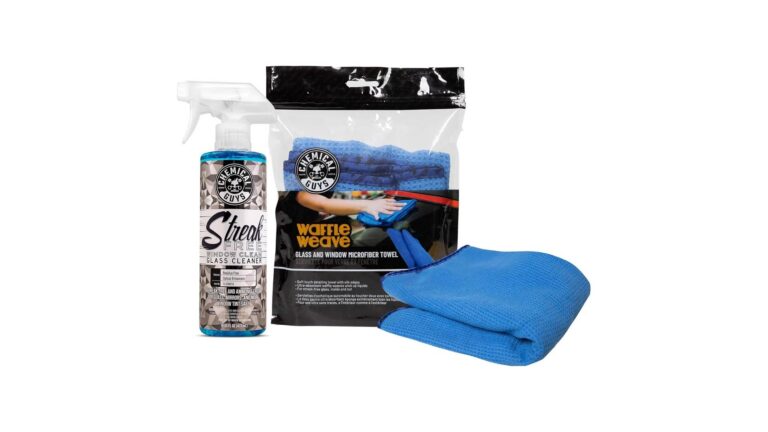
Products related to this article
Sponsored / affiliate links. As an Amazon Associate I earn from qualifying purchases. I may earn additional commission from eligible campaigns.