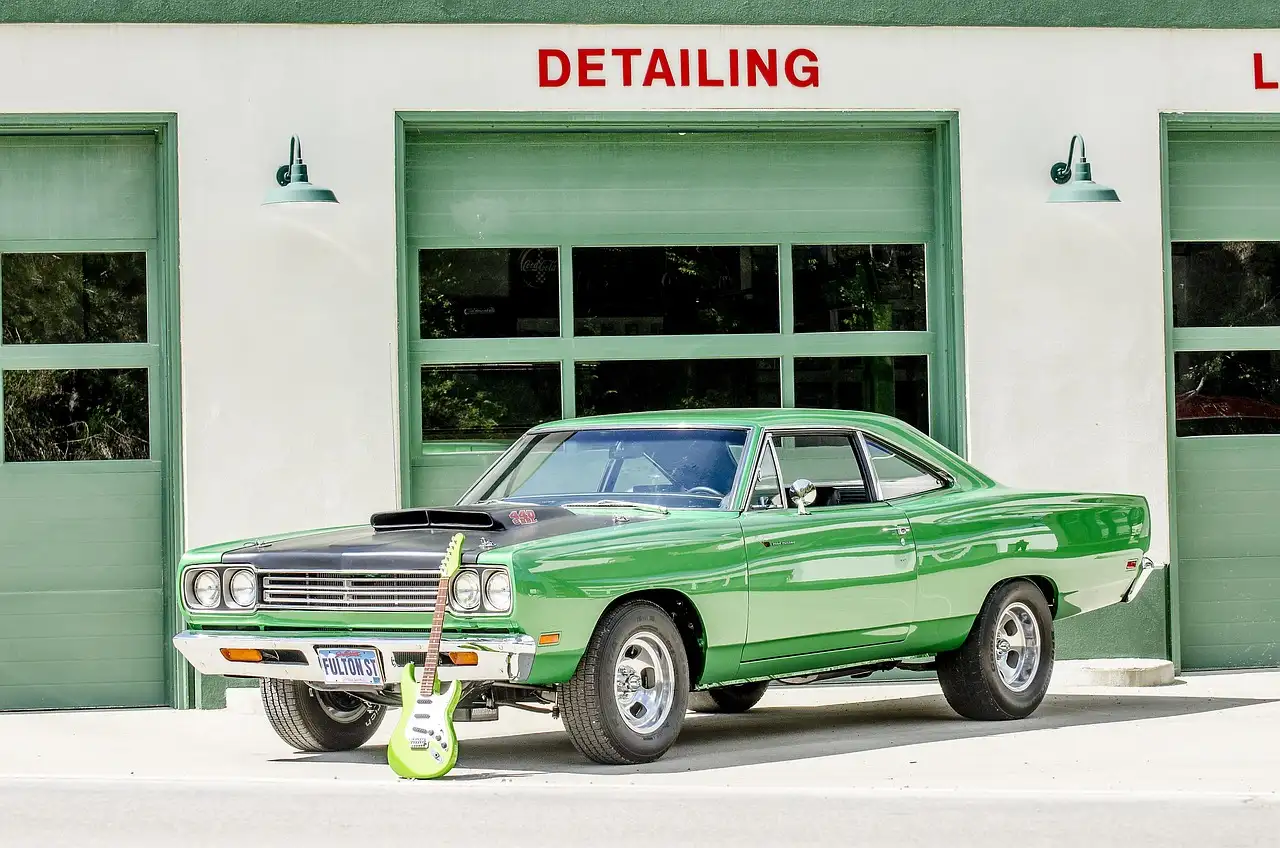
Classic Cars: Heritage and Nostalgia in Modern Life
Classic cars still matter because they turn a specific period’s design, engineering, and social memory into a machine you can own, drive, and debate. Buy poorly, and the romance turns into storage bills, stalled restoration work, and a car that spends most of its time parked. This guide explains why they endure, how different age groups attach meaning to them, and what costs, space, and usability to weigh before buying.
Why do classic cars still matter today?
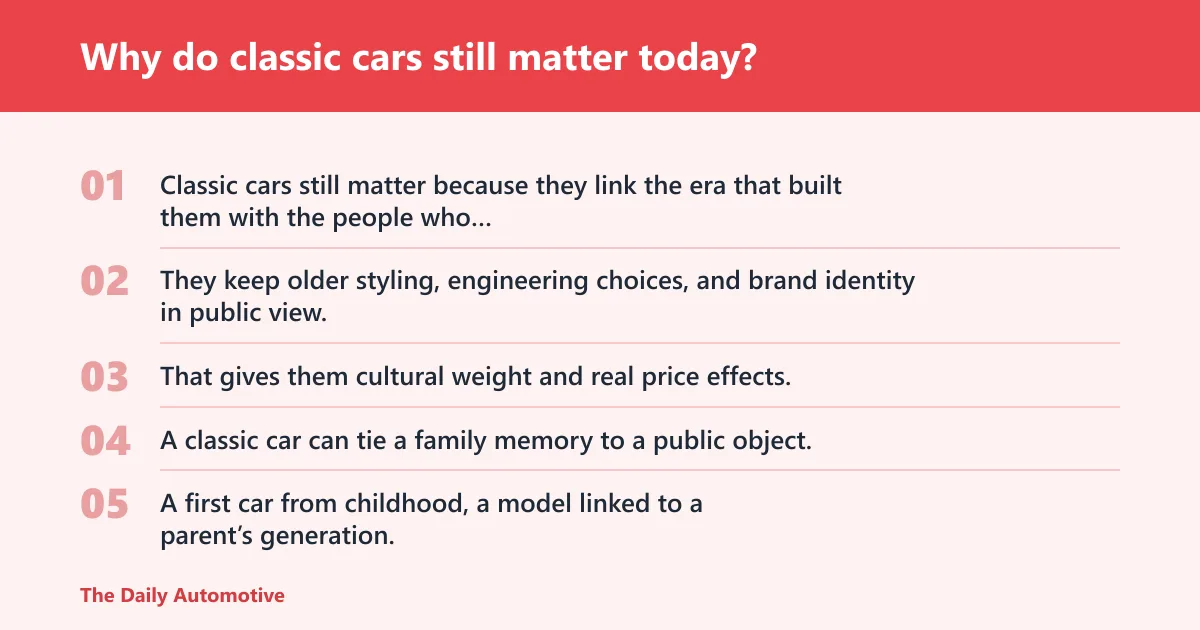
Classic cars still matter because they link the era that built them with the people who still want them. They keep older styling, engineering choices, and brand identity in public view, while collector demand keeps familiar models active in the market. That gives them cultural weight and real price effects.
Heritage, memory, and identity
A classic car can tie a family memory to a public object. A first car from childhood, a model linked to a parent’s generation, or a shape tied to a country’s industrial rise can carry meaning far past transportation. That helps explain why classic cars stay visible in daily life.
Design and craftsmanship still matter
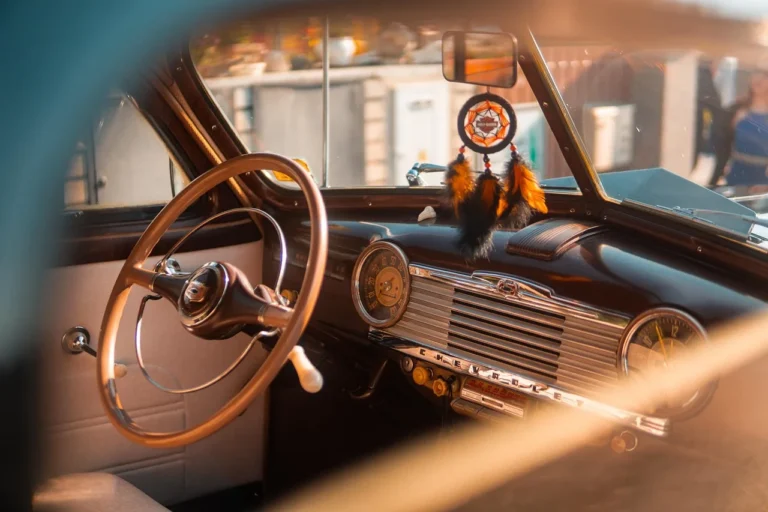
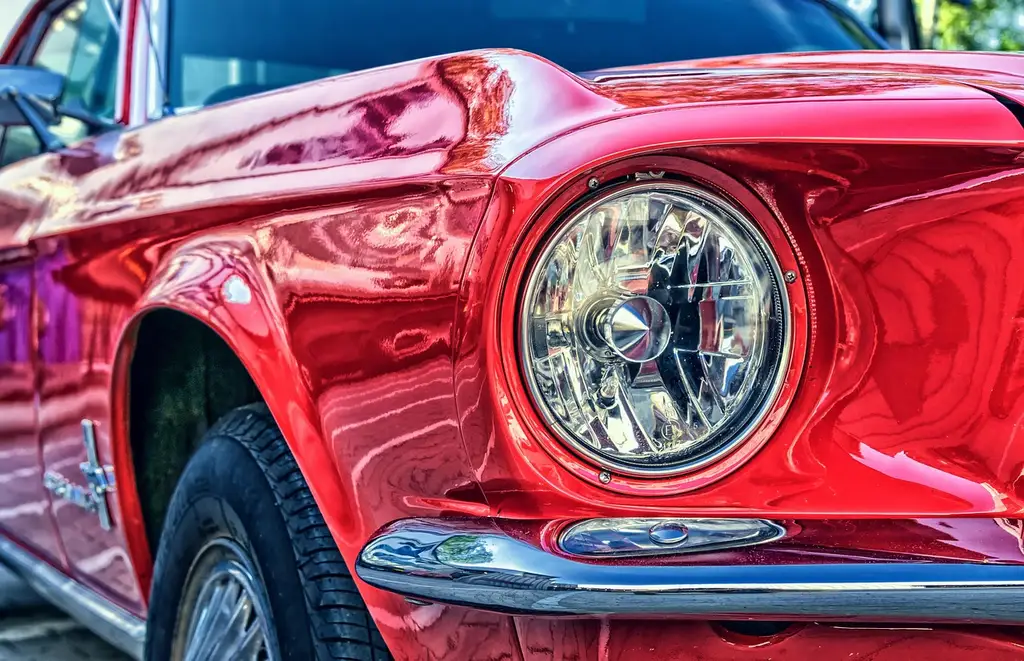
Older cars often draw attention because their shapes were built to stand out at a distance. Chrome trim, long hoods, tight cabin proportions, and hand-finished details point to the era that made them. Those features are evidence of how manufacturers built identity before shared platforms took over.
Collector interest keeps them relevant
The market keeps classic cars active. ClassicCars.com lists 30,190 classic cars and trucks for sale today, and its categories include Future Classics and Under $5,000. That spread shows the segment is not limited to six-figure restorations. It includes accessible entry points and cars that are still moving toward collector status.
📊 ClassicCars.com groups listings by categories including Future Classics and Under $5,000. Source: Classic Cars for Sale.
What makes a car a classic car?
Age helps, but it is not the whole answer. A classic car usually combines historical importance, design significance, and collector recognition. Some vehicles become classics because they changed a segment. Others earn the label through survival, scarcity, or the following they built over time.
Age is only part of the answer
Many buyers use roughly 25 years as a marker, but the market does not follow a hard rule. A car can be old and still mean little to collectors. Another can be newer and highly desirable because it introduced a layout, performance standard, or styling language later cars copied.
Historical importance and market recognition
Classic status usually depends on whether the car matters to more than one owner. A model becomes easier to classify as classic when historians, collectors, clubs, auction houses, and parts suppliers all treat it as worth preserving. Recognition helps liquidity, and liquidity supports value.
Why some cars become classics faster than others
Cars with limited production, clear performance credentials, or a strong cultural role tend to move faster into classic status. By contrast, ordinary commuter cars often need time, scarcity, and support from a younger audience before the market starts calling them collectibles.
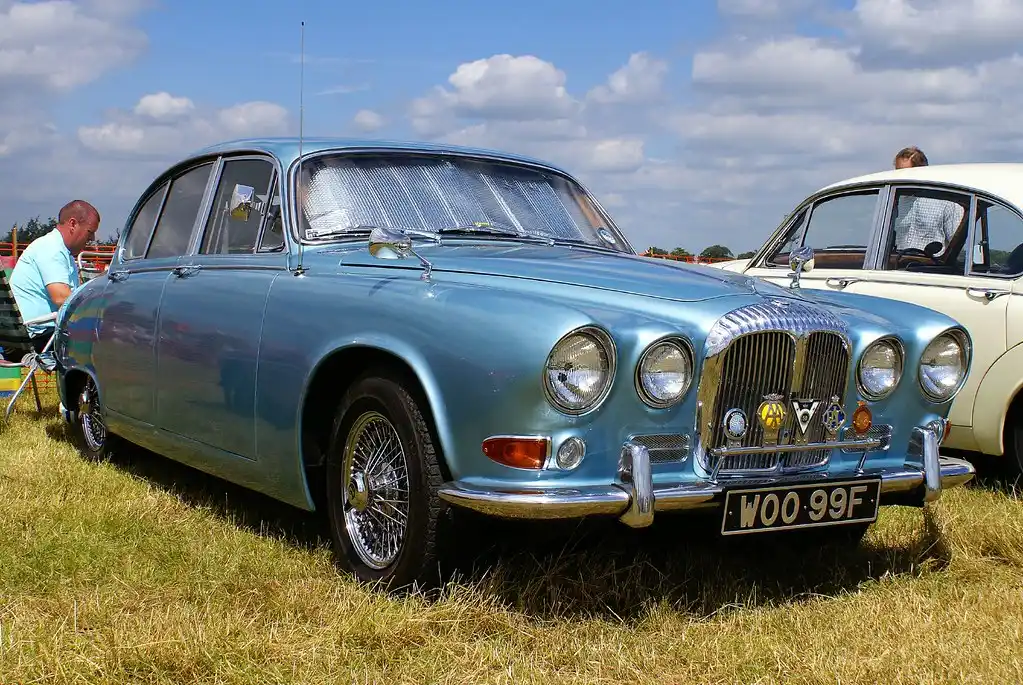
Which classic cars define the era?
Three models come up repeatedly because each set a durable benchmark in its own category. The Ford Mustang introduced in 1964 became the American muscle-car reference point. The Chevrolet Corvette, first appearing in 1953 with a fiberglass body, defined the American sports car. The Porsche 911, introduced in the early 1960s with a rear-engine layout, became a long-running performance benchmark. (en.wikipedia.org)
Ford Mustang and the American muscle benchmark
The 1964 Ford Mustang mattered because it made sporty style attainable to a broad audience. Its long market life and huge parts ecosystem make it the most recognizable gateway into the muscle-car conversation. Popular searches on ClassicCars.com include Ford Mustang, which shows how durable that recognition remains.
Chevrolet Corvette and the sports-car icon
The Chevrolet Corvette first appeared in 1953, and its fiberglass body made it stand out immediately. It became an American sports-car icon because it blended styling, performance, and a distinctly domestic identity. Popular searches also include Chevrolet Corvette and Chevrolet Camaro, which keeps the Chevrolet performance story visible in the collector market.
Porsche 911 and the long-running performance standard
The Porsche 911, launched in 1963, is the other kind of classic, less about mass appeal and more about continuity and engineering identity. Its rear-engine layout, long model history, and strong owner network make it a benchmark for buyers who care about driving feel as much as history.
How do Millennials and Gen Z connect with classics?
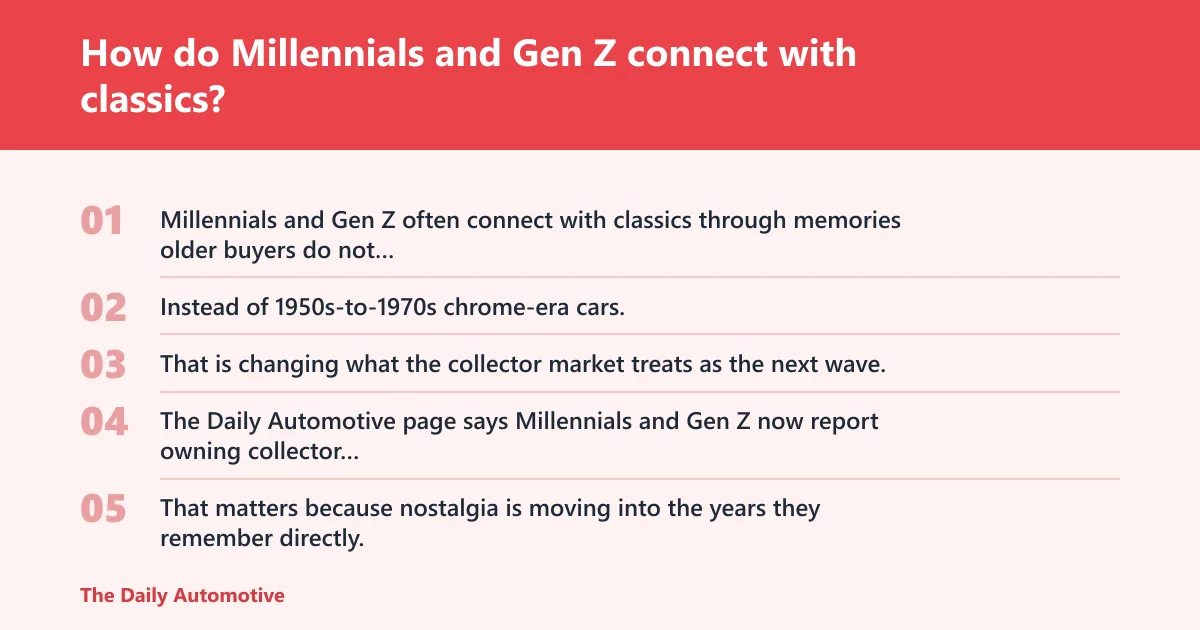
Millennials and Gen Z often connect with classics through memories older buyers do not share. Instead of 1950s-to-1970s chrome-era cars, many newer enthusiasts enter through 1990s-era cars that feel familiar, affordable, and still usable. That is changing what the collector market treats as the next wave.
Why nostalgia now reaches into the 1990s
The Daily Automotive page says Millennials and Gen Z now report owning collector vehicles more often than Gen X or Baby Boomers. That matters because nostalgia is moving into the years they remember directly. For them, a 1990s coupe or sedan can trigger the same pull that older buyers feel toward 1960s and 1970s machines.
Auction trends and newer entry points
The Daily Automotive page also says the average collector car at auction is 20 years newer than it was a decade ago, and it identifies ’90s-era cars as the new entry point. That shift suggests the market is widening, not shrinking. A car does not need to be half a century old to be collectible anymore.
What younger buyers want
Younger buyers often want a car that feels historic without becoming a second job. They usually care about parts access, reasonable insurance, and the ability to store the car in a garage or small lot. Many also want enough originality to keep the nostalgia intact, but enough modification to make weekend driving practical.
| Buyer type | Best era to start with | Entry cost | Parts availability | Maintenance difficulty | Usability | Nostalgia value |
|---|---|---|---|---|---|---|
| Budget-first first-time buyer | 1970s to 1980s mass-market coupe or sedan | Low to moderate | Moderate to strong | Moderate | Moderate | Moderate |
| Millennial entering through childhood-era cars | 1990s sports coupe, sedan, or hatchback | Moderate | Moderate, improving | Moderate | Strong | High |
| Gen Z buyer with limited storage | Late 1980s to 1990s compact classic | Low to moderate | Moderate | Moderate | Strong if kept stock | High |
| Experienced hobbyist with a garage | 1960s performance car | Moderate to high | Strong for popular models | Moderate to high | Moderate | Very high |
| Buyer focused on rarity and long-term value | Low-production or historically important model | High | Variable | High | Low to moderate | Very high |
If your budget is tight, your parking spot is outdoors, and you want a weekend car that starts without drama, a 1990s-era example with known parts support usually makes more sense than a rare 1960s coupe with costly trim and scarce replacement panels.
What should you know before buying or restoring one?
Before you buy or restore a classic car, decide whether you care more about originality, drivability, or investment potential. Those goals can line up, but not always. Condition matters as much as model choice, and storage, insurance, and parts scarcity can change the real cost far more than the purchase price.
Originality versus modification
Original cars usually appeal to purists and can draw stronger interest when the body, trim, paint, and mechanical pieces match the build period. Modified cars can be easier to live with if they improve cooling, braking, or fuel delivery. The tradeoff is that heavy changes can narrow the buyer pool.
How condition changes value
A complete, honest car with worn paint may be better than a half-finished restoration with hidden rust. Rust affects structure and repair cost. Non-original paint can matter too, especially if the color is close but not correct. A careful buyer checks panel fit, weld quality, and signs of past corrosion repair.
The real costs of ownership
Classic-car ownership often costs more in storage and upkeep than new buyers expect. A secure garage, indoor cover, battery care, and periodic mechanical attention all add to the bill. Insurance depends on how the vehicle is valued, how often it is driven, and whether the insurer views it as a collector car or a regular used car.
- Decide whether you want originality, usability, or resale strength.
- Check rust-prone areas first, especially floors, sills, wheel arches, and lower fenders.
- Confirm whether parts are reproduced or only available used.
- Estimate storage and insurance before making an offer.
- Set a restoration limit before work starts.
A common first-timer mistake is buying a car with shiny paint and hidden corrosion. The paint looks finished, but the lower quarters are bubbling, the trunk floor is thin, and the repair estimate exceeds the car’s market value. That is how a “decent project” becomes a long-term expense.
How do you preserve paint, trim, and diagnostics on older cars?
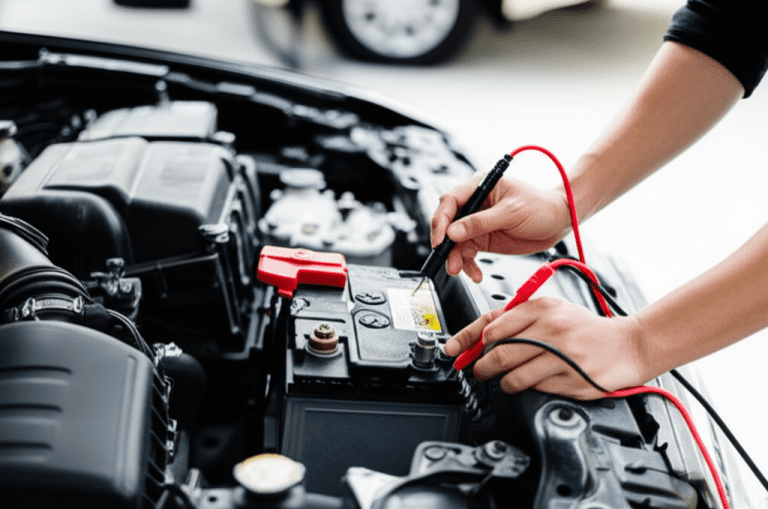
Preservation starts with small repairs and careful diagnosis. Touch-up paint helps with small chips before rust starts, and color-code matching matters if you want the repair to disappear. For electronics, an OBD-II scanner generally applies to 1996+ vehicles, so older cars need different fault-finding methods.
Touch-up paint, chip repair, and rust prevention
The guide recommends touch-up paint for small chips before they lead to rust. That is sound advice because bare metal corrodes quickly once the finish breaks. Clean the chip, match the color code as closely as possible, and seal exposed metal before moisture can get under the surrounding paint.
Matching color codes without creating a mismatch
Factory color names can vary by year, plant, and finish. A correct-looking repair depends on the code, the paint system, and the condition of the surrounding panel. Sun fade and aged clear coat can make a technically correct color look wrong if the rest of the car has aged unevenly.
Why an OBD-II scanner helps only on 1996-plus cars
The guide notes OBD-II scanners generally apply to 1996+ vehicles. That means pre-OBD-II cars require older diagnostic habits: checking fuel, ignition, vacuum, carburetion, or mechanical faults directly rather than reading standardized codes. On those cars, code readers cannot replace basic troubleshooting.
What are the biggest costs of owning a classic car?
The biggest costs are often not the sticker price. Storage, insurance, parts scarcity, labor, and restoration surprises can exceed expectations quickly. Cars with strong parts support are easier to budget. Cars with rare trim, unusual engineering, or corrosion damage can become expensive even before any cosmetic work starts.
Storage and insurance
Covered storage matters because weather and temperature swings accelerate deterioration. Insurance often depends on mileage limits, valuation method, and agreed-use terms. A car that sits outside is more likely to need paint, trim, and rubber replacement sooner than a garaged car.
Parts and labor
Common models usually have a better supply of reproduction parts, which can keep maintenance within reach. Rare models may require used pieces, specialty fabrication, or long waits for correct components. Labor also varies widely. Simple service can become expensive when access is tight or parts are obsolete.
Restoration cost bands
Costs usually rise in stages: cosmetic refresh, mechanical recommissioning, partial restoration, and full restoration. The jump from “running” to “correct” can be large. Original trim, period-correct hardware, and bodywork all add cost fast, especially when rust repair is involved.
Which classic cars are easiest to start with for new enthusiasts?
The easiest cars to start with are usually popular, well-documented models with good parts support and straightforward systems. A first classic should be affordable to maintain and common enough that trim, mechanical pieces, and repair knowledge are available without a long search.
Look for parts support first
Strong parts availability may matter more than badge prestige for a new owner. A mass-market model with plenty of reproduction components is usually easier to keep on the road than a rare exotic with a thin support network. That is especially true if the car will be stored at home and maintained gradually.
Choose usability over bragging rights
For a first classic, a car that starts reliably and can handle a weekend drive is usually a better choice than a fragile museum piece. Think about parking, weather, and whether you have a protected place to store the car after a drive. If not, simpler is safer.
Common beginner-friendly traits
Look for a known model, a clean body, limited rust, and mechanical originality that is intact enough to diagnose. If the car is pre-OBD-II, make sure you are ready for older-style troubleshooting. If it is a 1996-or-newer collectible, an OBD-II scanner can help sort fault codes faster.
Frequently asked questions
Why are classic cars still popular in modern life?
They combine design, memory, and mechanical identity in a way newer vehicles usually do not. Classic cars also occupy a visible place in auctions, club events, and private collections. For many buyers, the appeal is cultural as much as practical, which is why interest keeps renewing itself.
Which classic cars are most iconic and why?
The Ford Mustang, Chevrolet Corvette, and Porsche 911 are icons because each became a reference point in its category. The Mustang helped define American muscle, the Corvette became a sports-car symbol, and the 911 became a performance benchmark with lasting identity across decades.
How do Millennials and Gen Z relate to classic cars?
Many younger buyers connect through 1990s-era cars rather than older chrome-era models. The Daily Automotive page says they now report owning collector vehicles more often than Gen X or Baby Boomers, and that the average auction collector car is 20 years newer than it was a decade ago.
What should I know before buying or restoring a classic car?
Start with rust, parts support, storage, and insurance. Then decide whether originality or modification matters more to you. A car that looks affordable can become expensive quickly if the body needs repair or if the restoration goal is factory-correct rather than simply usable.
Products related to this article
Sponsored / affiliate links. As an Amazon Associate I earn from qualifying purchases. I may earn additional commission from eligible campaigns.