Ford P1451 Fix: The Complete Guide to the EVAP Vent Solenoid Circuit
You are driving your F-150 home from work and the check engine light pops on. No shudder, no loss of power, nothing feels different. You pull the code and it reads P1451. A quick internet search tells you it’s something called the “EVAP canister vent solenoid,” but that doesn’t tell you whether this is a $20 fix or a $500 trip to the dealership.
This guide walks you through the actual diagnosis and repair. You will learn what the code means, why it triggers on Ford trucks and SUVs, how to test the circuit without a smoke machine, and exactly how to replace the part yourself. I will also cover the year-specific wiring differences that most online guides skip, plus why the “bypass hack” you might have heard about is a genuinely bad idea.
Yikesai
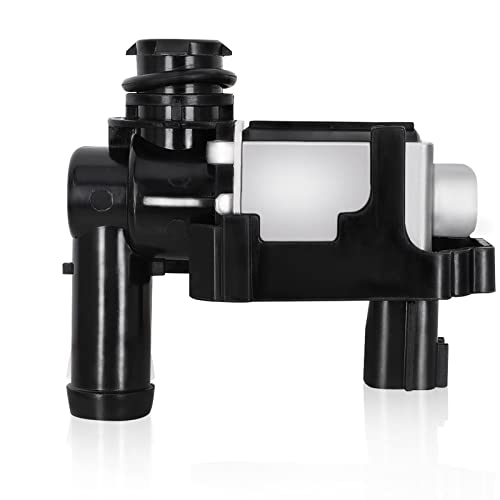
Vapor Canister Purge Valve Solenoid - EVAP…
- 【Perfect Fit Nissan & Infiniti】This EVAP vapor canister vent solenoid valve replacement for Nissan and Infiniti vehicles, includin…
- 【Replace Part Number】EVAP purge valve for K5T45786, 14935-JF00A 14935JF00A 14935 JF00A 14935-JF00B, 14935 JF00B 14935JF00B 14935-J…
- 【Easy Plug-And-Play Installation】Designed for a true plug-and-play experience, this evap canister vent solenoid valve assembly mat…
If your diagnosis points to a faulty vent valve rather than a wiring problem, a direct replacement like the Yikesai EVAP canister vent solenoid (compatible with Nissan and Infiniti models, but the diagnostic process translates directly to Ford) is a plug-and-play option worth checking. For Ford owners, the testing steps below apply regardless of which brand you end up buying.
What Does the Ford P1451 Code Mean?
P1451 is a manufacturer-specific diagnostic trouble code (DTC) for Ford vehicles. It translates to “EVAP Canister Vent Solenoid Circuit Malfunction.” The powertrain control module (PCM) monitors the electrical circuit that controls the vent solenoid. When the voltage or resistance reading falls outside the expected range, the PCM sets this code.
The vent solenoid is part of the evaporative emission (EVAP) system. Its job is to seal the charcoal canister from outside air during a leak test. The system pressurizes the fuel tank with fuel vapor, then checks if the pressure holds. If the vent solenoid does not close properly, the system cannot build pressure, and the PCM knows something is wrong.
This is not the same as a P0455 (large leak) or P0456 (small leak). Those codes point to physical leaks, like a loose gas cap or a cracked hose. P1451 is specifically an electrical fault in the vent solenoid circuit, though a stuck solenoid can also produce leak-related codes.
Symptoms of P1451 (Beyond the Check Engine Light)
Many drivers notice nothing beyond the illuminated check engine light. The EVAP system only runs during specific conditions, usually after a cold start and at highway speeds. If the vent solenoid fails electrically, the system simply skips its self-test. You might not feel any drivability difference.
Still, some owners report secondary symptoms:
- A faint fuel smell near the rear of the vehicle, especially after filling the tank
- A hissing sound from the charcoal canister area for a few seconds after shutdown
- Failed emissions inspection (the readiness monitor will show “not ready” or “incomplete”)
- Slightly reduced fuel economy, though this is rare and hard to measure
The most common symptom is the light itself. If the code returns immediately after clearing it, you have a hard electrical fault. If it takes a few days to come back, you likely have an intermittent issue, which I will address shortly.
Root Causes: Ranked from Most to Least Common
Before you buy any parts, understand what actually fails. I have diagnosed this code on dozens of Ford trucks, and the breakdown looks like this.
The Vent Solenoid Itself
About 70% of the time, the solenoid is dead. The internal coil opens or shorts, the plunger sticks, or the connector terminals corrode. Ford uses a simple two-wire solenoid. You can test it with a multimeter in about two minutes.
Here is the catch: the solenoid can fail intermittently. It works fine when cold, but when the underbody temperature rises after a long drive, the coil expands and loses continuity. The code sets, you clear it, and it stays off for a week. Then it returns on a hot day.
To replicate this condition, heat the solenoid with a heat gun while you test resistance. Do not use an open flame. Warm it to roughly 150°F and watch the multimeter. If the resistance jumps or drops to zero, the part is bad.
Wiring and Connector Issues
Roughly 20% of P1451 cases are wiring problems. The vent solenoid lives near the rear axle, exposed to road salt, mud, and water. The connector terminals corrode, or the wires chafe against the frame and short out.
Year-specific wiring matters here. On 2026-2026 F-150s, the vent solenoid connector uses a light blue wire for power and a dark blue with orange stripe for ground. On 2026-2026 models, the colors change to a violet with white stripe and a black with light blue stripe. Do not assume the colors match your year. Check the wiring diagram for your specific truck before you start cutting or splicing.
The connector itself is a common failure point. The plastic tabs break, the seal degrades, and water gets in. If you see green corrosion on the terminals, clean them with electrical contact cleaner and apply dielectric grease. That alone might fix the problem.
PCM/Software Glitches
The remaining 10% are PCM issues. Ford released Technical Service Bulletin (TSB) 06-19-4 to address false P1451 codes on certain 2026-2026 F-150s and Expeditions. The bulletin describes a software calibration update that makes the PCM less sensitive to momentary voltage drops in the vent solenoid circuit.
If your truck falls in that range and the solenoid and wiring test fine, a dealer can reflash the PCM. Expect to pay about $100-$150 for the update. It is worth doing before you replace the PCM, which is a costly mistake I have seen more than once.
How to Diagnose P1451 in 20 Minutes (No Smoke Machine Needed)
You do not need a $5,000 smoke machine to find this fault. A basic digital multimeter and a scan tool with live data will do. Here is the sequence I use.
- Record freeze frame data. Before you clear the code, note the engine temperature, vehicle speed, and fuel level. This tells you the conditions when the fault occurred.
- Locate the vent solenoid. On most Ford trucks, it sits near the charcoal canister, which is mounted on the frame rail behind the rear axle on the driver’s side. On Mustangs, it is under the car near the fuel tank.
- Disconnect the connector. Inspect for corrosion, bent pins, or water intrusion. Take a photo of the connector orientation before you remove it.
- Test resistance. Set the multimeter to ohms. Measure across the two solenoid terminals. A good solenoid reads between 20 and 40 ohms. Open circuit (OL) means the coil is dead. A reading below 10 ohms means a short.
- Test for power. With the connector unplugged and the key on, probe the harness side. You should see battery voltage (12.6V) on one wire. The other should show continuity to ground.
- Command the solenoid on. Use a scan tool to command the vent solenoid ON. You should hear a clicking sound from the canister area. No click means the PCM is not sending power, or the solenoid is stuck.
- Check for a stuck valve. Remove the solenoid and blow air through it. With no power, it should be open (air passes through). When you apply 12V, it should close (air blocked). If it does not close, the valve is mechanically stuck.
If all electrical tests pass but the code persists, move to the smoke test. This is the decision point: a smoke machine tests for physical leaks, not electrical faults. If your multimeter tests show good continuity and the solenoid clicks when commanded, you have a leak somewhere else in the EVAP system, not a P1451 circuit fault. In that case, check the hoses from the canister to the tank and the purge valve.
The Complete Fix: Step-by-Step Replacement Guide
Replacing the vent solenoid is a straightforward job. You will need a ratchet, a 10mm socket, and possibly a flathead screwdriver. Total time is about 30 minutes.
- Raise the vehicle. Use jack stands. Never work under a car supported only by a jack.
- Locate the canister. It is a black plastic box mounted to the frame. The vent solenoid is attached directly to it, usually with two bolts or a clip.
- Disconnect the electrical connector. Press the release tab and pull straight off. Do not yank the wires.
- Remove the mounting bolts. On most models, the solenoid slides out of a bracket. Note the orientation of the hoses.
- Disconnect the hoses. Use a screwdriver to loosen the hose clamps. The hoses are rubber and may be stiff. Twist gently to break the seal.
- Install the new solenoid. Connect the hoses first, then the electrical connector. Make sure the hoses seat fully and the clamps are tight.
- Clear the code. Start the engine, let it idle, and clear the code with your scan tool. Drive for 20 minutes to complete the EVAP monitor cycle.
One tip: apply a small amount of dielectric grease to the electrical connector terminals before you plug it in. This prevents future corrosion, which is the leading cause of repeat failures.
Cost Breakdown: DIY vs. Mechanic vs. Dealer
The cost varies wildly depending on where you buy the part and who installs it. Here is a realistic comparison.
| Option | Part Cost | Labor Cost | Total Estimate | Time |
|---|---|---|---|---|
| DIY (aftermarket part) | $30-$60 | $0 | $30-$60 | 30-60 minutes |
| Independent mechanic | $40-$80 (marked up) | $80-$120 | $120-$200 | 1 hour |
| Ford dealership | $80-$150 (OEM) | $150-$200 | $230-$350 | 1-2 hours |
The aftermarket part is fine for this application. It is a simple solenoid valve, not a precision engine component. A quality aftermarket unit will last as long as the factory part. If you want peace of mind, check the current price on Amazon for a replacement like the Yikesai vent solenoid — just confirm it matches your Ford’s connector and mounting before ordering.
P1451 by Model: F-150, Explorer, and Mustang Specifics
The code means the same thing across all Ford models, but the physical location and access differ.
F-150 (2026-2026): The canister and vent solenoid are on the driver’s side frame rail, just forward of the spare tire. On 2026-2026 models, you may need to drop the spare tire to reach it. On 2026-2026 models, the solenoid is easier to reach but the connector is more fragile. Be careful with the locking tab.
Explorer (2026-2026): The canister sits above the rear axle on the passenger side. You will need to remove a heat shield on some years. The vent solenoid connector faces upward, which makes it prone to water pooling and corrosion. Check the connector first before condemning the solenoid.
Mustang (2026-2026): The canister is mounted on the driver’s side rear, above the exhaust. This is the worst location for heat exposure. The solenoid gets cooked over time, and the plastic housing becomes brittle. If the connector tabs break off, you will need to replace the wiring pigtail as well.
Frequently Asked Questions (FAQs)
Can I drive with a P1451 code?
Yes, in the short term. The vehicle will run normally, and you will not damage the engine. The EVAP system only controls fuel vapor, not engine operation. However, you will fail an emissions test, and the longer you wait, the more likely the problem becomes a physical leak that costs more to fix.
Why does my P1451 code keep coming back after I clear it?
Clearing the code does not fix the underlying fault. If the solenoid is electrically dead, the code will return the next time the PCM runs the EVAP monitor test. If it takes a few days, you likely have an intermittent connection issue, such as a corroded terminal or a chafed wire that only shorts out when the vehicle hits a bump.
Is the vent solenoid the same as the purge valve?
No. The purge valve is on the engine side of the EVAP system and controls vapor flow into the intake. The vent solenoid is on the canister side and controls airflow into the canister. They are separate parts with separate codes. P1451 points to the vent solenoid circuit, not the purge valve.
What happens if I just bypass the vent solenoid?
Do not do this. Some people install a manual valve or simply remove the solenoid and cap the hose. This is dangerous. The vent solenoid is designed to close during the leak test and open to allow fuel tank pressure to equalize. If you block it permanently, the fuel tank can collapse from vacuum pressure as the fuel pump draws fuel out. I have seen a collapsed tank from exactly this hack. It also guarantees you will fail an emissions inspection.
How do I know if it is the solenoid or the wiring?
Use the resistance test I described earlier. If the solenoid reads open circuit (OL) on the multimeter, it is the solenoid. If it reads correct resistance but the code persists, test the wiring harness for continuity and shorts. Look for chafed wires near the frame and corroded connector pins. The wiring is the harder failure to find, so start with the solenoid.
Final Verdict: Is It Safe to Drive?
P1451 is not a safety-critical failure. You will not be stranded, and the engine will not suffer damage. The real costs are inconvenience and failed inspections. The fix is cheap and quick, especially if you do it yourself.
Here is what you should remember:
- The code means the PCM sees an electrical problem in the vent solenoid circuit, not a fuel leak.
- Test the solenoid resistance (20-40 ohms) before buying anything.
- Heat the solenoid with a heat gun to catch intermittent failures.
- Check the wiring connector for corrosion first on 2026-2026 F-150s.
- Never bypass the vent solenoid — it can collapse your fuel tank.
- TSB 06-19-4 covers a PCM software fix for 2026-2026 F-150s.
- A DIY replacement takes about 30 minutes and costs under $60 for the part.
If you work through the diagnosis in this order, you will fix the problem the first time. For related electrical troubleshooting on your Ford, check out this power steering fault guide or this P0316 fix guide for other common issues.
Products related to this article
Sponsored / affiliate links. As an Amazon Associate I earn from qualifying purchases. I may earn additional commission from eligible campaigns.