2026 Ford F-150 5.4 Firing Order (With Diagrams and 2026-Specific Fixes)
Your 2026 F-150 with the 5.4 Triton starts missing under load, the check engine light flashes, and you’re pretty sure it’s an ignition problem. Before you start throwing parts at it, you need the exact firing order and cylinder layout for this specific year. The 2026 5.4 is a 3-valve engine, and it’s different than the older 2-valve 5.4s in ways that matter for diagnosis.
This guide covers the 2026 F-150 5.4 firing order, where cylinder #1 sits, how the coil-on-plug system is wired, and what actually goes wrong on this year. You’ll leave with a clear picture of how to verify your ignition system and fix a misfire without guessing.
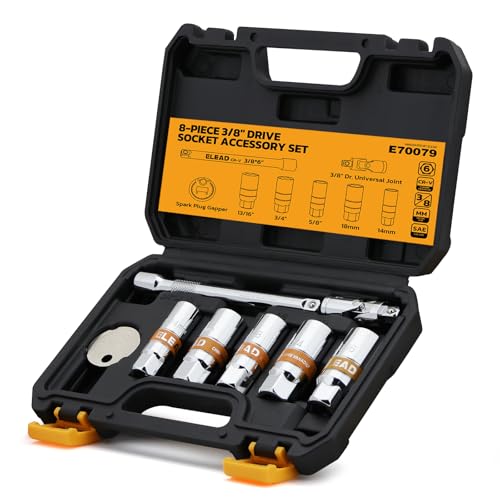
ELEAD
ELEAD 8-Piece 3/8" Drive Spark Plug Socket…
- PREMIUM CR-V - Built from heat-treated chrome vanadium steel, this spark plug socket set offers exceptional durability and corrosi…
- VERSATILE SIZES - Includes 5 spark plug sockets 5/8-Inch, 3/4-Inch, 13/16-Inch, 14mm, 18mm, plus a 6" extension bar, universal joi…
- REACH TIGHT SPACES - The extension bar easily reaches into tight and confined areas, while the universal joint provides flexibilit…
Before you start pulling coils, grab a proper spark plug socket set. The ELEAD 8-piece spark plug socket set covers the 5/8-inch and 3/4-inch sizes this engine uses, plus a universal joint and extension bar that make reaching the rear plugs on the passenger side a lot less painful. The built-in rubber ring holds the plug snug so you don’t drop it down into the coil bore.
2026 Ford F-150 5.4 Firing Order (The Short Answer)
The firing order for the 2026 Ford F-150 5.4L 3V Triton V8 is 1-3-7-2-6-5-4-8. That’s the sequence the engine uses to fire each cylinder. It hasn’t changed from the older 2V 5.4, but the ignition system layout is completely different.
This engine uses coil-on-plug (COP), meaning each spark plug has its own ignition coil sitting right on top of it. There are no spark plug wires and no distributor. That’s good news for reliability but bad news when a coil fails, because you have eight individual failure points instead of one coil pack.
Cylinder Numbering: Where Is Cylinder #1 on Your 2026 F-150?
This is where people mess up. On the 2026 5.4, cylinder #1 is on the passenger side, at the very front of the engine, right next to the radiator. The passenger side bank is cylinders 1 through 4, running front to back. The driver side bank is cylinders 5 through 8, also running front to back.
So the layout looks like this:
- Passenger side (front to back): 1, 2, 3, 4
- Driver side (front to back): 5, 6, 7, 8
Standing in front of the truck looking at the engine, cylinder #1 is on your right. If you’re standing on the driver side looking across the engine, it’s on the far side. Get this wrong and you’ll be diagnosing the wrong cylinder the whole time.
Firing Order Diagram for the 2026 5.4 Triton V8
Here’s the firing order laid out with cylinder numbers so you can visualize the sequence:
| Firing Sequence | Cylinder Number | Bank |
|---|---|---|
| 1st | 1 | Passenger Front |
| 2nd | 3 | Passenger Rear |
| 3rd | 7 | Driver Rear |
| 4th | 2 | Passenger Second |
| 5th | 6 | Driver Second |
| 6th | 5 | Driver Front |
| 7th | 4 | Passenger Third |
| 8th | 8 | Driver Third |
The pattern alternates between banks, which keeps the crankshaft balanced and reduces vibration. Ford has used variations of this firing order on its modular V8s for decades because it works well with the 90-degree V-angle.
Coil-on-Plug (COP) Layout and Wiring
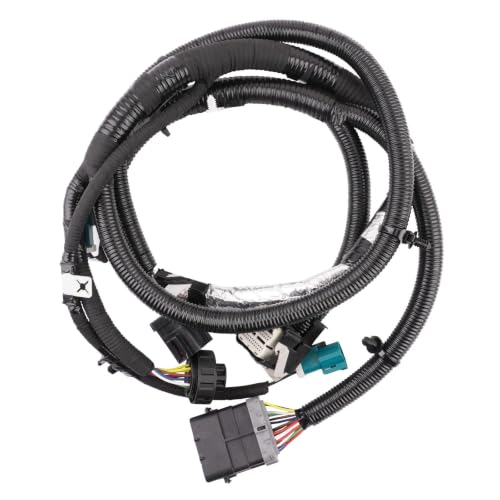
Each cylinder has a coil that bolts directly to the valve cover. The coil connects to the spark plug through a long rubber boot that extends down into the spark plug well. The electrical connector on top of each coil has three pins: power, ground, and the firing signal from the PCM.
There’s no wiring diagram to memorize for the coil order because each coil is physically located at its own cylinder. The PCM sends the firing signal to each coil in the 1-3-7-2-6-5-4-8 order internally. If you’re replacing coils, you just match the connector to the coil at each cylinder. You can’t cross wires because there aren’t any.
What you need to watch for is the condition of the connector pins. The 2026 model has a known issue where the electrical connectors get corroded or the locking tabs break, causing intermittent misfires. Check the connectors before you blame the coil itself.
Why the Correct Firing Order Matters for the 5.4
The firing order isn’t just a number to recite. It determines which cylinder fires at which point in the crankshaft rotation. If the sequence is wrong, the engine will run rough, backfire through the intake, or refuse to start at all.
On a COP engine like the 2026 5.4, you can’t physically install the coils in the wrong order because they’re bolted to specific cylinders. But the firing order still matters when you’re testing the system. If you use a timing light or a scope to verify when each cylinder fires, you need to know the correct sequence to interpret what you’re seeing.
It also matters when you’re checking compression or doing a cylinder balance test. Knowing which cylinder is #1 lets you set up your test equipment correctly and communicate with anyone helping you diagnose the truck.
Symptoms of an Incorrect Firing Order or Bad Coil
A truly incorrect firing order on a 2026 5.4 is rare since the COP design prevents misrouting. But a bad coil, a failing boot, or a wiring issue will produce symptoms that feel exactly like a firing order problem.
- Rough idle: The engine shakes or vibrates at a stop, especially when warm.
- Misfire under load: The truck stumbles or hesitates when you accelerate uphill or merge onto the highway.
- Check engine light flashing: A flashing CEL means a misfire severe enough to damage the catalytic converter. Pull over and address it.
- Poor fuel economy: A dead cylinder means the other seven work harder and burn more gas.
- Exhaust smell: Unburned fuel makes it into the exhaust, giving you a raw gas smell.
The most common 2026-specific failure is the COP boot arcing. The boot cracks over time from heat, and the spark finds an easier path to ground through the crack instead of jumping the plug gap. You’ll hear a ticking sound that gets louder under acceleration, and the misfire code will point to a specific cylinder.
How to Test Your 2026 F-150 Coils and Wiring
You can verify the firing order and coil operation without expensive equipment. Here’s the practical approach.
First, read the trouble codes with an OBD-II scanner. A P0301 code means cylinder #1 is misfiring, P0302 means cylinder #2, and so on. The code tells you which cylinder to focus on, which saves you time.
Next, swap the coil from the misfiring cylinder with a coil from a known-good cylinder. Clear the codes and run the engine. If the misfire moves to the new cylinder, the coil is bad. If it stays, the problem is elsewhere, like the plug, the boot, or the wiring harness.
To test the wiring harness, use a multimeter. With the key on and the engine off, unplug the coil connector and check for battery voltage on the power pin. Then check the ground pin for continuity to chassis ground. The signal pin carries a pulsed signal from the PCM, which you can verify with a noid light or an oscilloscope if you have one.
You can also use a timing light to confirm each cylinder fires. Clamp the timing light pickup around the coil signal wire for cylinder #1 and verify the light flashes. Move to each subsequent cylinder in the 1-3-7-2-6-5-4-8 order and confirm each one flashes. If one doesn’t, you’ve found your problem.
2026 5.4 vs. Older 2V Engines: Key Differences
If you’ve worked on a 1997-2026 F-150 5.4, the 2026 model will feel familiar but different. Here’s a quick comparison:
| Feature | 2026 5.4 3V | 1997-2026 5.4 2V |
|---|---|---|
| Firing Order | 1-3-7-2-6-5-4-8 | 1-3-7-2-6-5-4-8 |
| Valves per cylinder | 3 | 2 |
| Ignition system | Coil-on-plug (COP) | Coil pack with plug wires |
| Cylinder #1 location | Passenger side front | Passenger side front |
| Spark plug access | Under individual coils | Plug wires removed first |
| Common failure | COP boot arcing | Coil pack failure |
The firing order is identical, but the ignition hardware is worlds apart. The 2V used a single coil pack mounted on the intake manifold with eight spark plug wires running to the cylinders. The 3V eliminated the wires entirely, which removed one failure point but added eight individual coils that each have their own failure modes.
The 2026 model also introduced the 3-valve head design, which made the engine more efficient but also made spark plug changes more involved. The plugs sit deeper in the head, and you need a thin-wall socket to get them out without breaking them.
Troubleshooting Misfires on the 2026 F-150
Misfires on this engine follow a predictable pattern. Most of the time, it’s a coil boot that’s arcing to ground. The boot cracks from heat cycling, and the carbon track that forms on the cracked rubber provides a path for the spark to escape.
Another 2026-specific issue is PCM failure. The PCM on some early 2026 models had a problem where the coil driver circuits would fail, killing spark to one or more cylinders. If you’ve swapped coils, checked wiring, and replaced plugs but the misfire persists, the PCM might be the culprit. This is less common than boot failure, but it happens enough that it’s worth knowing.
There’s also the spark plug issue. The 2026 5.4 uses a two-piece plug design that’s notorious for breaking when you try to remove it. The ground electrode welds itself to the cylinder head over time, and the plug snaps in half during removal. If you’re replacing plugs on a high-mileage 2026, budget for the extraction tool and the patience to use it carefully. A proper spark plug socket with a rubber insert helps, but it doesn’t solve the weld issue.
Start your diagnosis with the cheapest and most likely fix: inspect the coil boots for cracks and carbon tracking. Replace any boot that looks questionable, and check the spark plug gap while you’re in there. The correct gap for the 2026 5.4 is 0.040 to 0.050 inches, with 0.045 being the sweet spot.
Frequently Asked Questions
What is the firing order for a 2026 Ford F-150 5.4?
The firing order is 1-3-7-2-6-5-4-8. This applies to both the 2V and 3V versions of the 5.4 Triton, but the 2026 F-150 uses the 3V version with coil-on-plug ignition.
Which cylinder is #1 on a 2026 F-150 5.4?
Cylinder #1 is on the passenger side, at the front of the engine closest to the radiator. The passenger side bank holds cylinders 1 through 4 from front to back, and the driver side holds 5 through 8.
Does the 2026 5.4 have spark plug wires?
No. The 2026 5.4 3V uses coil-on-plug ignition, meaning each spark plug has its own coil mounted directly above it. There are no spark plug wires to route or replace.
Why is my 2026 F-150 misfiring on cylinder 4?
A misfire on cylinder 4 is usually caused by a cracked coil boot arcing to ground, a worn spark plug, or a failing coil. Swap the coil with another cylinder to test it, and inspect the boot for carbon tracking before replacing parts.
Can a bad PCM cause a misfire on the 2026 5.4?
Yes, but it’s less common than coil or boot failure. Some early 2026 models had PCM issues where the coil driver circuits failed. If you’ve ruled out coils, plugs, and wiring, the PCM is a possible cause.
Final Verdict
Knowing the 2026 Ford F-150 5.4 firing order is the foundation for any ignition work on this engine. The sequence is 1-3-7-2-6-5-4-8, cylinder #1 is at the passenger side front, and the COP system means each cylinder has its own coil.
- Memorize the firing order: 1-3-7-2-6-5-4-8.
- Cylinder #1 is on the passenger side, front of the engine.
- There are no spark plug wires on the 2026 5.4; it’s coil-on-plug.
- Check coil boots for cracks and carbon tracking before replacing coils.
- Use a spark plug socket with a rubber insert to avoid dropping plugs.
- Verify misfire codes point to the correct cylinder before swapping parts.
- For related diagnostics, check the P0012 code guide if you see timing-related codes, or the 460 Ford firing order if you’re working on an older big block.
Products related to this article
Sponsored / affiliate links. As an Amazon Associate I earn from qualifying purchases. I may earn additional commission from eligible campaigns.