Ford F150 TPMS Reset Without Tool: The Complete Model-by-Model Guide
Before You Start: The 3-Step Pre-Check
You’re driving home and the little tire icon pops up on the dash. You check the pressures, they look fine, but the light won’t go away. Before you start pressing random buttons or pulling fuses, do these three things first. Skipping them wastes time and can make you think your sensors are dead when they’re not.
Step 1: Inflate all four tires to the pressure on the door sticker. That sticker is on the driver’s side B-pillar. For most F-150s, it’s 35 psi front and rear, but don’t trust my memory — check your specific truck. The TPMS light will not reset if any tire is underinflated by more than 25%.
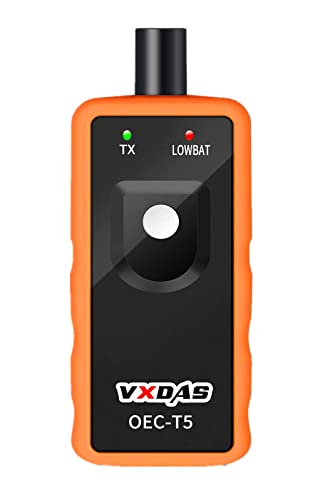
VXDAS
VXDAS TPMS Relearn Tool Only for GM…
- 🚗2023 UPDATED FOR WIDER COMPATIBILITY: Specifically designed to work with most GM vehicles 2006-2023 (Chevy / Buick / GMC / Opel /…
- SAVE TIME, SAVE MONEY: Tire pressure monitor sensor activation tool is quick, simple, and efficient. With a press of a button, act…
- 🚗ESSENTIAL, EASY TO USE TOOL: This tire pressure reset tool is essential for replacing tire pressure sensors, removing tire pressu…
Step 2: Visually inspect each valve stem. Look for cracks, corrosion, or missing caps. A damaged valve stem can cause a slow leak that keeps triggering the sensor. Also check the tire sidewalls for bulges or punctures you might have missed.
Step 3: Identify which TPMS system your truck has. This is the step most guides skip, and it’s the most important. Your F-150 either has a direct system (each wheel has a sensor inside that broadcasts pressure data) or an indirect system (the ABS module estimates pressure by comparing wheel rotation speeds). Almost every F-150 sold in North America since 2026 uses direct sensors, but here’s how to confirm: check the door sticker for the letters “TPMS” followed by a frequency. If you see 315 MHz or 433 MHz, it’s direct. If you see nothing, check your owner’s manual under “Tire Pressure Monitoring System.” Direct systems require the relearn procedures below. Indirect systems just need a button hold on the dash — but again, that’s rare on F-150s.
Does Your F-150 Have a Reset Button? (And Why Most Don’t)
Here’s the honest answer: no, your F-150 almost certainly does not have a dedicated TPMS reset button. Ford removed that feature years ago. On some older trucks, there’s a button in the glovebox or under the dash, but it’s more common to find nothing at all.
What your truck does have is a learn mode. Think of it like pairing a Bluetooth speaker. The truck’s receiver needs to hear each sensor’s unique ID code and assign it to a wheel position. The reset procedures below all put the truck into that listening mode, then you wake up each sensor so the receiver can hear it.
If you have a 2026-2026 model with a standard ignition key, you’ll use the sequence in Method 1. If you have a 2026-2026 model with push-button start, you’ll use a different sequence. And if you have a 2026 or newer truck, you’ll probably need Method 2, the drive-to-relearn. Let’s get into each one.
Method 1: The No-Tool Stationary Relearn (Horn Chirp Method)
This is the classic procedure. It works on 2026-2026 F-150s and requires nothing but your ignition key (or push button) and a few minutes of patience. The truck’s horn chirps to confirm each sensor has been learned. You’ll do this in a specific order: left front, right front, right rear, left rear.
For 2026-2026 Models (Standard Ignition)
Get in the truck, close the door, and put the key in the ignition.
- Turn the key from OFF to RUN (the position right before cranking the engine) three times in a row, ending in RUN. Do this within about 6 seconds. Don’t start the engine.
- Press and release the brake pedal once. The horn should chirp once, and the TPMS light on the dash should blink. That means you’re in learn mode.
- Get out and go to the left front tire. Hold the key fob (or a TPMS trigger tool if you have one) against the tire sidewall, right near the valve stem. Press and hold the button on the fob, or the tool’s trigger, until the horn chirps. That chirp means the left front sensor was learned.
- Move to the right front tire and repeat. Then right rear, then left rear. The horn chirps once for each sensor.
- When the last sensor (left rear) is learned, the horn chirps twice. Turn the key to OFF. You’re done.
A few things to watch for. If you don’t get the initial chirp after pressing the brake, you either didn’t cycle the key fast enough or the system didn’t enter learn mode. Start over and try again. Also, the key fob trick only works if your fob battery is strong. A weak fob might not transmit far enough to wake the sensor.
For 2026-2026 Models (Push-Button Start)
Push-button trucks need a slightly different sequence. The principle is the same, but the button changes the timing.
- Enter the truck with the key fob on you. Close the door.
- Press the START button three times without touching the brake pedal. Each press cycles through ACC, then ON, then OFF. End in ON (all the dash lights come on). Do this within about 6 seconds.
- Press and release the brake pedal once. The horn chirps once, and the TPMS light blinks.
- Walk to the left front tire. Hold the key fob against the sidewall near the valve stem. Press a button on the fob (lock or unlock both work) and hold it until the horn chirps.
- Repeat for right front, right rear, and left rear. The final chirp is a double chirp.
- Turn the truck off by pressing the START button once without touching the brake.
One common mistake: people press the brake pedal too early or too late. The system is picky about timing. If you miss the window, you’ll get no chirp and have to restart the sequence. It’s not broken, just retry.
Method 2: The Drive-to-Relearn Method (2026-2026 Models)
Starting with the 2026 model year, Ford changed things. The stationary horn chirp method doesn’t work on these trucks. Instead, you use the drive-to-relearn method. It’s simpler in some ways, but it requires a drive at specific speeds for a specific duration.
Here’s the exact procedure for 2026-2026 F-150s:
- Make sure all four tires are inflated to the pressure on the door sticker. This is non-negotiable. The system won’t learn if pressures are off.
- Start the engine and drive the truck. You need to maintain a speed between 20 and 40 mph continuously for at least 10 minutes. Stop-and-go traffic doesn’t count. Find a stretch of road where you can hold a steady speed.
- During this drive, the TPMS light may blink or stay solid. That’s normal. The system is sampling data from each wheel speed sensor and comparing it to the known good pressures.
- After about 10 minutes of steady driving, pull over safely and turn the engine off. Wait 60 seconds, then restart the truck. The TPMS light should be off.
If the light stays on after the drive, check your tire pressures again. A slow leak or a tire that’s a few psi low will prevent the relearn. Also, this method only works if you haven’t rotated the tires recently. If you rotated tires and the light came on, the system needs to relearn the new wheel positions, which this drive accomplishes.
This method is frustrating because there’s no feedback during the drive. You just have to trust it. But it works for the vast majority of 2026+ trucks. If you’ve done it twice and the light still won’t go off, you likely have a sensor issue, not a relearn issue.
Method 3: The Paperclip Trick (Bypassing the Tool)
This one’s for the older trucks, specifically 2026-2026 models. Some of these have a diagnostic connector under the dash that you can jump to force the system into learn mode, bypassing the key cycle sequence entirely. It’s a bit of a hack, but it works when the button sequence fails.
Here’s what to do:
- Look under the driver’s side dash, near the hood release. You’ll find the OBD-II diagnostic port (the big 16-pin connector).
- Find the two specific pins you need to jump. On F-150s, it’s usually pin 3 (the one with the orange wire) and pin 11 (the one with the brown wire). You’re looking for a brown wire and an orange wire in the same row.
- Take a paperclip and bend it into a U shape. Insert one end into the pin 3 slot and the other into the pin 11 slot. This creates a jumper wire.
- Turn the key to RUN (don’t start the engine). The horn should chirp once, and the TPMS light will blink, signaling learn mode.
- Leave the paperclip in place and walk around the truck, waking each sensor with your key fob (or a TPMS tool) in the same order: left front, right front, right rear, left rear.
- When the final sensor is learned, the horn chirps twice. Remove the paperclip and turn the key off.
This trick works because the pins connect two wires that the truck’s diagnostic system uses to trigger a relearn. It’s a shortcut that dealerships used before dedicated TPMS tools became cheap. A word of caution: double-check your year’s pinout before doing this. Getting the wrong pins can cause a short. If you’re not comfortable, stick with Method 1.
Why Disconnecting the Battery Won’t Work
It’s the most common piece of advice on forums: “Just unhook the battery for 30 minutes and it’ll reset.” That advice is wrong for modern F-150s, and here’s why.
Your truck’s TPMS system stores sensor IDs in non-volatile memory. That means it remembers them even without power. Disconnecting the battery clears the radio presets and the clock, but it does not clear the sensor IDs or the warning light. The system doesn’t need a reboot; it needs a relearn.
There’s another reason the battery trick fails. The TPMS warning light is triggered by a specific condition — low pressure, a sensor fault, or a missing sensor ID. Disconnecting the battery doesn’t change the tire pressure or fix a dead sensor. So the light comes right back on when you reconnect the battery because the underlying problem is still there.
If you’re dealing with a sensor that’s actually dead (not just out of range), the battery trick definitely won’t help. You need to replace the sensor, and then you’ll need to relearn it. A TPMS tool makes that job much easier. Something like the VXDAS TPMS relearn tool is designed for GM vehicles, so it won’t help you with your Ford, but it shows what a dedicated tool looks like. For your F-150, you’d need a Ford-compatible tool, or you can use the key fob methods above.
Troubleshooting: When the Horn Chirps But the Light Stays On
You did the whole sequence. The horn chirped for every tire. You got the double chirp at the end. But the TPMS light is still on. Now what?
This is where you need to think like a mechanic. The relearn worked, but the system is still seeing a problem. Work through this checklist in order.
First, check the pressures again. The relearn doesn’t fix low pressure; it just tells the truck which sensor is where. If a tire is at 28 psi and the threshold is 30, the light will stay on regardless of the relearn. Inflate to the door sticker pressure and drive for a minute.
Second, look at the TPMS light pattern. If the light blinks for about 75 seconds and then stays solid, that’s a system fault, not a low-pressure warning. A solid light after a relearn usually means a sensor isn’t transmitting. A blinking light usually means the receiver module can’t hear one or more sensors.
Third, isolate the bad sensor. You can do this without a tool by checking each tire’s pressure reading on the dash display (if your truck has the digital cluster). If one tire shows “–” instead of a number, that sensor is dead or not programmed. If all four show numbers but the light is still on, the problem is likely the receiver module or the wiring to it.
Fourth, consider the receiver module. It sits behind the glovebox on most F-150s. It’s rare, but the module can fail. Before replacing it, check the wiring harness for rodent damage or corrosion. Also, check if the module has the correct part number for your truck’s frequency (315 MHz vs. 433 MHz). If you bought a used module, it might be the wrong one.
Fifth, check for aftermarket wheels or tires. If you have aftermarket wheels with different valve stems, the sensors might be too far from the receiver or shielded by metal. Steel wheels can block the signal. Also, if you have a tire that was recently patched, the shop might have damaged the sensor during the repair.
When You Absolutely Need a TPMS Tool (And When You Don’t)
The methods above work without any special equipment on most F-150s. But there are two situations where you’ll need a tool, and pretending otherwise wastes your time.
Situation 1: You replaced a sensor and it’s not programmed. New sensors (or sensors from a parts store) need to be programmed with the correct ID before the truck will recognize them. The key fob trick won’t program a new sensor; it just wakes up sensors that are already programmed. If you replaced a sensor, you need a TPMS tool to write the sensor’s ID, or you need to take it to a shop.
Situation 2: Your key fob battery is dead or weak. The fob trick relies on the fob’s RF signal to wake the sensor. If the fob is dead, you can’t trigger the sensors. A TPMS tool has its own transmitter and doesn’t rely on the fob. If your fob is dead and you need to relearn, a tool is the only option short of replacing the fob battery first.
For everything else — tire rotations, seasonal tire changes, or just clearing a light after inflating — the no-tool methods above are sufficient. You don’t need to spend money on a tool you’ll use once a year. But if you fall into either situation above, a dedicated tool is worth it. The VXDAS TPMS tool I mentioned earlier is for GM vehicles, so it won’t work on your Ford. For F-150s, look for a tool that explicitly lists Ford compatibility and supports 315 MHz. Check the current price on Amazon before buying.
Quick Reference Chart: F-150 Generations and Reset Methods
| Model Years | Ignition Type | Best Reset Method | Notes |
|---|---|---|---|
| 2026-2026 | Standard key | Key cycle + brake (Method 1) | Paperclip trick works on some years; key fob triggers sensors |
| 2026-2026 | Push-button start | Button cycle + brake (Method 1) | Same sensor wake order; use fob buttons to trigger |
| 2026-2026 | Push-button start | Drive-to-relearn (Method 2) | Requires 20-40 mph for 10 minutes; no horn chirps |
| All years (with dead fob) | Any | TPMS tool required | Fob can’t trigger sensors; tool needed to wake them |
Frequently Asked Questions
How long does it take for the F-150 TPMS light to reset after driving?
For 2026 and newer models, you’ll need to drive at a steady speed between 20 and 40 mph for about 10 minutes. For older models using the horn chirp method, the reset is immediate once you complete the sequence. The light should go off within a minute of the final chirp.
Can I use my phone as a TPMS reset tool?
No. Your phone doesn’t have the 315 MHz or 433 MHz transmitter needed to wake the sensors. Some aftermarket TPMS apps can read data from Bluetooth sensors, but they can’t trigger the relearn procedure on a factory F-150 system. You need a physical tool or the key fob method.
Why does my TPMS light blink for 75 seconds then stay solid?
That’s a system fault code, not a low-pressure warning. It means the receiver module isn’t getting a signal from one or more sensors. It could be a dead sensor battery, a damaged sensor, or a problem with the receiver module itself. Check each tire’s pressure reading on the dash to find the silent sensor.
Will tire rotation trigger the TPMS light on an F-150?
Yes, it can. The system is programmed to know which sensor is at which wheel position. When you rotate tires, the sensors move to new positions. The truck doesn’t know that, so it may show incorrect pressures or trigger a warning. You need to perform a relearn after a rotation so the truck maps each sensor to its new position. The drive-to-relearn method works for this on 2026+ models.
What’s the difference between 315 MHz and 433 MHz sensors?
They’re two different radio frequencies used by TPMS sensors. Your F-150 uses one or the other, depending on the model year and market. You can’t mix them. Check your door sticker or owner’s manual to see which one your truck uses. If you’re buying replacement sensors, they must match your truck’s frequency. The wrong frequency won’t be detected by the receiver.
Your Next Move: A Quick Recap
You’ve got the knowledge, so here’s the plan of attack.
- Always start with the pre-check: inflate to door sticker pressure, inspect valve stems, and confirm your TPMS type.
- For 2026-2026 trucks, use the horn chirp method. Match the sequence to your ignition type — key cycle or push-button cycle.
- For 2026-2026 trucks, don’t waste time with the horn chirp. Drive at 20-40 mph for 10 minutes and let the system relearn.
- The paperclip trick is a fallback for older models, but only if you’re comfortable with the pinout.
- Disconnecting the battery won’t help. Ever. Skip that step.
- If the horn chirps but the light stays on, you have a sensor or receiver problem, not a relearn problem. Isolate the dead sensor by checking the dash display.
- If you have a dead key fob or a new unprogrammed sensor, you need a TPMS tool. There’s no way around it.
If you’re dealing with other F-150 issues, we’ve got guides on resetting engine failsafe mode and finding the right lug nut size. And for a broader look at TPMS resets on other Ford models, check out our TPMS reset guide for F-150s.
Products related to this article
Sponsored / affiliate links. As an Amazon Associate I earn from qualifying purchases. I may earn additional commission from eligible campaigns.
 EL-50449 Ford TPMS Relearn Tool TPMS Reset Tool Tire Pressure Sensor Reset, TPMS relearn, tire Rotation, tire Replacement, clearing TPMS Warning Light
 Arozk TPMS19 TPMS Reset Tool Sensor Relearn Reset Tool for Ford Lincoln Tire Pressure Monitor System Sensor Programming Training Activation Tool TPMS Trigger Tool Tire Sensors Reset Tool