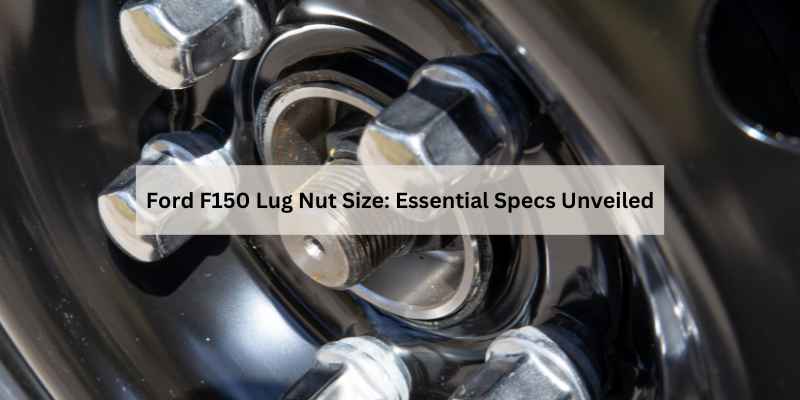
Ford F-150 Lug Nut Size: The Complete Year-by-Year Guide
You’re on the side of the road with a flat tire, and the factory lug wrench won’t fit. Or worse, you’ve just rounded off a lug nut trying to use a 13/16″ socket on a truck that needs 21mm. It’s a frustrating spot, and it usually happens because someone assumed all F-150s use the same hardware. They don’t.
This guide settles the confusion. You’ll get the exact thread pitch, socket size, and torque specs for every F-150 generation from 1997 through 2026. You’ll also learn why factory lug nuts swell and seize, how to avoid damaging your wheels when switching to aftermarket rims, and the safe way to remove and reinstall them. No guesswork left.

dynofit
dynofit 24pcs 14x1.5 OEM/Stock Lug Nuts for…
- Fitment: Vehicles with wheel lug nuts requiring a 14x1.5 thread(6 lugs) and take a conical 60 degree seat, compatiable with 2015-2…
- Specification: Thread pitch M14X1.5, 60 Degree cone/conical seat, Overall tall 1.75" (44.5mm), Width 1.22"(31mm), 21mm(13/16") hex…
- Performance: One-piece structure design, which is more safer while you are installing the lug nuts, high standward QC/QA control,…
If you discover your current lug nuts are the swollen two-piece style, a set like the dynofit 24pcs 14x1.5 OEM lug nuts is a direct replacement. It’s a one-piece design that eliminates the swelling problem entirely, and it’s built for the 2026-2026 models. We’ll get into why that matters shortly.
The Exact Ford F-150 Lug Nut Size (Quick Answer)
For the vast majority of F-150s built after 1997, the lug nut size is M14 x 1.5. That means the thread diameter is 14 millimeters, and the pitch (the distance between threads) is 1.5 millimeters. The hex size you’ll need for your socket is 13/16 inch (21mm).
There are a few exceptions for older models, so check the chart below before you buy anything.
Ford F-150 Lug Nut Size Chart by Generation and Year
Here’s the master reference table. Bookmark this page, because you’ll need it every time you rotate tires or replace a wheel.
| Generation | Years | Thread Pitch | Socket Size | Seat Type | Torque Spec (ft-lbs) |
|---|---|---|---|---|---|
| 9th-11th Gen | 1997-2026 | M14 x 1.5 | 13/16″ (21mm) | Conical 60° | 100 |
| 12th Gen | 2026-2026 | M14 x 1.5 | 13/16″ (21mm) | Conical 60° | 150 |
| 13th Gen | 2026-2026 | M14 x 1.5 | 13/16″ (21mm) | Conical 60° | 150 |
| 14th Gen | 2026-Present | M14 x 1.5 | 13/16″ (21mm) | Conical 60° | 150 |
9th-11th Generation (1997-2026)
These trucks use the same M14x1.5 thread as the newer ones. The socket size is 13/16 inch. The torque spec is lower than later models at 100 ft-lbs. If you’re working on a 2026 F-150, don’t use the 150 ft-lbs spec from the newer trucks; you’ll over-torque the studs.
12th Generation (2026-2026)
Ford bumped the torque spec to 150 ft-lbs for this generation. The thread and socket size stayed the same. This is also the generation where you start seeing more complaints about swollen factory lug nuts, which we’ll cover in a moment.
13th Generation (2026-2026)
The aluminum-bodied trucks kept the same M14x1.5 thread and 21mm hex. Torque remains at 150 ft-lbs. This generation is compatible with the dynofit replacement set mentioned earlier.
14th Generation (2026-Present)
No changes here. Still M14x1.5, still 13/16 inch socket, still 150 ft-lbs. Ford has kept this spec stable for nearly three decades, which is good news for anyone swapping wheels between trucks.
Thread Pitch, Socket Size, and Seat Type Explained
Three numbers matter when you buy lug nuts: thread pitch, hex size, and seat angle.
Thread pitch is the distance between threads in millimeters. M14x1.5 means the stud is 14mm wide and the threads are 1.5mm apart. You can’t use an M14x1.25 nut on this truck; it will start to thread on, then cross-thread and ruin the stud.
Socket size is the width across the flats of the hex. Most F-150s use a 13/16 inch socket, which is the same as 21mm. Some aftermarket lug nuts use a smaller 19mm hex, so check before you assume your factory wrench fits.
Seat type is the angle where the nut meets the wheel. F-150s use a conical 60-degree seat, often called an acorn nut. If you switch to aftermarket wheels, verify they also use a 60-degree cone. Some aftermarket rims use a ball seat (usually found on German cars), and forcing a cone nut into a ball seat will cause vibrations and eventually loosen the wheel.
Why Factory Lug Nuts Swell (and How to Fix It)
If you’ve ever tried to remove a wheel on a 2026-2026 F-150 and the socket just spins, you’ve met the swollen lug nut problem. The factory nuts are a two-piece design: a steel inner core and a chrome outer shell. Water gets between the two layers, rust forms, and the outer shell expands. The hex grows just enough that a 13/16 socket slips right over it.
You can identify a swollen nut by looking at the hex. The corners will look rounded, and the surface might feel rough or pitted. Sometimes you’ll see the chrome cap starting to separate from the steel underneath.
The fix is to replace them with a one-piece design. A solid steel nut with a machined hex won’t swell because there’s no cap to separate. The dynofit set mentioned earlier is exactly this style. It’s a single forged piece, so the socket always fits. You’ll need a 21mm socket that’s in good condition, and you might need to tap the socket onto the swollen nut with a hammer to get it seated before you can break it loose.
Proper Torque Specs and Tightening Sequence
Torque Chart by Year
Use these numbers with a calibrated torque wrench. Don’t guess, and don’t use the impact gun to tighten.
| Model Years | Torque (ft-lbs) | Torque (Nm) |
|---|---|---|
| 1997-2026 | 100 | 135 |
| 2026-Present | 150 | 203 |
The Correct Star Pattern
Always tighten in a star or cross pattern, not in a circle. Here’s the sequence for a 6-lug F-150:
- Tighten the top-left lug nut to about 50% of the final torque.
- Move to the bottom-right lug (opposite the first).
- Move to the top-right lug.
- Move to the bottom-left lug.
- Move to the top-center lug.
- Move to the bottom-center lug.
- Repeat the entire pattern at 100% torque.
This pattern ensures the wheel seats evenly against the hub. If you tighten in a circle, you’ll warp the brake rotor or cause a vibration that’s hard to diagnose. Also, re-torque your lug nuts after driving 50 miles. New wheels and new nuts settle, and a loose wheel is a dangerous thing.
Aftermarket Wheels: What Changes?
Swapping to aftermarket wheels changes the rules. The thread pitch stays M14x1.5 because that’s on the truck’s hub, not the wheel. But the seat type and the length of the lug nut might change.
Most aftermarket wheels for trucks use a conical 60-degree seat, so your factory nuts will work. But some use a shank-style nut, which has a straight cylindrical portion that centers the wheel. If your new wheels require shank nuts, using acorn nuts will leave the wheel loose and cause it to wobble. Check the wheel manufacturer’s spec sheet before you mount anything.
You also need to watch the nut length. A lug nut that’s too long will bottom out on the stud before it clamps the wheel. A nut that’s too short won’t engage enough threads. The general rule is you need at least the same number of threads engaged as the diameter of the stud. For a 14mm stud, that’s about 14mm of thread engagement.
Step-by-Step Lug Nut Replacement Guide
Here’s the practical process for replacing your lug nuts, whether you’re dealing with swollen factory ones or just upgrading.
- Loosen the lug nuts while the truck is on the ground. Use a breaker bar and the correct 13/16 socket. If a nut is swollen, tap the socket on with a hammer.
- Jack up the truck and secure it on jack stands. Never work under a truck supported only by a jack.
- Remove the wheel and lay it flat.
- Remove the old lug nuts. If they’re swollen and stuck, you might need to use a lug nut extractor socket. These have spiral flutes that bite into the rounded metal.
- Clean the wheel studs with a wire brush. Remove any rust or debris. This step is critical; a dirty stud will give you a false torque reading.
- Install the new lug nuts by hand. Thread them on until they’re snug. This prevents cross-threading.
- Tighten in the star pattern with a torque wrench to the correct spec for your year.
- Lower the truck and drive 50 miles, then re-torque.
One thing I’ll add from experience: don’t use an impact wrench to install lug nuts. It’s easy to over-torque them, and the hammering action can damage the wheel studs. Use it to remove, but switch to a torque wrench for installation. Your future self will thank you when you’re not fighting a seized nut on the side of the road.
Anti-Seize: Yes or No?
There’s a debate about applying anti-seize to wheel studs. Some say it prevents corrosion and makes future removal easier. Others say it changes the torque reading.
Here’s the truth: anti-seize acts as a lubricant. When you torque a lug nut to 150 ft-lbs with anti-seize on the threads, the actual clamping force is much higher because there’s less friction. Some studies suggest the effective torque is reduced by about 20%. So if you apply anti-seize, you should reduce your torque spec by roughly 20% to avoid over-stretching the studs.
My recommendation: skip the anti-seize on the threads. The factory spec assumes dry threads. Instead, apply a thin coat of anti-seize to the hub-centric ring and the back of the wheel where it meets the rotor. This prevents the wheel from seizing to the hub without affecting the torque reading.
Frequently Asked Questions (FAQs)
Will a 13/16 socket fit all F-150 lug nuts?
It fits all factory lug nuts on 1997-2026 models. Some aftermarket lug nuts use a 19mm hex, so verify before you start. If you’re using the stock nuts, 13/16 is correct.
Can I use lug nuts from a 2026 F-150 on a 2026 F-150?
Yes. The thread pitch is identical (M14x1.5), and the seat type is the same. The only difference is the torque spec. The 2026 truck needs 150 ft-lbs, and the 2026 also needs 150 ft-lbs. So they’re fully interchangeable.
How do I know if my lug nut is swollen?
Look at the hex. If the corners are rounded or the chrome cap looks like it’s separating, it’s swollen. You can also try fitting a socket; if it slips over the nut without engaging the corners, it’s swollen.
What happens if I use the wrong torque spec?
Under-torquing causes the wheel to loosen and wobble. Over-torquing stretches the studs, which weakens them and can cause them to snap. Both are dangerous. Always use the spec for your specific generation.
Do I need to re-torque after 50 miles?
Yes. New lug nuts and wheels settle after a few heat cycles. The nuts can loosen slightly. Re-torquing after 50 miles is cheap insurance against a wheel coming off. It’s a 10-minute job that could save your life.
What You Should Remember
- All F-150s from 1997 to 2026 use M14x1.5 thread and a 13/16 inch socket.
- Torque specs are 100 ft-lbs for 1997-2026 and 150 ft-lbs for 2026 and newer.
- Always use a 60-degree conical seat nut on factory wheels.
- Swollen factory lug nuts are a two-piece design failure; replace them with one-piece nuts like the dynofit set.
- Never tighten lug nuts with an impact wrench. Use a torque wrench in a star pattern.
- Re-torque after 50 miles whenever you install a wheel.
- Skip anti-seize on the threads; apply it to the hub contact face instead.
If you’re dealing with deeper suspension or axle work, check out our front axle diagram for reference. And if you’ve got a 2026 model with the 5.4L, the firing order guide might come in handy for your next tune-up. For older trucks, the bolt pattern guide covers the 1997 model specifically.
Products related to this article
Sponsored / affiliate links. As an Amazon Associate I earn from qualifying purchases. I may earn additional commission from eligible campaigns.