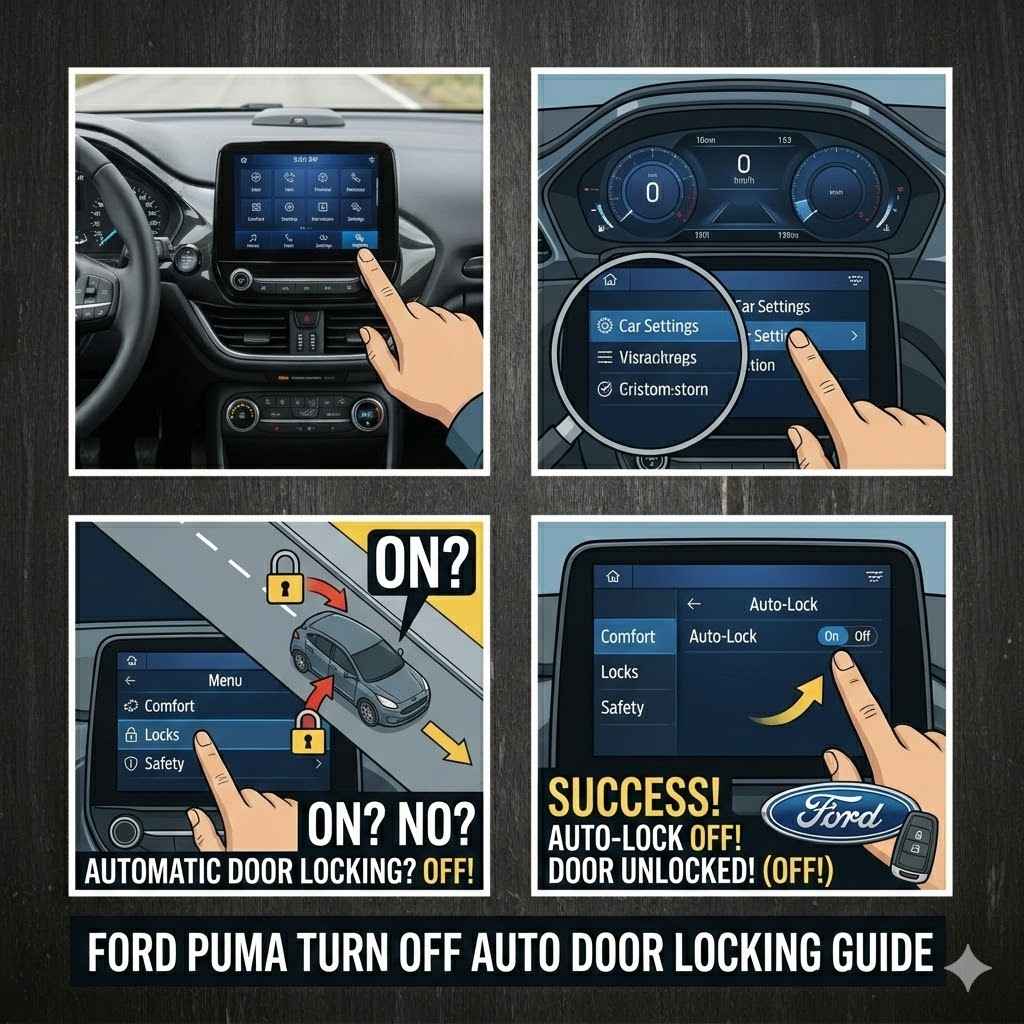
Ford Puma Turn Off Auto Door Locking Guide
Some car features are super handy, but sometimes you just want to turn them off, right? For new Ford Puma owners, figuring out how to Ford Puma: Turn Off Auto Door Locking can seem a bit tricky at first. It’s not always obvious where to find the setting.
But don’t worry, it’s actually quite simple once you know where to look! This guide will walk you through it step-by-step, so you can get your doors to lock exactly when and how you want them to. Let’s make your Puma work just for you.
Understanding Ford Puma Auto Door Locking
Ford Puma’s auto door locking system is designed to add a layer of security and convenience for drivers. This feature automatically locks the vehicle’s doors when certain conditions are met, typically after the engine starts or when the vehicle reaches a certain speed. The goal is to prevent accidental unlocking while driving and to ensure the car is secure when you’re on the move. Many drivers appreciate this built-in safety net, as it provides peace of mind knowing their vehicle is protected.
The system is usually configurable, allowing owners to adjust its behavior to better suit their needs. For instance, some systems can be set to lock doors only after the vehicle is in motion, while others might lock all doors simultaneously. The underlying technology involves sensors that detect vehicle speed and the state of the engine, communicating with the car’s body control module (BCM) to engage the locking mechanisms. Understanding how this system works is the first step in learning how to modify its settings.
How Auto Door Locking Works in Your Puma
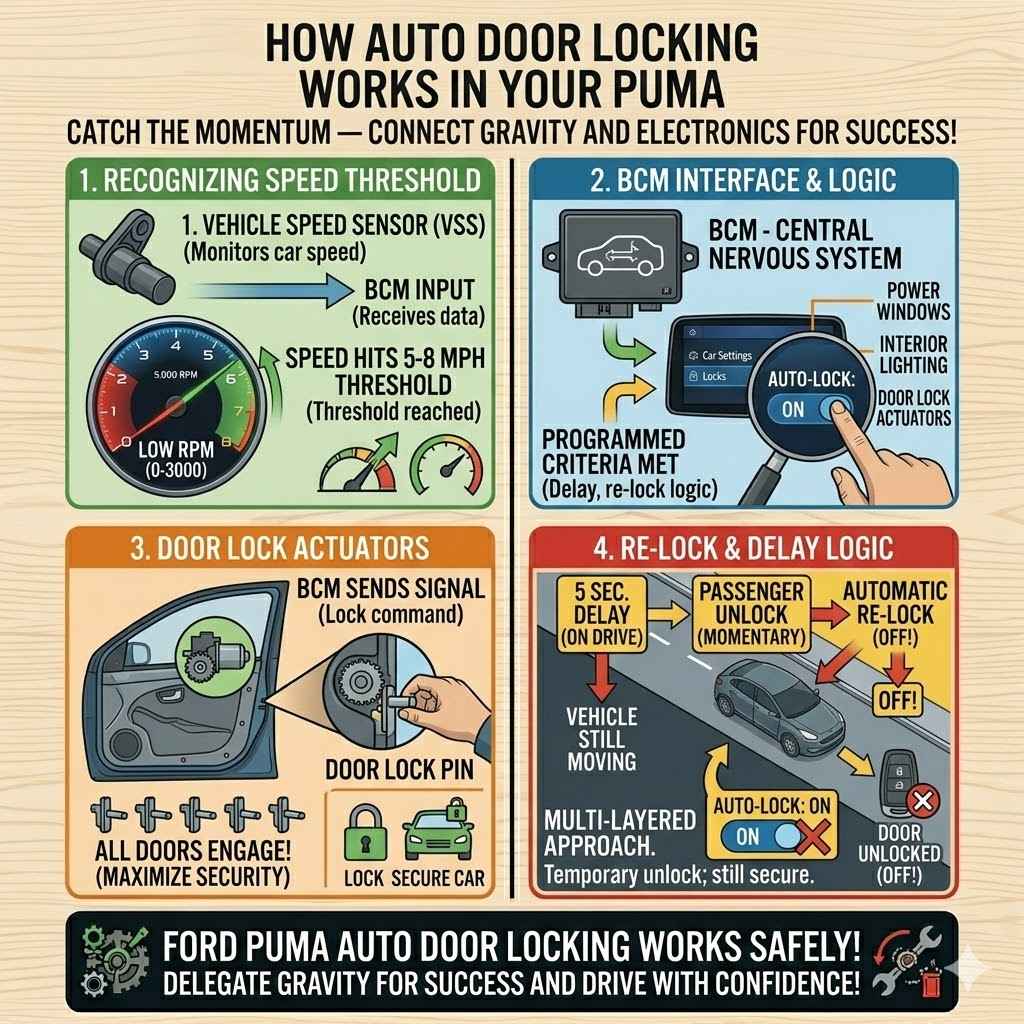
In your Ford Puma, the auto door locking system relies on a network of sensors and electronic modules. The vehicle speed sensor is a key component, feeding information about your car’s speed to the BCM. Once the vehicle hits a predetermined speed threshold, like 5 or 8 mph, the BCM sends a signal to the door lock actuators. These actuators are small motors within each door that physically engage the locking pins.
The system is programmed with specific parameters for when to activate. This often includes a delay, ensuring the doors don’t lock the instant you shift into drive. Some systems also incorporate a feature where, if a door is unlocked momentarily (perhaps for a passenger), it will re-lock after a short period if the vehicle is still moving. This multi-layered approach aims to maximize security without being overly intrusive.
The Role of the Body Control Module
The Body Control Module, or BCM, acts as the central nervous system for many of your car’s comfort and convenience features, including the auto door locking. It receives input from various sensors, such as the speed sensor, and then executes commands based on its programming. For the auto door locking, the BCM monitors vehicle speed. When the speed meets the programmed criteria, the BCM tells the door lock actuators to lock the doors.
The BCM also manages other functions like interior lighting, power windows, and even some safety systems. This interconnectedness means that settings related to door locking are often accessed through the BCM’s interface, which is typically controlled via the vehicle’s infotainment system or a dedicated button on the dashboard. Understanding the BCM’s function helps explain why certain settings are found in specific menus.
Why You Might Want to Turn Off Auto Door Locking
While auto door locking offers benefits, there are several practical reasons why a driver might prefer to disable this feature. One common scenario is when you frequently have passengers who need to exit the vehicle quickly, such as children. If the doors lock automatically, a passenger might not be able to open their door from the inside without you manually unlocking them first. This can be inconvenient, especially in situations where speed is important.
Another reason is personal preference. Some drivers simply feel more in control when they can manually decide when to lock and unlock their doors. They might find the automatic locking feature to be an unnecessary action that they don’t require. For those who often park in secure, private locations, the perceived security benefit of auto locking might be less of a priority. The ability to customize car settings is a valued aspect of modern vehicle ownership.
Also, troubleshooting can sometimes lead to wanting to turn off the feature. If there’s a perceived issue with the auto locking system, or if you’re performing maintenance that requires doors to remain unlocked, disabling it temporarily is a logical step. It allows you to isolate potential problems or ensure consistent access without the system interfering.
Convenience for Passengers and Children
For families with young children, the auto door locking feature can sometimes create a small hurdle. If a child needs to exit the vehicle urgently, and the doors have automatically locked, they might not be able to operate the handle themselves. This means the driver has to be aware and ready to unlock the doors manually, which can be an added task when your attention might be needed elsewhere. Disabling auto lock allows all occupants to have immediate access to their doors.
This is particularly relevant when you are parked. If you’re waiting for a passenger to get into or out of the car, and the auto lock engages, they might struggle to open the door. Being able to control the lock status manually provides a smoother experience for everyone involved. It simplifies the process of getting in and out of the vehicle for all occupants.
Scenarios Requiring Manual Control
Imagine you’re picking up a friend from a busy train station. As you pull up, they are waiting. If the auto lock engages, they might have to wait for you to notice and manually unlock their door. Being able to keep the doors unlocked until they are safely inside, or to unlock them with a simple button press, makes the interaction much quicker and less prone to confusion.
Consider another situation where you’re a delivery driver. You might need to hop in and out of your vehicle frequently throughout the day. If the doors auto lock after every stop, it adds a significant amount of time to your workflow. Being able to disable this feature means you can access your vehicle much faster, improving your efficiency.
Personal Preference and Control
Some drivers simply prefer to have full manual control over their vehicle’s locking mechanisms. They might not fully trust an automated system or may just feel more comfortable making those decisions themselves. For these individuals, the ability to disable the auto door locking feature is about asserting personal preference and maintaining a direct connection with how their vehicle operates. It’s about setting up the car to match their driving style and comfort level.
This preference can stem from years of driving vehicles without such automated features. The routine of manually locking doors after parking, or unlocking them before exiting, becomes second nature. Introducing an automatic system can feel like an unnecessary change to that established routine. It’s about having the car adapt to the driver, not the other way around.
How to Turn Off Auto Door Locking on Ford Puma
Fortunately, adjusting the auto door locking settings on a Ford Puma is generally a straightforward process, usually done through the vehicle’s infotainment system. The exact steps can vary slightly depending on the specific model year and trim level of your Puma, but the general approach remains consistent. You’ll typically access these settings via the touchscreen display.
The key is to find the correct menu that controls vehicle settings or driver assistance features. Once you locate this menu, you should see an option related to door locking or central locking. Within that option, you’ll usually find a toggle or selection to disable the automatic locking function. The system will then confirm your choice, and the feature will be turned off until you decide to re-enable it.
Accessing Vehicle Settings Via the Touchscreen
Your Ford Puma is equipped with an infotainment system that serves as the central hub for many of its features. To access the auto door locking settings, you’ll typically need to navigate to the main menu on the touchscreen. Look for an icon that represents vehicle settings, sometimes depicted as a gear or a car silhouette. Tapping this icon will open up a sub-menu with various configurable options.
Within the vehicle settings menu, you’ll want to find a section dedicated to “Locks” or “Door Settings.” This is where all the functions related to how your doors lock and unlock are managed. It’s important to explore these menus carefully, as different settings are grouped together to make them easier to find. Once you’ve found the relevant section, the next step is to locate the specific feature you wish to modify.
Finding the Door Locking Options
Once you are in the “Locks” or “Door Settings” menu, you should see several options related to how your car’s doors behave. You are looking for a specific setting that controls the automatic locking function. This might be labeled as “Auto Lock,” “Speed Lock,” “Automatic Door Locking,” or something similar. The exact phrasing can vary, but it will generally be descriptive of the feature you want to change.
You will likely see a checkbox, a toggle switch, or a list of options to choose from. To turn off the auto door locking, you would either uncheck the box, move the toggle to the “off” position, or select the option that indicates it should not operate automatically. The system usually provides visual confirmation that your selection has been registered.
Disabling the Feature Step-by-Step
Here’s a common sequence of steps to turn off auto door locking in your Ford Puma:
1. Start your Ford Puma and ensure the engine is running.
2. On the infotainment touchscreen, tap the “Settings” icon.
3. Look for and select the “Vehicle” or “Car” settings option.
4. Within the vehicle settings, find and tap on “Door Locks” or “Locking.”
5. Locate the option for “Automatic Door Locking” or “Speed Lock.”
6. Tap on this option and select “Off” or uncheck the associated box.
7. The system may ask you to confirm your choice. Select “Yes” or “Confirm.”
After these steps, the auto door locking feature should be disabled. To verify, you can try driving your Puma briefly and observe if the doors lock automatically when you reach a certain speed. If they remain unlocked, you have successfully turned off the feature. Remember that you can always return to these settings to re-enable auto door locking if you change your mind.
Re-enabling Auto Door Locking
If you decide later that you want the auto door locking feature back, the process is just as simple as disabling it. You will follow the same steps as outlined above, but instead of selecting “Off,” you will choose the option to enable the feature. This might be labeled as “On,” “Enable,” or by checking the box. Your Puma will then revert to its default behavior for automatic door locking.
It’s good to know that these settings are adjustable. This means you can switch the feature on and off as needed. For example, you might disable it for a long road trip with frequent stops and then re-enable it once you’re back to your usual commuting routine. The flexibility is there to match your driving needs.
Returning to Automatic Locking
To reactivate the auto door locking feature, simply return to the “Door Locks” or “Locking” menu within the vehicle settings on your Ford Puma’s touchscreen. Find the “Automatic Door Locking” or “Speed Lock” option again. This time, you will select “On” or check the box to enable it. The system will confirm the change.
This allows you to experiment with different settings. You might find that for certain situations or driving conditions, having the auto lock active is beneficial. The ability to switch back and forth ensures that the Ford Puma remains a versatile vehicle that can adapt to your preferences and requirements.
When to Consider Re-enabling
You might want to re-enable auto door locking if you start using your Puma for longer journeys where security on unknown roads is a higher concern. It’s also useful if you find yourself often forgetting to manually lock the doors after parking. Many drivers find that having the system active provides an extra layer of reassurance.
For instance, if you are driving in an area where you feel less secure, the auto lock can give you confidence that your doors are secured as soon as you start moving. It’s a small convenience that can contribute to a greater sense of safety and well-being while on the road.
Ford Puma Auto Door Locking Statistics and Facts
The adoption of auto door locking systems in vehicles has been steadily increasing over the years. This trend is driven by consumer demand for enhanced security and convenience features. According to industry reports, a significant percentage of new vehicles sold today come equipped with some form of automatic locking system as standard. This highlights its perceived value among car buyers.
In the automotive sector, features like auto door locking are often bundled into “convenience packages” or “safety suites.” Manufacturers track consumer preferences for these features to inform future vehicle design. While specific statistics for the Ford Puma’s auto door locking feature’s usage are not publicly available, the general trend indicates that it is a widely appreciated function. Many surveys show that car buyers rank security and ease of use high on their list of desired features.
Here’s a look at some related statistics that paint a picture of the automotive tech landscape:
A study by JD Power found that convenience features, including automatic locking, are highly valued by car owners.
In recent years, over 90% of new vehicle models offer some form of keyless entry and start, which often pairs with automatic locking systems.
Consumer reports often highlight the importance of security features for car buyers, with automatic locking being a common point of interest.
These statistics show that the technology found in your Ford Puma is part of a larger automotive evolution focused on making driving safer and more convenient for everyone.
Security Benefits of Auto Door Locking
Auto door locking provides a proactive security measure. It eliminates the chance of forgetting to lock your doors manually, especially when you’re in a hurry or distracted. For instance, if you’re carrying groceries and put them in the back seat before getting into the driver’s seat, the doors might automatically lock once you start moving, securing your belongings and the vehicle.
This feature is particularly beneficial in preventing “smash and grab” incidents. If a thief attempts to open a door while the vehicle is in motion, the automatic locking mechanism makes this impossible. It acts as an immediate deterrent and a physical barrier. This constant protection offers drivers a greater sense of security when they are on the road.
Real-Life Example of Security
Consider a scenario where you’ve just parked your car in a busy parking lot. As you get out to run an errand, you accidentally leave your passenger door slightly ajar, but the auto lock is enabled. After you move a short distance away, the system might detect the open door, wait for a brief period, and then re-lock it once it’s closed and the car is driven a little. While this is a simplified example, it illustrates how the system can help prevent opportunistic theft by ensuring the vehicle is locked. This proactive feature acts as a constant guardian.
Another example could be if you are driving in heavy traffic. A person on a motorcycle might try to open your passenger door as you crawl along. The auto locking system ensures that their attempt will be futile, as the door will be securely locked from the moment you started moving or reached the speed threshold. This automatic protection is invaluable in preventing such incidents.
Statistics on Vehicle Security Features
While precise data on how often auto door locking prevents specific crimes is hard to isolate, general trends in vehicle security are encouraging. Reports often indicate a decline in certain types of vehicle theft in areas where modern security features are prevalent. This suggests that the combination of various electronic safeguards, including automatic locking, plays a role in deterring criminals.
For example, a study might show that cars equipped with advanced anti-theft systems have a lower reported incidence of break-ins. Auto door locking, as a fundamental component of vehicle security, contributes to this overall safety. Its presence, even as a simple feature, adds a layer of defense that can make a vehicle a less appealing target for opportunistic thieves.
Troubleshooting Common Issues with Auto Door Locking
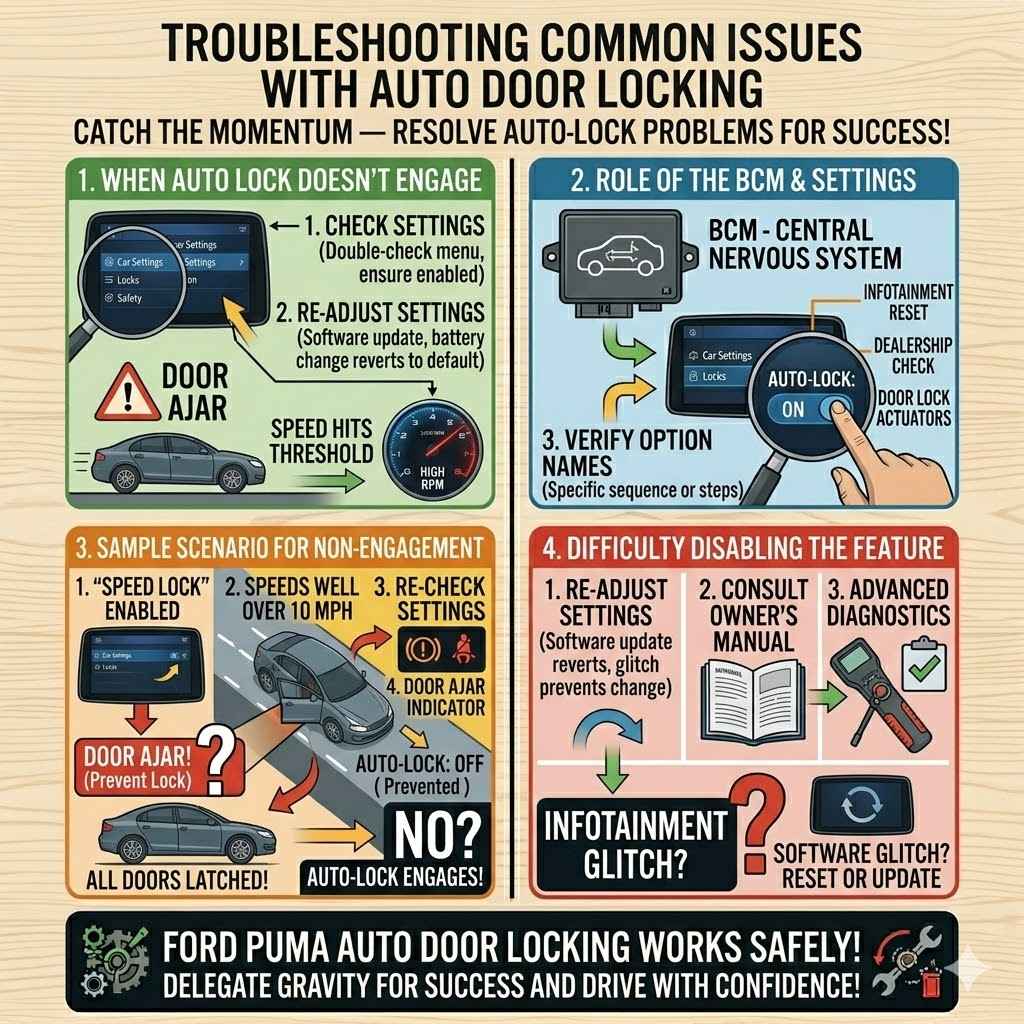
While the Ford Puma’s auto door locking system is generally reliable, like any electronic system, it can occasionally encounter issues. If you find that the auto locking isn’t working as expected, or if you’re having trouble disabling it, there are a few common problems to consider. These often involve simple fixes that can be resolved without needing a trip to the dealership.
The most frequent issues might include the system not engaging at all, or engaging erratically. Sometimes, after a software update or a battery change, vehicle settings can revert to their default, requiring you to re-adjust them. Other times, a loose connection or a faulty sensor could be the culprit, though this is less common for a user-adjustable feature.
When Auto Lock Doesn’t Engage
If your Ford Puma’s doors aren’t locking automatically when they should, first double-check your settings. It’s possible that the feature was accidentally turned off, or it reverted to its default disabled state. Make sure you are following the correct procedure to enable it via the infotainment system.
If the settings are confirmed to be correct and the feature is enabled, check if there are any error messages on your dashboard. Sometimes, a “door ajar” warning might prevent the auto lock from engaging, even if the door appears closed. Ensure all doors, including the trunk and hood, are firmly shut. If the problem persists, there might be a deeper electronic issue that warrants professional inspection.
Sample Scenario for Non-Engagement
Let’s say you’ve just bought a used Ford Puma and you want the auto door locking to work. You go through the menus and enable “Speed Lock.” You take the car for a drive, reaching speeds well over 10 mph, but the doors don’t lock. You re-check the settings, they are still on. You then notice a small orange light on your dashboard that indicates a door is not fully closed. Upon closer inspection, the rear passenger door wasn’t clicked all the way shut after you loaded some bags. Once you firmly closed it, the auto lock engaged on your next drive.
This highlights the importance of ensuring all doors and the trunk are properly secured. Any open or not fully latched entry point can inhibit the auto locking system from functioning as designed. It’s a simple check that often resolves the issue without further complication.
Difficulty Disabling the Feature
If you are having trouble turning off the auto door locking feature, ensure you are following the exact steps for your specific Puma model. Consult your owner’s manual if you are unsure about menu navigation or option names. Sometimes, a specific sequence of button presses or menu selections is required.
In rare cases, a software glitch within the infotainment system could prevent you from making changes. If you’ve tried multiple times and the setting won’t save, a software reset of the infotainment system, or a visit to a Ford dealership for a software update, might be necessary. They can access more advanced diagnostic tools to resolve such issues.
Frequently Asked Questions
Question: Can I turn off auto door locking for just the driver’s door?
Answer: Typically, the auto door locking feature in the Ford Puma is an all-or-nothing setting for all doors simultaneously. You usually cannot selectively disable it for just one door.
Question: Does turning off auto door locking affect my remote key fob?
Answer: No, turning off the automatic door locking feature will not impact the functionality of your remote key fob. You will still be able to lock and unlock all doors manually using the fob.
Question: Will disabling auto door locking void my warranty?
Answer: No, adjusting user-configurable settings like auto door locking through the infotainment system is a standard feature and will not void your vehicle’s warranty.
Question: How often should I check my Ford Puma’s door lock settings?
Answer: You only need to check your door lock settings if you wish to change them or if you notice the system is not behaving as expected. For most owners, it’s a set-it-and-forget-it feature.
Question: Is there a physical button to turn off auto door locking?
Answer: No, the auto door locking feature is typically controlled through the vehicle’s touchscreen infotainment system, not a dedicated physical button.
Conclusion
You’ve learned how to easily manage your Ford Puma’s auto door locking feature. Whether you prefer the convenience of automatic locking or the direct control of manual operation, adjusting this setting is simple. You can now confidently switch the auto door lock on or off through your car’s touchscreen to match your daily needs. Enjoy your Ford Puma with settings that work perfectly for you.