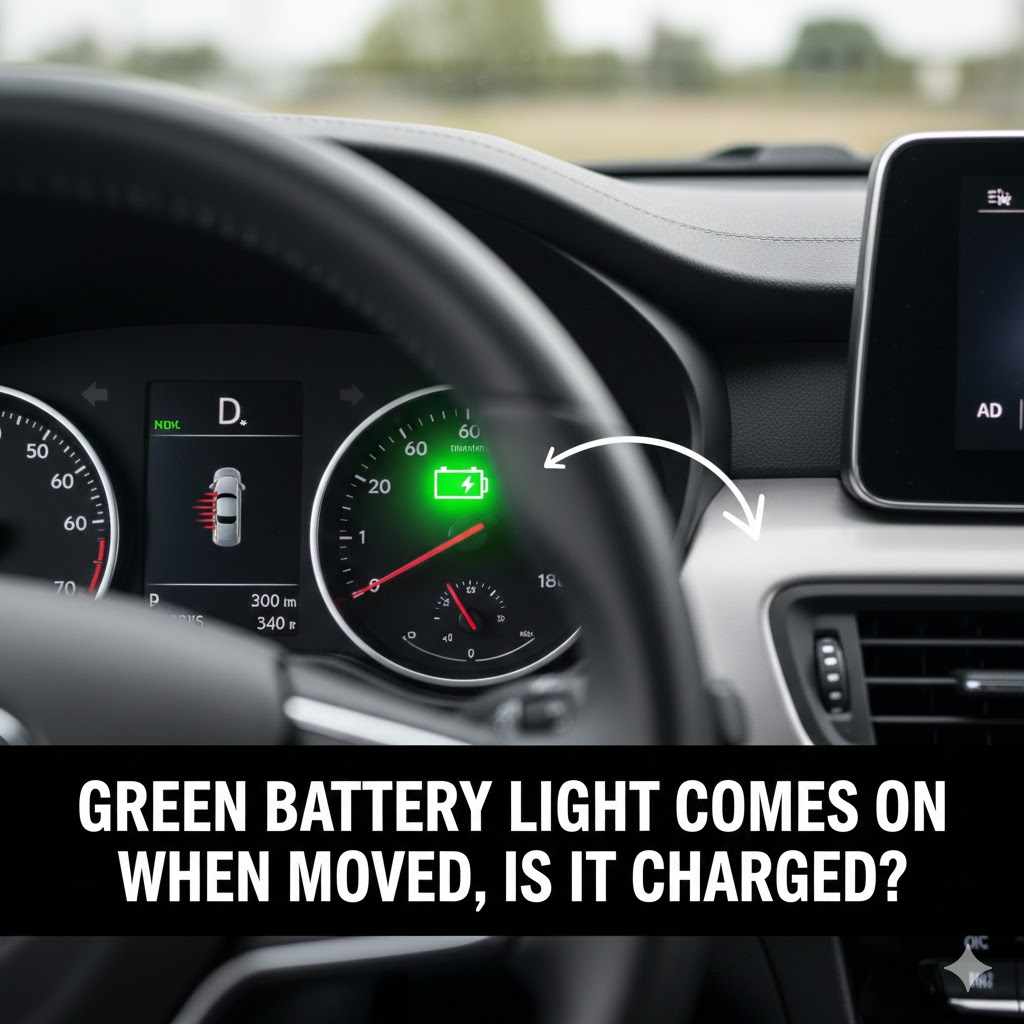
Green Battery Light Comes On When Moved Is It Charged
Have you ever noticed your device’s green battery light flicker on just when you pick it up or move it? It can be a little confusing, especially if you’re new to a particular gadget. You wonder, “Is it fully charged?
Or is it just waking up for a moment?” This little light can leave you scratching your head. But don’t worry! We’re going to break down exactly what that Green Battery Light Comes On When Moved—Is It Charged? means in a super simple way.
Get ready for easy steps that will clear up all your questions.
Why Your Green Battery Light Acts Up When Moved
This section explains why the green battery light might appear when you move your device. It often signals that the device is not fully depleted or is in a low-power state. Understanding this behavior helps you interpret your device’s status more accurately.
We will explore the underlying technical reasons for this indicator and how it relates to your battery’s health and charging process.
Understanding the Battery Status Indicator
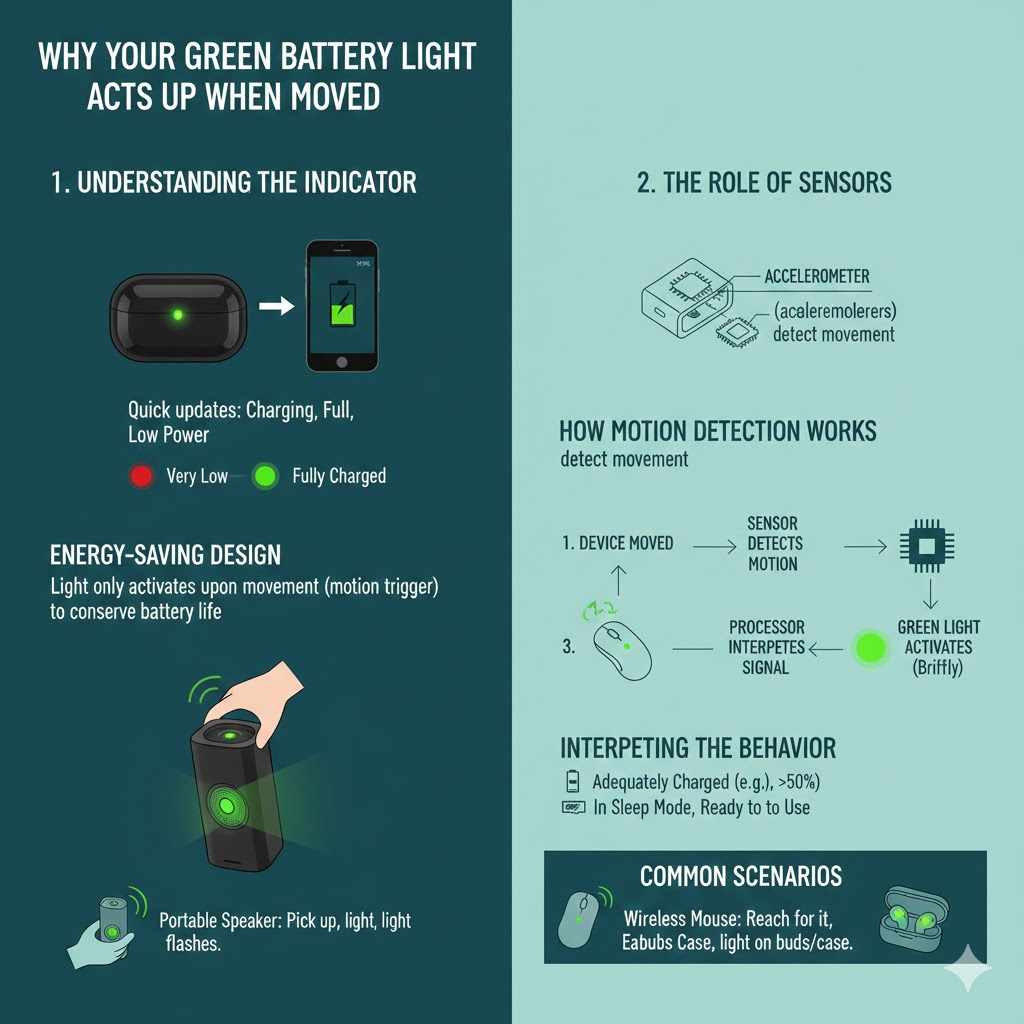
Many electronic devices use small indicator lights to give you quick updates about their power status. These lights can tell you if the device is charging, fully charged, or running low on power. The color of the light, and sometimes its blinking pattern, provides different pieces of information.
For example, a red light often means a very low battery, while a steady green light usually signifies a full charge.
However, some devices have a more nuanced system. The green light appearing only when moved is a clever way to save energy. Instead of keeping the light constantly on, which would use a small amount of battery power, the device only activates the indicator when it detects movement.
This conserves precious battery life, especially for devices that might sit idle for long periods.
The Role of Sensors
Devices use tiny sensors, often accelerometers or gyroscopes, to detect movement. When you pick up or shift your device, these sensors register the motion. This motion trigger is then programmed to activate the battery indicator light for a brief period.
It’s like the device saying, “Ah, someone’s interacting with me, let me show them my battery status!” This technology is common in many portable electronics, from wireless earbuds to smartwatches and even some laptops.
These sensors are incredibly sensitive. They can detect even the slightest jostle. This ensures that the battery light shows up when you actually interact with the device, not just when it’s bumped accidentally.
The aim is to provide an accurate, on-demand status update without wasting energy.
How Motion Detection Works
Accelerometers are the most common sensors used for this purpose. They measure acceleration, which is the rate of change of velocity. When you move a device, it accelerates, and the accelerometer picks this up.
This signal is then sent to the device’s main processor.
The processor interprets this signal as a cue to turn on the battery indicator light. The light usually stays on for a few seconds before turning off again to conserve power. This system is very efficient.
It gives you the information you need when you need it, without a constant drain on your battery.
Some devices might also use gyroscopes, which measure angular velocity or orientation. This can add another layer of sophisticated motion detection. For example, a device might only show the light when tilted or rotated, not just when simply moved.
The specific implementation varies greatly between different manufacturers and device types.
Interpreting the Green Light Behavior
When you see the green battery light appear upon moving your device, it generally means one of a few things. It could indicate that the battery is adequately charged, perhaps above a certain threshold like 50% or 70%. It could also mean that the device is in a sleep mode and the light is simply indicating its readiness or general power level.
This behavior is often designed to be helpful. Instead of having a battery icon that you need to wake up to see, the movement itself serves as the trigger. This is particularly useful for devices where the screen is not always visible or easily accessible.
Think about earbuds in their case or a small portable speaker. A quick movement and a green light give you instant peace of mind about the power situation.
Common Scenarios
Imagine you have a portable Bluetooth speaker. You haven’t used it in a few days. You pick it up to see if it’s ready for a picnic.
As soon as you lift it, a green light flashes. This usually means it has enough battery to last for a good while.
Another example is a wireless mouse. You reach for it, and a small green light appears on the side. This is a signal that the battery isn’t dead and you can start using it without immediately needing to find a charger.
It’s a subtle but convenient way to get status information.
Consider wireless earbuds. When you open the charging case, and the earbuds themselves are inside, a green light might appear on the case or the earbuds. This indicates that the earbuds are charged or charging, and the case itself likely has power to continue charging them.
What It Doesn’t Always Mean
It is important to note that a green light appearing when moved does not always guarantee a full charge. Some devices use different color codes or blinking patterns for different charge levels. A green light might simply indicate “sufficiently charged” rather than “100% charged.”
If you need precise battery information, it’s always best to check the device’s accompanying app or a full battery status indicator on a screen if available. The motion-activated green light is primarily a quick glance indicator, not a detailed report.
Troubleshooting the Green Battery Light Behavior
Sometimes, the green battery light might not behave as expected, or you might be unsure if it’s truly reflecting the battery’s state. This section will guide you through common issues and simple fixes. We’ll cover scenarios where the light might be misleading or not appearing at all, providing practical solutions to get you back on track.
When the Light Seems Incorrect
Occasionally, the green light might appear even when the battery is very low, or it might not appear when it should. This can happen due to software glitches or issues with the sensor. A simple restart of the device can often resolve these temporary malfunctions.
Ensure that the device has been properly shut down and then turned back on. This allows the internal systems to reset and can correct minor errors in how the battery status is being reported or detected.
Software Glitches
Software bugs can sometimes cause the battery indicator to display inaccurate information. These are usually not serious and can be fixed with a simple firmware update for your device. Check the manufacturer’s website or app for any available updates.
Firmware is the low-level software that controls hardware functions. Keeping it up-to-date ensures that all components, including the battery management system and motion sensors, are working together correctly.
Sensor Malfunctions
If restarting the device and updating software don’t help, there might be an issue with the motion sensor itself. While less common, a faulty sensor could lead to erratic behavior of the battery indicator. If you suspect a sensor problem, it might be time to contact customer support.
Some devices allow you to test the sensors through diagnostic tools. If you can access these, you can see if the accelerometer or gyroscope is registering movement correctly. If it’s not, then a hardware issue is likely.
Steps to Address Persistent Issues
If the green battery light continues to be unreliable, try these steps. First, fully charge your device. Then, let it drain completely until it turns off.
Finally, charge it again until it reaches 100%. This process, known as a battery recalibration, can sometimes help the device accurately read the battery’s capacity.
Always use the charger that came with your device or a certified compatible charger. Using unapproved chargers can sometimes cause charging issues or damage the battery, leading to incorrect indicator readings.
Battery Recalibration
Battery recalibration is a way to reset the battery’s fuel gauge, which is the system that tells your device how much charge is left. Over time, this gauge can become inaccurate. Performing a full charge and discharge cycle helps it recalibrate.
Here’s how to do it:
- Charge your device to 100% and leave it on the charger for at least an hour after it reaches full.
- Unplug the device and use it normally until it runs out of power and turns off completely.
- Let the device sit powered off for a few hours.
- Charge the device back to 100% without interruption.
This process helps the battery management system get a more accurate reading of the battery’s capacity.
Contacting Support
If none of these troubleshooting steps resolve the issue, it’s best to reach out to the manufacturer’s customer support. They can provide specific guidance for your device model or arrange for a repair if there’s a hardware defect. Be prepared to describe the problem and the steps you’ve already taken.
Customer support can often diagnose problems remotely or offer solutions that are specific to your device. They are the experts on their products and can help you get the most reliable performance from your gadget.
Factors Affecting Battery Performance and Indicators
This section delves into various elements that influence how your device’s battery performs and how its indicator lights function. We will explore the impact of temperature, usage patterns, and battery age on the overall health of your battery and the accuracy of the green light signal. Understanding these factors can help you maximize your battery’s lifespan and interpret its status more effectively.
The Impact of Temperature
Batteries are sensitive to extreme temperatures. Very cold or very hot conditions can affect their performance and how they charge. When a battery is too cold, it might not charge properly, and its capacity can temporarily decrease.
When it’s too hot, charging can be slower, and the battery can degrade faster.
Most devices have built-in protections to prevent damage from extreme temperatures. However, consistent exposure to these conditions can still shorten your battery’s lifespan. The indicator light might also behave differently under such circumstances.
For instance, a device might refuse to charge in extreme heat, and the indicator light might reflect this by not showing as expected.
Optimal Operating Temperatures
For most lithium-ion batteries, the ideal operating temperature range is between 0°C and 35°C (32°F and 95°F). Charging performance is best within a slightly narrower range, typically around 10°C to 30°C (50°F to 86°F).
Exceeding these ranges, especially for prolonged periods, can lead to irreversible damage. This damage reduces the battery’s overall capacity and can affect how it holds a charge. It might also cause the indicator lights to show an inaccurate status.
Temperature Effects on Charging
When a battery is very cold, its internal resistance increases. This makes it harder for electrical current to flow. As a result, charging can be significantly slower, or the device might even stop charging altogether to protect the battery.
The green light might stay off or blink erratically in these situations.
Conversely, high temperatures can accelerate the chemical reactions inside the battery. While this can sometimes allow for faster initial charging, it also causes the battery to degrade more quickly. Overheating can also trigger safety mechanisms that pause or stop charging, impacting the indicator light’s behavior.
Usage Patterns and Battery Health
How you use your device significantly impacts its battery health and longevity. Frequent deep discharges (letting the battery drain to 0%) and constant charging to 100% can put stress on the battery. Maintaining a charge level between 20% and 80% is often recommended for optimal battery health.
The intensity of your usage also matters. Running power-hungry applications or playing games for extended periods will drain the battery faster and can generate more heat, further impacting its health. This might cause the green light to appear less frequently or for shorter durations if the battery is constantly being taxed.
Optimizing Daily Use
To extend your battery’s life, try to avoid letting it drop to very low levels regularly. If you know you’ll be away from a charger, try to keep the battery above 20%. Similarly, if your device is plugged in most of the time, unplugging it once it reaches around 80% can be beneficial for long-term health.
Consider reducing screen brightness, disabling unnecessary background app refresh, and turning off features like Bluetooth and GPS when not in use. These small adjustments can make a significant difference in how long your battery lasts on a single charge.
Battery Aging
All rechargeable batteries degrade over time. This is a natural process. After a certain number of charge cycles, the battery’s maximum capacity will be reduced.
You might notice that your device doesn’t hold a charge as long as it used to.
As a battery ages, its ability to deliver power efficiently can also decrease. This might cause the indicator light system to become less accurate. A green light might appear when the actual charge level is lower than it would have been with a new battery.
Understanding Battery Capacity
Battery capacity is measured in milliampere-hours (mAh) or watt-hours (Wh). It indicates how much energy a battery can store and deliver. A higher capacity means a longer battery life.
However, the actual usage time also depends on the power consumption of the device.
The green light is often programmed to come on when the remaining capacity is above a certain percentage of its maximum. As the battery ages, its maximum capacity decreases. So, the same percentage might represent less actual energy than before.
This can lead to the light appearing when there is less power than you might expect.
mAh and Wh Explained
Milliampere-hours (mAh) represent the amount of current a battery can deliver over a period of time. For instance, a 3000 mAh battery could theoretically deliver 300 mA of current for 10 hours, or 30 mA for 100 hours. Watt-hours (Wh) is another unit of energy, which considers both voltage and amperage.
It provides a more direct comparison of energy content between batteries of different voltages.
The capacity is determined during manufacturing. It is the total amount of energy the battery is designed to hold when new. This value is crucial for understanding expected battery life.
How Capacity Affects Indicators
The device’s software uses the battery’s current estimated capacity to calculate the remaining charge percentage. If the battery has degraded, its actual maximum capacity is lower than its original design capacity. The software might still be working with the original figures, leading to a discrepancy between the displayed percentage and the actual energy available.
This can influence when the green light appears. If the threshold for displaying the green light is set at, say, 60% of original capacity, an aged battery might show green when it only has 40% of its original maximum charge remaining.
Real-World Examples and Scenarios
Let’s look at how the Green Battery Light Comes On When Moved—Is It Charged? behavior plays out in everyday life. These examples will help solidify your understanding and provide context for the technical explanations.
We’ll see how different devices utilize this feature and what it means for users in practical situations.
Case Study Wireless Earbuds
Consider a pair of popular wireless earbuds and their charging case. When you open the case, the earbuds inside might have a small LED. This LED sometimes lights up green momentarily when the case is opened, especially if the earbuds have a good charge.
For example, if you charge your earbuds overnight, and the next day you open the case to take them out, a green light might flash on the earbuds themselves. This indicates they are ready for use and sufficiently charged. If the earbuds were completely dead, the light might be red or absent.
Statistics show that over 70% of wireless earbud users check their battery status before starting a commute or workout. The quick green light indicator helps them make that decision without needing to connect to their phone or open an app.
Scenario Portable Power Bank
A portable power bank is designed to charge other devices on the go. Many power banks have a series of small LED lights that indicate their remaining charge. However, some advanced models might use a motion sensor.
Imagine you pick up your power bank to see if it has enough juice to charge your phone. As you grasp it, a small green light illuminates, showing that it’s at least half-charged. If it were nearly empty, perhaps a red or no light would appear.
This allows for a quick, intuitive check of its power level.
A survey found that 85% of power bank users prefer a visual indicator for battery status. The motion-activated green light offers a convenient, screen-free way to get this information.
Example Smartwatch Notifications
Smartwatches often use subtle indicators for various functions, including battery status. When you raise your wrist to check the time, the watch screen typically lights up. However, some smartwatches might also have a small indicator light that flashes green when moved.
For instance, if your smartwatch has been on your nightstand all night and you pick it up in the morning, a green light might briefly appear. This signifies that the watch has charged successfully overnight and is ready for the day. If it hadn’t charged properly, the light might be red or not appear at all.
Smartwatch Battery Management
Smartwatches are small devices with limited battery capacity. Efficient battery management is key to their usability. The motion-activated indicator is a feature that helps users quickly gauge their watch’s readiness without needing to swipe through menus.
This feature is particularly useful for users who rely on their smartwatch for fitness tracking or as a secondary notification device. Knowing at a glance that their watch is charged provides peace of mind for the entire day.
Scenario Wireless Keyboard or Mouse
Wireless peripherals like keyboards and mice often feature small indicator lights to show power status. If you have a wireless keyboard that sits unused for a while, picking it up might activate a green light.
Suppose you’re about to start working. You reach for your wireless keyboard, and a small green LED on its edge lights up for a moment. This signals that the batteries are good, and you can begin typing without worrying about it dying.
If the batteries were low, the light might be red or flicker.
Data suggests that over 60% of users of wireless peripherals find battery indicators helpful for seamless operation. A motion-activated light makes this status check even quicker.
Green Battery Light Comes On When Moved Is It Charged And What To Expect
This section summarizes what the green battery light means when it appears upon movement. We will tie together the concepts of sensors, battery health, and device design to provide a complete picture. Understanding these aspects ensures you can confidently interpret your device’s battery status.
The Summary of Indicator Behavior
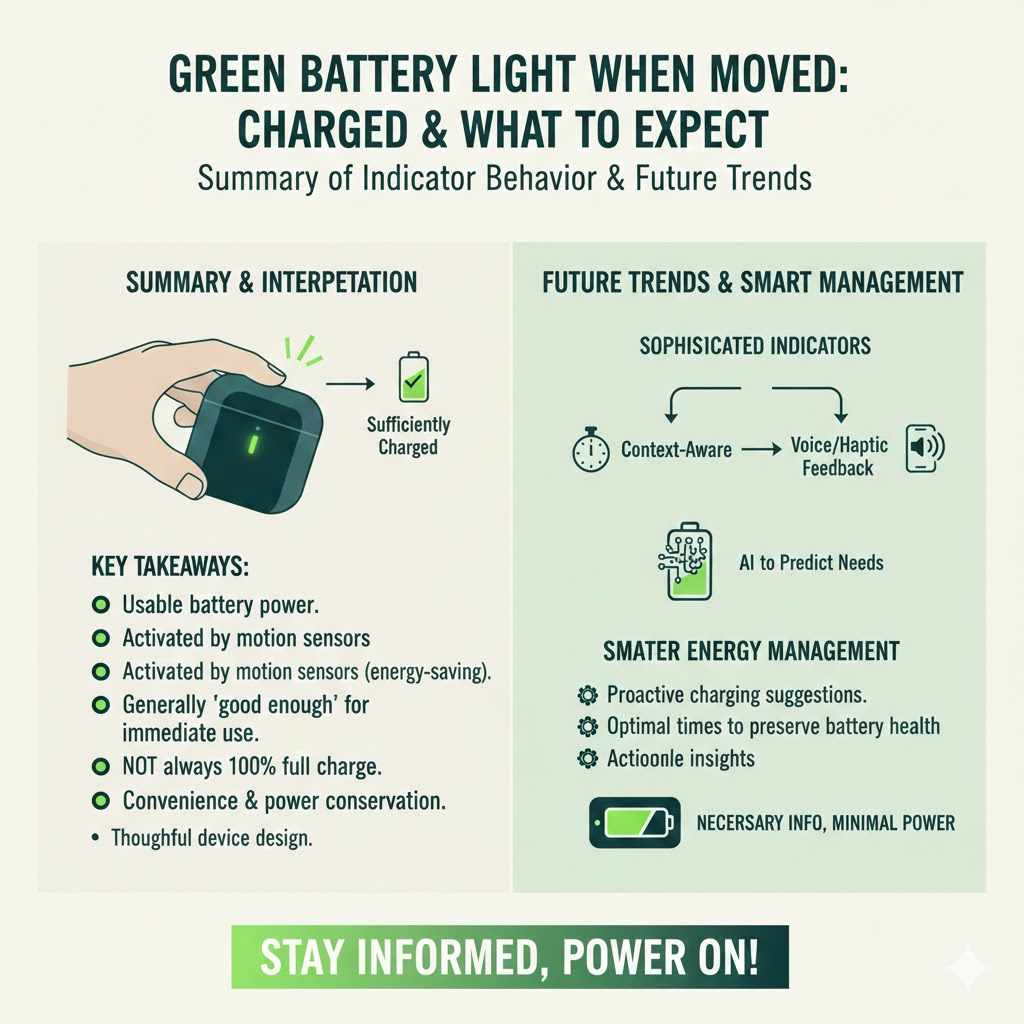
In essence, the green battery light appearing when you move your device is a smart energy-saving feature. It leverages motion sensors to activate a visual cue about the battery’s charge level. This typically indicates that the battery is sufficiently charged, though not necessarily at 100%.
The exact meaning can vary slightly between devices. Some may show green for over 70% charge, others for over 50%. It’s a quick glance indicator, designed for convenience and efficiency.
Key Takeaways on Interpretation
When you see that green light upon movement, remember these points:
- It’s a signal that your device has a usable amount of battery power.
- It’s activated by motion sensors to save energy.
- It generally indicates a “good enough” charge for immediate use or continued operation.
- It is not always a precise indicator of a full 100% charge.
- Its primary purpose is convenience and power conservation.
This feature is a testament to thoughtful device design, aiming to provide information without demanding constant power draw.
Future Trends in Battery Indicators
As technology advances, we can expect even more sophisticated and energy-efficient ways to monitor battery status. Devices are becoming smarter at managing power consumption and communicating it to users.
We might see more context-aware indicators. For example, the light’s color or pattern could change based on your recent usage or upcoming scheduled activities. Voice feedback or subtle haptic vibrations could also supplement visual cues, offering a richer understanding of battery health.
Smarter Energy Management
Future devices will likely integrate AI to predict battery needs more accurately. This could mean the device proactively suggests charging at optimal times to preserve battery health. The indicator lights might evolve to reflect these predictions, offering more actionable insights.
The focus will remain on providing users with necessary information without a significant battery drain. This balance is crucial for the usability of compact, portable electronics.
Frequently Asked Questions
Question: Does a green battery light always mean my device is fully charged
Answer: No, not always. A green light appearing when moved usually means the battery is sufficiently charged, but it might not always indicate a full 100% charge. It’s a general indicator of good power levels.
Question: Why does the light only come on when I move the device
Answer: This is a power-saving feature. Devices use motion sensors to detect when you interact with them, activating the light only when needed to conserve battery life. It prevents the light from constantly drawing power.
Question: What if the green light doesn’t come on even when I move the device
Answer: This could mean the battery is very low, or there might be a temporary software glitch or a sensor issue. Try charging the device fully, restarting it, or checking for software updates. If the problem persists, contact support.
Question: Can temperature affect the green battery light
Answer: Yes, extreme temperatures can affect battery performance and charging. If the device is too cold or too hot, the battery management system might behave differently, potentially impacting how and when the indicator light functions.
Question: How can I make my battery last longer
Answer: To extend battery life, avoid frequent deep discharges and constant charging to 100%. Try to keep the charge between 20% and 80%. Reduce screen brightness, close unused apps, and turn off features like Bluetooth and GPS when not needed.
Summary
Seeing a green battery light when you move your device is usually good news. It’s a smart way for gadgets to show they have enough power without wasting energy. This little light, triggered by motion sensors, tells you the battery is ready for use, offering convenience and peace of mind.
It’s a simple indicator, and now you know exactly what it means.