Honda Accord Won’t Start: A Step-by-Step Diagnostic Guide
You’re already running late, you slide into the driver’s seat, press the brake, hit the start button, and the dashboard lights up but the engine just sits there. Or maybe you turn the key and hear a single click, or a rapid-fire clicking, or nothing at all. Whatever the exact symptom, the outcome is the same: your Honda Accord won’t start, and you need answers now.
This guide is built around a simple diagnostic flowchart. You’ll identify your symptom first, then jump straight to the most likely culprit. We’ll cover the battery, starter, fuel system, immobilizer, and push-button start quirks, plus model-year-specific recalls and TSBs that might apply to your car. You’ll also get a clear cost breakdown for DIY versus mechanic repairs, so you can decide whether to grab a wrench or call a tow truck.
NOCO
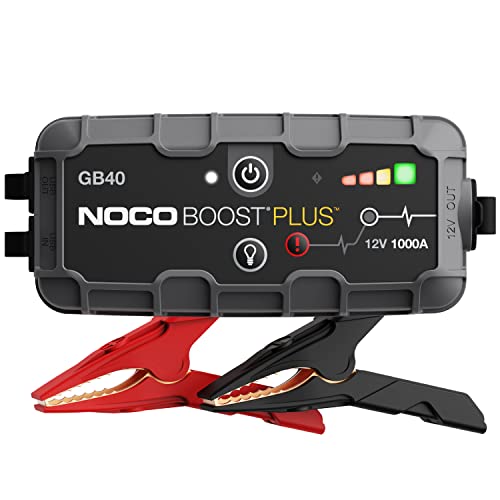
NOCO Boost GB40 12V 1000A UltraSafe Portable…
- START DEAD BATTERIES — Instantly start dead batteries with 1000 amps of peak lithium power. Up to 20 starts per charge on engines…
- ULTRASAFE TECHNOLOGY — Engineered with patented spark-proof and reverse polarity protection for foolproof connections to any 12V v…
- PORTABLE POWER BANK — Integrated power bank delivers emergency power to smartphones, tablets, and more. Recharges in 3 hours so it…
Before we dive into the diagnostic tree, one quick note: if the problem turns out to be a dead battery, a portable jump starter like the NOCO Boost GB40 is a lifesaver. It packs 1000 amps of peak power, enough to start a 6.0L gas or 3.0L diesel engine, and it’s got spark-proof and reverse polarity protection, so you won’t damage your car’s electronics if you hook it up wrong. It also doubles as a power bank and LED flashlight, which is handy when you’re stranded at night.
First, Diagnose the Symptom: Crank, Click, or Nothing
Your Accord’s behavior when you try to start it tells you more than any code reader. Here’s a quick decision tree to narrow things down:
- No crank, no click, no lights: The battery is completely dead, or the main fuse or battery cable is broken. Start with the battery.
- No crank, but dashboard lights come on: The battery has some charge but not enough cranking amps, or the starter solenoid isn’t engaging. Could also be a brake pedal sensor or immobilizer issue.
- Single loud click, then nothing: The starter solenoid is engaging but the starter motor isn’t spinning. Often a dead spot in the motor or a bad ground.
- Rapid clicking (like a machine gun): The battery voltage is too low to hold the solenoid in. Charge or jump the battery first.
- Engine cranks (turns over) but won’t start: The starter is fine. Look at fuel, spark, or the immobilizer.
- Cranks, but only after several attempts: Could be a weak fuel pump, a clogged fuel filter, or a failing crankshaft position sensor.
Write down your symptom, then follow the relevant section below. Don’t skip the battery test even if your lights work—a battery can have enough voltage for accessories but not enough amperage for the starter.
The Battery: More Than Just a Dead Cell
The battery is the number one cause of a no-start in any car, and the Accord is no exception. But ‘dead battery’ isn’t always the full story. You might have a battery that’s low on charge, a battery that’s sulfated and can’t hold a charge, or a battery that’s fine but has corroded terminals that interrupt the flow.
Testing Voltage vs. Cranking Amps
Grab a multimeter and check the resting voltage across the battery terminals. A healthy battery reads about 12.6 volts. If it’s below 12.4, it’s undercharged. Below 12.0, it’s very low. But voltage alone doesn’t tell you if the battery can deliver the 300-500 amps the starter needs. That’s why you need a load test.
You can do a crude load test by turning on the headlights (with the car off) and watching the voltage. If the lights dim significantly within a few seconds, the battery is weak. A proper load tester is better—most auto parts stores will test your battery for free. If the battery fails the load test, replace it. If it passes, move on to the cables.
Cleaning Corroded Terminals and Cables
Corrosion on the battery terminals looks like white or bluish-green fuzz. It acts as an insulator, and it can cause a no-start even with a good battery. Disconnect the negative cable first, then the positive. Clean both the terminals and the cable ends with a wire brush or a battery terminal cleaner. A paste of baking soda and water neutralizes the acid; rinse with water and dry thoroughly. Reconnect positive first, then negative.
Pro tip: Check the cable ends for cracks or fraying. A corroded cable can look fine on the outside but be eaten away inside the insulation. If the cable feels crunchy or you see green corrosion under the insulation, replace the cable.
The Starter System: Solenoid and Motor
If your battery tests fine and the terminals are clean, but you still get a single click or no click at all, the starter system is the next suspect. The starter has two parts: the solenoid (a relay that sends power to the motor) and the motor itself. The solenoid also pushes the gear forward to engage the flywheel.
First, check the starter relay and fuse. The relay is usually in the under-hood fuse box, and the fuse is in the same box. Swap the relay with an identical one from another circuit (like the horn) to test it. If the car starts, the relay was bad. If the fuse is blown, replace it, but also check for a short—a blown fuse is a symptom, not the cause.
If the relay and fuse are good, the problem is likely the starter motor or its wiring. You can tap the starter with a hammer or a long wrench while someone turns the key. If the car starts, the starter’s brushes are worn and it’s time to replace it. This is a temporary fix—don’t rely on it long-term.
On many Accords, the starter is mounted low on the engine block, near the transmission bell housing. It’s not a hard DIY job, but it’s cramped. You’ll need a socket set, a jack and stands, and maybe a swivel joint. Expect to spend 2-3 hours if you’re doing it for the first time.
Fuel Delivery: Pump, Filter, and Pressure
If the engine cranks but won’t start, you might not be getting fuel. The fuel pump is electric and lives inside the gas tank. When you turn the key to the ‘ON’ position (without cranking), you should hear a faint whirring sound from the rear of the car for a couple of seconds. If you don’t hear it, the pump isn’t running.
Check the fuel pump relay and fuse first—same swap trick as the starter relay. If those are fine, you can test the fuel pressure with a gauge. The fuel rail has a test port on most models. The pressure should be around 40-50 psi, depending on the engine. No pressure means the pump is dead or the filter is clogged.
The fuel filter is another common culprit, especially on older Accords. It’s usually mounted under the car, near the fuel tank. Replacing it is a messy but straightforward job—you’ll need to relieve the pressure, disconnect the lines, and use quick-connect fittings. If you’re handy with tools, it’s a 30-minute job. If not, a mechanic will charge about an hour of labor.
The Immobilizer and Key Fob: Security System Failures
Honda’s immobilizer system uses a chip in the key that communicates with the engine control module. If the chip isn’t recognized, the engine won’t start, even if it cranks. This is a common issue with Accords, and it can be triggered by a dead key fob battery, a damaged key, or a malfunctioning immobilizer module.
Dead Key Fob Battery vs. Immobilizer Malfunction
The key fob battery powers the remote locking and the push-button start (on models with that feature). If the fob battery is dead, the car may not detect the key, and you’ll see a green key light on the dashboard. Replace the fob battery with a CR2032, which costs about $2 and takes a minute to swap.
If the fob battery is fine but the immobilizer light stays on, the key itself might be damaged. Try your spare key. If the spare works, the original key’s chip is failing. If neither key works, the immobilizer module or the antenna ring around the ignition cylinder might be faulty. This is a dealer-level repair, and it’s not cheap.
Pro tip: If you have a push-button start and the fob battery is dead, you can usually start the car by touching the fob to the start button or placing it in a specific slot in the center console. Check your owner’s manual for the exact location.
Push Button Start: Sensor and Brake Interlock Issues
On Accords with push-button start, the car won’t crank unless it detects the brake pedal is pressed. The brake light switch (also called the brake pedal sensor) tells the computer that you’re pressing the pedal. If this switch fails, the car thinks you’re not pressing the brake, and it won’t start.
Test the switch by pressing the brake and looking at the tail lights. If they don’t come on, the switch is likely bad. The switch is located under the dashboard, above the brake pedal. It’s a cheap part (about $20) and takes 30 minutes to replace. But wait—sometimes the switch just needs adjustment. It’s a common failure on Accords, and you’ll often find it’s just broken plastic.
Another quirk: the shift interlock. If the car is in gear, it won’t start. Make sure the shifter is firmly in Park. If the interlock solenoid fails, you might need to use the shift lock release button (usually near the shifter) to move it out of Park.
When It Cranks But Won’t Fire: Spark and Ignition
If you have fuel pressure and the immobilizer is happy, the next suspect is spark. You can test for spark by pulling one of the spark plug wires (on older models) and grounding it to the engine block while cranking. You should see a bright blue spark. On coil-on-plug systems, it’s harder to test without a tool, but you can swap a coil from a working cylinder to see if the problem moves.
Common ignition issues on Accords include worn spark plugs, faulty ignition coils, and a failing crankshaft position sensor. The crank sensor tells the computer when the pistons are at the right position to fire. If it fails, the engine will crank but won’t start. You can test it with a multimeter or just replace it—it’s a relatively cheap part.
Also, check the main relay. It’s a common failure on Accords from the 90s and 2000s. The main relay powers the fuel pump and the ignition system. If it’s failing, the car might start when cold but die when hot, or not start at all. The relay is under the dash, and you can test it by listening for a click when you turn the key. Replacement is about $50 and 20 minutes.
Model-Year Specific Recalls and Technical Service Bulletins
Some Accords have known issues that are worth checking before you start throwing parts at the problem. Here are a few examples:
- 2026-2026 Accord: Fuel pump relay recall. The relay can short out, causing a no-start or a stalled engine. Honda will replace it for free.
- 2026-2026 Accord 2.0T: Fuel pump failure. There was a TSB for a fuel pump that could fail prematurely, especially in hot climates.
- 2026-2026 Accord V6: Starter motor failure. Some V6 models had weak starters that would fail early. You’ll see a single click or a grinding noise.
- Any Accord with push-button start: Brake pedal sensor issues are common across many model years. If you’re handy, just replace it.
You can check for open recalls by entering your VIN on Honda’s website. Don’t ignore a recall—it’s free, and it could be your exact problem.
DIY vs. Mechanic: Cost and Difficulty Breakdown
Here’s a quick comparison of what each fix will cost you if you do it yourself versus taking it to a shop. Prices are estimates and will vary by region and parts quality.
| Component | DIY Cost (Parts) | Mechanic Cost (Parts + Labor) | Difficulty | Time |
|---|---|---|---|---|
| Battery replacement | $120-180 | $200-300 | Easy | 30 min |
| Battery terminal cleaning | $5 (wire brush) | $50-100 | Easy | 15 min |
| Starter motor | $150-300 | $400-600 | Moderate | 2-3 hrs |
| Fuel pump | $150-250 | $500-700 | Hard | 3-4 hrs |
| Fuel filter | $20-40 | $150-250 | Moderate | 1 hr |
| Immobilizer/key fob battery | $2-5 | $50-100 (if dealer) | Easy | 5 min |
| Brake pedal sensor | $20-40 | $100-200 | Easy | 30 min |
| Crank sensor | $30-60 | $150-250 | Moderate | 1 hr |
| Ignition coil (per coil) | $50-80 | $150-250 | Easy | 30 min |
For most of these, the DIY route is worth it if you have basic tools and some patience. The exception is the fuel pump—it’s a dirty, awkward job that involves dropping the tank or cutting an access panel. A mechanic will do it faster and with less mess.
Emergency Workarounds and How to Get Moving
If you’re stuck in a parking lot and need to get home, here are a few temporary fixes that might get you moving:
- Dead key fob battery: Use the physical key blade to unlock the door. For push-button start, touch the fob to the start button while pressing the brake. The car should start.
- Bad starter solenoid: Tap the starter with a hammer or a long wrench. It can free up a stuck contact and let you start the car once or twice. Don’t do this repeatedly—it’s a temporary workaround.
- Immobilizer issue: If you have a spare key, use it. If not, try disconnecting the battery for 10 minutes to reset the system. Sometimes that clears a glitch.
- No crank, but lights work: Try shifting to Neutral and starting. Sometimes the Park/Neutral switch is misaligned.
- Totally dead battery: You need a jump start. The NOCO Boost GB40 is a solid choice because it’s compact enough to keep in the glove box, and it won’t damage your electronics if you connect it backward.
Frequently Asked Questions
Why does my Honda Accord crank but not start?
This usually points to fuel, spark, or the immobilizer. Check the fuel pump relay and fuse first. Then check for spark at the plugs. If you have both, the issue is likely the immobilizer—look for a green key light on the dash. If the light is blinking, the system isn’t recognizing your key.
How do I reset the immobilizer on a Honda Accord?
Try disconnecting the battery for 10 minutes, then reconnect it. This resets the ECU and sometimes clears immobilizer glitches. If that doesn’t work, you may need to reprogram the key with a scan tool or visit a dealer. Some Accords allow a manual reset by turning the key to ‘ON’ and back three times, but that’s not universal.
What does the green key light on my Accord mean?
The green key light is the immobilizer indicator. It should come on briefly when you start the car, then go off. If it stays on or blinks, the immobilizer isn’t recognizing the key. This can happen with a dead key fob battery, a damaged key, or a faulty immobilizer module.
Can a bad brake light switch cause a no-start?
Yes, especially on push-button start models. The car won’t crank unless it detects the brake pedal is pressed. If the brake light switch is faulty, the computer never gets that signal. You can test it by pressing the brake and seeing if the tail lights come on. If they don’t, the switch is likely bad.
Why does my Accord start sometimes but not others?
Intermittent starting problems often point to a failing main relay, a weak battery, or a starter with worn brushes. The main relay is a common issue on older Accords—it can work when cold and fail when hot. A weak battery might have enough juice in the morning but not after a short drive. Worn starter brushes can cause a no-start that’s easily fixed with a tap.
What Most People Get Wrong
Three mistakes come up again and again when diagnosing a no-start Accord. Here’s how to avoid them:
- Assuming the battery is fine because the lights work. Lights only need a few amps. The starter needs hundreds. Always load-test the battery before moving on.
- Replacing parts without checking the basics. I’ve seen people buy a new starter when the real issue was a corroded battery terminal. Check the battery, cables, fuses, and relays first. They’re cheap and easy.
- Forgetting about the immobilizer. If the engine cranks but won’t start, and you have fuel and spark, the immobilizer is a prime suspect. Don’t ignore that green key light.
If you’ve worked through this guide and still can’t find the issue, it’s time to get a scan tool that can read manufacturer-specific codes. A generic OBD-II scanner won’t show immobilizer or ABS codes. Many auto parts stores will scan for free, but they might not have the right software. A professional scan tool or a trip to the dealer is worth the money if you’re stuck.
For more Accord-specific maintenance tips, check out our guide on the 2026 Honda Accord maintenance light if you’re dealing with that warning. And if you’re wondering about Honda Accord sport mode, that’s a separate topic, but it won’t help you start your car.
Products related to this article
Sponsored / affiliate links. As an Amazon Associate I earn from qualifying purchases. I may earn additional commission from eligible campaigns.