Why Won’t My Key Start My Car: Expert Solutions
If the key turns but the engine won’t start, the most likely causes are a weak battery, corroded or loose battery cables, a failed starter relay or solenoid, a bad ignition switch, a fuel delivery fault, or a seized engine. Check battery voltage, then starter feed power, then fuel pressure and spark. Chasing the wrong clue can waste money on parts and leave you stranded again. This guide follows the same order a technician would use, from key and immobilizer checks to electrical, fuel, and mechanical causes.
What should you check first?
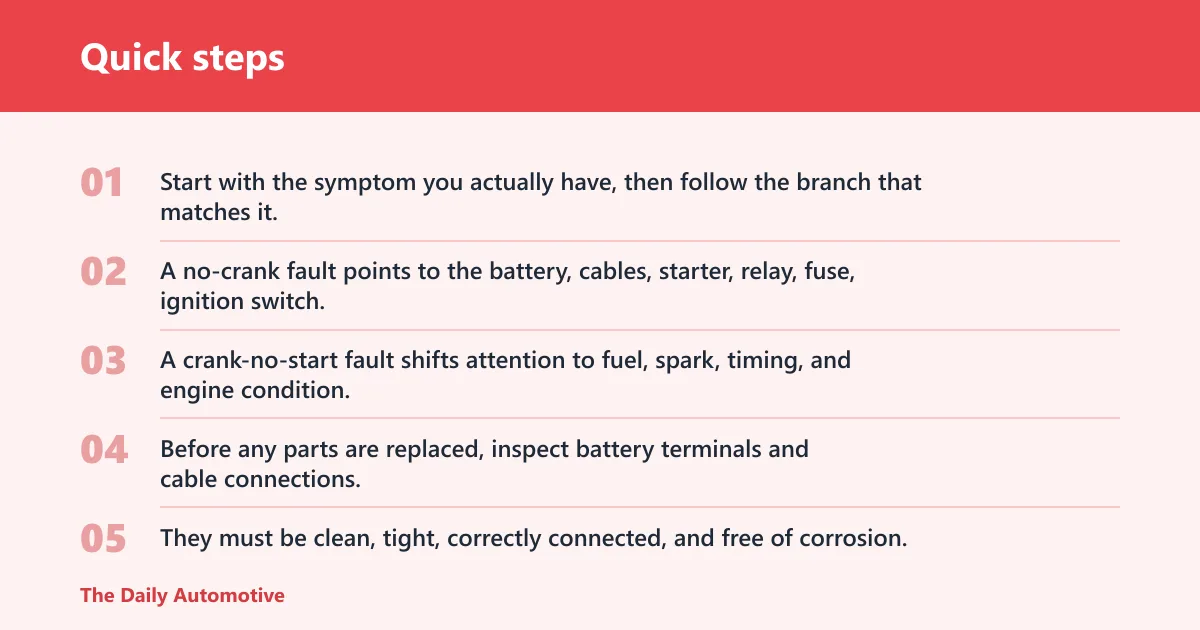

Start with the symptom you actually have, then follow the branch that matches it. A no-crank fault points to the battery, cables, starter, relay, fuse, ignition switch, or immobilizer. A crank-no-start fault shifts attention to fuel, spark, timing, and engine condition. That split keeps you from guessing.
Before any parts are replaced, inspect battery terminals and cable connections. They must be clean, tight, correctly connected, and free of corrosion. Loose or corroded terminals can stop starting, even when the battery itself is healthy.
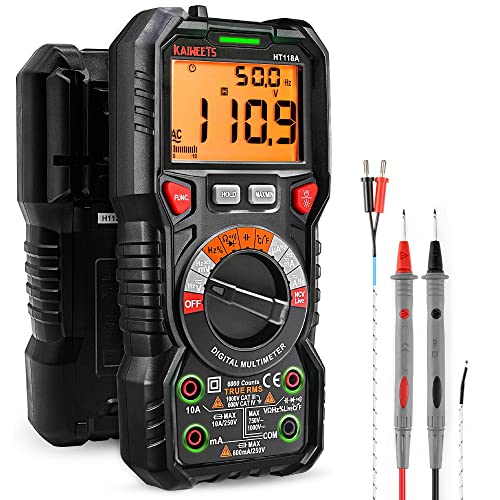
Then look at the dash, the key position, and what happens at the starter. No dash lights, a single click, rapid clicking, or normal cranking with no fire all point to different faults. A multimeter helps separate voltage loss from mechanical failure.
Key start symptom table
| Symptom heard or felt | Likely fault area | Exact first test | What result confirms the fault |
|---|---|---|---|
| No-crank | Battery terminals, cable connections, fuse, relay, starter circuit | Check battery terminal tightness and corrosion, then test for voltage at the starter feed during a crank attempt | No voltage at the starter feed or heavy voltage drop at the terminals confirms a power-path fault |
| Single click | Starter solenoid, starter motor, cable voltage drop | Measure voltage at the starter solenoid while the key is held in START | Battery voltage present at the solenoid but no crank points to a starter or solenoid fault |
| Rapid clicking | Battery state, terminals, grounds | Check battery voltage and inspect ground cables and chassis grounds | Low voltage or poor ground continuity confirms insufficient current delivery |
| Dash lights off | Battery, main connections, ignition switch | Inspect battery polarity, terminal fitment, and main power connections; then verify ignition-switch output | Dead dash with good battery voltage points to a main power or ignition-switch problem |
| Cranks but won’t fire | Fuel pump, fuel delivery, ignition, immobilizer, timing | Listen for fuel pump prime, then verify fuel pressure or flow | No prime or low pressure confirms a fuel delivery fault |
| Intermittent start | Starter relay, ignition switch, wiring, ground cables | Wiggle-test accessible wiring while checking for consistent starter signal and relay operation | Starter signal that comes and goes confirms an intermittent electrical break |
| New battery/no start | Cable routing, corrosion, grounds, relay, ignition switch, immobilizer | Confirm correct polarity, terminal clamp fit, and chassis ground quality | Correct battery voltage with poor cranking current points to a connection or control fault |
| New starter/no start | Starter relay, solenoid control, fuse, wiring, ignition switch, engine mechanical condition | Test for power at the solenoid during crank and check the starter fuse | Power present with no crank means the new starter may be faulty, damaged, or not being engaged properly |
Say your sedan has a fresh battery, the dash lights come on, and the key produces one solid click. That points away from the battery and toward the starter circuit. A voltage check at the solenoid during crank tells you whether the starter is being fed or whether control power is missing.
Why won’t the key do anything?
No response at all usually means the starter is not being told to engage, or power is not reaching the starter circuit. The first suspects are the battery terminals, the starter fuse, the starter relay, and the ignition switch. If the dash is dead too, move the ignition switch higher on the list.
Check the power path first
Inspect the battery terminals, positive and negative cable ends, and the main ground connection to the chassis or engine block. They must be clean and tight. Corrosion or a loose clamp can interrupt current flow enough to mimic a dead starter, even when the battery tests fine.
Next, check the starter fuse. A blown starter fuse can cut power to the starter motor circuit. Fuses can fail from excess current or wiring faults, so replacing the fuse without finding the cause can lead to another failure.
Look at the ignition switch and relay
The ignition switch sends the signal to engage the starter. If it fails, the car may show no dashboard lights or may click once without engaging. A faulty starter relay can also stop the vehicle from starting. When appropriate, swap it with a known-good relay of the same type.
- Verify battery voltage and terminal condition.
- Check the starter fuse.
- Swap the starter relay with a known-good unit if the relay is serviceable.
- Test for starter signal from the ignition switch.
- Inspect the dash for signs of lost accessory or ignition power.
What does it mean when the key turns but nothing happens? Usually, the start signal is not reaching the starter, or the starter cannot complete the circuit. That can come from a bad relay, a failed ignition switch, a broken wire, a poor ground, or an immobilizer problem that blocks crank authorization.
Why does it click but not start?
A single click often means the starter solenoid is trying to engage but the starter motor is not turning. Rapid clicking usually points to low voltage or a bad connection. The distinction matters because one click and rapid clicking do not point to the same fault path.
Use a multimeter at the solenoid
The starter solenoid acts as a relay between the battery and starter motor. A multimeter at the solenoid during a crank attempt helps separate control-side faults from a failed motor. If voltage reaches the solenoid but the starter does not spin, the starter motor or solenoid assembly is suspect.
A starter motor can be defective even when new. It can fail to engage, or a new unit can be damaged during installation. If the solenoid is integrated into the starter assembly, the repair may require full starter replacement rather than a separate solenoid swap.
Single click versus rapid clicking
Single click with strong battery voltage often points to a starter that is not engaging. Rapid clicking usually means the battery voltage collapses under load or the current path is restricted by corroded terminals or a poor ground. Check both the battery side and the engine ground side before replacing parts.
Picture a truck that starts after a jump but only clicks on its own battery. That pattern often means the battery or connection path cannot supply enough current under load. A quick voltage test during crank is more useful than another parts swap.
Can a battery be fine and still no-start?
Yes. A good battery does not guarantee a good current path. Battery terminals, cable fitment, ground cables, and wiring condition can all stop the starter from getting the current it needs. A battery replacement that changes nothing is a clue to look elsewhere.
Check polarity and cable fitment
Confirm correct polarity at the battery posts and make sure the clamps are seated fully. A reversed or poorly fitted connection can create no-start symptoms that look like a dead battery. The terminals should not rotate by hand once tightened.
Then inspect the ground cables and chassis grounds. Poor grounding can stop sufficient current from reaching the starter. Look for loose, damaged, or corroded grounds, and check for broken strands where the cable flexes near the engine or body mount.
Inspect wiring for loss points
Examine the wiring for rubbed insulation, corrosion at connectors, and any sign of heat damage near the starter, relay, or fuse box. A damaged wire can carry enough current for a light or module, then fail under starter load.
A common first-timer mistake is replacing the battery, seeing the dash come alive, and stopping there. If the engine still does not crank, the next check is the cable and ground path, not another battery.
Could the starter, relay, or switch be bad?
Yes, and those parts are often blamed in the wrong order. The starter relay can be faulty, the ignition switch can stop sending the start signal, and a new starter can still be defective or damaged during installation. A common test order is relay, signal, then starter feed.
Swap the starter relay
The starter relay interrupts and routes electrical flow to the starter. If it is blown or faulty, the vehicle may do nothing when the key is turned. Swapping it with a known-good relay of the same type can confirm the diagnosis quickly, as long as the relay is an exact match.
Check the ignition switch signal
Because the ignition switch sends the signal to engage the starter, a bad switch can stop the crank request before it reaches the relay or solenoid. Symptoms can include no dashboard lights, intermittent start behavior, or a click with no crank. Testing for output at the switch is more useful than guessing.
If the starter is new but the car still will not start, do not assume the replacement was good. A defective new starter, damaged wiring, a weak solenoid feed, or a bad relay can all produce the same result. Voltage at the solenoid during crank is the cleanest separator.
Could fuel or engine faults stop it?
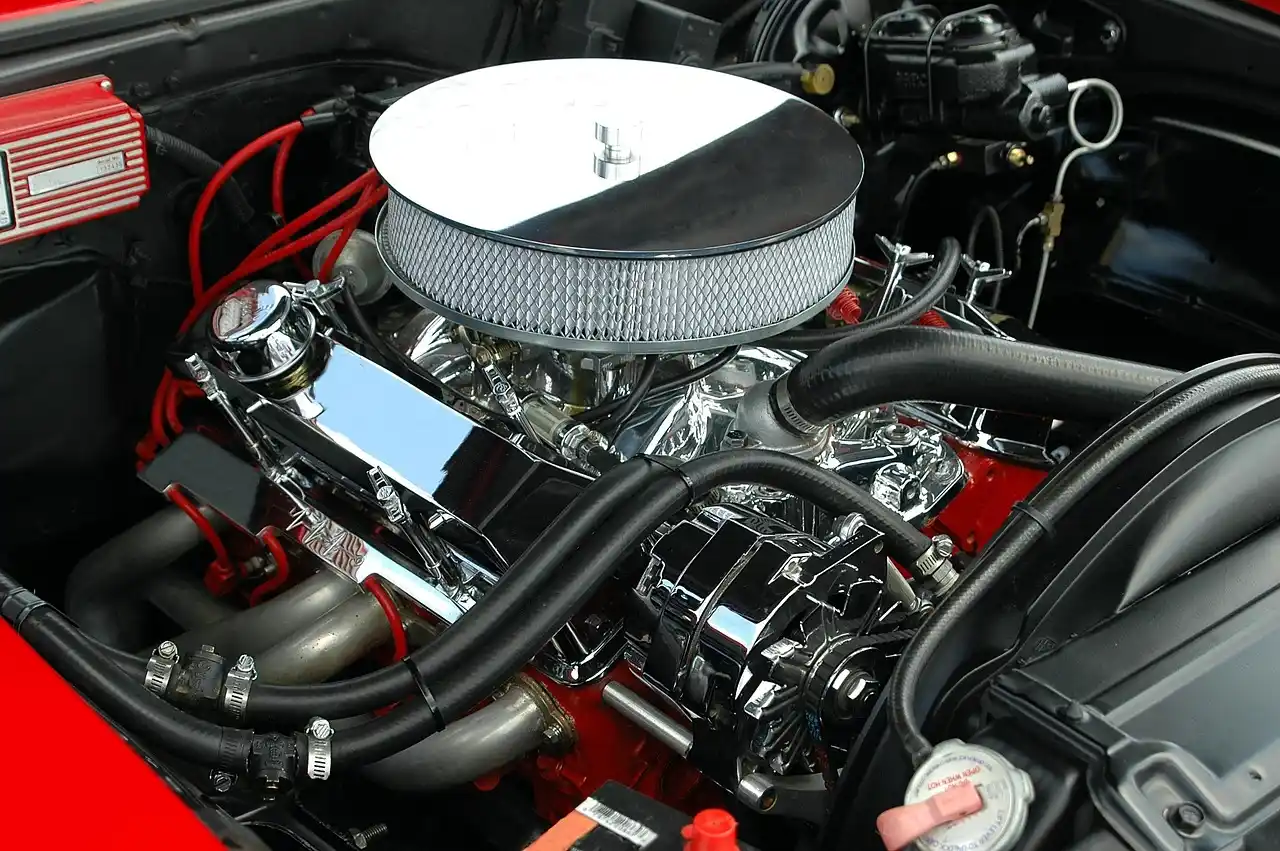
Yes. If the engine cranks normally but will not fire, the fault often moves away from the starter system and toward fuel, spark, immobilizer, or mechanical timing. A fuel pump that does not prime can prevent starting, and mechanical issues can mimic electrical failure.
Check for fuel pump prime and delivery
When the key is turned on, the fuel pump should prime. If there is no prime, the no-start may be in the pump circuit, relay, fuse, wiring, or pump itself. If the pump primes but the engine still will not start, fuel pressure or flow may still be too low.
Cranks but won’t fire is not the same as no-crank. In this case, the starter is doing its job, so the next checks are spark, fuel pressure, immobilizer status, and timing. Do not keep replacing starting parts once the engine is already cranking.
Consider engine mechanical condition
Mechanical issues like a seized engine can also cause no-start problems. A broken timing belt can also prevent starting. If the engine will not turn normally by hand or the symptom appeared after a timing event, professional inspection is the correct next step.
Suppose the starter spins freely after replacement, the fuel pump primes, and the engine still will not fire. That combination pushes the fault toward timing, spark, or mechanical damage rather than the starter circuit. At that point, further parts swapping is poor odds.
Frequently asked questions
Why won’t my key start my car but the battery is fine?
If the battery tests good, the problem often moves to the starter relay, starter fuse, ignition switch, ground cables, or the starter itself. A good battery only proves stored charge. It does not prove the current can reach the starter under load or that the key signal is making it through.
What does it mean when the key turns but nothing happens?
That usually means the starter circuit is not being energized. The most common causes are a bad relay, failed ignition switch, blown fuse, poor grounding, or a loose cable connection. If the dash is also dead, the ignition switch and main power path move higher on the list.
Can a bad ignition switch stop my car from starting?
Yes. The ignition switch sends the signal to engage the starter, so if it fails the starter may never receive the start request. Common clues include no dashboard lights, intermittent start behavior, or a click with no crank. Testing the switch output during key turn is the cleanest check.
Why does my car click but won’t start with the key?
A click means some part of the starter circuit is waking up, but the starter is not turning the engine. A single click often points to the starter solenoid or starter motor. Rapid clicking usually means low voltage, bad battery connections, or a weak ground path.
Could a blown fuse stop my key from starting the car?
Yes. A blown starter fuse can interrupt the electrical flow to the starter motor and leave the car silent when the key is turned. If the fuse fails again after replacement, look for excess current draw or a wiring fault instead of treating the fuse as the root problem.
How do I tell if it’s the starter, relay, or ignition switch?
Check the symptom first, then test in order. If the relay swaps with a known-good unit and the fuse is intact, measure for starter signal from the ignition switch. If power reaches the solenoid during crank but the starter does not engage, the starter or solenoid is the likely fault.
Why won’t my car start even with a new starter and good battery?
A new starter does not rule out a bad relay, poor ground, corroded cable, defective new part, or a solenoid feed problem. If the engine still will not start, test voltage at the solenoid during crank, check the starter fuse, and inspect all battery and ground connections before replacing anything else.
Can wiring or ground problems stop the car from starting?
Yes. Loose, damaged, or corroded grounds can stop sufficient current from reaching the starter, and a damaged wiring run can interrupt the start signal. If the symptom is intermittent, check connectors, chassis grounds, and cable ends for movement, corrosion, or heat damage before blaming the starter.
What should I check first when the key won’t start my car?
Check the battery terminals, cable connections, and grounds first, then confirm the starter fuse and relay. After that, match the symptom: no-crank, click, rapid clicking, or crank-no-start. That order catches the most common faults while keeping battery, starter, relay, ignition, fuel, and mechanical issues separate.
Products related to this article
Sponsored / affiliate links. As an Amazon Associate I earn from qualifying purchases. I may earn additional commission from eligible campaigns.