How a Car Engine Works: The Four-Stroke Cycle Explained
A four-stroke engine repeats intake, compression, power, and exhaust. The crankshaft turns twice for each full cycle, and the camshaft times the valves to each piston stroke. If one step or its valve timing fails, you lose power, get rough running, or stop the engine from starting. This guide explains each stroke and the drivability symptoms that point to trouble.
What is the four-stroke cycle?
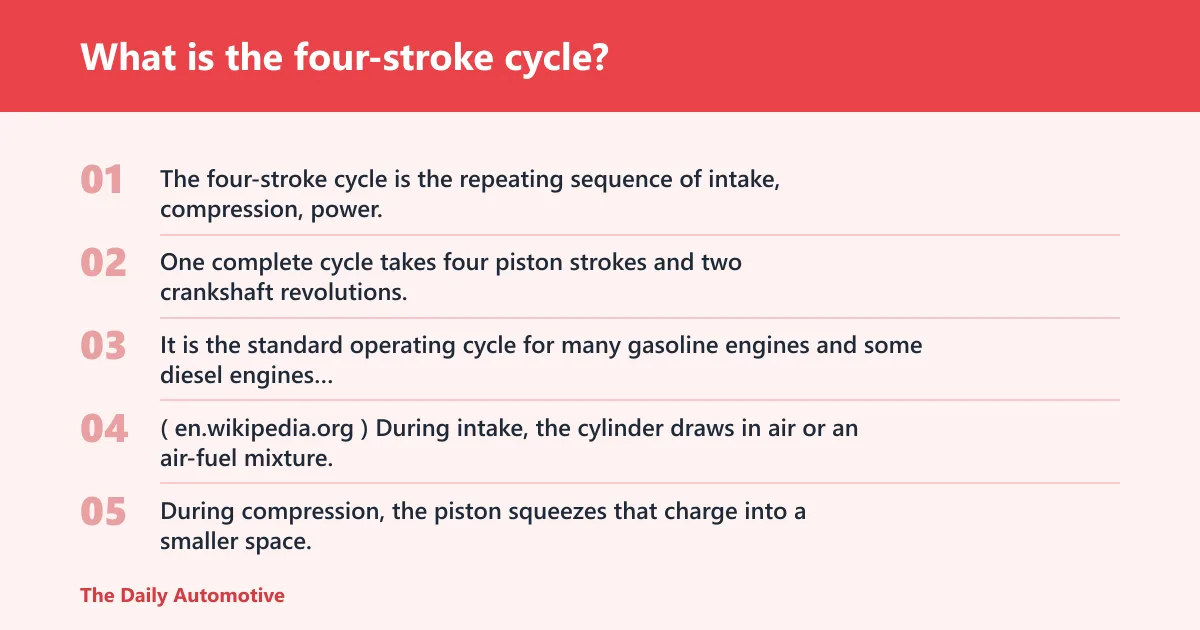


The four-stroke cycle is the repeating sequence of intake, compression, power, and exhaust. One complete cycle takes four piston strokes and two crankshaft revolutions. It is the standard operating cycle for many gasoline engines and some diesel engines used in vehicles and light aircraft. (en.wikipedia.org)
The four strokes in order
During intake, the cylinder draws in air or an air-fuel mixture. During compression, the piston squeezes that charge into a smaller space. During power, combustion forces the piston down. During exhaust, burnt gases leave the cylinder. That sequence is why many explanations call the cycle suck, squeeze, bang, blow.
Why two crankshaft revolutions are required
The piston moves up and down once for each stroke, but the crankshaft only turns half a revolution for each piston stroke. Four strokes therefore require two full crankshaft revolutions, or 720 degrees of crankshaft rotation, to return the engine to the same state at the same cylinder. (howacarworks.com)
How the piston and crankshaft turn pressure into motion
The piston moves in a straight line between top dead center and bottom dead center inside the cylinder. Pressure from intake charge, compression, combustion, and exhaust acts on the piston crown. The connecting rod transfers that force to the crankshaft, which converts linear motion into rotation. A flywheel helps smooth the output because the power stroke happens only once per cycle.
| Stroke | Piston motion | Valve state | Main result |
|---|---|---|---|
| Intake | TDC to BDC | Intake open, exhaust closed | Cylinder fills with fresh charge |
| Compression | BDC to TDC | Both closed | Charge is squeezed and heated |
| Power | TDC to BDC | Both closed at the start | Combustion pushes piston down |
| Exhaust | BDC to TDC | Exhaust open, intake closed | Burnt gases leave the cylinder |
How does a four stroke engine work?
A four-stroke engine works by using valve timing, piston motion, and crankshaft rotation as one linked system. The cylinder and cylinder wall form a sealed chamber. The camshaft opens and closes the valves at the right time, the piston changes pressure inside the chamber, and the crankshaft turns that pressure into usable rotation.
How the cylinder, valves, and camshaft fit together
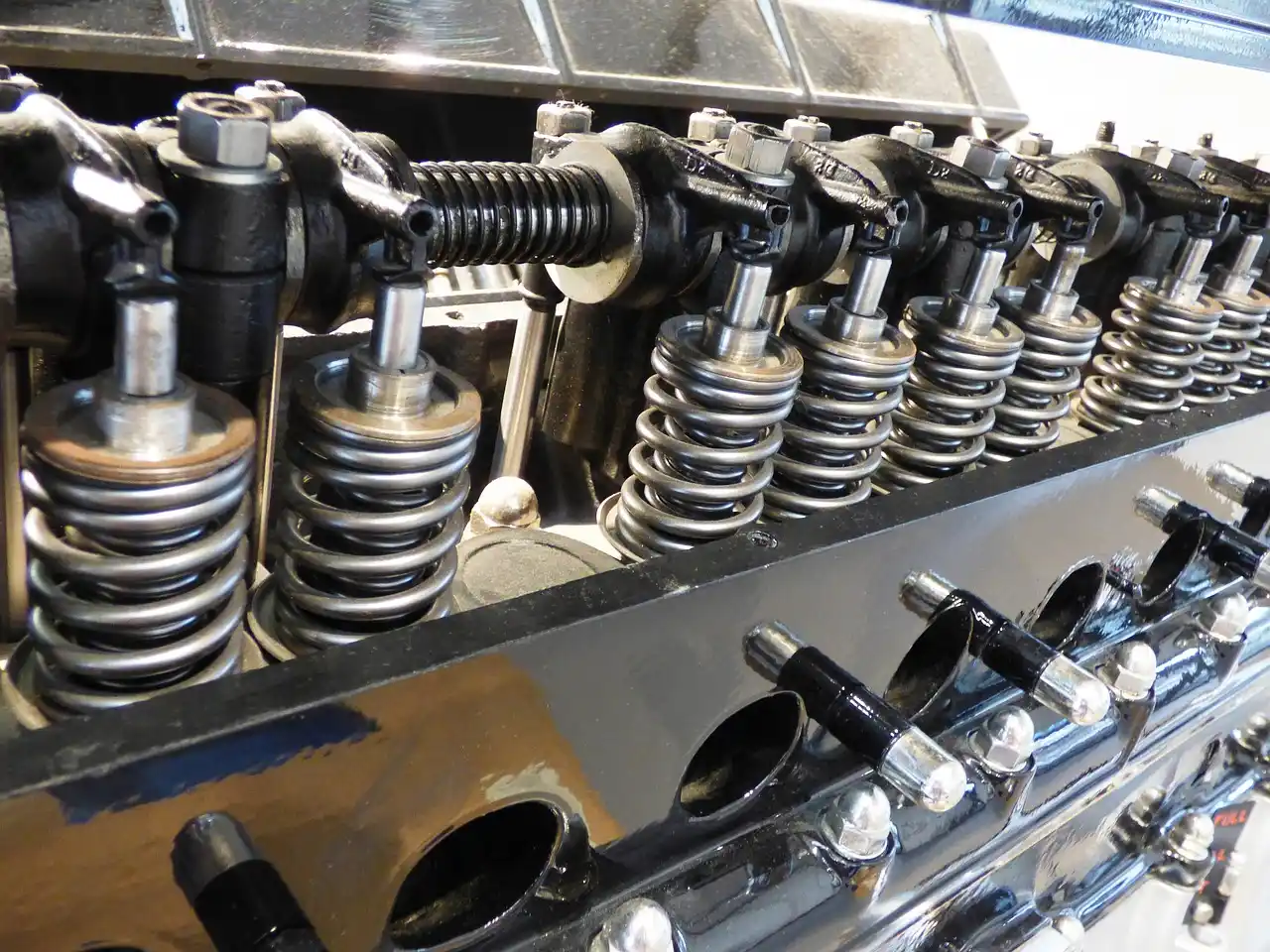
The cylinder is the chamber where the piston travels. The cylinder wall keeps the charge sealed enough for compression and combustion. Intake and exhaust valves in the cylinder head open and close under camshaft control. Their timing matters because the engine must fill the cylinder, hold pressure during compression, then empty the burned gases without mixing the wrong flows.
How does a 4 stroke cycle work?
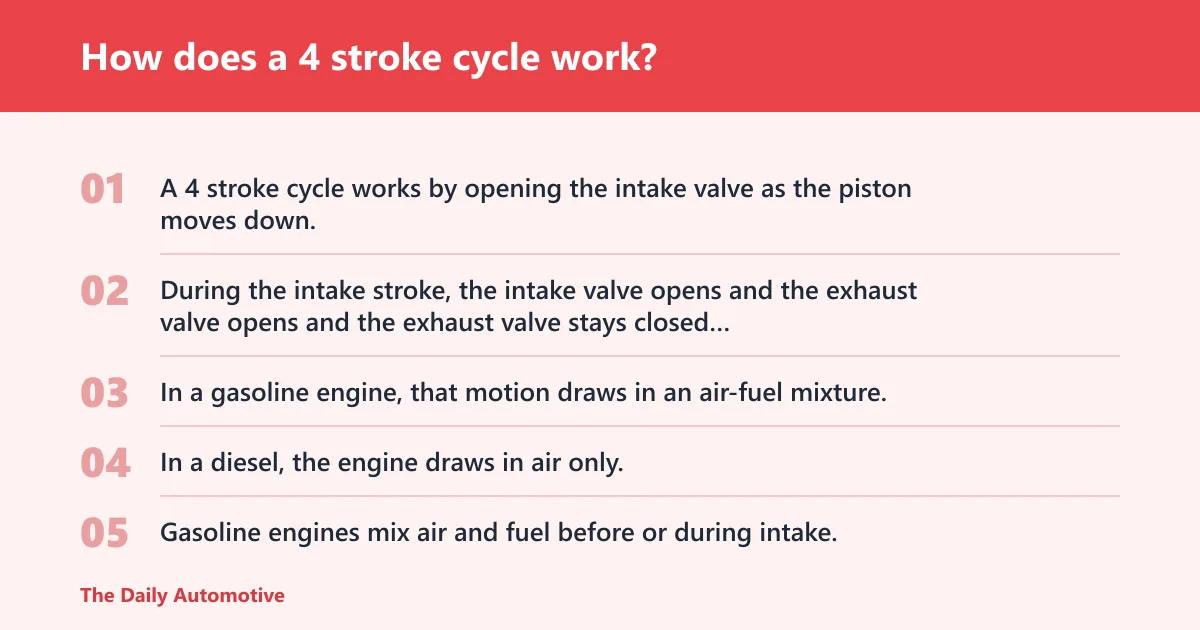
A 4 stroke cycle works by opening the intake valve as the piston moves down, closing both valves as the piston rises to compress the charge, igniting the charge near top dead center, and then opening the exhaust valve as the piston rises again to clear the cylinder. Each stroke prepares the next one.
What happens during the intake stroke?
During the intake stroke, the intake valve opens and the exhaust valve stays closed while the piston moves from top dead center to bottom dead center. In a gasoline engine, that motion draws in an air-fuel mixture. In a diesel, the engine draws in air only, which will be compressed later before fuel injection and combustion.
Gasoline and diesel intake are not the same
Gasoline engines mix air and fuel before or during intake, depending on fuel system design. Diesel engines usually fill the cylinder with air alone. That difference matters because gasoline engines use a spark plug to light the compressed mixture, while diesel engines rely on the heat created by compression ignition.
What happens during the compression stroke?
During the compression stroke, the valves are closed while the piston moves from bottom dead center back to top dead center. That motion squeezes the charge, which raises pressure and temperature. In a gasoline engine, the compressed air-fuel mixture is ready for spark ignition. In a diesel, the hot compressed air is ready for fuel injection and self-ignition.
Why compression problems hurt starting and idle quality
Low compression leaves the mixture too cool or too diluted to burn well. Worn piston rings, leaking valves, a blown head gasket, or a carboned-up valve seat can all cause it. The usual result is hard starting, rough idle, weak power, or a misfire under load.
What happens during the power stroke?
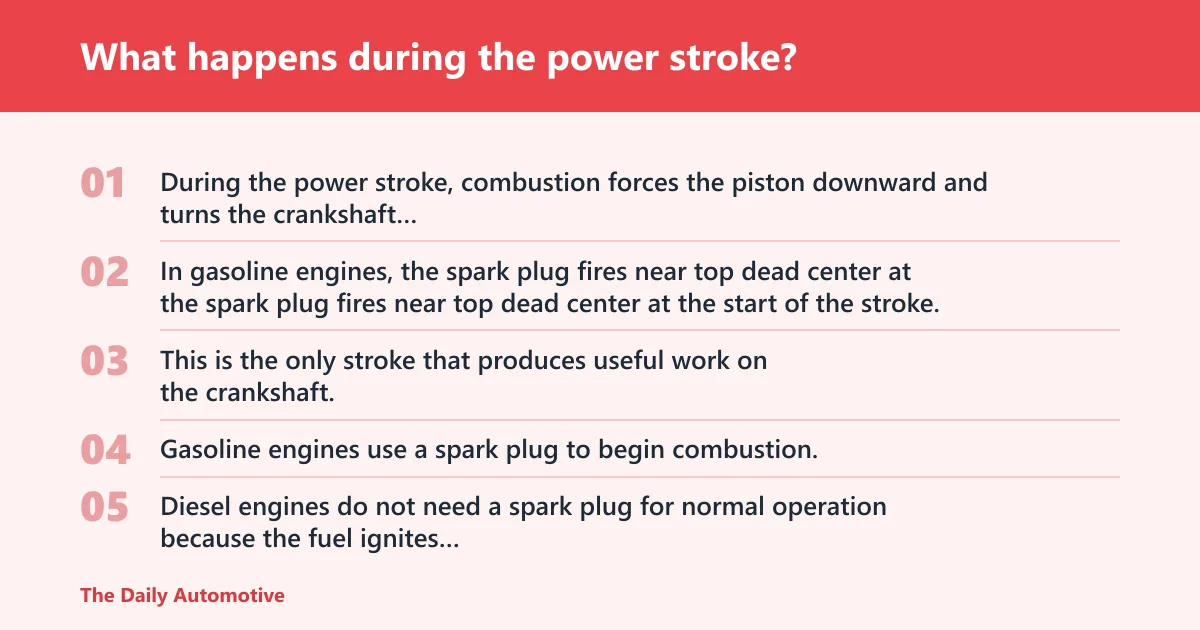
During the power stroke, combustion forces the piston downward and turns the crankshaft through the connecting rod. In gasoline engines, the spark plug fires near top dead center at the start of the stroke. That spark ignites the compressed mixture. This is the only stroke that produces useful work on the crankshaft.
Gasoline spark ignition versus diesel compression ignition
Gasoline engines use a spark plug to begin combustion. Diesel engines do not need a spark plug for normal operation because the fuel ignites from hot compressed air after injection. That is why a gasoline misfire often points toward spark, fuel, or compression issues, while a diesel no-start may point more toward injection, air supply, or compression heat.
Why only one stroke is power-producing
Only the power stroke adds energy to the crankshaft. Intake and exhaust mainly move gases. Compression consumes crankshaft energy to squeeze the charge, even though it prepares the burn. That is why flywheels matter. They store rotational energy and smooth the gaps between power strokes.
What happens during the exhaust stroke?
During the exhaust stroke, the exhaust valve opens and the intake valve stays closed while the piston moves from bottom dead center to top dead center. That motion pushes burnt gases out of the cylinder so fresh charge can enter on the next intake stroke. Good exhaust flow helps the next cycle start with a clean chamber.
Why exhaust flow matters for the next cycle
If exhaust gas stays in the cylinder, it displaces fresh air-fuel mixture or fresh air. That can cause low power, rough idle, or a feeling that the engine is “breathing” poorly. A stuck exhaust valve, damaged valve seat, or restricted exhaust path can interrupt the handoff between exhaust and intake.
What does TDC and BDC mean in an engine?
TDC means top dead center, the highest point of the piston travel in the cylinder. BDC means bottom dead center, the lowest point. These stroke endpoints define where the piston starts and ends each stroke, and they help set valve timing, spark timing, and compression events.
Why timing uses TDC and BDC as reference points
The intake stroke starts at TDC and ends at BDC. The exhaust stroke returns the piston from BDC to TDC. Spark timing in gasoline engines is usually referenced near TDC at the start of the power stroke. If valve timing drifts far enough, the piston may compress the wrong charge at the wrong moment, which hurts starting and power.
Camshaft timing and valve overlap
The camshaft coordinates valve opening and closing with piston position. Near the end of exhaust and the start of intake, both valves may be open for a short overlap period. That can help cylinder filling at the right engine speeds, but if timing is wrong, overlap can let fresh charge escape or exhaust gas linger, leading to unstable idle and low torque.
Say your four-cylinder engine idles at a low speed and starts shaking after a timing chain issue. If the intake and exhaust events no longer line up with TDC and BDC, the cylinder may fill poorly and the engine may misfire at idle before it ever feels normal at speed.
What is the difference between intake and exhaust valves?
The intake valve lets fresh charge into the cylinder, and the exhaust valve lets burned gases out. They do opposite jobs, and they are timed to different strokes. Intake opens during the intake stroke. Exhaust opens during the exhaust stroke. During compression and power, both are normally closed so the cylinder can hold pressure.
Why does a four stroke engine need two crankshaft revolutions?
A four-stroke engine needs two crankshaft revolutions because each piston stroke uses only half of one crankshaft turn, and the engine must complete intake, compression, power, and exhaust before repeating. One full cycle therefore spans 720 degrees of crankshaft rotation. That is the time needed to fill, compress, burn, and clear the cylinder.
Why is only one stroke in four power-producing?
Only the power stroke makes the crankshaft turn from combustion pressure. The other three strokes either move gases or spend energy preparing the cylinder for combustion. Intake fills the chamber, compression squeezes the charge, and exhaust removes the spent gases. The engine depends on the flywheel to carry momentum through the non-power strokes.
What is the Suck, Squeeze, Bang, Blow sequence?
Suck, squeeze, bang, blow is a simple memory aid for intake, compression, power, and exhaust. It matches the four-stroke cycle in order. “Suck” means the cylinder draws in charge. “Squeeze” means the piston compresses it. “Bang” means combustion drives the piston. “Blow” means exhaust clears the cylinder for the next cycle.
Troubleshooting sidebar: one fault per stroke
- Intake stroke: Restricted air filter or sticking intake valve. Symptom: weak acceleration and poor cylinder filling. First check: inspect the air intake path and listen for a valve that is not moving cleanly.
- Compression stroke: Low compression from worn rings or a leaking valve. Symptom: hard starting, rough idle, or a misfire. First check: perform a compression test or a leak-down test if the engine design allows it.
- Power stroke: Misfire from bad spark, fuel delivery trouble, or incorrect ignition timing. Symptom: loss of power and shaking under load. First check: verify spark plug condition and ignition timing on gasoline engines.
- Exhaust stroke: Stuck exhaust valve or blocked exhaust path. Symptom: sluggish engine response and trapped exhaust gases. First check: look for a valve that does not open fully or a restriction in the exhaust system.
A common first-timer mistake is to blame a rough idle on the spark plug alone. Suppose a car cranks normally but idles unevenly and loses power on hills. A compression problem or a valve timing fault can create the same complaint, so the stroke that fails matters as much as the symptom.
How does a 4 stroke motor work?
A 4 stroke motor works the same way as a four-stroke engine: intake, compression, power, and exhaust repeat in order. The motor uses the piston, valves, cylinder, and crankshaft to move from pressure to rotation. The difference between a healthy engine and a sick one is often which stroke is interrupted.
how a four stroke engine works
A four-stroke engine works by controlling when air or air-fuel mixture enters the cylinder, when the charge is compressed, when combustion happens, and when exhaust leaves. The piston’s travel between TDC and BDC sets the stroke. The crankshaft turns that motion into rotation, and the camshaft keeps the valves on schedule.
how a 4 stroke engine works
A 4 stroke engine works through a repeated chain of cause and effect. Valve timing controls cylinder filling and emptying. The piston changes pressure. The spark plug fires in gasoline engines, or compression ignition occurs in diesels. The crankshaft receives the force and sends it to the drivetrain as rotation.
Frequently asked questions
How does a four stroke engine work?
A four stroke engine works by repeating intake, compression, power, and exhaust in that order. The piston moves between TDC and BDC while the camshaft opens and closes the valves. Combustion pushes the piston down, and the crankshaft turns that force into continuous rotation.
Why does a four stroke engine need two crankshaft revolutions?
It needs two crankshaft revolutions because each of the four strokes uses part of the crank’s rotation, and the engine must complete all four strokes before the cycle repeats. That adds up to 720 degrees of crankshaft rotation for one full cycle.
What happens during the compression stroke?
During the compression stroke, both valves are closed and the piston moves upward from BDC to TDC. The trapped charge is squeezed, which raises pressure and temperature. In a gasoline engine, that prepares the mixture for spark ignition. In a diesel, it prepares hot air for fuel injection.
What does TDC and BDC mean in an engine?
TDC means top dead center, the piston’s highest point. BDC means bottom dead center, the piston’s lowest point. These points mark the ends of each stroke and help define valve timing, spark timing, and compression events inside the cylinder.
What is the difference between intake and exhaust valves?
The intake valve opens to let fresh charge into the cylinder during the intake stroke. The exhaust valve opens to let burnt gases out during the exhaust stroke. They do opposite jobs, and the engine depends on their timing to keep filling, burning, and clearing each cylinder in order.
What is the Suck, Squeeze, Bang, Blow sequence?
Suck, squeeze, bang, blow is a plain-language way to remember intake, compression, power, and exhaust. It matches the four-stroke cycle exactly. The phrase is useful because it ties the movement of air, pressure, combustion, and exhaust to the order the engine actually follows.
Products related to this article
Sponsored / affiliate links. As an Amazon Associate I earn from qualifying purchases. I may earn additional commission from eligible campaigns.