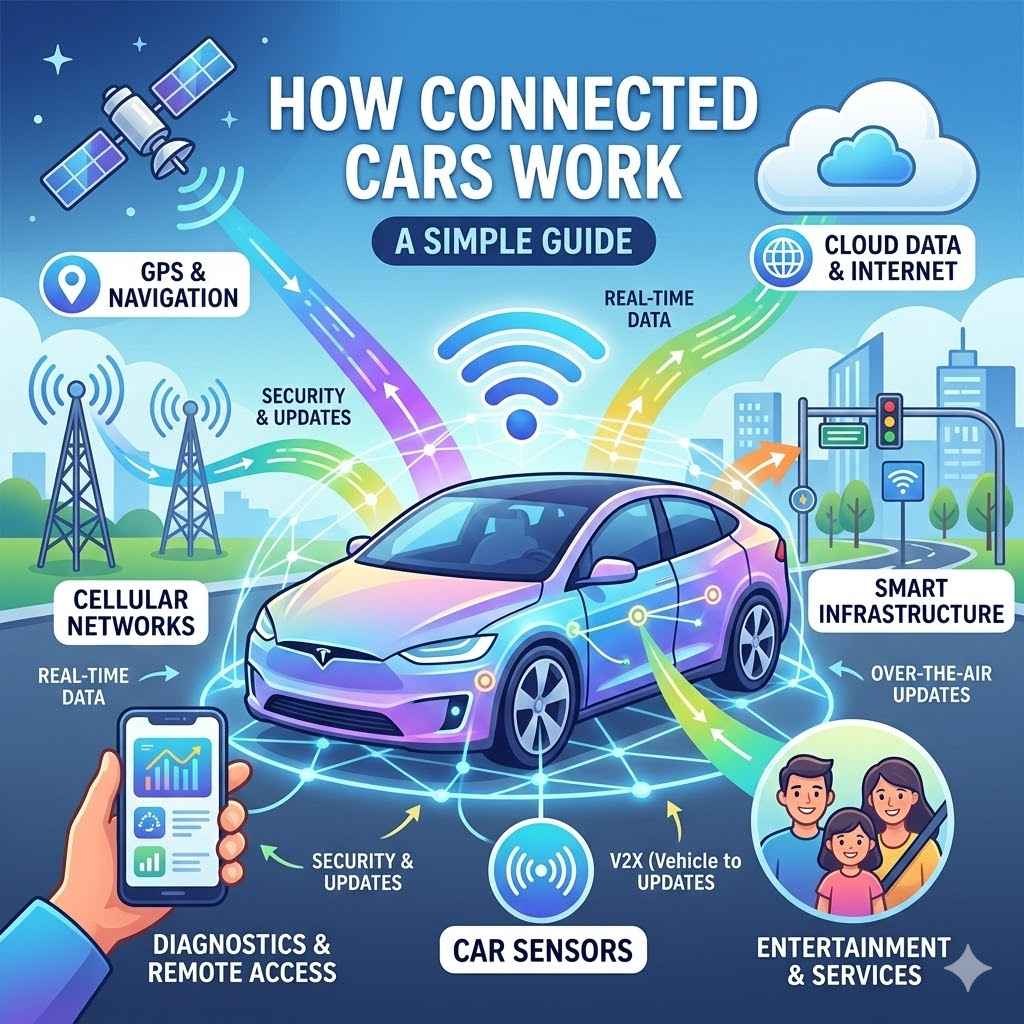
How Connected Cars Work: A Simple Guide
Many people find learning about How Connected Vehicles Work: A Simple Guide a bit tricky. It feels like a lot of technical words and complicated systems. But really, it’s not as hard as it sounds.
This guide will break down exactly how cars connect to the internet and other devices. We will go step-by-step, making it easy to follow. Get ready to understand the tech that makes your car smarter.
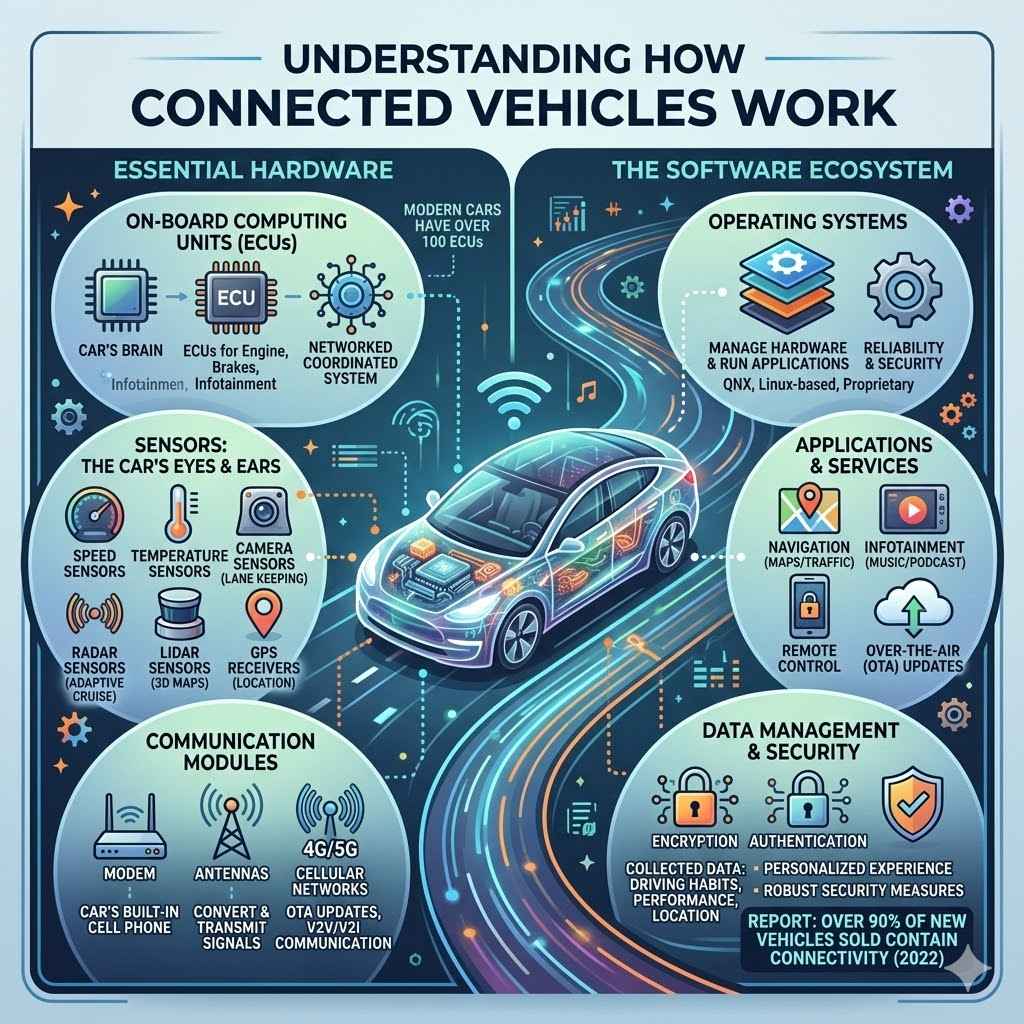
Understanding How Connected Vehicles Work
Connected vehicles are cars that can communicate with the outside world. They use different technologies to send and receive data. This lets them offer many new features.
Think about getting traffic updates in real-time or controlling your car with a smartphone app. These cars are becoming more common, and knowing how they function helps you appreciate them more. This section explains the basic building blocks that make a car “connected.” We will look at the hardware and software involved.
The Essential Hardware
At the heart of a connected car is its internal technology. This includes a variety of sensors and computing units. These components gather information about the car and its surroundings.
They also process commands from the driver or remote systems.
On-Board Computing Units
Think of these as the car’s brain. On-board computing units, also known as Electronic Control Units (ECUs), manage various functions. In a connected car, these ECUs are more powerful and networked.
They handle everything from engine performance to infotainment.
ECUs are specialized microprocessors. One ECU might control the engine, another the brakes (ABS), and yet another the infotainment system. In connected vehicles, these ECUs are linked together.
This allows them to share data and work as a coordinated system. For example, an ECU monitoring tire pressure can send that data to an ECU managing the dashboard display.
The development of powerful ECUs has been key to automotive advancements. Early cars had only a few ECUs for basic functions. Modern cars can have over 100 ECUs.
This increase allows for more complex features like advanced driver-assistance systems (ADAS) and the seamless integration of connectivity features.
Sensors
Sensors are the car’s “eyes” and “ears.” They collect data from the car’s internal systems and the external environment. This data is then sent to the ECUs for processing.
There are many types of sensors in a car. Some common ones include:
- Speed Sensors Measure how fast the wheels are turning. This data helps control the speedometer and anti-lock braking systems.
- Temperature Sensors Monitor engine coolant, outside air, and cabin temperature. This information is vital for engine performance and driver comfort.
- Camera Sensors Used for features like lane keeping assist and automatic emergency braking. They “see” the road and other vehicles.
- Radar Sensors Work similarly to cameras but use radio waves. They are effective in various weather conditions and are used for adaptive cruise control and parking assist.
- Lidar Sensors Use lasers to create detailed 3D maps of the surroundings. These are increasingly important for autonomous driving systems.
- GPS Receivers Determine the vehicle’s location, essential for navigation and location-based services.
These sensors provide the raw data that makes connected car features possible. Without accurate and reliable sensor data, the car’s systems cannot function correctly.
Communication Modules (Modems and Antennas)
To be connected, a car needs a way to talk to the outside world. This is where communication modules come in. These are like the car’s built-in cell phone.
A modem is a device that converts digital data into signals that can be transmitted over a network, and vice versa. In connected cars, modems enable communication via cellular networks (like 4G or 5G) or Wi-Fi. Antennas are used to send and receive these signals.
These modules allow the car to:
- Connect to the internet for streaming music or accessing online maps.
- Send diagnostic information to the manufacturer.
- Receive over-the-air (OTA) software updates.
- Communicate with other vehicles (V2V) or infrastructure (V2I).
The type and capability of these modules affect the speed and reliability of the car’s connectivity. Newer cars often feature 5G modems for faster data transfer.
The Software Ecosystem
Hardware is only part of the story. The software running on the car’s computers is what makes everything work together and provides the user experience.
Operating Systems
Just like your smartphone or computer, cars have operating systems. These systems manage the hardware and allow other applications to run.
Common operating systems in vehicles include QNX, Linux-based systems, and proprietary systems developed by automakers. These systems are designed for reliability and security, as failure can have serious safety implications.
The operating system handles:
- Managing all the ECUs and their tasks.
- Running the infotainment system and its applications.
- Processing data from sensors.
- Facilitating communication with external networks.
The choice of operating system influences the types of features and applications that can be developed and implemented in the vehicle.
Applications and Services
These are the programs and features that drivers interact with. They leverage the hardware and operating system to provide useful functions.
Examples of applications and services include:
- Navigation Apps Providing real-time traffic data and routing.
- Infotainment Services Streaming music, podcasts, and video.
- Remote Control Apps Allowing users to lock/unlock doors, start the engine, or check vehicle status from their phone.
- Vehicle Diagnostics Sending alerts to drivers or mechanics about potential issues.
- Over-the-Air (OTA) Updates Software updates that improve performance or add new features without a dealership visit.
The development of these applications often involves partnerships between automakers and third-party tech companies. This ecosystem is constantly growing, bringing more innovative features to connected cars.
Data Management and Security
Connected cars generate and process vast amounts of data. This data needs to be managed securely.
Data collected can include driving habits, vehicle performance metrics, location history, and even personal preferences. This data is often used to improve services, personalize the driving experience, and for manufacturer diagnostics.
Security is paramount. Protecting this data from unauthorized access is a major concern. Automakers implement encryption and authentication protocols to safeguard information.
They also work to prevent cyberattacks that could compromise the vehicle’s systems.
A significant statistic highlights the importance of this: A 2022 report found that over 90% of new vehicles sold contain some form of connectivity. This means billions of data points are being generated and need robust security measures.
How Connected Vehicles Communicate
Connectivity is the core of a connected vehicle. This section explains the different ways cars talk to each other and the world around them. It covers the technologies that enable data exchange.
Cellular Networks
Cellular networks are the most common way connected cars communicate with the internet. This is similar to how your smartphone connects.
Cars equipped with cellular modems can access 4G LTE or 5G networks. This provides a stable and wide-reaching connection. This allows for real-time data streaming and communication.
Key benefits of using cellular networks include:
- Wide Coverage Available in most populated areas.
- High Bandwidth Supports streaming, downloads, and complex data exchange.
- Reliability Generally consistent connection quality.
Cellular connectivity powers features like real-time traffic updates, remote diagnostics, and over-the-air software updates. It is the backbone for many advanced connected car services.
Wi-Fi and Bluetooth
While cellular is for wide-area communication, Wi-Fi and Bluetooth offer shorter-range connectivity.
Wi-Fi in a car can be used to connect to home or public Wi-Fi hotspots. This can be useful for downloading large software updates when the car is parked, potentially saving cellular data usage. Some cars can even act as Wi-Fi hotspots for passengers.
Bluetooth is primarily used for connecting personal devices like smartphones and smartwatches to the car’s infotainment system. This enables hands-free calling, audio streaming, and integration with phone apps like Apple CarPlay or Android Auto.
These technologies complement cellular connectivity, providing flexibility for different communication needs within and around the vehicle.
Vehicle-to-Everything (V2X) Communication
This is a more advanced form of communication. It allows vehicles to talk directly with other entities. V2X is crucial for future safety and efficiency.
There are several types of V2X:
- Vehicle-to-Vehicle (V2V) Cars share information directly with each other. This could include speed, location, and braking status. This allows cars to warn each other about potential hazards, like sudden stops or vehicles in blind spots, even before the driver sees them.
- Vehicle-to-Infrastructure (V2I) Cars communicate with traffic lights, road signs, and other infrastructure. This can help optimize traffic flow, alert drivers to construction zones, or inform them about changing speed limits.
- Vehicle-to-Pedestrian (V2P) Cars can communicate with pedestrians’ smartphones or wearable devices. This is a vital safety feature, helping cars detect pedestrians, especially in low-visibility conditions or at night.
- Vehicle-to-Network (V2N) This is the connection of vehicles to a broader network, usually via cellular. It’s how cars access cloud services and receive real-time data from traffic management centers.
V2X communication uses dedicated short-range communications (DSRC) or cellular V2X (C-V2X) technologies. It promises to significantly improve road safety and traffic management. For instance, V2V could help prevent up to 80% of crashes involving human error, according to some industry estimates.
Global Positioning System (GPS)
GPS is a foundational technology for many connected car features. It provides precise location data.
GPS receivers in cars use signals from a constellation of satellites to determine the vehicle’s position on Earth. This location data is essential for:
- Navigation Systems Guiding drivers to their destinations.
- Location-Based Services Providing traffic updates specific to the car’s route or offering nearby points of interest.
- Emergency Services Helping emergency responders locate the vehicle in case of an accident.
- Fleet Management Tracking the location of commercial vehicles.
The accuracy of GPS can be enhanced by using additional technologies like Assisted GPS (A-GPS), which uses cellular network data to speed up signal acquisition and improve location accuracy, especially in areas with weak satellite reception.
Key Features Enabled by Connectivity
The ability to connect opens up a world of features that make driving safer, more convenient, and more enjoyable. This section details some of the most impactful applications.
Safety Features
Connected car technology plays a huge role in enhancing safety. It provides drivers with more information and can even intervene to prevent accidents.
Some advanced safety features include:
- Advanced Driver-Assistance Systems (ADAS) Features like automatic emergency braking, lane keeping assist, blind-spot monitoring, and adaptive cruise control rely on sensors and communication to operate. V2V and V2I can extend the capabilities of these systems.
- Remote Diagnostics and Alerts The car can constantly monitor its own systems. If it detects a potential issue, it can alert the driver or send a notification to a service center. This allows for proactive maintenance, preventing breakdowns.
- Emergency Call Services (eCall) In the event of a severe accident, connected cars can automatically alert emergency services. They can transmit the car’s location, direction of travel, and the severity of the impact, speeding up response times.
- Real-time Hazard Warnings Through V2X communication, cars can receive alerts about upcoming hazards like icy roads, accidents, or traffic congestion ahead, allowing drivers to slow down or change routes.
These technologies are designed to reduce accidents and protect occupants. The integration of connectivity makes these systems more effective by providing broader situational awareness.
Infotainment and Convenience
Beyond safety, connectivity greatly enhances the in-car experience.
Features include:
- Seamless Smartphone Integration Apple CarPlay and Android Auto allow drivers to access their phone’s apps, music, and contacts on the car’s display.
- In-Car Wi-Fi Hotspots Passengers can stay connected to the internet, making long trips more enjoyable for everyone.
- Streaming Services Access to music, podcasts, and even video streaming directly through the car’s system.
- Voice Assistants Integrated voice assistants allow drivers to control various car functions, send messages, or get information without taking their hands off the wheel.
- Remote Start and Climate Control Using a smartphone app, drivers can start their car and set the temperature before entering, especially convenient in extreme weather.
These features transform the car into a connected hub, offering entertainment and productivity on the go. They make daily commutes and road trips more pleasant and efficient.
Navigation and Traffic Management
Connected navigation systems go far beyond basic route guidance.
They utilize real-time data to provide:
- Live Traffic Information GPS data from many connected vehicles combined with information from traffic sensors and cameras allows for highly accurate real-time traffic updates. This helps in choosing the fastest routes and avoiding congestion.
- Predictive Routing Some systems can learn driving patterns and predict traffic conditions, suggesting optimal departure times or routes.
- Parking Assistance Connected apps can help drivers find available parking spots, sometimes even allowing for reservation and payment through the app.
- Traffic Signal Synchronization Through V2I communication, cars can receive information about traffic light timings, allowing for smoother driving and reduced fuel consumption.
This advanced navigation capability makes driving less stressful and more efficient, saving time and fuel for drivers.
Over-the-Air (OTA) Updates
OTA updates are a revolutionary aspect of connected vehicles. They allow software to be updated remotely.
This means:
- Software Enhancements New features can be added, or existing ones improved, without a visit to the dealership.
- Bug Fixes Software glitches can be resolved quickly and efficiently.
- Performance Improvements Updates can optimize engine performance, battery management (for EVs), or other vehicle functions.
- Security Patches Critical security vulnerabilities can be addressed promptly.
OTA updates are transforming vehicle maintenance. They are similar to how your smartphone receives regular updates. This ensures cars remain up-to-date with the latest technology and security measures.
A recent survey indicated that 70% of consumers expect their cars to receive OTA updates, showing a clear demand for this convenience.
The Future of Connected Vehicles
The evolution of connected cars is far from over. The technology is rapidly advancing, promising even more integrated and intelligent transportation.
Autonomous Driving
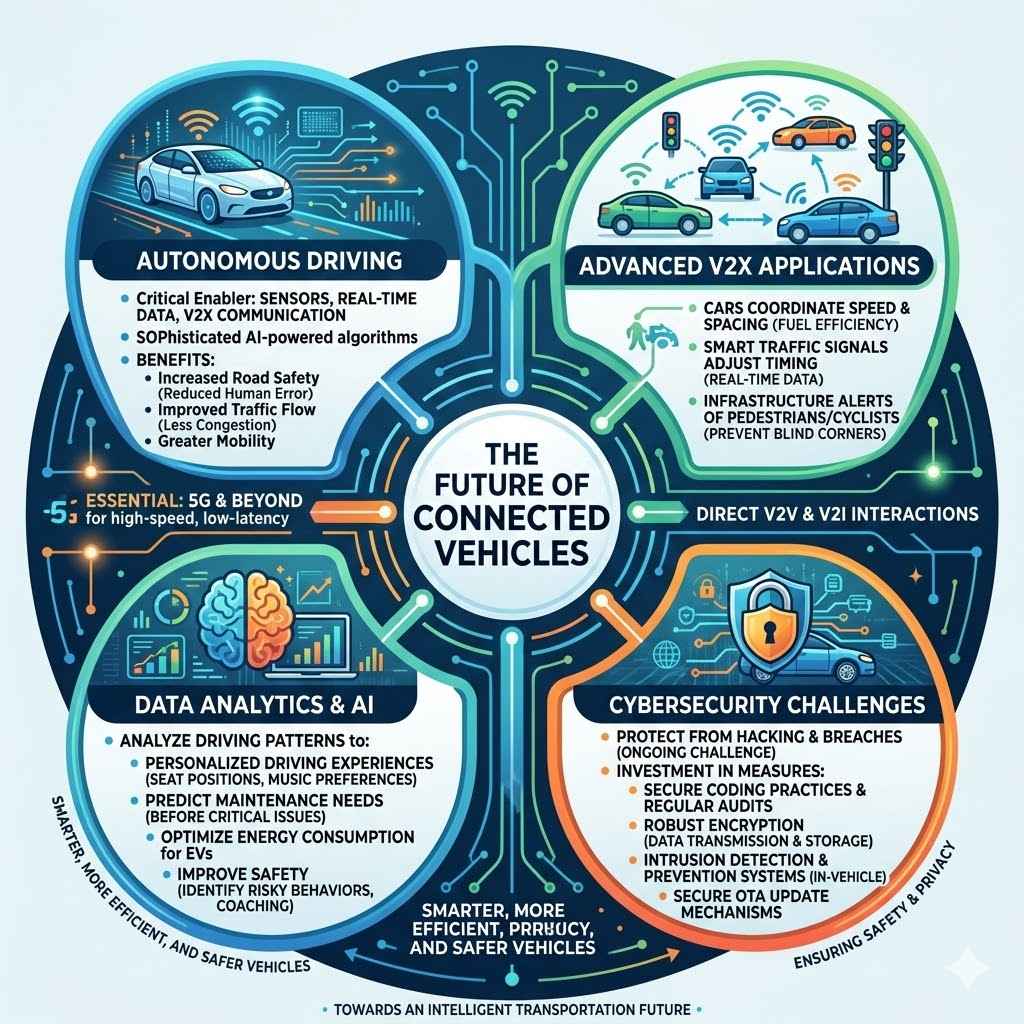
Connectivity is a critical enabler of autonomous driving. Self-driving cars rely heavily on sensors, real-time data, and V2X communication to perceive their environment and make decisions.
Future autonomous vehicles will use sophisticated algorithms and AI, powered by constant data streams. They will communicate with each other and the infrastructure to ensure safe and efficient navigation without human input.
This technology could lead to:
- Increased Road Safety Reducing accidents caused by human error.
- Improved Traffic Flow Optimized vehicle movements leading to less congestion.
- Greater Mobility Providing transportation for those unable to drive.
The development of 5G and beyond will be essential for the high-speed, low-latency communication required for robust autonomous systems.
Advanced V2X Applications
V2X communication will continue to expand its capabilities. We will see more sophisticated applications that leverage direct vehicle-to-vehicle and vehicle-to-infrastructure interactions.
Imagine a scenario where:
- Cars coordinate their speed and spacing to create platoons, improving fuel efficiency on highways.
- Smart traffic signals adjust timing in real-time based on the exact number and speed of approaching vehicles.
- Infrastructure can detect pedestrians or cyclists and proactively alert approaching vehicles, even around blind corners.
These advancements will make our roads safer and transportation systems more efficient.
Data Analytics and AI
The massive amount of data generated by connected cars will be increasingly used for advanced analytics and artificial intelligence.
AI can analyze driving patterns to:
- Personalize driving experiences, from seat positions to music preferences.
- Predict maintenance needs before they become critical issues.
- Optimize energy consumption for electric vehicles based on driving habits and route.
- Improve safety by identifying risky driving behaviors and providing personalized coaching.
This data-driven approach will lead to smarter, more efficient, and safer vehicles.
Cybersecurity Challenges
As vehicles become more connected and reliant on software, cybersecurity becomes a paramount concern.
Protecting connected cars from hacking and data breaches is an ongoing challenge. Manufacturers are investing heavily in cybersecurity measures to ensure that vehicle systems remain secure.
This includes:
- Secure coding practices and regular security audits.
- Robust encryption for data transmission and storage.
- Intrusion detection and prevention systems within the vehicle.
- Secure OTA update mechanisms.
Ensuring the safety and privacy of drivers and passengers is a top priority as connectivity increases.
Frequently Asked Questions
Question: What does it mean for a car to be “connected”
Answer: A connected car can access the internet and communicate with other devices or systems, both inside and outside the vehicle, using technologies like cellular, Wi-Fi, and GPS.
Question: How do connected cars get internet access
Answer: Most connected cars use built-in cellular modems, similar to a smartphone, to connect to 4G LTE or 5G networks for internet access.
Question: Can my car get software updates over the air
Answer: Yes, many modern connected cars can receive over-the-air (OTA) software updates that can improve performance, fix bugs, or add new features remotely.
Question: What is V2X communication
Answer: V2X stands for Vehicle-to-Everything communication. It allows cars to communicate directly with other vehicles (V2V), road infrastructure (V2I), pedestrians (V2P), and the network (V2N) to enhance safety and efficiency.
Question: Is my connected car data safe
Answer: Automakers implement various security measures like encryption and firewalls to protect the data generated by connected cars, but cybersecurity remains an ongoing focus.
Summary
Understanding how connected vehicles work reveals a system of sensors, computers, and communication technologies. These work together to bring enhanced safety, convenience, and infotainment to your driving experience. From cellular networks enabling real-time data to V2X paving the way for smarter roads, the integration is impressive.
Embrace these advancements for a safer and more connected drive.