Best Portable Car Jacks for Emergencies (2026): We Compared
The best portable car jack is the one that fits your vehicle’s curb weight, ground clearance, and the surface where you’ll use it: scissor jack for compact cars, bottle jack for trucks and SUVs, and a low-profile floor jack for garage use. Pick the wrong type, and you may end up with a jack that does not fit, sinks into soft ground, or takes too much effort during a roadside stop. This guide compares top portable jacks by emergency scenario, vehicle type, and ease of use.
Which portable car jack is best for most drivers?
A scissor jack is the best default choice for most passenger cars because it stores compactly, works with standard roadside tire changes, and does not need the footprint a floor jack requires. If speed matters more than effort, an electric jack is the better comfort pick, but only on firm, level ground.
Quick comparison
| Product | Badge | Best for | Price | ||
|---|---|---|---|---|---|
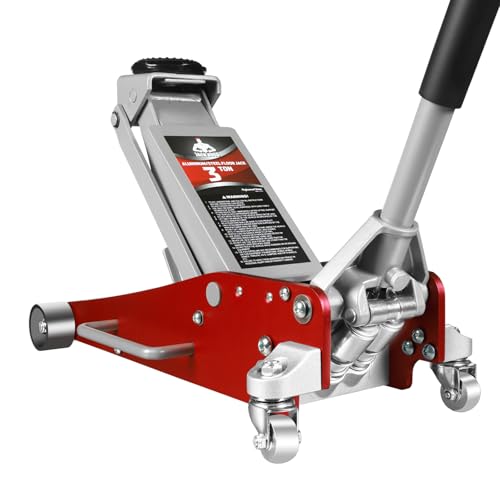 |
Jack Boss 3 Ton Low Profile, Aluminum and Steel RacingJack Boss | Our pick | 3 Ton · Aluminum and Steel · Racing Floor Jack | $169.99
Price as of 22 Oct 2026
|
View |
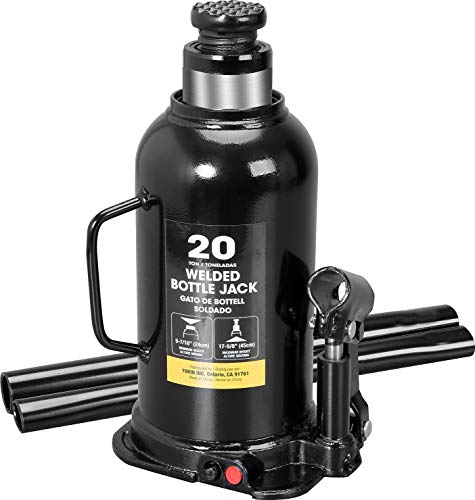 |
Torin 20 Ton (40,000 LBs) Capacity Hydraulic Welded HeavyTorin | Budget pick | 20 Ton · Heavy Duty · Bottle Jack | $52.99
Price as of 22 Oct 2026
|
View |
 |
Electric Car Jack Kit 5 Ton 12V Hydraulic Floor Jack withFEANISIFEI | Upgrade pick | 5 Ton · 12V Hydraulic · Electric Car Jack Kit | $89.99
Price as of 22 Oct 2026
|
View |
 |
Flieeya 4-Ton Exhaust Air Jack – Portable Inflatable CarFlieeya | Also great | 4-Ton · Exhaust Air Jack · Portable Inflatable Lifting Bag | $132.99
Price as of 22 Oct 2026
|
View |
Use the comparison table to separate compact-carry options from garage-first tools. Then match the jack type to the vehicle and surface, not just the advertised rating.
How we chose
The pick process centered on four things: capacity relative to vehicle class and GVWR, lift height for tire removal, footprint and storage size, and the safety features that matter on the roadside. Manual effort also mattered, because a jack that is strong enough but too hard to operate may be the wrong emergency tool.
- Capacity: A jack should exceed half the vehicle’s weight for one-corner lifting. GVWR helps estimate that threshold when curb weight is not listed.
- Lift height: The jack must clear pinch points at the low end and raise the tire high enough for removal at the high end.
- Stability: A broad base helps reduce tipping risk on a shoulder, driveway, or uneven roadside patch.
- Practical storage: Trunk space, carrying case fit, and handle rattle matter if the jack lives with a roadside kit.
Say your sedan has a GVWR around 4,000 pounds. A one-corner lift does not need a 20-ton jack; it needs a jack that fits under the pinch weld, lifts the tire off the ground, and stays small enough to store without crowding the spare and lug wrench.
Suppose a crossover is stranded on firm pavement, but the owner has limited upper-body strength. A powered jack can reduce cranking, yet the ground still needs to support the tool and the vehicle before any lift begins. Soft shoulder gravel changes the answer fast.
Jack Boss floor jack: best for low cars
This Jack Boss floor jack fits drivers with a low-clearance car or a home garage setup where storage space is less tight. Its 3-ton rating and 3-15/16" to 18-5/16" lift range make it suitable for many passenger vehicles, and the low-profile body helps it slide under cars that sit close to the pavement.
The main advantage is control. Dual pistons reduce the number of pumps needed, which makes the lift faster than a basic single-piston floor jack. The drawback is portability: at 30 lbs, it is far less convenient to keep in a trunk than a scissor jack or compact electric kit.
Torin hydraulic bottle jack: best for trucks and SUVs
The Torin 20 Ton hydraulic bottle jack is the better match for trucks, body-on-frame SUVs, and other heavier vehicles that need a small footprint and a higher capacity reserve. Bottle jacks are compact for their strength, and this one is built for demanding lifts where a small emergency jack would be overloaded.
Its drawback is just as important as its strength: bottle jacks demand careful lift-point placement and do not include an integrated stand. On a roadside stop, that means you need a solid, level surface and a separate plan for support if any work goes beyond a wheel change.
FEANISIFEI electric car jack kit: best for faster roadside use
This electric car jack kit is aimed at drivers who want the least manual effort during a tire change. It uses 12V powered lifting, and the kit format matters because it bundles the jack with tools that can help during an emergency stop. The 5-ton rating also makes it more plausible for larger passenger vehicles than a typical compact scissor jack.
The tradeoff is weight, complexity, and dependence on vehicle power. At a roadside stop, the battery connection, cord management, and kit storage all matter. It is a convenience tool, not a substitute for firm ground and correct lift points.
Flieeya air jack: best for uneven recovery work
The Flieeya inflatable air jack is the most specialized option in this group. It is built for SUV, truck, and off-road recovery situations where extra lift height and a softer contact approach can help in uneven terrain or awkward recovery scenarios.
Its drawback is that an air jack is not the simplest answer for a basic trunk kit. It needs the right inflation setup, and the 31.5-inch reach is useful only when the situation truly calls for that much lift and the ground can support the bag safely.
Portable jack decision matrix
| Vehicle type | Clearance and surface | User strength tolerance | Safest jack type | Minimum capacity range | Must-have safety features |
|---|---|---|---|---|---|
| Sedan | Standard clearance, firm level pavement | Low to moderate effort acceptable | Scissor jack | 1.5 to 2 tons | Broad base, correct pinch-point fit, stable crank handle |
| Crossover | Moderate clearance, firm level pavement | Moderate effort or powered lift preferred | Scissor jack or electric jack | At least 2 tons | Broad base, enough lift height, carrying case or trunk restraint |
| SUV | Higher clearance, firm level pavement only | Low effort preferred | Bottle jack or electric jack | 3 to 5 tons | Broad base, secure lift point, separate jack stand plan |
| Truck | High curb weight, firm level pavement only | Low effort preferred | Bottle jack | 3 to 5 tons or higher | Broad base, accurate lift-point placement, separate stand support |
| Lifted rig | Custom lift points, firm level ground only | Moderate to low effort preferred | Bottle jack or floor jack with proper reach | Vehicle-specific; often above passenger-car range | Lift-point verification, broad base, stand support, enough max height |
| Low-clearance car | Very low approach height, garage or driveway | Moderate effort acceptable | Low-profile floor jack | At least 2 tons | Low minimum height, wide saddle, stable rolling base |
This matrix is the fast filter. If the vehicle is heavy, choose capacity first; if the car sits low, choose minimum height first; if the surface is not firm and level, move the vehicle if possible before deciding anything else.
Which one should you buy?
For a compact sedan or hatchback, start with a scissor jack if trunk space matters most. For a low car that lives in a garage, a low-profile floor jack is a better fit, and the Jack Boss model above is the clearest match in this group. For trucks and SUVs, a bottle jack is the safer capacity-first choice.
If the goal is minimal physical effort, choose the electric jack kit, but only if you also have the patience to store the kit properly and manage the cord, power source, and accessory pieces. If the vehicle is lifted or used off-road, the air jack is the more specialized option, though it is not the simplest emergency trunk tool.
Skip a portable jack and call for roadside help if the car must be lifted on unstable gravel, in soft mud, or anywhere the vehicle cannot be moved to firm, level ground first. A jack is not the right answer when the surface itself is the problem.
What size portable car jack do I need for my car?
Use the vehicle’s GVWR as a starting point and choose a jack that exceeds half the vehicle’s weight for a one-corner lift. Sedans often fall into the 1.5- to 2-ton range, while SUVs and trucks commonly need 3 to 5 tons. Then confirm the jack can clear the pinch point and lift the tire free.
Is a scissor jack or bottle jack better for emergencies?
A scissor jack is usually better for compact passenger cars because it stores small and is easy to keep with a roadside kit. A bottle jack is better when the vehicle is heavier, but it demands more attention to lift-point placement and typically needs a separate support plan if the job goes beyond a quick wheel change.
Can one portable jack work for sedans, SUVs, and trucks?
One jack can cover a broad range only if its capacity, lift height, and footprint are all large enough for the heaviest vehicle in the group. In practice, that often means a stronger bottle jack or electric kit for SUVs and trucks, while a sedan-friendly scissor jack stays the better compact-car choice.
What is the safest jack to use on the side of the road?
The safest roadside choice is the one that pairs a broad base with enough lift range and can sit on firm, level ground. A scissor jack is often the least complicated for a passenger car. If the shoulder is soft, loose, or uneven, move the vehicle before lifting rather than trying to make the surface work.
How high should a portable car jack lift?
It must lift high enough to clear the tire and let it come off the hub without forcing the suspension or body into an awkward angle. For many emergency tools, useful lift ranges sit around 14 to 17 inches, while some specialty tools go higher. The low end matters too, because the jack has to fit under the car first.
What portable jack is best for a low-clearance car?
A low-profile floor jack is usually the best fit for a low-clearance car because it slides under the chassis more easily than a taller jack. The Jack Boss model here starts at 3-15/16 inches and reaches 18-5/16 inches, which gives it a practical edge for lowered or sporty vehicles.
Frequently asked questions
What portable jack is best for a lifted truck?
A lifted truck usually needs a bottle jack with enough height and capacity reserve to reach the custom lift points safely. The right pick depends on the truck’s actual lift geometry, but the tool should have a broad base, a strong capacity margin, and a clear plan for stand support before anyone works under the vehicle.
Do electric car jacks work better than manual jacks?
They work better for reducing effort, not automatically for every job. A 12V electric jack is faster and easier to operate, but it still needs firm, level ground and the correct lift point. Manual jacks stay simpler, lighter, and easier to store, which matters in a basic trunk kit.
Products related to this article
Sponsored / affiliate links. As an Amazon Associate I earn from qualifying purchases. I may earn additional commission from eligible campaigns.