How Do Cars in Cars Reproduce? What Pixar Has Never Explained
Pixar has never officially explained how the sentient cars in the “Cars” movies come into existence. The films show cars that talk, fall in love, mentor each other, and eventually die of old age — but never a car being born, and never a factory scene that answers the question directly. The closest thing to an in-universe hint is a single throwaway line where a character says “thank the manufacturer,” implying cars are built rather than born the way animals are.
That gap has fueled more than a decade of fan speculation, from wholesome “assembly line” theories to genuinely unsettling ones. Below is what the movies actually show, what evidence suggests happened to humans in this world, and which fan theories are worth taking seriously — clearly labeled as theories, not facts.
Quick Answer
Pixar has never revealed how cars reproduce in the “Cars” universe. The films only imply cars are manufactured (via a “thank the manufacturer” line) and deliberately avoid showing a birth or a factory. Everything beyond that — assembly lines, “car eggs,” self-replicating nanobots — is unofficial fan theory.
What the Movies Actually Confirm
Across four feature films and multiple shorts, the “Cars” franchise gives surprisingly few real clues:
- No birth is ever shown. There are younger and older vehicles on screen — background school buses, small forklift-like “kid” cars, teenage-coded characters — but no scene ever shows a car being built, hatched, or born, and no character grows from infant to adult the way a person would.
- Cars die of old age. Doc Hudson, voiced by Paul Newman, is established as having passed away between “Cars” and “Cars 2.” If cars can age and die, the films imply some kind of life cycle exists — they just never show the other end of it.
- One line implies manufacturing. A background character exclaims “thank the manufacturer” instead of a human equivalent like “thank goodness,” which is usually cited as the strongest in-universe evidence that cars are built rather than born biologically.
- Pixar has an internal bible that was never published. Cars franchise creative director Jay Ward has referenced an internal document called “The World of Cars Owner’s Manual” that reportedly lays out the rules of this universe in more detail — but it has never been released publicly, so none of its contents can be verified.
In short: the franchise treats car reproduction the way most kids’ movies treat where babies come from — it happens somewhere off-screen, and the story is never really about that.
Where Radiator Springs Really Comes From
While the origin of the cars themselves is fictional and unexplained, the town they live in is not made up out of thin air. Director John Lasseter took a cross-country road trip along old Route 66 in 2000 while researching the film, and Radiator Springs is modeled closely on Seligman, Arizona — a real town that was bypassed when Interstate 40 opened and lost most of its traffic almost overnight, much like the fictional town in the movie. A local barber, Angel Delgadillo, spent hours telling the Pixar crew the town’s history, and several of the film’s landmarks (including Ramone’s Body Shop and the Radiator Springs Curios shop) were directly inspired by real Route 66 storefronts the crew visited.
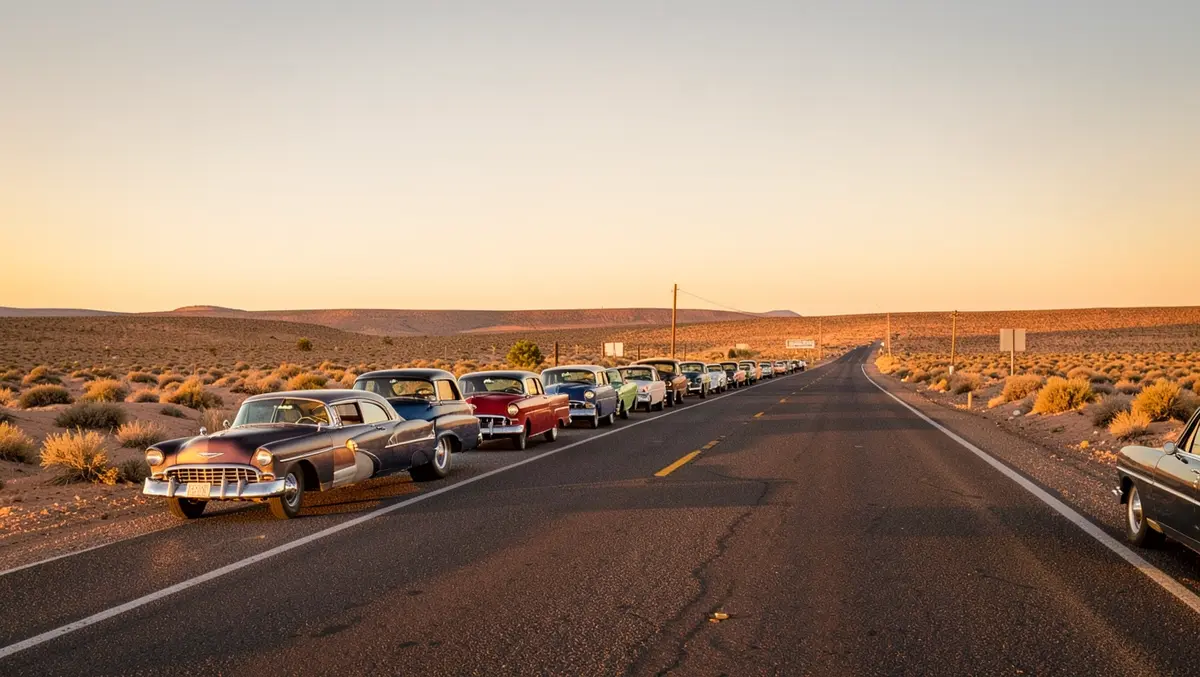
That real-world grounding is part of why the “how are cars born” question feels genuinely strange to think about — the setting is realistic and lived-in, but the biology of its residents is left completely blank.
Did Humans Ever Exist in the World of Cars?
This is a separate but related mystery fans have picked apart for years, because the answer would explain a lot about how new cars could appear. Several details in the films only make sense if humans existed in this world at some point:
- Every car has door handles, side mirrors sized for a human driver, and interiors with seats and steering wheels — features a species of sentient, self-driving vehicles would have no functional reason to keep.
- An American flag and other human-scale infrastructure (mailboxes, traffic lights, road signs written in English) appear throughout the series.
- Buildings, doorways, and furniture in Radiator Springs are all sized for a human body, not a car.
Cars creative director Jay Ward has floated — explicitly as his own idea, not confirmed canon — that the cars could be an extension of modern self-driving car technology that simply “left humanity behind” once it no longer needed drivers, with each car inheriting something of the personality of whoever drove it last. It is a fan-adjacent theory from someone who works on the franchise, not an official Pixar statement.
The Fan Theories, Clearly Labeled as Theories
None of the following is confirmed by Pixar. They are popular, long-running fan theories, and it is worth knowing where each one actually came from before repeating it as fact.
The Pixar Theory (Jon Negroni, 2013)
Writer Jon Negroni’s “Pixar Theory,” published in 2013, ties every Pixar film into one shared timeline. In his version of events, humans evacuate Earth by the year 2100 because of pollution — the backstory shown in “WALL-E” — and the cars left behind, having grown sentient the same way WALL-E did, take on the personalities of the people who used to own them. It is a fun, internally consistent piece of fan fiction, but it was never written or endorsed by Pixar.
The Manufacturing / Assembly-Line Theory
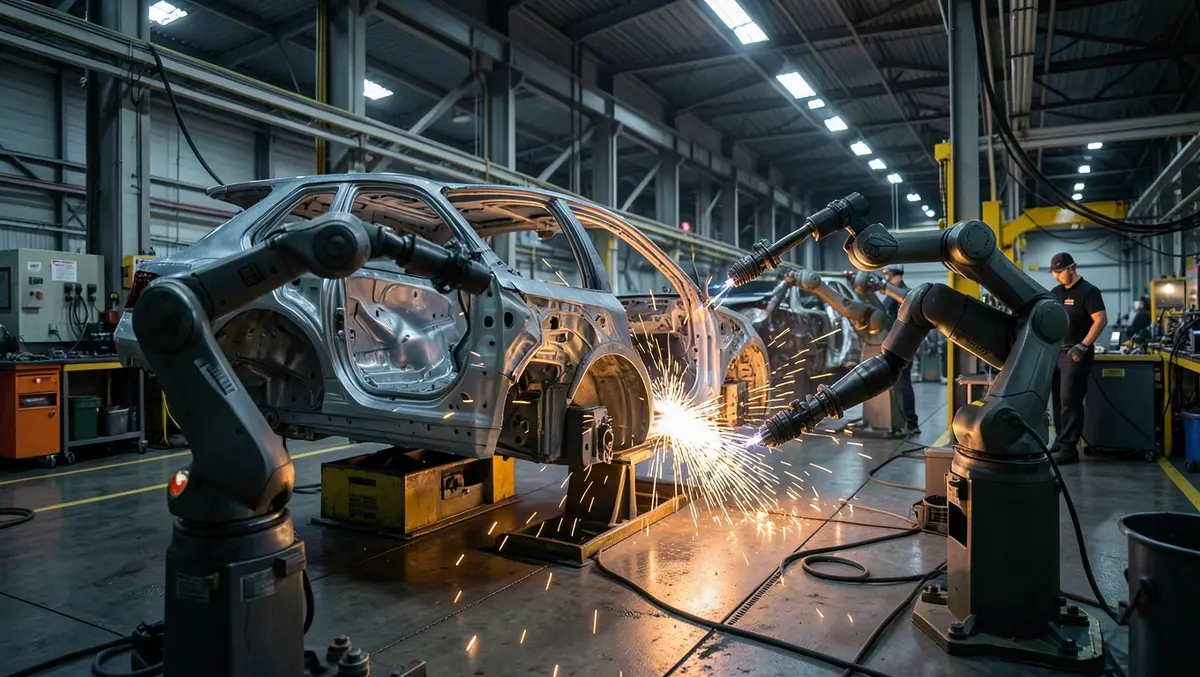
The most common and least controversial fan theory is that new cars are simply manufactured — built on assembly lines from raw materials and salvaged parts, the same way real cars are made, just without human workers. It is the theory that best matches the film’s one real clue (“thank the manufacturer”). If you want the full breakdown of how that manufacturing process might work step by step, see our companion piece on the manufacturing theory in detail.
Beyond these two, there are cruder internet joke theories involving anatomical diagrams and “car pregnancy” comics that circulate on Reddit and Twitter. They are memes, not serious theories, and this article is deliberately not reproducing them.
Why Pixar Keeps This a Mystery on Purpose
“Cars” is a family franchise built around friendship, mentorship, and small-town nostalgia — not hard science fiction world-building. Any concrete answer to “how are cars born” would almost certainly raise more uncomfortable questions than it solves, whether that means implying cars are grown from parts of older cars, or leaning into the darker “what happened to the humans” implication. Leaving it unanswered lets the films stay focused on the characters and their relationships, which is also why the same ambiguity shows up in Pixar’s handling of Doc Hudson’s death — acknowledged, but never dwelt on.
Frequently Asked Questions
How do the cars in the Cars movies reproduce?
Pixar has never shown or confirmed this. The films only hint that cars are manufactured rather than born, through a single background line about “the manufacturer.” Everything more specific than that is fan theory.
Does Pixar have an official explanation for how cars are made?
Not one that has been published. Cars creative director Jay Ward has referenced an internal reference document, “The World of Cars Owner’s Manual,” that reportedly covers rules like this, but it has never been released to the public, so its contents cannot be confirmed.
What happened to the twins in Cars?
Mia and Tia are identical twin Mazda Miatas who are Lightning McQueen’s biggest self-declared fans in the first film. They briefly switch allegiance to Chick Hicks when McQueen goes missing, but return to being McQueen fans by the end. In the credits, they move to Radiator Springs and work as waitresses at Flo’s V8 Cafe.
How old is Mater supposed to be in Cars?
Pixar has never given Mater a specific age. He is written and designed as an older, experienced tow truck with decades of small-town history in Radiator Springs, but no exact number appears in any film or official material.
Is Radiator Springs a real place?
Not exactly, but it is closely based on one. Radiator Springs was modeled on Seligman, Arizona, a real Route 66 town that was bypassed by Interstate 40 and lost most of its business, which is essentially the town’s backstory in the film.
Did humans ever exist in the Cars universe?
It has never been confirmed, but several details — door handles, human-scale buildings, an American flag, and English-language road signs — suggest a human-built world at some point. This is fan speculation based on evidence in the films, not something Pixar has stated directly.
What is the most popular fan theory about how cars are made?
The two most-cited theories are Jon Negroni’s 2013 “Pixar Theory,” which ties the Cars universe to a post-human “WALL-E” timeline, and the more grounded “assembly line” theory, which treats car creation as ordinary manufacturing. Neither is official Pixar canon.
The Bottom Line
There is no confirmed answer to how cars reproduce in the “Cars” universe, and that is by design. Pixar gives just enough (“thank the manufacturer,” Doc Hudson’s death) to suggest cars live and eventually die like the rest of us, without ever showing how they arrive. Until an official statement or a future film says otherwise, the honest answer is that nobody outside Pixar actually knows — and the fan theories, while fun, are exactly that: theories.
Products related to this article
Sponsored / affiliate links. As an Amazon Associate I earn from qualifying purchases. I may earn additional commission from eligible campaigns.